


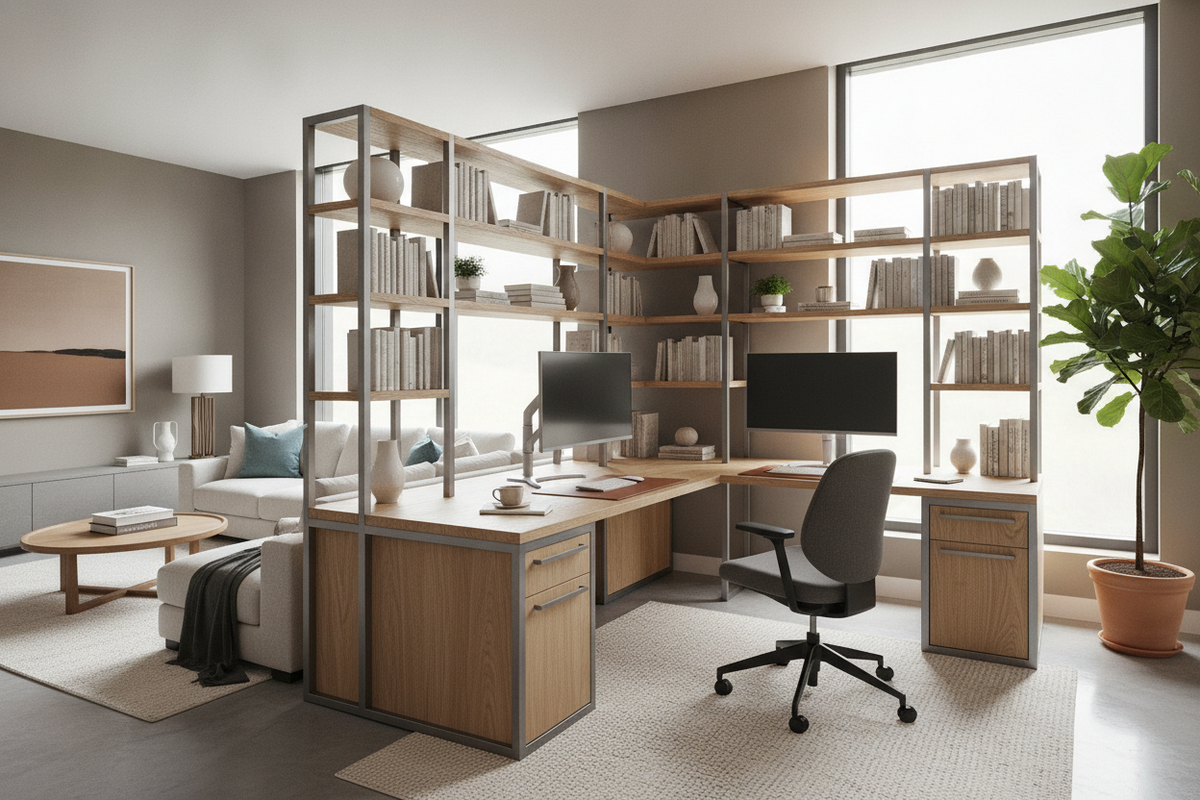
Understanding the Storage Architecture of an L-Shaped Desk with Shelves
An l-shaped desk with shelves serves as an efficient cornerstone for modern home offices, creative studios, and multi-monitor gaming setups. By combining two perpendicular work surfaces with integrated vertical or horizontal tiers, this furniture layout consolidates equipment, reference materials, and daily necessities within natural reaching distance. Exploring the broader computer desk collection reveals how corner footprints transform underutilized room corners into high-capacity workstations without encroaching on central walking paths.
The structural appeal of an l-shaped computer desk with shelves lies in its dual-wing architecture. One wing typically supports focal technology—such as widescreen monitors, keyboard trays, and input peripherals—while the secondary return accommodates supporting storage. The method used to integrate these shelves dictates the overall visual weight, stability, and utility of the workstation.
Evaluating Shelving Positions: Overhead, Tower, and Under-Desk Bays
Integrated shelving configurations generally fall into three distinct structural zones: top-mounted overhead hutches, side-anchored vertical towers, and lower under-desk shelving bays. Selecting the right arrangement depends on lighting conditions, room dimensions, and reach preferences, as seen in versatile options like a dedicated computer desk storage product.
Overhead Hutch Shelving for Vertical Density
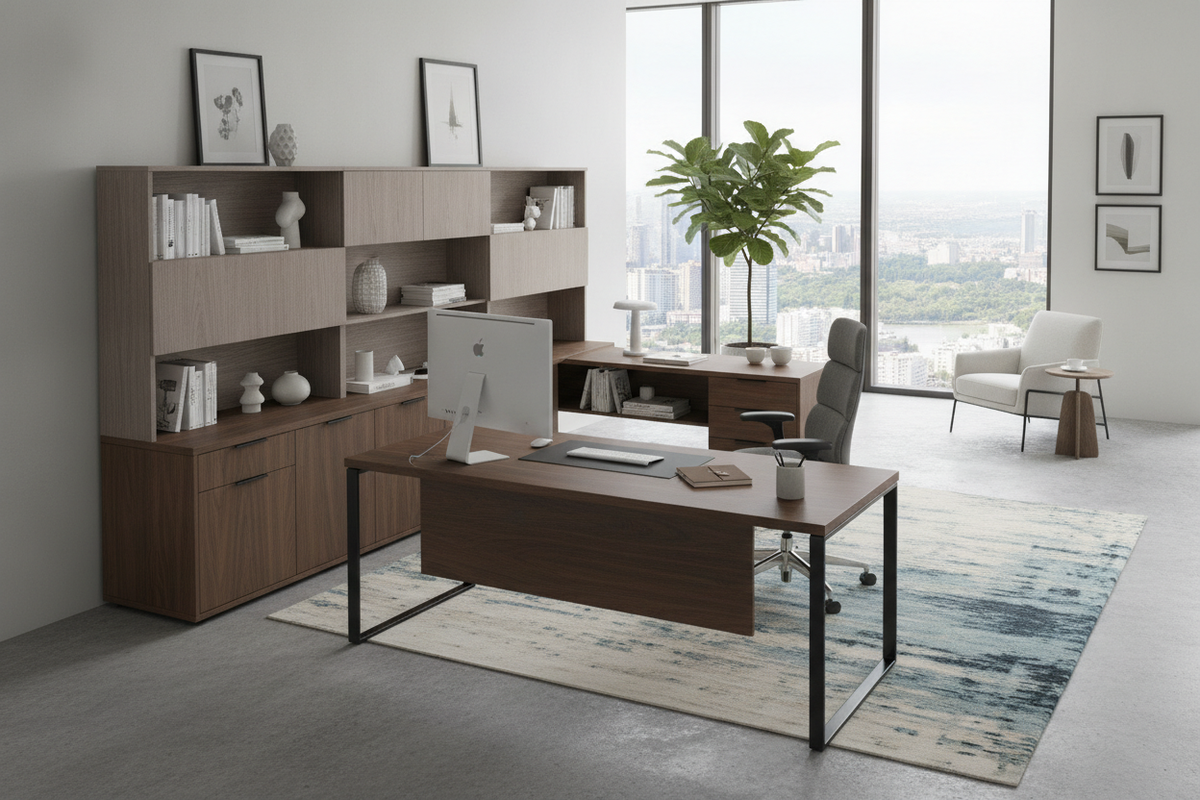
An overhead hutch mounts directly above one or both wings of the desk, expanding vertical storage capacity without increasing the floor footprint. Hutches keep daily binders, reference volumes, and decorative accents elevated above the primary work surface. When positioning an overhead unit, ensure it does not obstruct natural window light or collide with wall-mounted fixtures.
Side Towers and Open Bookcase Returns
Side towers replace traditional desk legs on one wing, creating a multi-tiered bookcase structure that extends from the floor upwards. These towers provide substantial lateral stability and offer convenient housing for desktop computer towers, document organizers, or printers. For spaces requiring customizable shelf heights, pairing workstations with elements from an shelf storage collection helps accommodate diverse hardware and tall folio storage.
Under-Surface Storage Shelves for Discreet Stashing
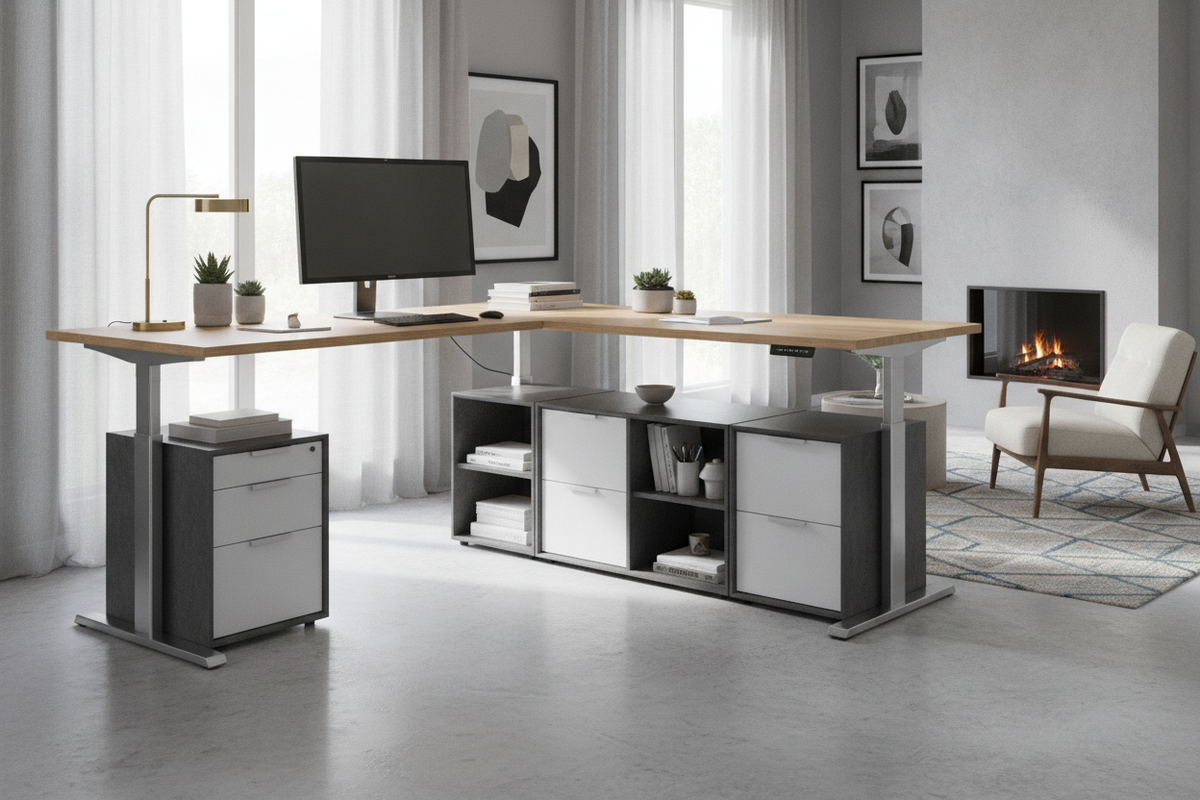
Under-desk shelves sit beneath the secondary return wing, keeping paperwork, charging hubs, and auxiliary gear tucked away from direct sightlines. When selecting an l shaped desk with storage shelves beneath the work surface, verify that the shelving bay leaves generous lateral leg clearance so your chair can swivel freely between both wings without knee obstructions.
Dimensional Decision Categories: Matching Desk Proportions to Room Fit
Proper spatial planning ensures that an l-shape desk with shelves integrates smoothly into your room layout. Consider these primary dimensional factors before finalizing your setup:
- Wing Length Symmetry: Symmetrical desks offer equal surface spans on both sides, which suits open corner placements. Asymmetrical designs feature one long primary wing and a shorter storage return, making them ideal for narrower rooms.
- Usable Surface Depth: Deeper primary wings provide adequate focal distance for larger displays, while shallower storage wings preserve open floor space.
- Vertical Clearance: Account for ceiling height and wall elements when selecting elevated shelving tiers or overhead hutches.
- Entryway and Corner Navigation: Ensure that room doors, closet swings, and heating vents remain unobstructed by the desk wings.
For modular spaces requiring supplementary vertical organization, adding an external unit such as an open storage shelves shelf product allows you to extend storage alongside the desk perimeter.
Material Selection, Frame Stability, and Weight Distribution
The durability and balance of an l shaped desk with shelving rely heavily on construction materials. Most modern designs combine dense engineered wood panels with powder-coated steel frameworks. Steel supports provide rigid structural geometry that resists racking, while composite wood surfaces offer smooth, resilient work areas.
When organizing heavy items across multi-tiered shelving, follow sound weight distribution practices. Place heavy hardware, large books, and dense equipment on lower shelves or bottom tower bays to anchor the desk's center of gravity. Reserve higher overhead shelves for lightweight organizers, small electronics, and decorative items.
Workflow Zoning: Optimizing Dual Wings for Multitasking and Peripherals
An l shaped desk shelf configuration naturally supports productive workflow zoning by separating primary computing tasks from secondary project handling. For detailed planning on hardware layouts and cable management, consulting a dedicated desk computer storage guide provides valuable structural strategies.
Designate the longer or primary wing exclusively for screen-based tasks, keyboard input, and focused work. Use the adjacent return wing with integrated shelving for administrative duties, document signing, scanning equipment, or tactile crafting. This functional split keeps your primary monitor zone uncluttered while keeping essential reference tools within arm's reach.
Assembly Planning, Cable Routing, and Maintenance
Assembling a multi-component desk requires methodical preparation. Clear an open floor area larger than the finished dimensions before starting, and assemble the frame close to its final position. If your model features reversible shelf returns, determine whether a left-hand or right-hand orientation best complements your room's power outlets and window placements before securing structural fasteners.
Plan cable management alongside assembly. Route power cords along the interior edges of shelving supports using adhesive clips or hook-and-loop ties to keep wiring discreet and safe from foot snags. Maintain surfaces by dusting open shelves regularly with a soft cloth and protecting high-contact areas with desk pads.
Key Takeaways: Choosing Your Ideal L-Shaped Shelf Configuration
An l-shaped desk with shelves delivers an exceptional balance of working surface and vertical organization. By evaluating whether overhead hutches, vertical side towers, or under-desk bays match your daily habits, you can create an ergonomic, visually balanced workstation tailored to your home office footprint.

Laisser un commentaire
Ce site est protégé par hCaptcha, et la Politique de confidentialité et les Conditions de service de hCaptcha s’appliquent.