


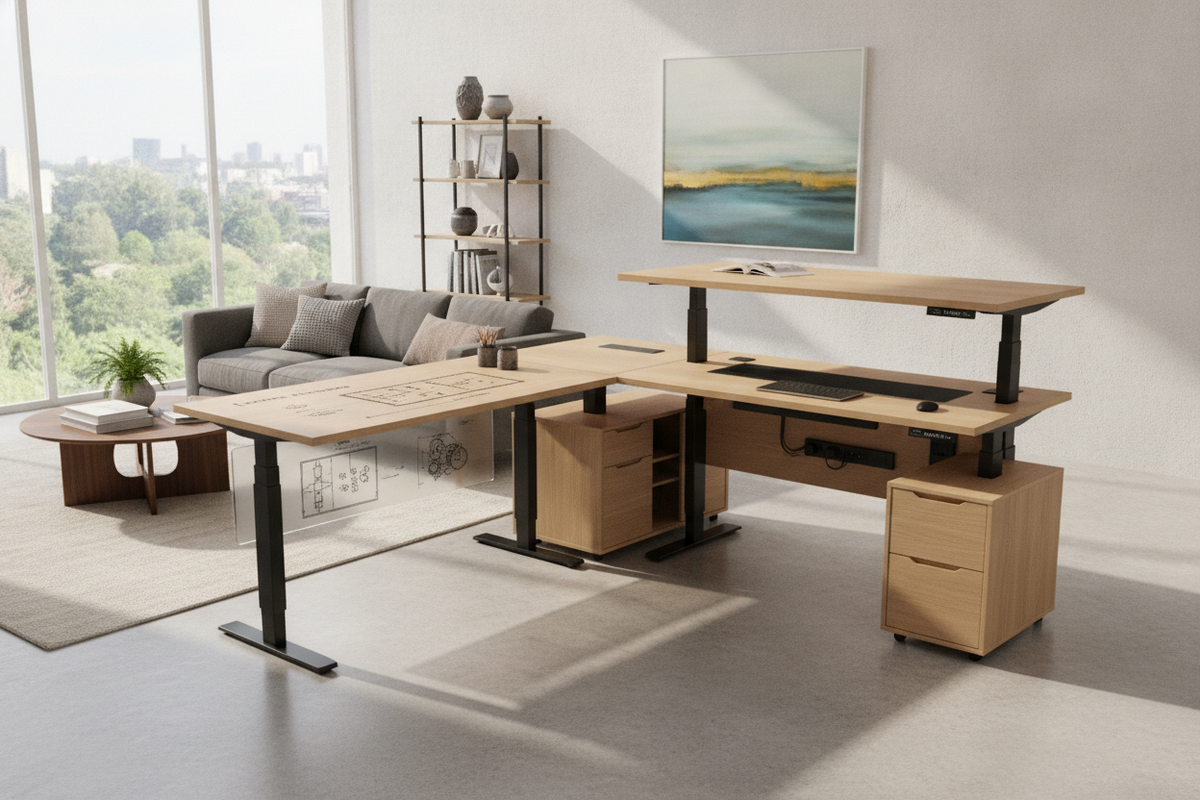
Modern home office setups frequently demand both expansive tabletop room and physical flexibility throughout the working day. An l shaped desk with lift combines the broad surface area of a traditional corner workstation with the ergonomic versatility of height adjustability. Navigating the planning process requires evaluating lift mechanism types, room clearances, integrated storage designs, and wire management paths.
Understanding the L-Shaped Desk with Lift Architecture
Corner desks have long served as standard solutions for multi-monitor setups, reference documentation, and creative workstations. Introducing height adjustment to this form factor changes how the entire unit interacts with the surrounding room. Rather than functioning as a static corner fixture, an l-shaped desk with lift functions as a dynamic system where clearances, weight distribution, and perimeter surroundings must be planned in unison.
By splitting surface utility across two perpendicular axes, users can dedicate one wing to primary screen tasks and the adjoining wing to analog writing, drafting, or secondary equipment. Understanding how the lifting mechanism interacts with these zones determines the overall usability of the workstation.
Core Lift Mechanism Configurations
When selecting an adjustable corner workstation, the fundamental structural choice lies in how the elevation change is delivered across the desk footprint.
Full-Frame Motorized Lifts vs. Hybrid Lift-Top Desks
Full-frame motorized models utilize synchronized multi-leg lifting columns that elevate the entire L-shaped tabletop at once. This setup preserves a continuous, unbroken surface level across both wings regardless of whether the user is seated or standing.
Conversely, hybrid designs combine a stationary return credenza with a mechanical or motorized lift platform on the primary task surface. A configuration like a 63-inch L-shaped 3-drawer lift computer desk pairs a rising worktop with stationary drawers and side shelving. This allows the user to transition into a standing position at their active computer screen while secondary reference materials, printers, and filing cabinets remain stable and at standard seated height.
Single-Wing vs. Entire-Surface Movement
The choice between elevating the entire desk or just a single wing depends largely on your hardware footprint. Single-wing lift tops focus movement directly beneath primary displays, reducing the risk of tipping decorative accents or stationary desktop peripherals. Full-surface movement offers a unified expanse for users who routinely transition between multiple digital displays arranged in an arc.
Dimensioning and Spatial Clearance Requirements
Integrating an adjustable corner workstation into a room requires careful spatial evaluation beyond simple floor measurements. When optimizing corner desk traffic flow, planners must account for both horizontal boundaries and vertical travel envelopes.
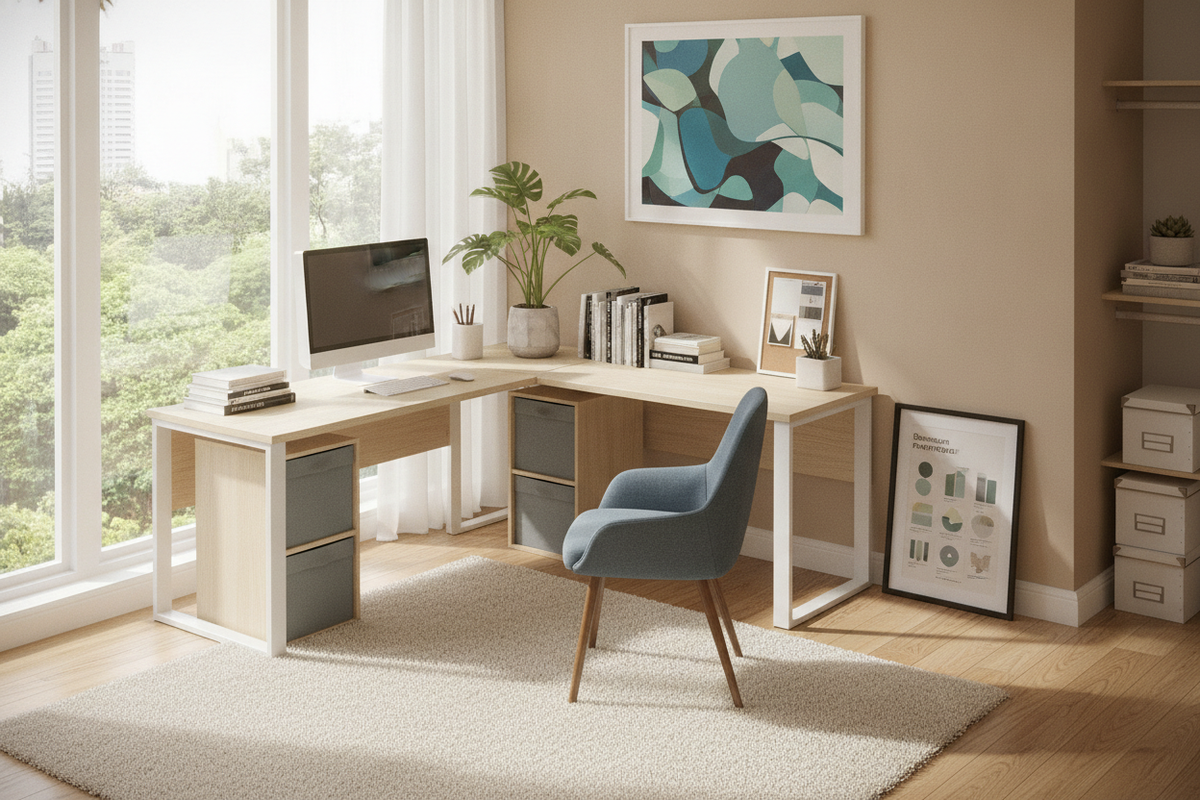
If you are working with tighter room dimensions or minimalist setups, evaluating stationary options such as a compact 55-inch white corner desk can help determine whether a dedicated lift structure or a fixed-height corner surface better fits your available square footage.
Vertical Travel Envelopes and Wall Proximity
Because an adjustable desk moves vertically, placing it flush against a wall can create friction points. Baseboards, windowsill protrusions, wall-mounted shelving, and low window treatments can obstruct moving edges. Maintaining a small perimeter offset ensures that the lifting components operate smoothly without scraping drywall or pinching loose items against vertical surfaces.
Dual-Wing Workflow Zoning and Ergonomics
Structuring your daily tasks across an L-shaped surface prevents clutter and enhances physical comfort. A recommended ergonomic layout separates the desk into two distinct functional zones:
- Primary Active Zone (Lifting Wing): Houses the primary keyboard, mouse, and monitors. This section elevates smoothly to maintain proper elbow angles and eye-level screen alignment in both seated and standing positions.
- Secondary Static Zone (Return Wing): Serves as home base for desktop peripherals, stationary organizers, desk lamps, and paperwork. On hybrid desks, keeping this zone static ensures that fragile items remain completely undisturbed during position changes.
Storage Architectures for Dynamic Workstations
Standard sit-stand tables often sacrifice under-desk storage to accommodate leg clearance and lift actuators. In contrast, an L-shaped layout naturally accommodates integrated storage beneath the stationary wing without cramping the user's leg space.
For extensive archiving needs, combining a lifting primary surface with vertical credenzas—such as a 71-inch lift desk with integrated bookcase and drawers—creates an all-in-one command center. This approach keeps books, office accessories, and computer towers organized while preserving generous legroom under the lifting surface.
Dynamic Cable Management and Power Routing
Managing cables on an adjustable corner desk requires accommodating vertical movement without creating pulling hazards. As the desk rises, cords stretching from wall outlets to desktop devices undergo continuous tension changes.
To maintain an organized and reliable power setup, consider these principles:
- Mount an under-desk power strip directly to the underside of the lifting surface so device cables travel with the desk.
- Utilize an articulated cable spine or flexible wire sleeve to route the main power supply cord cleanly to the wall outlet.
- Allow adequate service slack in all connecting wires when the desk is raised to its highest planned position.
- Fasten loose cords to the underside frame with adhesive clips or hook-and-loop ties to keep them clear of mechanical pinch points.
Selecting the Right Finish, Frame Material, and Room Integration
An L-shaped workstation is often the visual anchor of a home study. Selecting high-density engineered wood surfaces paired with a heavy-duty steel support structure provides structural rigidity and long-term surface resilience. Choosing warm woodgrains, clean modern neutrals, or two-tone contrasting finishes helps the workstation blend into transitional, modern, or industrial interior themes.
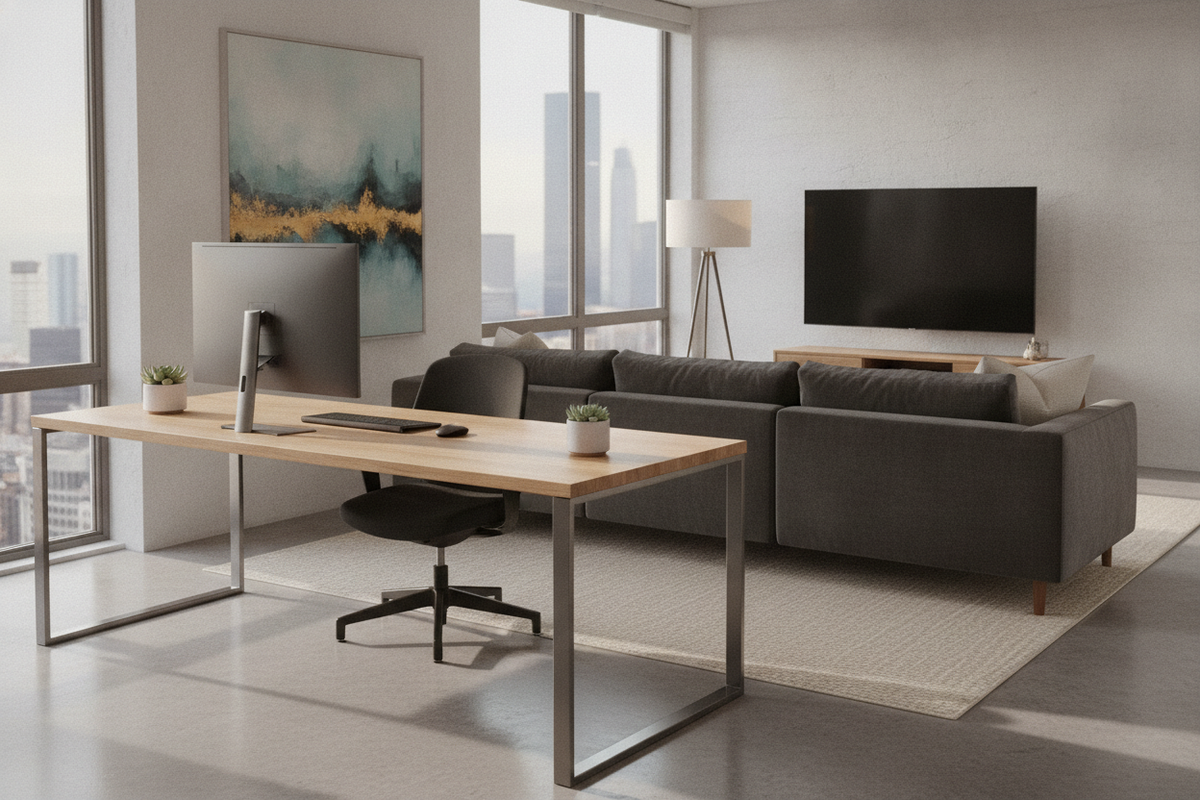
In multipurpose living rooms or creative studios, you might also balance your main corner work hub with complementary accent pieces, such as a distinctive geometric writing desk in an adjacent alcove. Aligning colors and frame lines across your home furniture creates a cohesive, productive environment tailored to both focused work and daily living.

Laisser un commentaire
Ce site est protégé par hCaptcha, et la Politique de confidentialité et les Conditions de service de hCaptcha s’appliquent.