


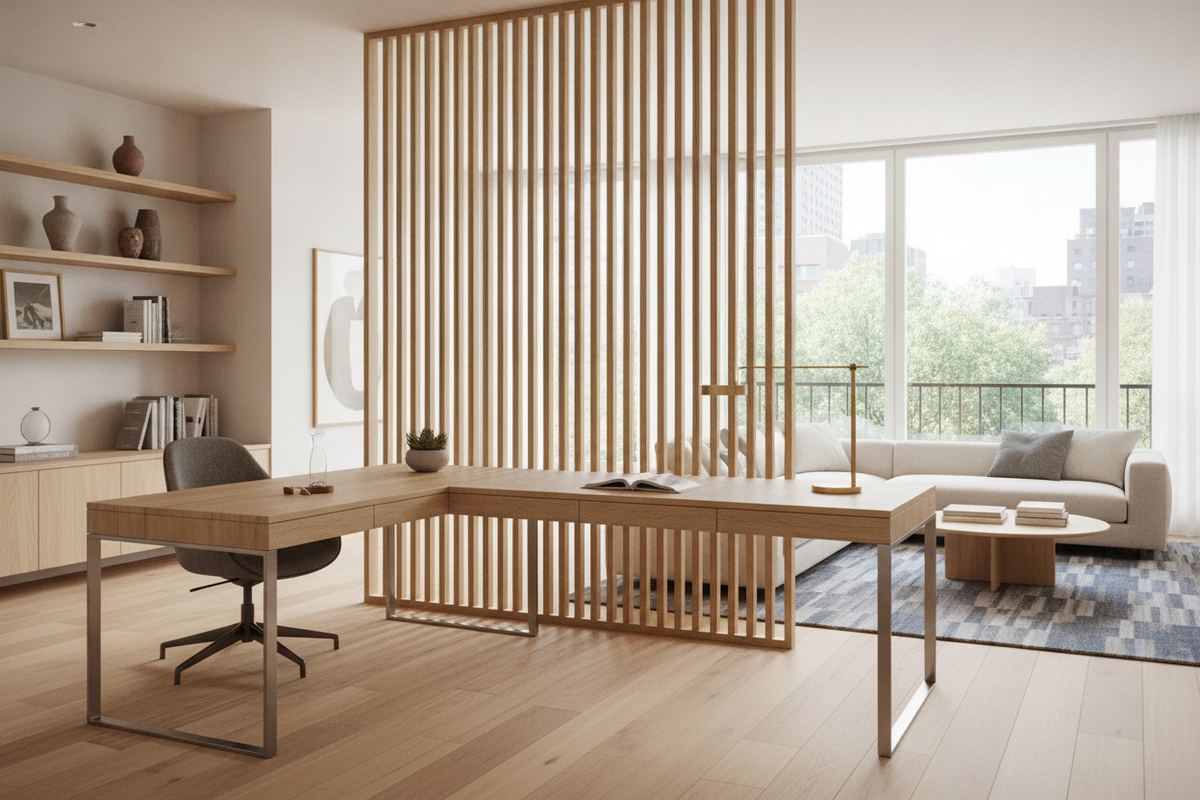
While traditional home office setups often tuck right-angle furniture against adjacent walls, placing an l shaped desk not in corner environments is one of the most effective ways to redefine an open floor plan. By stepping away from the perimeter, an L-shaped workstation transitions from a simple space-saver into an architectural anchor. This approach establishes intentional work zones, enhances room sightlines, and creates an open, commanding atmosphere for daily tasks.
Why Place an L-Shaped Desk Outside of the Corner?
Positioning a workstation in an interior corner often turns your back toward the entire room and natural light sources. In contrast, moving your workstation outward changes the dynamic of your office or multipurpose living area. Rather than facing flat drywall, you gain a panoramic view of the room and direct sightlines to doorways and windows.
For those familiar with a standard desk corner guide, tucking furniture against intersecting walls is ideal for conserving square footage in compact rooms. However, in mid-sized or open-concept rooms, an off-corner L-desk serves as a visual anchor. It organizes large, undefined footprints into purposeful living, resting, and productivity zones without requiring physical partition walls.
Core Layout Configurations for Open Floor Plans
Arranging an L-shaped desk away from the corners opens up versatile layout options suited for various room dimensions and working styles.
The Floating Executive Layout (Command Position)
The floating executive layout places the primary work surface facing outward toward the main entrance of the room, with your seating position situated behind the desk. The secondary wing (or return) extends along your side. This configuration offers clear sightlines across the room while providing a structured barrier between your private workflow and visiting guests or family members.
The Peninsula Layout as a Functional Room Divider
In living rooms, open lofts, or wide studio apartments, the peninsula layout serves as an effective space divider. One short edge of the desk rests against a flat wall run, while the extended return projects out into the room. Selecting a versatile shaped corner desk product configured as a peninsula immediately separates a lounge or dining area from your dedicated work zone while preserving light and conversation flow.
The Central Island Workstation
In spacious multipurpose rooms or commercial studios, placing an L-shaped desk entirely free from all walls creates a central workstation island. This layout encourages 360-degree movement around the desk, making it easy to shift between computer-based tasks, reference reading, and collaborative meetings.
Spatial Clearance and Traffic Flow Planning
When an L-shaped desk is positioned in the open room, planning clearance around all sides is vital to avoid bottlenecks. A well-proportioned layout balances the desk with natural pedestrian walkways:
- Seating Clearance: Maintain ample space behind the desk to ensure your office chair can roll back smoothly without bumping into background credenzas, shelving, or walls.
- Walkway Clearance: Leave clear, unobstructed passage along the exposed sides of the desk to allow comfortable movement through the room.
- Zone Proportion: Position the desk so its visual weight complements nearby sofas, beds, or bookcases without dominating the entire room.
Aesthetic and Construction Considerations for Exposed Desks
When an L-shaped desk is moved away from perimeter walls, every side becomes visible from across the room. Addressing aesthetic details ensures the desk looks intentional from every angle.
Finished Back Panels and Modesty Screens
Standard corner desks sometimes leave rear panels unfinished or unpainted since they are designed to face walls. When floating an L-desk, choose models featuring fully finished backs or integrated modesty panels. For additional inspiration on upgrading workstation finishes, consulting a corner desk guide can help you evaluate panel materials, decorative modesty screens, and open-shelf backs that look attractive from any vantage point.
Material Harmony with Surrounding Room Decor
Because an open-plan desk sits in plain view, its finish should complement existing furniture. Warm wood tones pair well with traditional and transitional spaces, while metal frames and clean neutral surfaces suit modern or industrial interiors. Matching desk legs and hardware to nearby shelving helps tie the room together.
Cable Management and Power Routing in Open Spaces
The primary practical challenge of floating a desk in the center of a room is routing electrical cords without creating tripping hazards. Effective cable routing solutions include:
- Floor Cord Protectors: Low-profile floor cable covers run power cords securely from baseboard outlets across the floor to the desk base.
- Under-Desk Cable Trays: Mounting power strips and wire baskets beneath the primary desktop keeps surge protectors, adapters, and excess cables hidden from view.
- Area Rug Concealment: Placing a large area rug beneath the workstation allows flat extension cords to run discreetly along the rug backing toward nearby wall outlets.
Integrated Storage and Workflow Zoning
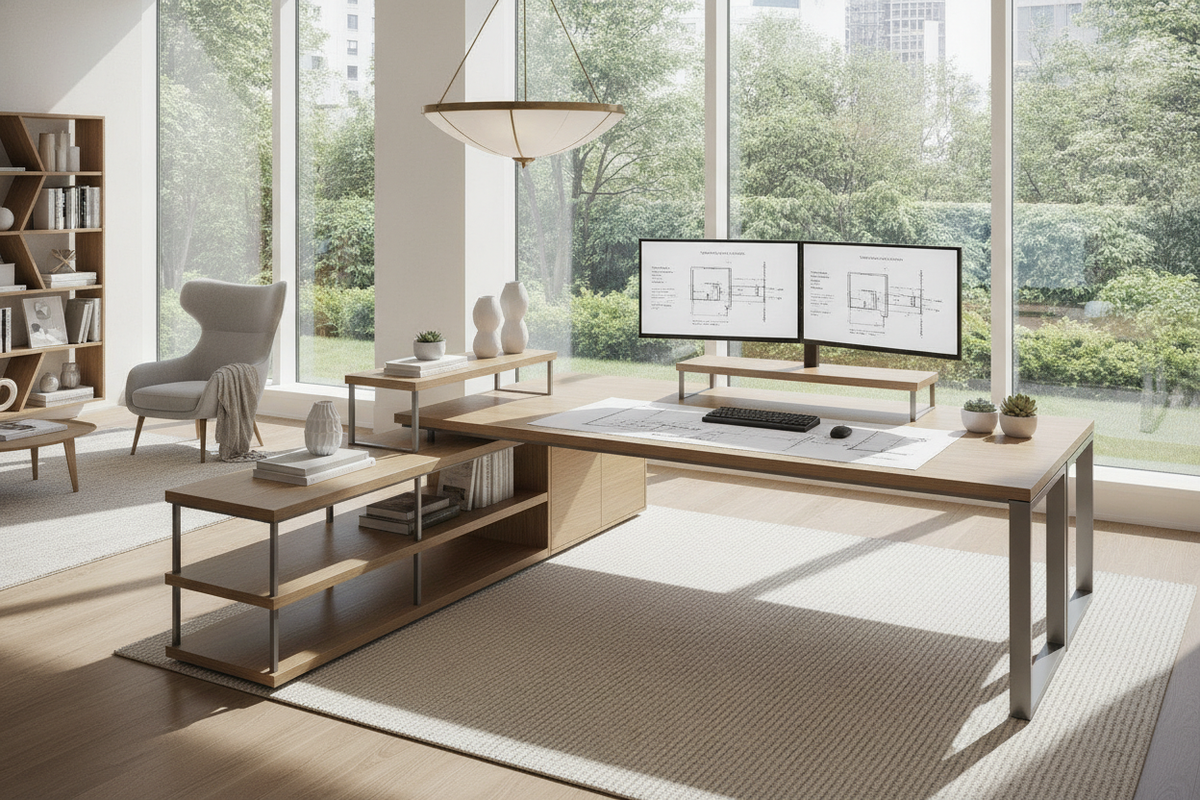
An L-shaped configuration provides two distinct surfaces that can be tailored to different tasks. The primary surface typically supports dual monitors, a laptop dock, and essential input devices. The return wing serves as an offline station for paperwork, notebooks, and reference materials.
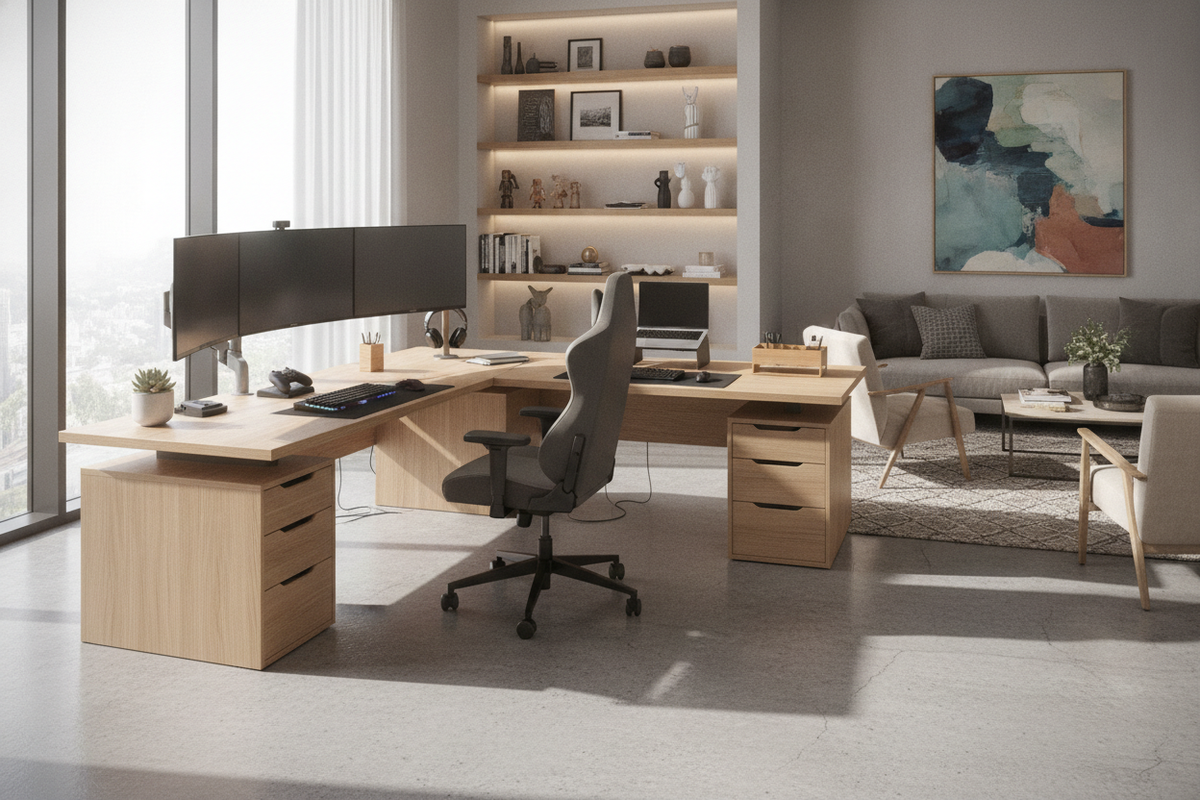
Choosing a shaped corner desk product with built-in drawers or open shelving allows you to keep the top surfaces clean and clutter-free. By storing office supplies, files, and charging accessories within integrated cabinetry, your open-room desk maintains a polished, organized appearance throughout the workday.

Laisser un commentaire
Ce site est protégé par hCaptcha, et la Politique de confidentialité et les Conditions de service de hCaptcha s’appliquent.