



Balancing digital devices, heavy textbooks, and open notebooks on a standard writing desk often leads to rapid clutter and fragmented focus. An l shape study desk offers an architectural solution to this common learning challenge by establishing distinct, contiguous work surfaces within a single workstation. By dividing digital tasks from handwriting and reference reading, learners can transition smoothly between activities without rearranging their materials mid-session.
The Academic Advantage of an L-Shape Study Desk
Modern academic workflows require frequent switching between digital interfaces and physical media. When working from a conventional linear desk, opening a large textbook usually means shoving the keyboard aside or balancing a notebook on top of the laptop trackpad. Integrating an l-shaped study desk solves this bottleneck through natural surface separation. One dedicated wing accommodates the laptop, external monitor, and peripheral accessories, while the perpendicular return provides a clear, flat plane reserved exclusively for handwritten notes, binders, and open reference volumes.
This spatial separation supports better cognitive focus. When your screen-based workspace remains distinct from your reading area, you reduce the physical friction of clearing surfaces, making long study blocks more manageable. For additional insights on optimizing academic surfaces, exploring a study desk guide on focus and flow provides helpful context for structuring your daily work environment.
Dimensional Decision Framework: Sizing Tiers for Study Spaces
Selecting the right desk starts with evaluating your available room footprint and clearance zones. L-shaped desks generally fall into three distinct sizing profiles, each tailored to different room capacities and learning requirements:
- Compact Study Desks: Typically designed with a main surface and a short return, these models suit secondary bedrooms, study nooks, or dorm spaces. They provide enough room for a single laptop and an open spiral notebook without dominating floor space.
- Mid-Size Workstations: Offering balanced surface lengths on both wings, a mid-sized model like a 55-inch white corner study desk delivers generous depth for dual monitors on one wing while preserving full textbook spread on the other.
- Expansive Executive Desks: Featuring extended wings and wide desktop depths, expansive setups cater to university researchers, graduate students, or shared sibling stations requiring dual monitors, printers, and reference stands.
When measuring your room, account for the chair rotation arc and rear clearance. An L-shaped configuration requires adequate open space behind the inner corner so you can glide and swivel between the two operational wings without colliding with walls or adjacent furniture.
Dual-Zone Layout Architecture: Digital vs. Analog Workflows
The core functionality of an l shape study desk relies on deliberate zoning. Setting up a dual-zone study setup requires assigning specific roles to each wing based on your dominant hand and study habits:
- Primary Digital Zone: Position your computer screen, keyboard, and mouse along the longer surface or directly against the wall where cable grommets and power outlets reside. Keeping power bricks and screen stands centralized on one side prevents cords from intruding on writing tasks.
- Secondary Analog Zone: Keep the adjacent wing uncluttered. This zone should be dedicated to handwriting, sketching, drafting, or reading physical books. Equip this wing with a focused task lamp and an accessible pen caddy.
- The Pivot Corner: The diagonal junction between both wings serves as the ideal home for shared resources, such as a desktop bookstand, reference dictionary, tablet dock, or digital clock visible from both seated angles.
Integrated Storage Architectures for Study Materials
Clutter control directly influences study efficiency. Selecting an l-shaped study desk with integrated storage features ensures that research materials, notebooks, and writing instruments remain within arm's reach without overcrowding the tabletop.
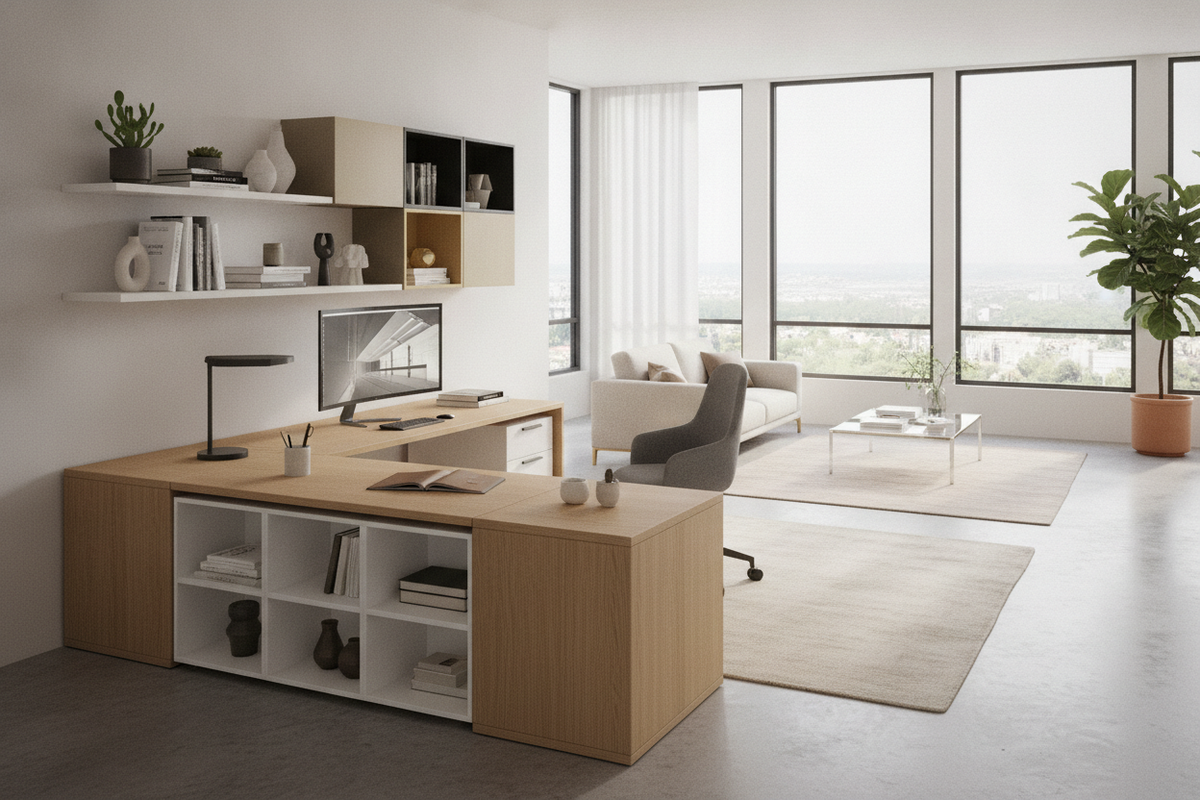
Consider an L-shaped desk with integrated storage if your academic program involves extensive physical binders, folders, or art supplies. Open under-desk shelving provides rapid access to frequently consulted textbooks, while integrated drawers keep loose stationery, charging cables, and flashcards organized. If vertical clearance allows, models with attached hutches or overhead shelving maximize wall space without expanding the desk's overall floor footprint.
Room Placement Strategies: Bedrooms, Dorms, and Multi-Use Studies
How you position an L-shaped desk within a room impacts both lighting and spatial harmony. Consider these common placement configurations:
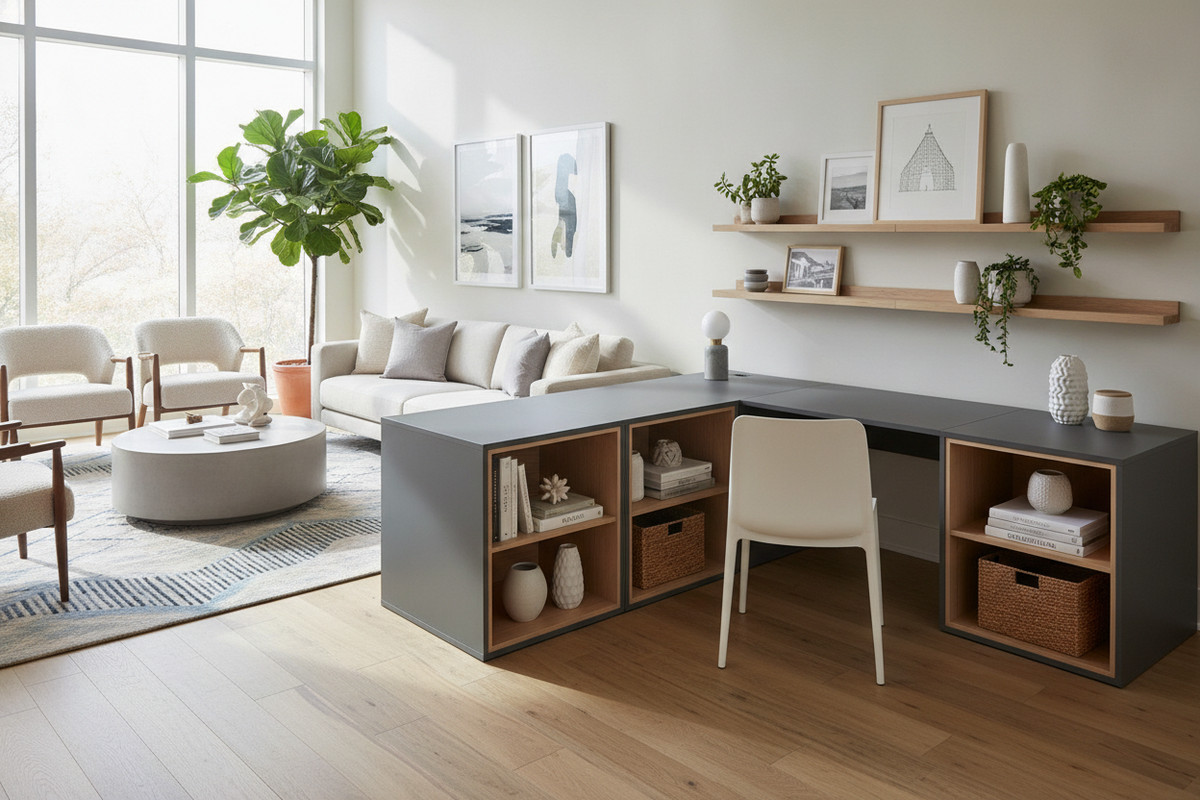
- Corner Anchoring: Placing both wings flush against two intersecting walls maximizes floor efficiency in compact bedrooms and eliminates awkward dead corners behind the furniture.
- Peninsula Partitioning: In open-concept rooms or shared dorms, anchoring the primary desk wing against a wall while extending the return outward into the room creates an organic room divider. This clearly delineates the study zone from sleeping or living areas.
- Window Orientation: Whenever possible, position your writing wing perpendicular to natural light sources to minimize direct screen glare while benefiting from ambient daylight during daytime reading sessions.
For ideas on blending functional study furniture with refined interior decor, check out an aesthetic study room styling guide to balance utility with visual cohesion.
Material Selection, Surface Durability, and Maintenance
Study desks endure heavy daily use, from pencil pressure and highlighter marks to warm beverage mugs and weighted book piles. Selecting the appropriate surface material ensures long-term durability and ease of maintenance:
- Laminated Engineered Surfaces: High-pressure laminates and melamine finishes resist surface scratches, pen indentations, and liquid spills, making them an excellent low-maintenance choice for student desks.
- Sturdy Metal Frame Foundations: Steel and powder-coated metal sub-frames provide structural rigidity, ensuring the desk remains stable and wobble-free when typing or erasing.
- Alternative Profiles: If an L-shaped footprint feels too substantial for a secondary room, exploring compact writing desk options can provide focused functionality in tighter spaces.
Assembly Tips, Cable Routing, and Ergonomic Study Setup
To get the most out of your l-shaped study desk, pay close attention to assembly details and ergonomic alignment. Many modern L-shaped desks feature reversible configurations, allowing you to install the return wing on either the left or right side to match your room layout and power outlet locations.
During assembly, adjust the leveling feet beneath each leg to compensate for uneven flooring, which prevents desktop wobble. Organize power strips and device chargers beneath the digital wing using adhesive cable channels or under-desk trays. By keeping cables contained and establishing designated operational zones, your l shape study desk becomes a streamlined, durable hub for academic focus and multi-task learning.

Laisser un commentaire
Ce site est protégé par hCaptcha, et la Politique de confidentialité et les Conditions de service de hCaptcha s’appliquent.