


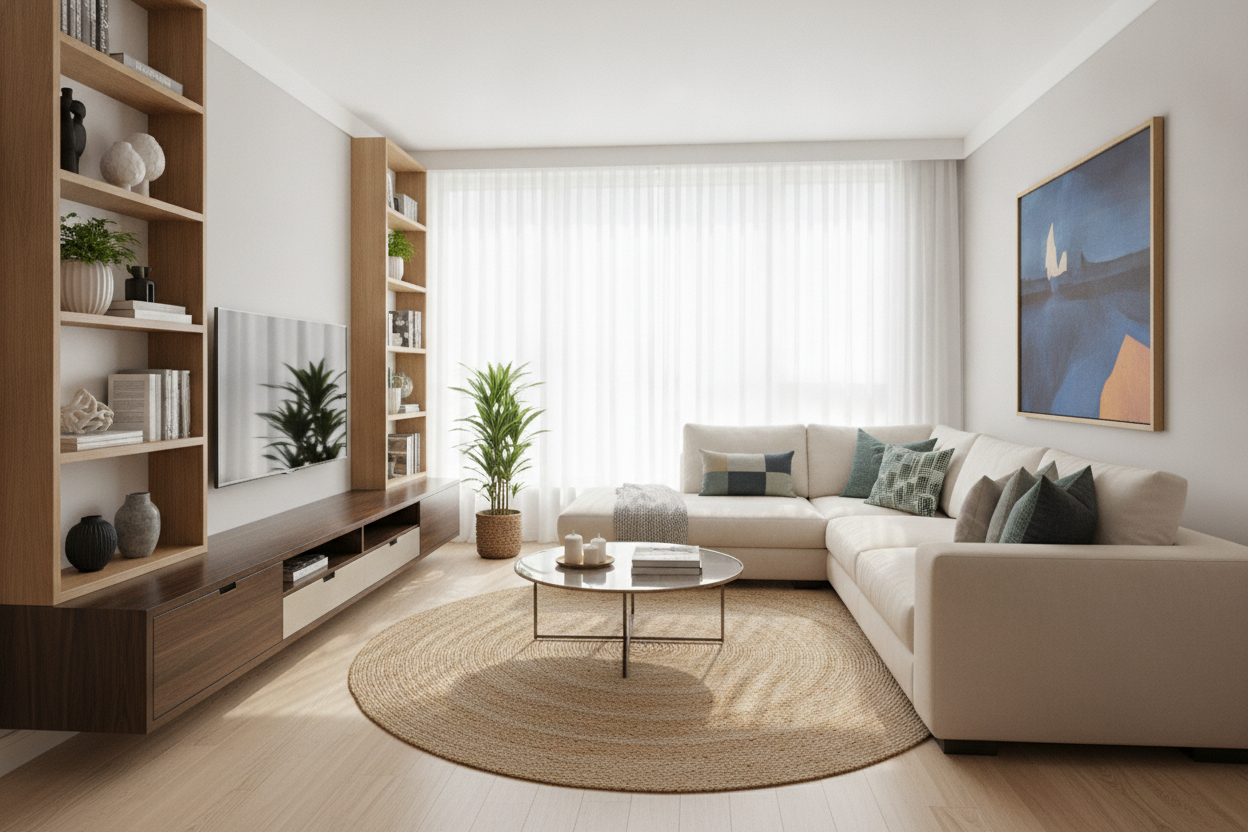
I spent three hours last night scrolling through furniture sites that look like they were curated by a minimalist robot. You know the ones—white gloss everything, no visible handles, and sofas that look about as comfortable as a park bench. It’s easy to feel like buying a touch of modern tv stand is a trap that will turn your cozy living room into a sterile waiting room.
Quick Takeaways
- Avoid high-gloss finishes if you want to keep the room feeling warm.
- Mixed materials—like wood and metal—bridge the gap between eras.
- Hidden cable management is the real reason to go modern.
- Style the top with organic shapes to soften sharp furniture edges.
Why 'Full Modern' Sometimes Feels Like a Waiting Room
The problem with 'full modern' isn't the design; it's the lack of soul. When you buy a piece that is too futuristic or clinical, it stops talking to the rest of your furniture. I've seen it happen a dozen times: someone buys a stark modern white TV stand and suddenly their favorite vintage rug looks dirty, and their comfortable sofa looks frumpy. It creates a visual rift.
Ultra-glossy surfaces are the biggest offenders. They reflect every light in the room and show every single fingerprint. Unless you plan on dusting three times a day and living in a showroom, you want something that feels lived-in. You want a piece that respects your 10-year-old armchair while bringing the room into this decade.
The Secret to Nailing That 'Just Right' Aesthetic
The trick is finding a piece that acts as a bridge. You aren't trying to build a set for a sci-fi movie; you're just trying to get rid of that bulky, honey-oak entertainment center from 2004. I like to see what designers actually think when they mix styles, and they almost always point toward 'transitional' modernism.
This means looking for pieces that have the clean, straight lines of contemporary design but use materials that feel familiar. It’s about the silhouette, not the gimmick. A slim profile can make a small room feel twice as big without making it feel cold.
Look for Warm Woods Mixed With Clean Lines
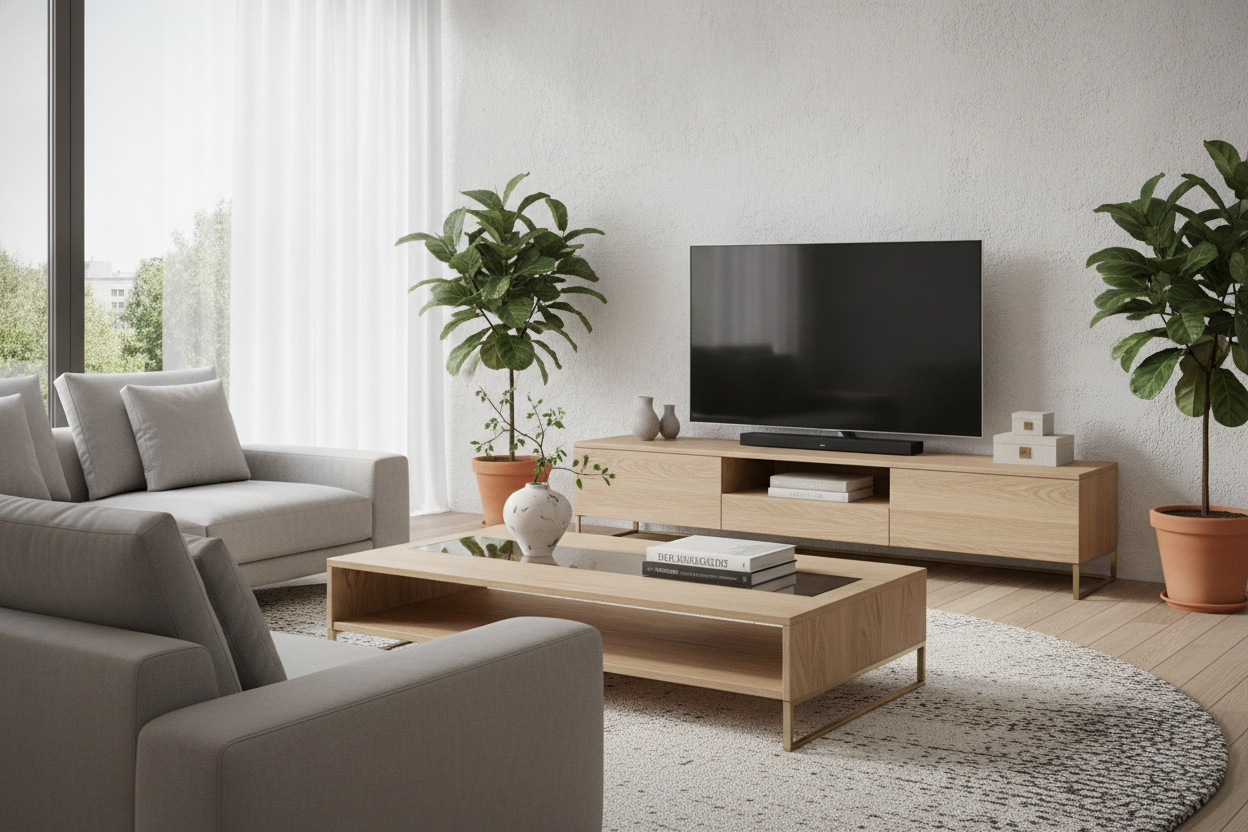
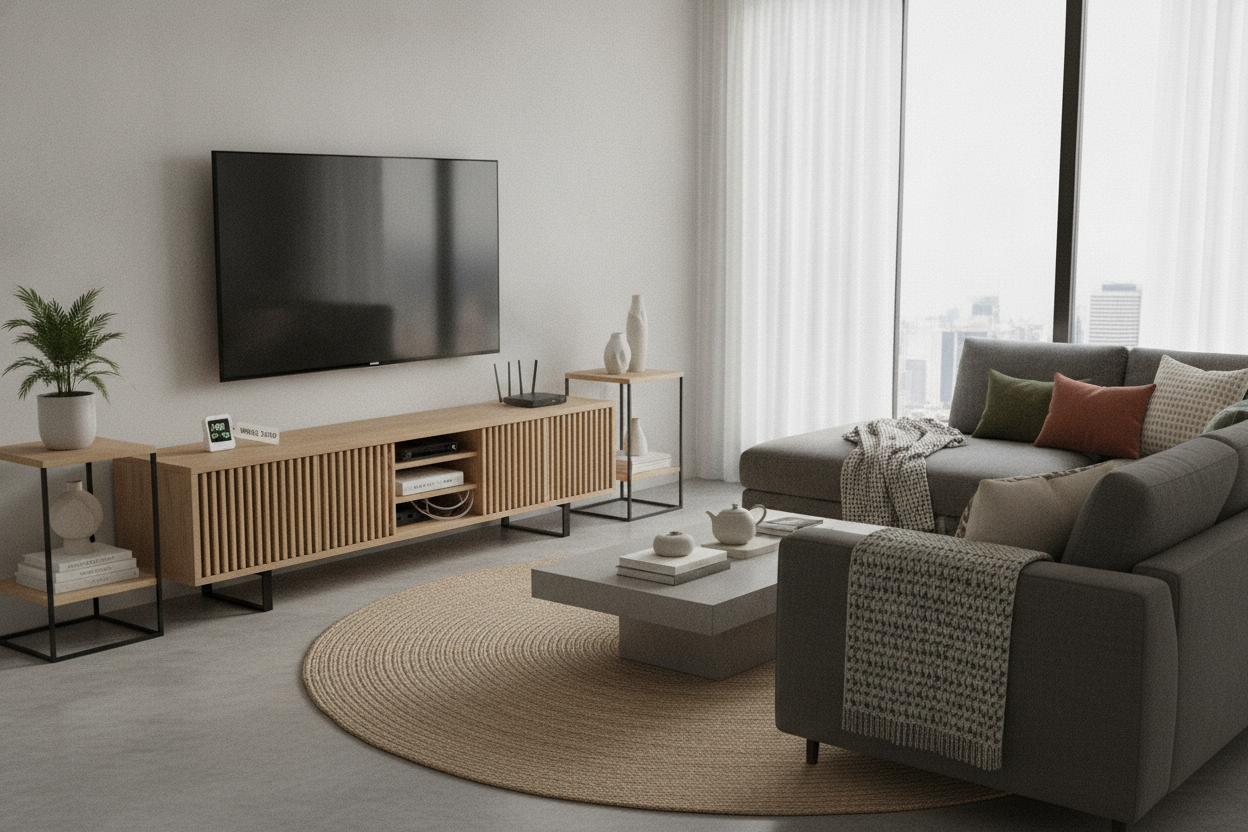
Natural wood is the ultimate peacekeeper in interior design. A mid century modern TV stand with slatted doors is my go-to recommendation for anyone afraid of the 'modern' label. The walnut or oak grain provides that organic warmth we all crave, while the slatted design and tapered legs keep it feeling light and current.
It’s a functional choice, too. Slatted doors allow your remote signals to pass through while keeping your messy pile of HDMI cables and dusty gaming consoles out of sight. It’s the perfect compromise between 'I have a life' and 'I have taste.'
Don't Be Afraid of a Little Matte Black
If wood isn't your thing, or you already have too many different wood tones in your room, look at matte finishes. A stylish black TV stand acts as a visual anchor. It’s the 'little black dress' of furniture—it works with almost everything.
The key here is the 'matte' part. You want a finish that absorbs light rather than bouncing it back at you. This gives the piece a weight and presence that feels grounded. It’s modern because of the color and the hardware, but it doesn't feel like it’s trying too hard.
Hiding the Mess (Because Tech Is Inherently Ugly)
Let’s be honest: tech is ugly. My PS5 looks like a giant popped collar, and my router has enough blinking lights to guide a small aircraft. The best part about a modern console is that it’s designed for the tech we actually own today, not the VCRs of the past.
I look for units with dedicated cable cutouts and enough depth to actually fit a modern receiver. I once bought a 'sleek' unit that was only 12 inches deep—my cables were bent at 90-degree angles just to get the door shut. It was a disaster. Go for something with at least 15-16 inches of internal depth if you have a gaming setup.
How to Style It So It Actually Belongs in Your House
Once the stand is in place, the styling is what makes it 'yours.' If the console has very sharp, masculine lines, I balance it with something soft and organic. A trailing Pothos plant or a stack of textured ceramic vases does wonders. It breaks up the geometry and makes the piece feel like part of the home.
Don't just center the TV and call it a day. Offset it with a lamp or a small stack of books on one side. When you browse our TV stands, try to visualize your actual mess—your remotes, your coasters, your favorite candle—sitting on top. If you can see it working, you've found the right one.
Personal Experience: The Glass Trap
I once owned a glass-and-chrome TV stand because I thought it made my 500-square-foot apartment look 'airy.' It was the worst furniture decision I ever made. I could see every cable behind it, every dust bunny under it, and I spent half my life with a bottle of Windex in my hand. I eventually traded it for a solid wood unit with a matte black base, and my stress levels literally dropped. Learn from my mistake: hide the wires, embrace the solid doors.
FAQ
Will a modern TV stand look dated in five years?
If you stick to clean lines and natural materials like wood or metal, no. Avoid 'trendy' features like built-in LED strips or neon acrylic panels. Those are the things that scream 2024 in a bad way.
How wide should my TV stand be?
Your stand should be at least 4-6 inches wider than your TV on both sides. A TV that overhangs the edges of a console looks top-heavy and accidental. It’s all about the proportions.
Can I mix a modern stand with a traditional sofa?
Absolutely. In fact, it usually looks better that way. It’s called 'eclectic' when you do it on purpose. Just make sure there is one common element, like a similar wood tone or metal finish, to tie them together.

Laisser un commentaire
Ce site est protégé par hCaptcha, et la Politique de confidentialité et les Conditions de service de hCaptcha s’appliquent.