


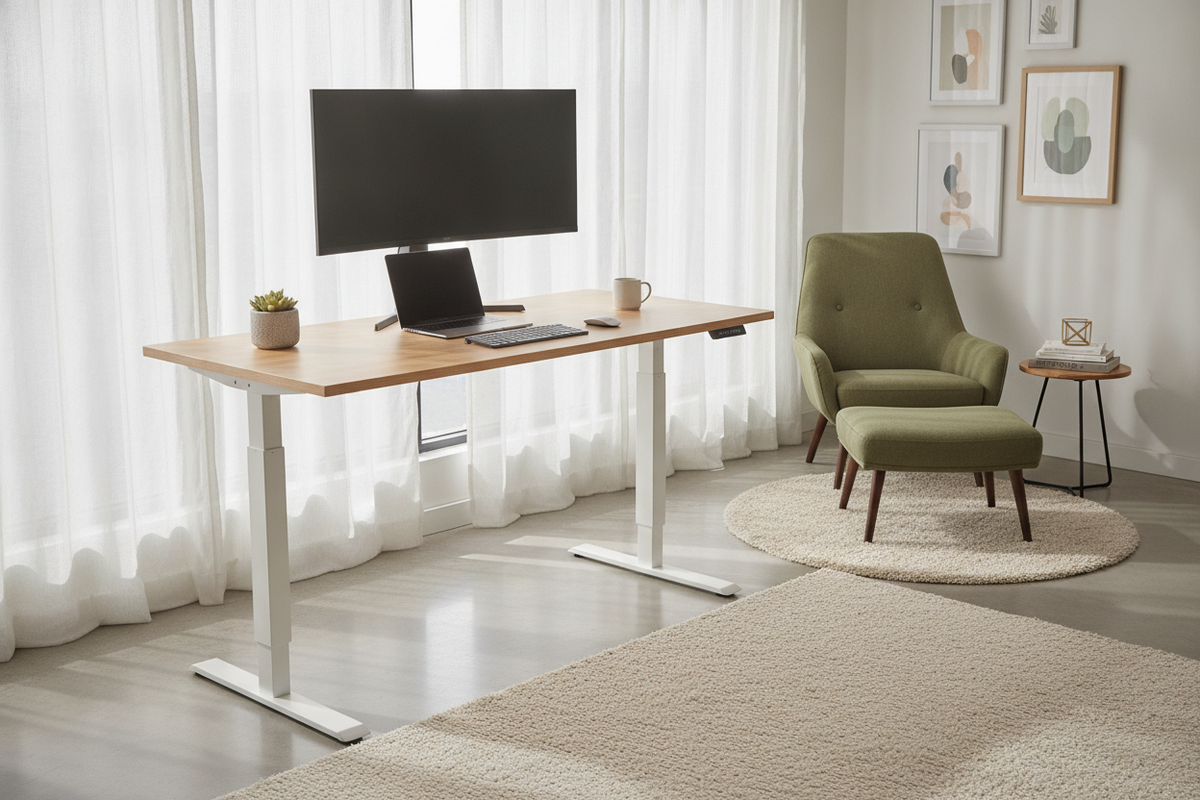
Selecting a motorized workstation involves balancing mechanical reliability, physical proportions, and room aesthetics. In this inbox zero standing desk review, we explore the essential structural elements, surface materials, and spatial planning principles that define functional height-adjustable workspaces for home offices.
Understanding the Inbox Zero Electric Standing Desk Architecture
The contemporary inbox zero height adjustable electric standing desk represents an open-architecture approach to modern office furniture. Unlike traditional solid-pedestal executive desks, motorized desks rely on an inverted or standard telescopic column design attached to reinforced steel crossbars and broad floor feet. This configuration keeps the under-desk area open, allowing smooth dynamic movement while creating space for mobile pedestals or ergonomic footrests.
When evaluating a height adjustable standing desk inbox zero model, the main goal is facilitating seamless transitions between seated and standing postures throughout the working day. Achieving this requires examining how the mechanical components, tabletop geometry, and peripheral accessories interact within your room.
Core Performance Factors in an Electric Height Adjustable Desk
Motorized desks vary in engineering quality, interface refinement, and load handling. Assessing these core performance factors helps you identify the best configuration for your daily workflow.
Lifting Mechanism and Frame Stability Across Elevation Tiers
A sit-stand desk must maintain structural balance at its highest point. Dual-stage and three-stage telescopic columns provide varying ranges of travel. At lower elevations, frame rigidity is naturally supported by low centers of gravity. As the lifting columns extend upward, stability relies heavily on the tolerance of internal glide pads, the width of the bottom footplates, and the stiffness of the under-desk frame connection.
A well-engineered motorized system provides steady, quiet travel without sudden jolts during acceleration and deceleration. This smooth motion protects fragile desk accessories, display mounts, and beverage containers from tipping during height transitions.
Desktop Top Materials, Surface Finishes, and Edge Profiles
Desktop surfaces come in several materials, including high-pressure laminates, melamine-faced engineered wood, and contoured composite boards. For deeper insights into balancing desktop styling with surrounding room decor, consult our comprehensive standing desk guide.
Beveled or rounded front edges offer better forearm comfort during long typing sessions compared to sharp, square-cut edges. In addition, matte or lightly textured finishes reduce harsh overhead glare from desk lamps and monitor backlights while resisting surface smudges.
Handset Controls, Memory Presets, and Collision Awareness
Digital controller interfaces range from basic two-button up-down switches to multi-button LED panels with programmable memory presets. Choosing an adjustable height standing product equipped with memory presets allows you to return to calibrated sitting and standing heights with a single touch.
Integrated collision-detection sensors provide an essential operational safeguard. When the desk encounters resistance from an obstructing windowsill, chair armrest, or under-desk storage unit during elevation changes, the motor stops and briefly reverses direction to prevent structural strain.
Spatial Sizing and Room Layout Integration
Choosing the correct desk dimensions depends on your available floor area, doorway pathways, and technical equipment needs.
Compact Workspaces vs. Expansive Executive Layouts
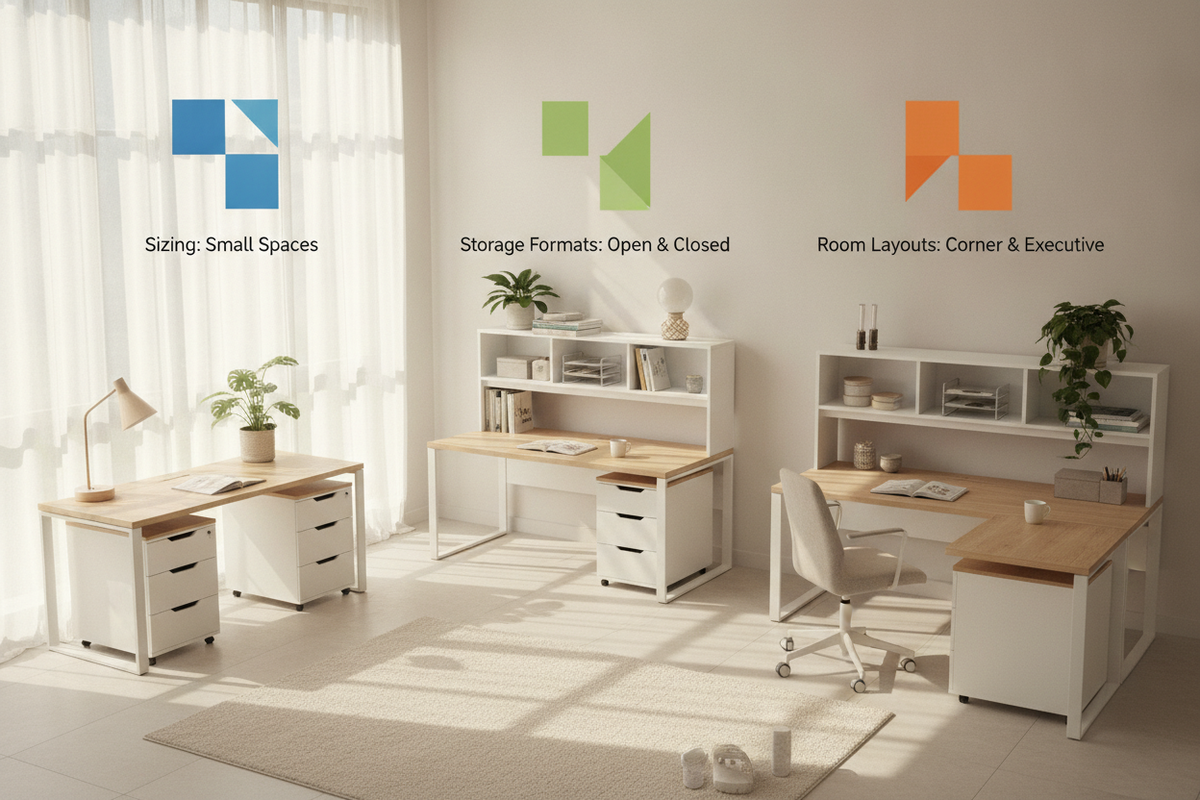
Compact workspaces benefit from narrow desktop depths that preserve walkways in dual-purpose guest rooms or living room corners. However, users managing multi-monitor arrays, audio gear, or large drafting materials require wide spans. Exploring a wide height adjustable standing product provides generous surface real estate for extensive peripheral arrangements without cluttering active writing zones.
Dynamic Wall Clearance and Vertical Travel Pathways
Planning for a height-adjustable desk requires evaluating vertical travel corridors alongside static floor footprints. For creative spatial arrangement concepts, review our additional standing desk guide on layout design.
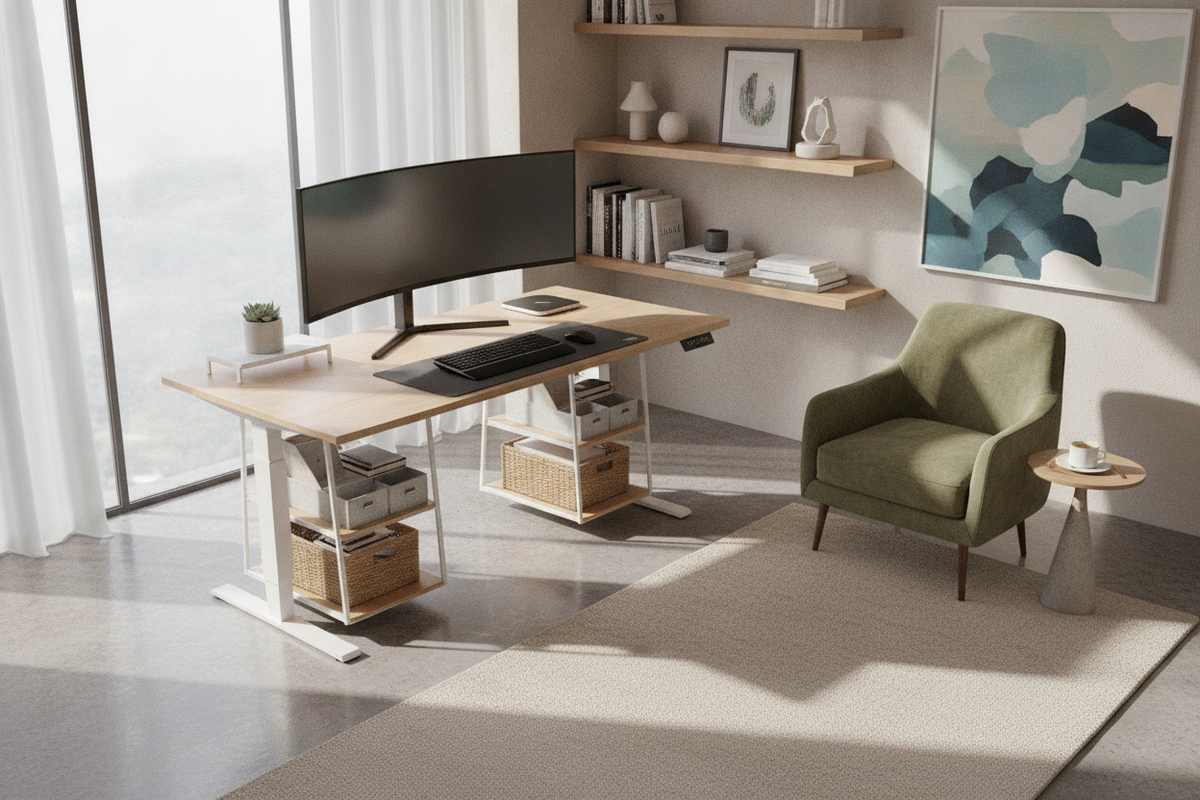
Ensure that floating wall shelves, framed artwork, and window treatments remain clear of the upward travel path. Maintain a small clearance gap between the rear edge of the desktop and the drywall to prevent rubbing, paint scuffs, or pinched monitor cables during vertical adjustments.
Cable Routing and Dynamic Management for Sit-Stand Desks
Cable management requires distinct planning on sit-stand desks because the distance between desktop electronics and stationary wall power outlets changes continuously. Key strategies include:
- Under-Desk Power Hubs: Mount surge-protected power strips directly beneath the desktop frame so peripheral cables travel with the desk surface.
- Articulated Cable Spines: Use flexible vertebrae or fabric cord sleeves to guide the primary power feed cleanly from the desktop to the floor outlet.
- Slack Calibration: Ensure the primary wall power cord has adequate slack when the desk is fully elevated to avoid pulling against wall sockets.
Complementary Storage Strategies for Floating Base Workstations
Because height-adjustable frames lack built-in storage pedestals, keeping your work surface clear depends on secondary organization. Pairing an open frame with an adjustable collection of bookcases or mobile filing carts creates a clean, adaptable layout. Rolling storage units can slide underneath the desk during seated work and wheel outward to grant full leg clearance when standing.
Buyer's Decision Checklist: Choosing Your Ideal Electric Desk
Before purchasing, review these essential criteria to ensure your chosen workstation fits your workflow and room dimensions:
- Elevation Range: Confirm that the minimum and maximum height settings accommodate both your seated elbow angle and standing posture.
- Surface Proportions: Verify that the desktop width and depth fit your room layout while accommodating all monitors and desktop accessories.
- Frame Stability: Look for heavy-gauge steel frame architecture with wide floor feet to minimize lateral sway.
- Handset Functionality: Prioritize programmable digital presets for quick, consistent height changes throughout the day.
- Storage Pairing: Plan complementary storage units, such as low credenzas or mobile pedestals, to maintain an organized work environment.

Laisser un commentaire
Ce site est protégé par hCaptcha, et la Politique de confidentialité et les Conditions de service de hCaptcha s’appliquent.