


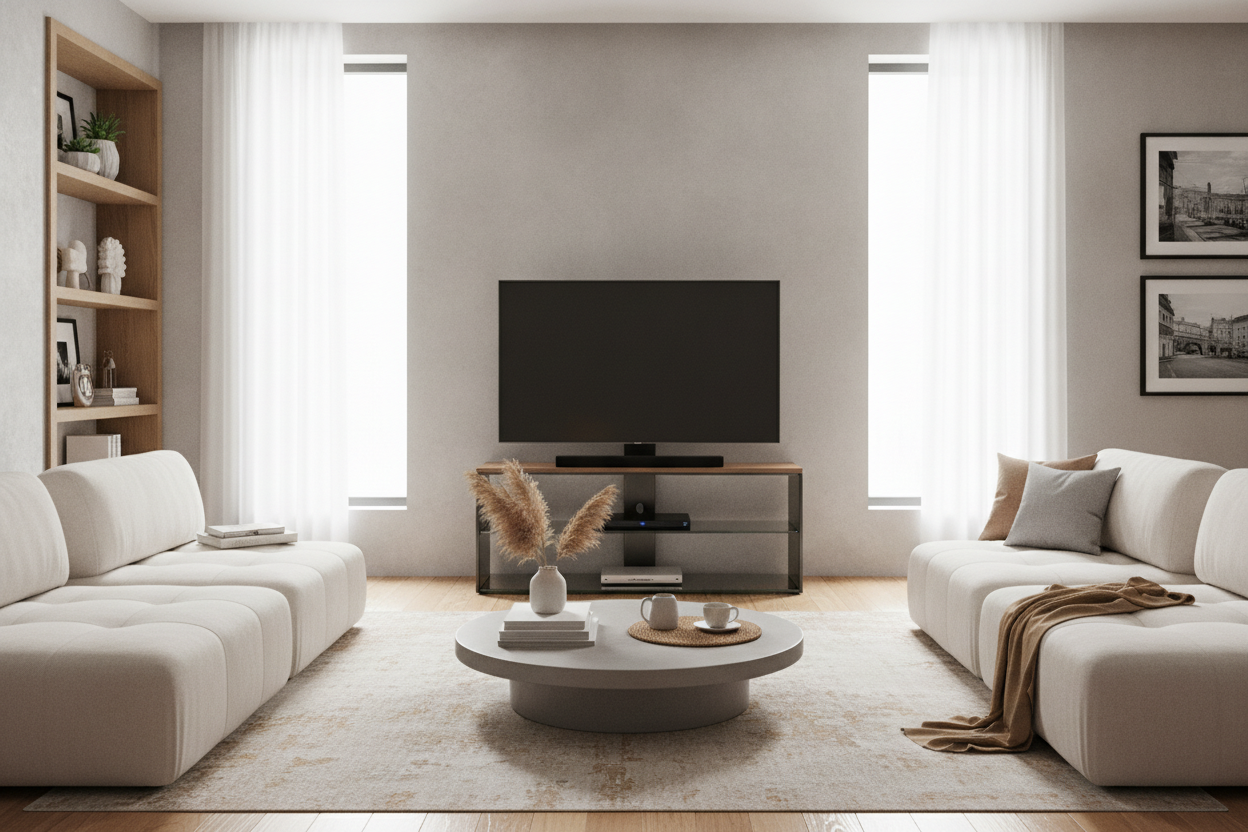
I stood there with a 65-inch screen leaning precariously against my sofa and a mounting kit that was absolutely useless. My apartment has these gorgeous, crumbling plaster walls that sound like a bag of chips when you try to drill into them. I knew if I tried to mount this beast, I’d be losing my security deposit and probably my TV in one loud, dusty crash.
That’s how I ended up wandering the aisles looking for a universal tv stand home depot sells. I needed something that didn't require a drill but wouldn't tip over the second my cat decided to use the screen as a scratching post. After testing a few flimsy options elsewhere, I went for the heavy-duty steel pedestal.
- Heavy-duty steel construction beats the flimsy plastic legs that come in the box.
- VESA compatibility is broad, but check your screw depth twice before tightening.
- Height adjustability is the hidden perk for fitting a chunky soundbar underneath.
- Stability is surprisingly solid, though slight 'neck' wobble is normal for single-pillar designs.
The 'No Drilling Allowed' Dilemma
Plaster walls are the ultimate renter's curse. They look historic and cool until you want to hang literally anything heavier than a calendar. My landlord is a stickler for 'no holes larger than a pinhead,' so a traditional wall mount was out of the question. I had two options: buy a massive new entertainment center or find a pedestal that could handle 60 pounds of glass and electronics.
I've been down the road of cheap online stands that arrive with bent metal and instructions written in riddles. This time, I needed something I could actually touch before buying. I needed a tabletop solution that acted like a wall mount but lived on top of my existing furniture without the commitment of a permanent installation.
Unboxing the Hardware Store Pedestal
When I grabbed the box, the first thing I noticed was the weight. That’s a good sign. If a TV base is light, your screen is going for a ride. This particular base para tv home depot option felt like actual cold-rolled steel, not that hollow aluminum that pings when you tap it. The base itself was tempered glass, which I usually hate, but it was thick enough to feel structural.
I’ve had mixed luck with big-box hardware store furniture before. Last year, I skipped IKEA for a Home Depot TV stand 55 inch model and was pleasantly surprised by the bolt quality. This pedestal followed suit. The finish was a matte black powder coat that didn't immediately flake off when I accidentally dropped a screwdriver on it during the frantic assembly process.
Does it Actually Fit 'Universally'? (The VESA Bracket Test)
The term 'universal' is usually a lie in the furniture world, but this one came close. It included a massive bag of hardware—M4, M6, and M8 screws in various lengths. If you’ve ever lost the original legs to your TV during a move, you know the panic of trying to find the right thread pitch at 9 PM on a Sunday. This kit covers those bases.
Assembly took about 20 minutes. The VESA brackets aligned perfectly with the 400x400 pattern on my Sony. My one tip: use the plastic spacers even if you don't think you need them. They prevent the metal brackets from scratching the back of your TV and give you just enough clearance for the power cables to breathe. I did find the instructions a bit sparse, but if you've ever built a Lego set, you'll manage.
The Wobble Test: Is My Screen Safe?
Once I hoisted the 65-inch screen onto the pillar, I held my breath. I currently have the whole setup sitting on a mid-century modern TV stand with slatted doors, and I was worried the pedestal would look bulky. It actually looks quite sleek, almost like the TV is floating above the wood surface.
I gave it the 'toddler bump' test. It swayed maybe half an inch but settled immediately. Compared to the built-in bases para tv home depot offers on some of their cheaper particle board consoles, this standalone steel unit is significantly more rigid. It doesn't have that terrifying 'forward lean' that happens when a base can't handle the center of gravity on a modern thin-bezel screen. It stayed level even when I moved the console to plug in my gaming console.
My Final Verdict on Hardware Store TV Bases
If you're a renter or someone who just hates the commitment of drilling holes, this is a no-brainer. It's a $50-ish fix that saves a $1,000 TV. It’s also a lifesaver if you bought a used TV that came without its original stand—a common Craigslist tragedy. It looks professional and keeps the screen at eye level, which your neck will thank you for.
However, if you're looking for a total living room overhaul, you might want to look at a full furniture piece. If you want something more integrated, the Fufu Gaga Home Depot collection has some solid options that include built-in mounting structures. But for a quick, sturdy tabletop fix that won't fail you? The universal pedestal is the way to go.
Can this stand hold a curved TV?
Yes, as long as it has VESA mounting holes on the back. You'll definitely want to use the included spacers to account for the curve of the chassis so the brackets sit flush and don't put pressure on the plastic casing.
Will it scratch my furniture?
Most of these units come with rubber or felt pads for the bottom of the glass or steel base. If yours doesn't, grab a pack of stick-on felt pads for two bucks—it’s worth it to protect your wood finish from the heavy weight of the base.
How high can I raise the TV?
Most universal stands give you about 5 to 10 inches of vertical play. I set mine at the highest notch so I could tuck my center-channel speaker directly under the screen without blocking the infrared sensor for the remote.

Laisser un commentaire
Ce site est protégé par hCaptcha, et la Politique de confidentialité et les Conditions de service de hCaptcha s’appliquent.