


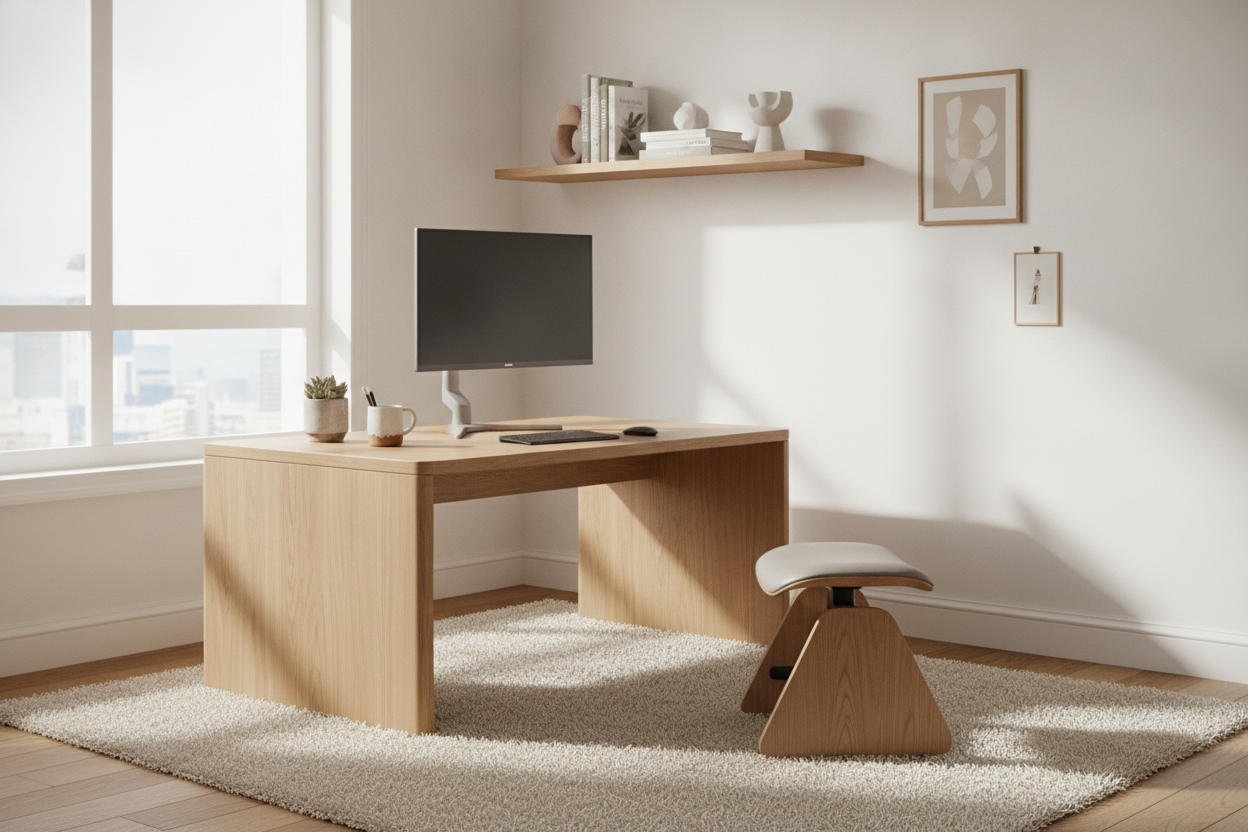
I spent three years staring at a 55-inch slab of fake wood that took up a third of my studio apartment. It was a standard-issue workstation that forced me into a high-back chair I never actually liked. My hips were perpetually tight, and my living room felt more like a cubicle than a home. I finally hit a breaking point when I realized I was spending my evenings sitting on the floor to relax, yet forcing myself onto a perch to work. That's when I ditched the traditional height and moved everything down to a low desk table.
- Floor seating encourages active movement and better hip flexibility compared to static chairs.
- A lower profile creates a visual sense of openness in small apartments.
- Standard coffee tables are too low and lack leg clearance for long-term work.
- Successful floor setups require specific ergonomic support like zafu cushions or floor chairs.
The Coffee Table Hunch Was Ruining My Spine
For a few weeks, I tried to fake it. I thought I could just use my mid-century coffee table as a workspace. Big mistake. Most coffee tables sit between 16 and 18 inches high. Unless you are a toddler, that height forces a brutal, C-shaped curve into your spine the second you reach for a keyboard. After three days of 'coffee table work,' my lower back felt like it was being squeezed in a vise.
The problem isn't just the height; it's the lack of 'apron' space. You can't get your knees under a standard coffee table without hitting the frame or a storage shelf. I found myself sitting cross-legged and leaning forward at a 45-degree angle. By 3 PM every day, I was popping ibuprofen and eyeing my bed. A real floor-level workspace needs to be high enough to clear your thighs but low enough to keep your elbows at a 90-degree angle while sitting on a cushion.
Enter the Low Desk Table: My Floor-Seating Revelation
When I finally bought a dedicated floor desk, the change was immediate. Replacing my towering, room-dominating Writing Computer Desk with a floor-level alternative instantly opened up the room's sightlines. Suddenly, I could see the baseboards. I could see the floor. The apartment felt like it grew by 50 square feet just because the vertical clutter was gone.
I opted for a minimalist wooden frame that sits about 13 inches off the ground. This is the sweet spot. It allows me to sit on a firm buckwheat cushion with my legs tucked comfortably underneath. Unlike a traditional setup, floor sitting encourages 'active sitting.' I’m constantly shifting—legs out, legs crossed, one knee up. This micro-movement kept my hip flexors from locking up, which was my biggest complaint after years of being tethered to a standard office chair.
What About Video Calls? (And Other Practical Questions)
The first question everyone asks is: 'Doesn't the camera look straight up your nose?' Yes, if you leave your laptop flat on the table, you will look like a bridge troll during your Zoom calls. The fix is a simple riser or a stack of books to get the lens at eye level. When I set up my low height computer desk, I also invested in a monitor arm that could tilt downward. This kept my dual-monitor setup functional without making the room look like a command center.
Cable management is the other hurdle. Since the desk is so low, your wires have nowhere to hide. I used a simple J-channel cable racer screwed to the back of the desk to keep the 'spaghetti' off the rug. It takes ten minutes to install, and it prevents your minimalist floor nook from looking like a tech graveyard. If you're worried about leg room, look for a desk with a width of at least 40 inches so you have space to sprawl.
When You Still Want to Stand: The Floor-to-Ceiling Hack
Sometimes you just need to stand up and stretch. The tricky part is that most motorized desks are built for people sitting in chairs, not on the floor. If you want the best of both worlds, you have to be obsessive about the minimum height specs. Most 'standard' standing desks only go down to 28 inches, which is way too high for floor sitting. You'll end up reaching upward like a kid at a candy counter.
Finding a True Low Height Adjustable Desk
To make a floor-to-standing transition work, you need a low height adjustable desk that can drop down to at least 22 inches, though 19 is better. This is rare in the budget market because the telescoping legs usually require three stages to get that low. When you find a low adjustable desk that hits those marks, it becomes a total utility player. You can spend the morning in a deep squat or cross-legged on the floor and the afternoon standing at full height.
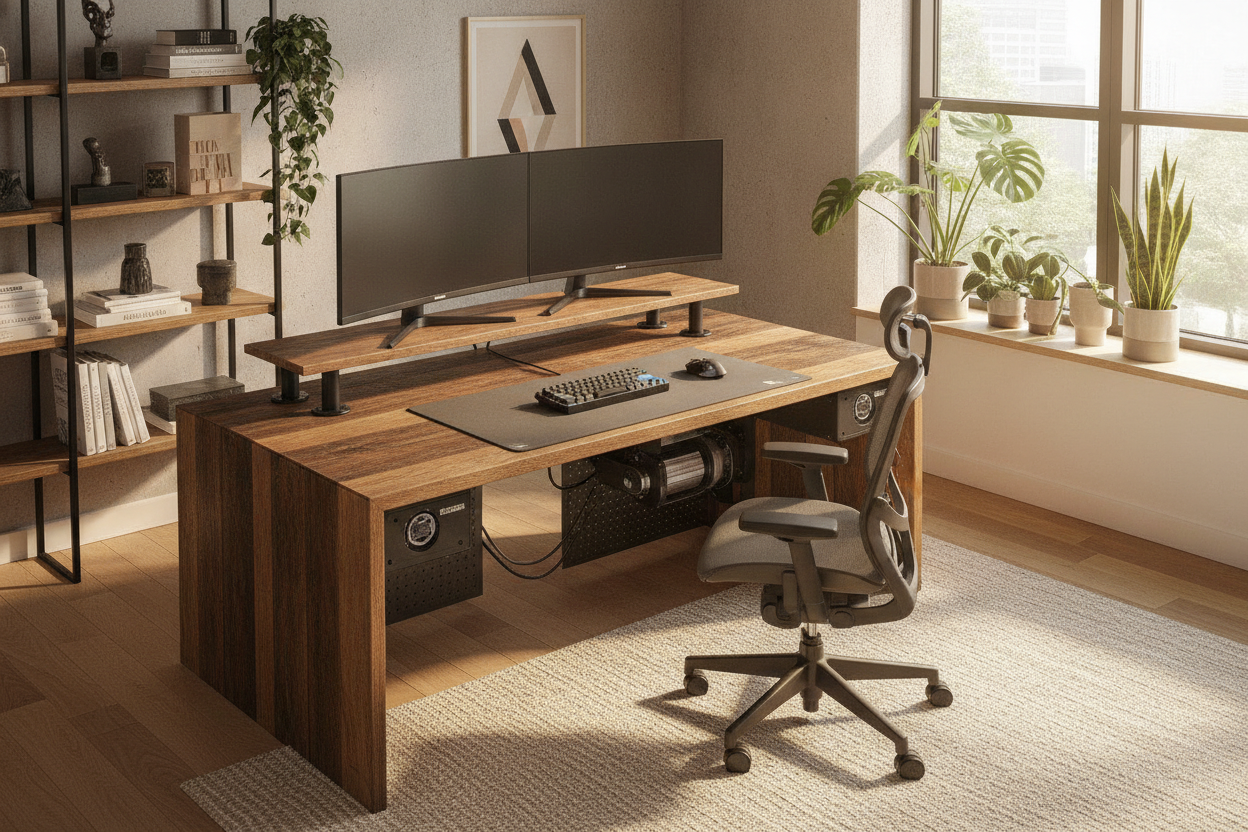
A great example of this versatility is the Modern Electric Height Adjustable Desk With Dual Storage Modules And Pegboard Organizer. While many frames struggle with the extreme range needed for floor-to-standing transitions, a robust motor system and a stable frame make it possible to swap between wildly different sitting and standing habits without the desk wobbling like a leaf in the wind.
How to Transition to a Floor Workspace Without Aching
Don't expect to sit on the floor for eight hours on day one. Your ankles and hips will protest. I started with two-hour blocks. I also realized that the floor itself is the enemy—you need a high-density foam mat or a thick rug to protect your sit-bones. I eventually added a 'zaisu' chair, which is a Japanese-style floor chair with a backrest but no legs. It provides the lumbar support of a real office chair while keeping you grounded.
Some people make even more drastic changes, like how I Traded My Gaming Table for an Office Desk Adjustable Setup to finally fix my posture. The goal is the same: stop letting the furniture dictate how your body feels. Moving to a low desk isn't about being trendy; it's about reclaiming the floor space you pay for and letting your body move the way it was designed to. I’ve been floor-working for six months now, and the 'clunky' office life is officially a thing of the past.
FAQ
Is floor sitting actually ergonomic?
It can be, but it requires more discipline. It promotes 'active sitting,' which is better for your core and hips, but you still need to ensure your screen is at eye level to avoid neck strain.
What is the ideal height for a low desk?
For most adults sitting on a standard 3-4 inch cushion, a desk height of 12 to 15 inches is the sweet spot. Anything lower and you'll be hunching; anything higher and your shoulders will shrug.
Can I use a regular monitor on a floor desk?
Absolutely. Just use a monitor arm or a sturdy riser. The key is ensuring the top third of the screen is at eye level so you aren't looking down all day.

Laisser un commentaire
Ce site est protégé par hCaptcha, et la Politique de confidentialité et les Conditions de service de hCaptcha s’appliquent.