


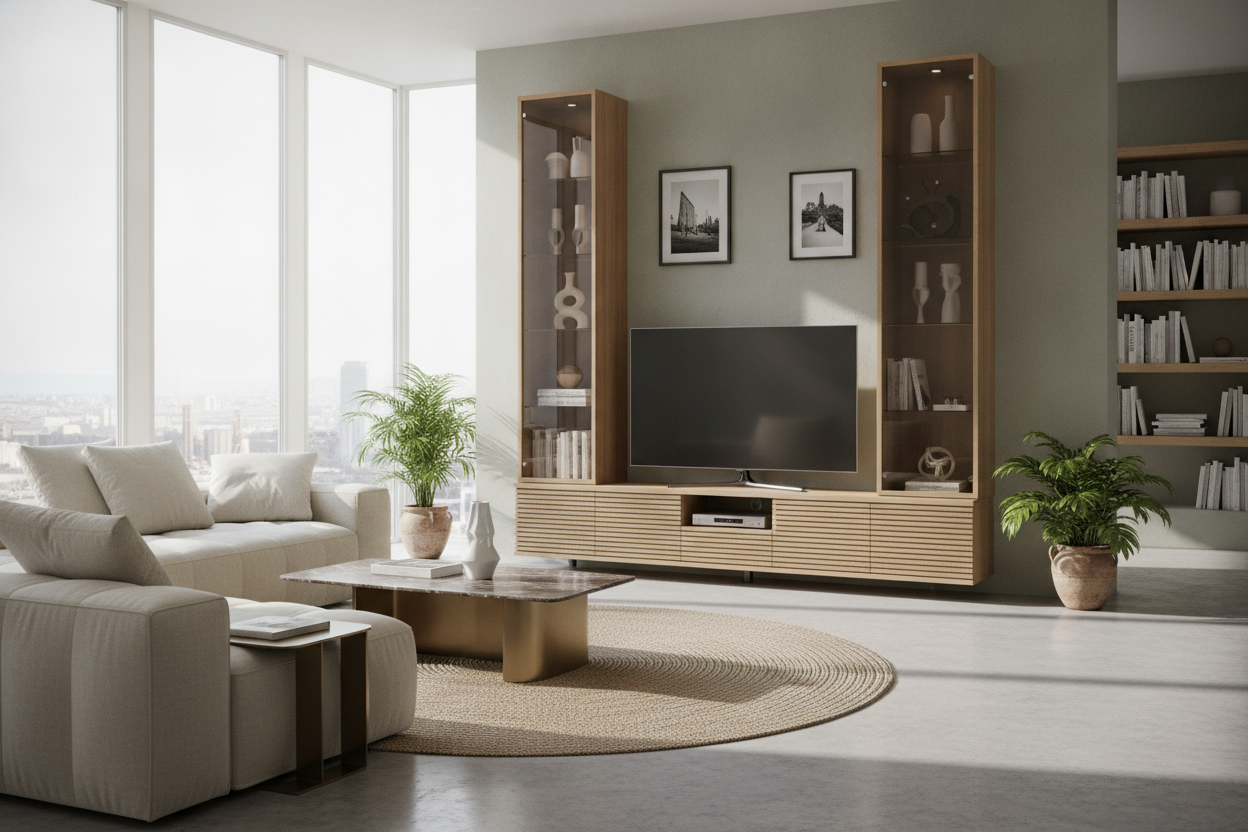
I spent three years trying to make a 48-inch floating console work in a living room with 11-foot ceilings. It was a disaster. Every time I sat on my sofa, I wasn't looking at the TV; I was looking at the vast, yawning expanse of white drywall above it. It felt like my living room was wearing a shirt three sizes too small.
Eventually, I broke my 'minimalist furniture only' rule and bought a massive entertainment center tower. I thought it would make the room feel cramped, but it did the opposite. It actually made the space feel finished. If you have been staring at a lonely TV on a giant wall, you probably do not need a bigger screen—you need more vertical structure.
- Verticality balances rooms with high ceilings or wide, empty walls.
- Modern units prioritize 'negative space' so they do not feel like heavy blocks.
- Integrated cord management hides the 'cable spaghetti' behind the frame.
- Towers offer a built-in look for a fraction of the contractor's price.
The 'Floating Console' Illusion (And Why It Failed Me)
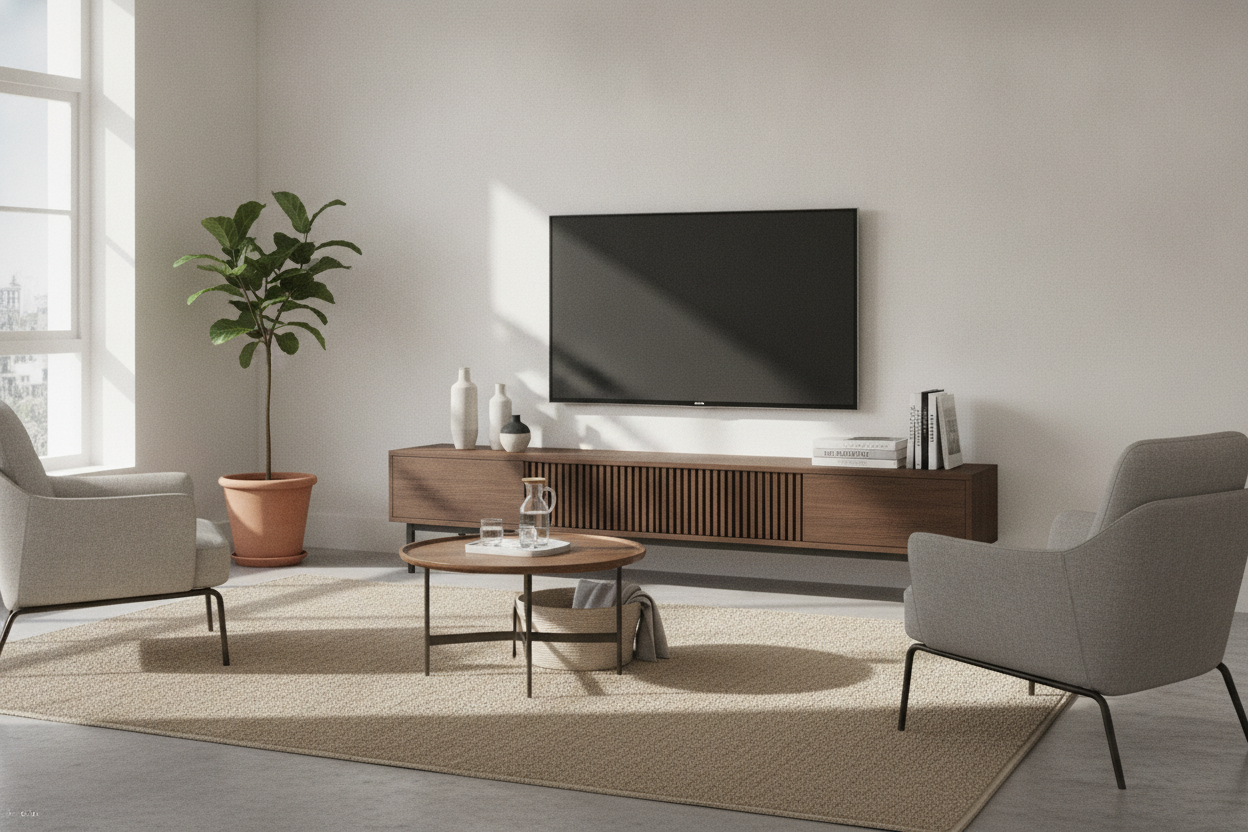
We have all been sold the dream of the ultra-low-profile TV stand. It looks great in a 600-square-foot studio, but in a real living room, it often leaves a massive gap between the top of the TV and the ceiling. My 12x16 living room felt hollow. I tried adding floor lamps and oversized art, but nothing could fix the scale issue. The room was bottom-heavy.
I realized that by trying to keep things 'airy,' I was actually making the room look unfinished. A small console makes your TV look like an afterthought. When I finally swapped it for a unit with height, the entire room clicked into place. The vertical lines drew the eye upward, making the 11-foot ceilings feel like a feature rather than an empty void.
Wait, Aren't Entertainment Towers Just '90s Oak Monstrosities?
I know what you are thinking. You are picturing that orange-tinted, chunky oak beast that lived in your parents' basement in 1996—the one with the weirdly specific VHS slots and tempered glass doors that never stayed shut. We have all been burned by those 300-pound dust magnets. But the entire modern entertainment center category has undergone a serious glow-up.
Today’s entertainment center with towers is a different animal. We are talking about slim profiles, powder-coated steel frames, and matte wood finishes that actually show a grain. They are designed for 65-inch OLEDs, not 20-inch CRT boxes. The focus has shifted from hiding a bulky TV to framing a slim one like a piece of gallery art.
The Magic of Negative Space in Modern Designs
The secret to why a modern tower tv stand works is negative space. Instead of solid wood sides, many current designs use open shelving or ladder-style frames. This allows your wall color to peek through, which prevents the unit from feeling like a giant monolith. For instance, a modern 3-piece entertainment center often uses a mix of natural wood and black metal to break up the visual weight. It provides the storage you need without suffocating the room.
3 Reasons a Full Setup Actually Makes Sense
First, it frames the TV. A standalone screen on a big wall can look like a black hole when it is turned off. Side towers act as a frame, turning the tech into a focal point. Second, you get a dedicated entertainment tower cabinet to hide the ugly stuff. I’m talking about the router, the gaming consoles, and the tangled mess of HDMI cables that usually spill out from behind a basic stand.
Third, it creates a custom look. Choosing a rustic entertainment center with shelves gives you the vibe of expensive, custom-built library shelving without the $5,000 contractor bill. You get the architectural interest of tv stands with towers and the flexibility to move them if you ever decide to rearrange your life. It is the easiest way to add 'bones' to a cookie-cutter apartment.
How to Style Side Towers So They Don't Look Cluttered
The biggest mistake people make with an entertainment tower is treating it like a junk drawer. If you fill every inch of those entertainment center side towers with random knick-knacks, the room will feel chaotic. I follow the 'Rule of Three': group items in threes of varying heights—like a tall vase, a medium book, and a small decorative bowl.
Leave at least 30% of each shelf empty. That 'breathing room' is what makes it look like a curated shelfie and not a garage sale. I also love using tv stand side towers for trailing plants like Pothos or Philodendrons. Letting the vines hang down the side of the tower softens the hard edges of the furniture and adds a bit of life to all that tech.
My Verdict: Stop Fearing Vertical Furniture
If your living room feels like it is missing 'something,' it is probably height. Stop trying to fill the void with more gallery walls or tiny floating shelves that are a pain to level. A full-scale unit provides the storage, the style, and the scale that a tiny console just cannot match. If you are still on the fence, a stylish black TV stand with modular components is a safe starting point. It offers the storage you crave while keeping the aesthetic sharp and modern. Don't be afraid to take up space—your living room will thank you.
FAQ
Will an entertainment center with towers make my room look smaller?
Actually, no. By drawing the eye upward toward the ceiling, vertical furniture can make a room feel taller and more expansive. Just stick to open-back designs if you are worried about visual weight.
Are these difficult to assemble?
I won't lie: they take longer than a coffee table. Expect a 2-hour project and definitely recruit a friend. Aligning the towers to the center console is much easier with two sets of hands.
Can I put a TV larger than the center opening?
Avoid this. If the TV overhangs the center stand or crowds the towers, it looks cramped. Always measure your TV's actual width (not the diagonal screen size) and ensure you have at least 2-3 inches of clearance on each side.

Laisser un commentaire
Ce site est protégé par hCaptcha, et la Politique de confidentialité et les Conditions de service de hCaptcha s’appliquent.