


I have moved five times in the last six years. Each time I stand in a new living room with a tape measure, I feel a familiar sense of dread. That 72-inch sideboard that looked 'stately' in my old loft now makes my current ten-foot-wide living room feel like a crowded elevator. Finding the right media console for tv usually feels like a math problem where the variables change every twelve months.
We have all been there: staring at a wall and realizing your furniture is either three inches too long to clear the door frame or so small it looks like dollhouse decor. After years of selling 'perfect' pieces on Craigslist for half what I paid, I finally stopped buying for the room I have and started buying for the moves I know are coming.
- Fixed-width units are a gamble for anyone who doesn't own their home.
- Adjustable consoles slide to fit narrow corners or massive accent walls.
- Asymmetric heights create better visual interest than a flat, boring slab.
- Sliding sections are the ultimate hack for hiding off-center wall outlets.
The Renter's Trap: Buying Furniture for Just One Room
Most people buy a tv and media console for the specific floor plan they are currently standing in. It is a classic mistake. You find a piece that fits perfectly between the window and the radiator, only to move a year later and realize that same piece blocks the only walkway to the kitchen. I once spent $800 on a heavy oak stand that ended up in a storage unit because it was two inches too wide for my next apartment's only usable wall.
It is not just about the width, either. It is about the scale. A bulky, heavy-set console might look great under high ceilings, but it will absolutely swallow a basement apartment whole. When you are moving constantly, you need furniture that can shrink or grow without requiring a saw or a prayer.
Enter the Expandable Console (My Layout Savior)
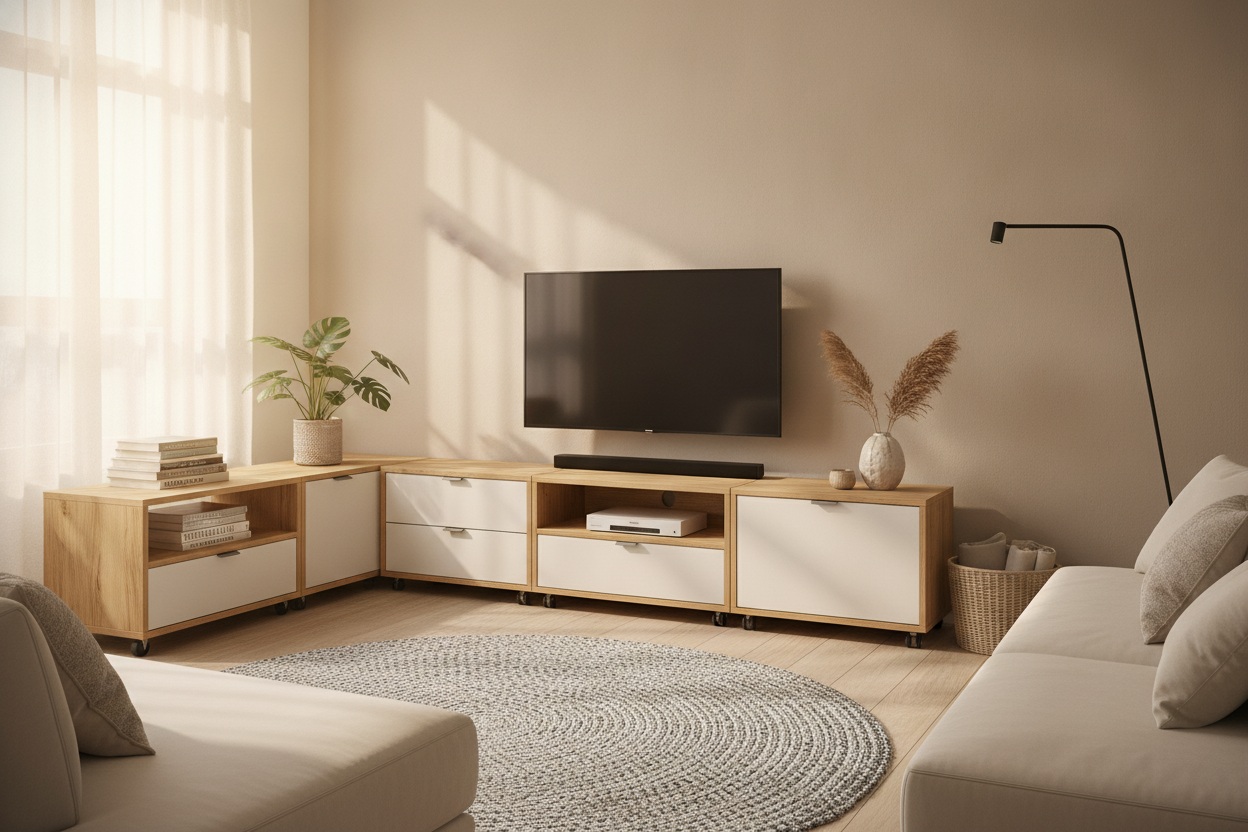
The solution I finally landed on is the telescoping or sliding media unit. These designs usually consist of two or three interlocking sections that slide over one another. If you are in a cramped studio, you push them together into a compact block. If you move into a place with a massive blank wall, you stretch it out to fill the space and provide extra surface area.
I am a huge fan of the modern adjustable length TV console because it does not look like 'temporary' furniture. It uses heavy-duty sliding hardware that stays stable even when fully extended. Unlike the cheap plywood stuff that bows the second you put a TV on it, these units use high-density materials that can actually handle the weight of a 65-inch screen and a soundbar without complaining. The flexibility means you aren't stuck with a 'good enough' fit; you get a custom fit every single time.
How to Style the 'Overlap' Without It Looking Clunky
The best part of these tv stands media consoles is the 'stair-step' effect. Since one section usually sits slightly higher than the other, you avoid that boring, flat horizon line that makes most living rooms look like a showroom floor. I use the lower section for my record player and the higher section for a few oversized coffee table books.
It is also the perfect spot for a trailing Pothos or Philodendron. The leaves can drape over the seam where the two pieces meet, making the transition look intentional rather than mechanical. If you have a soundbar, you can tuck it right into the 'nook' created by the overlap to keep your sightlines clean.
Saying Goodbye to Offset Wall Plugs and Cable Chaos
Let’s talk about outlets. In older buildings, the electrician seemingly threw darts at the wall to decide where the plugs go. They are never centered where you actually want your television. With traditional stands, you are stuck either centering the furniture on the outlet or centering it on the wall and seeing a mess of tangled black wires stretching across your baseboards.
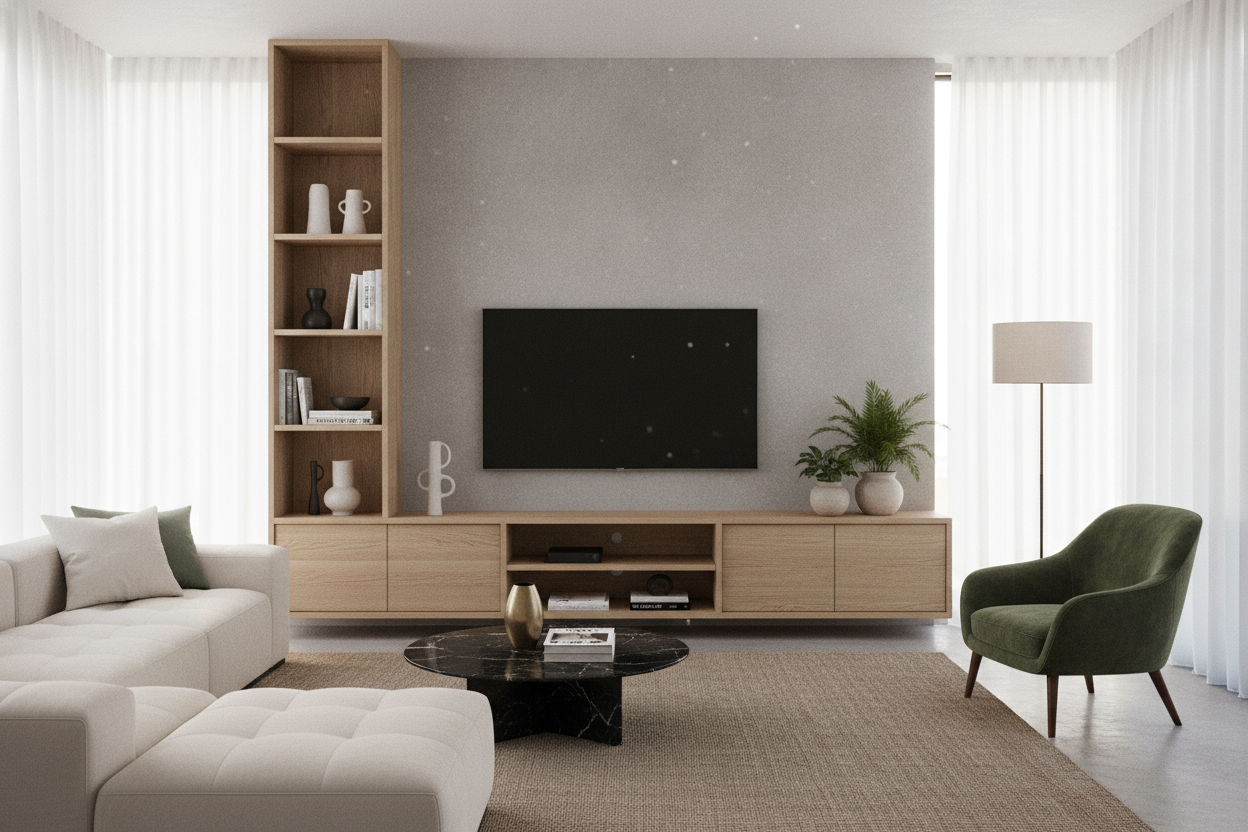
An adjustable unit lets you slide the main body over the outlet while keeping the overall footprint centered under your TV. You can hide the surge protector and all those messy HDMI cables behind the solid section of the console, while the extended 'wing' fills out the rest of the wall. It turns a cable management nightmare into a clean, professional-looking setup.
Stop Buying Disposable Furniture
We need to stop treating our living rooms like a rotating gallery of cheap particle board that ends up on the curb every July. Investing in an adaptable piece means you aren't shopping again in two years. You can browse adaptable TV stands that use real wood veneers and solid legs instead of the flimsy stuff that sags after six months.
Functional furniture does not have to be ugly or purely utilitarian. You can find actually cool TV stands that have real personality—think fluted wood details, mid-century silhouettes, or matte finishes—that still offer that sliding flexibility. Stop buying for your current zip code and start buying for your future self.
Frequently Asked Questions
Are adjustable consoles sturdy enough for heavy TVs?
Yes, provided you don't exceed the manufacturer's weight limit. Look for units with at least 12 inches of overlap between sections to ensure maximum stability. If the top section starts to tilt, you've stretched it too far.
How do I prevent scratches when sliding the pieces?
Most high-quality adjustable units come with felt pads or smooth glides. If yours didn't, buy a pack of heavy-duty felt strips and apply them to the underside of the top section. It makes adjusting the length a five-second job instead of a two-person lift.
Can I use these in a corner?
Absolutely. One of the best ways to use a sliding console is to 'L-shape' it into a corner. It creates a wrap-around look that provides way more storage and surface area than a standard corner wedge unit ever could.

Laisser un commentaire
Ce site est protégé par hCaptcha, et la Politique de confidentialité et les Conditions de service de hCaptcha s’appliquent.