


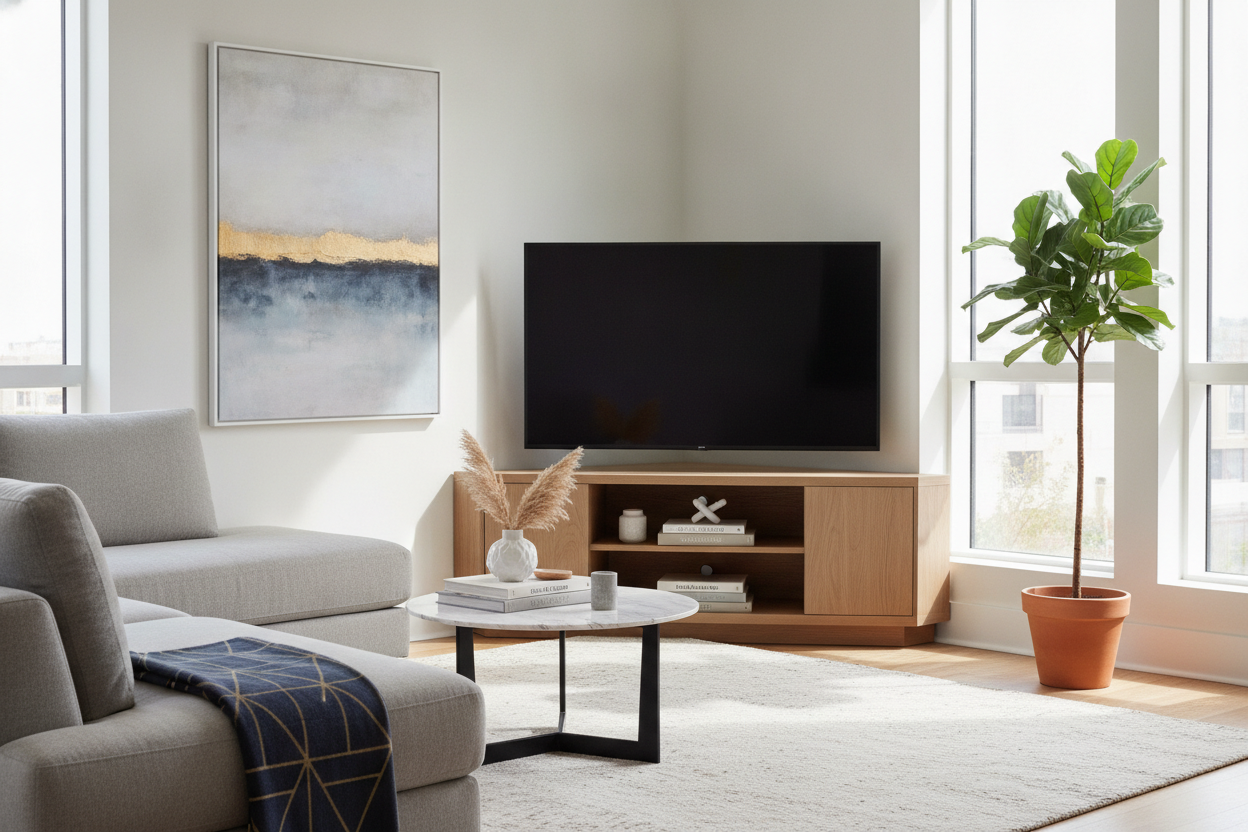
I spent three weeks staring at a blank 90-degree angle in my bedroom, convinced that every piece of furniture designed for a corner was cursed. I had 47 browser tabs open, most of them showing the same honey-oak monstrosities that looked like they were salvaged from a 1994 Sears catalog. I just wanted a corner tv unit contemporary enough to not ruin the vibe of my mid-century modern-ish apartment.
Quick Takeaways
- Stop buying honey-oak triangles; they kill the visual flow of a modern room.
- Legs are your best friend—elevating the unit makes the floor space feel larger.
- Measure the depth of the corner, not just the width of the TV.
- Cable management is harder in corners; choose a unit with built-in ports or a hollow back.
The 1990s Called, They Want Their Oak Triangle Back
Let’s be honest: for the last thirty years, small corner entertainment centers have been the absolute bottom of the design barrel. They were usually these chunky, heavy-handed wooden triangles designed to hold 80-pound CRT televisions. Because they had to support so much weight, they were built like tanks—and they looked like them too. Even as TVs got thinner, corner unit design stayed stuck in the past, offering us clunky veneer and dated hardware that makes a room feel like a basement guest suite.
The problem is the 'triangle' shape itself. When a piece of furniture is just a solid block of wood shoved into a corner, it creates a dead zone. It eats up the floor but provides very little actual storage. I’ve seen so many people try to 'modernize' these by painting them gray, but you can’t paint away a bad silhouette. A truly contemporary piece needs to break that heavy geometry.
I realized that if I wanted my bedroom to look like it belonged in this decade, I had to stop looking for 'corner furniture' and start looking for 'sculptural furniture' that happened to fit a corner. I was tired of the visual clutter. I wanted something that felt intentional, not like a compromise I made because my room was too small to handle a real console.
Why My Awkward Bedroom Actually Begged for a Corner Setup
My current bedroom is a floor plan nightmare. Between the radiator, the closet door that swings outward, and a window that takes up the only long wall, there was literally nowhere to put a standard media console. I tried the 'TV on the dresser' move for a month, but my neck was constantly strained, and it made my dresser feel cluttered and messy. I needed a dedicated spot, but I couldn't block the path to the bathroom.
This is the reality for most of us living in modern apartments. Wall space is a luxury. We have floor-to-ceiling windows or HVAC units that dictate exactly where every piece of furniture goes. I finally admitted that a small TV stand in the corner was the only geometric solution that didn't turn my bedroom into an obstacle course. By tucking the screen into that 45-degree angle, I opened up the center of the room and finally stopped stubbing my toe on the edge of the bed frame.
A small corner tv stand for bedroom use doesn't have to be a 'sacrifice.' When you find the right one, it actually anchors the room. It turns an unused, awkward pocket of space into a functional zone. The key was finding something with a small enough footprint that it didn't encroach on the walking path but had enough presence to hold its own against my 43-inch screen.
What Makes a Minimal Corner TV Stand Actually Work?
So, what should you actually look for? If you want a minimal corner tv stand, you have to prioritize 'visual lightness.' This usually means furniture with legs. When you can see the floor underneath the unit, the room feels significantly larger. Look for tapered dowel legs or thin matte metal frames. These styles mimic the look of high-end minimalist entertainment centers that usually sit flush against a wall, but they’re adapted for that tricky corner angle.
Materials matter more than you think. Skip the cheap, shiny laminate. Go for a matte finish—think charcoal black, soft walnut, or even a fluted wood texture. Fluted details are having a huge moment right now because they add vertical lines that draw the eye upward, making the unit feel taller and more expensive. A contemporary unit usually ditches the 'triangle' top for a more hex-like or clipped-corner shape, which looks much more architectural.
I personally look for units that use a mix of materials. A wood body with metal legs or glass doors can break up the monotony. The goal is to make the piece feel like a choice, not a necessity. When the lines are clean and the hardware is hidden (think push-to-open doors instead of clunky brass knobs), the unit blends into the architecture of the room rather than shouting 'I am a TV stand' from the corner.
The Storage Trap: Hiding the Mess in a Tiny Footprint
The biggest downside of a corner media cabinet small enough for a bedroom is the lack of depth for tech. Your router, your Apple TV, and that tangled mess of power strips still need a home. Most modern corner units are shallower than their 90s ancestors, which is great for space but bad for cable management. I once bought a sleek unit only to realize my cable box stuck out the back by two inches.
Look for units with 'cable management ports'—basically pre-drilled holes with plastic grommets. Better yet, find a unit with a recessed back panel. This gives you a few extra inches to hide a power strip and all those excess coils of HDMI cable. If the unit is open-shelved, you’re going to need decorative baskets. There is nothing that ruins a contemporary look faster than a 'spaghetti' of black wires hanging against a white wall.
I also recommend choosing a unit with at least one closed drawer or a flip-down door. You need a place for remotes, spare batteries, and the inevitable collection of manuals you’ll never read. A 'minimal' look only works if you have a place to hide the non-minimal items of daily life.
Still Hate Corners? Here is My Backup Plan
I get it. Some people just can't get past the 'corner TV' aesthetic, no matter how modern the stand is. If you’ve tried every corner configuration and it still feels like a dorm room, it might be time to ditch the corner stand entirely. There are high-tech ways to save space that don't involve a 45-degree angle.
My favorite alternative is the 'hidden' approach. You can get an electric vertical lift TV cabinet that sits at the foot of your bed. During the day, it looks like a high-end end-of-bed bench or a slim sideboard. When you’re ready for a movie, the TV rises up via remote. It’s the ultimate space-saver because it uses the 'dead space' at the end of the bed rather than a corner. It’s a bit more of an investment, but if you’re a design purist, it’s the cleanest way to keep your bedroom looking like a sanctuary instead of a media room.
Personal Experience: My $200 Mistake
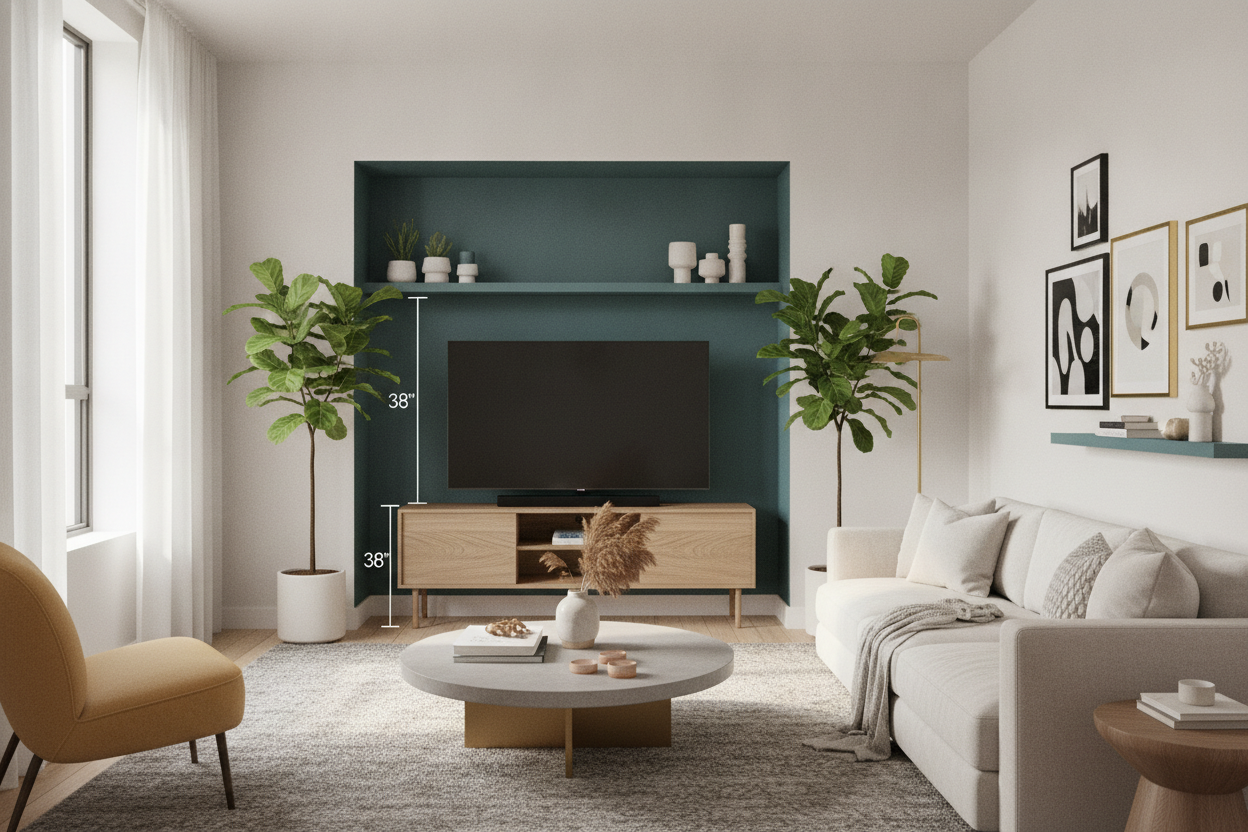
I’ll admit, I once bought a corner unit that looked amazing in photos but was only 14 inches tall. When I put it in my room, it looked like a coffee table for a toddler. I had to stack three coffee table books under the TV just to see it from my bed. Lesson learned: always check the 'seated eye level.' If you’re watching from a bed, you need a unit that’s at least 24-30 inches tall. If you’re on a low sofa, 18-22 inches is the sweet spot. Don't just trust the 'contemporary' tag; check the dimensions twice.
FAQ
Can a corner TV unit fit a 65-inch TV?
Technically yes, but it’s risky. Most corner units are designed for 32 to 55-inch screens. A 65-inch TV will likely overhang the sides, which looks top-heavy and unstable. If you have a massive TV, you’re better off wall-mounting it on an articulating arm above a small console.
How do I hide cables if the unit has no back?
Use adhesive cable clips to run the wires down the back of the unit's legs. If the legs are metal and thin, you can even find magnetic cable channels that snap right on. It’s all about keeping the lines clean.
Are floating corner shelves a good idea for TVs?
Only if you are a pro at finding studs and managing heavy-duty drywall anchors. Most TVs, even light ones, put a lot of leverage on a floating shelf. I usually suggest a floor-standing unit for peace of mind, especially in a rental where you can't tear up the walls.

Laisser un commentaire
Ce site est protégé par hCaptcha, et la Politique de confidentialité et les Conditions de service de hCaptcha s’appliquent.