


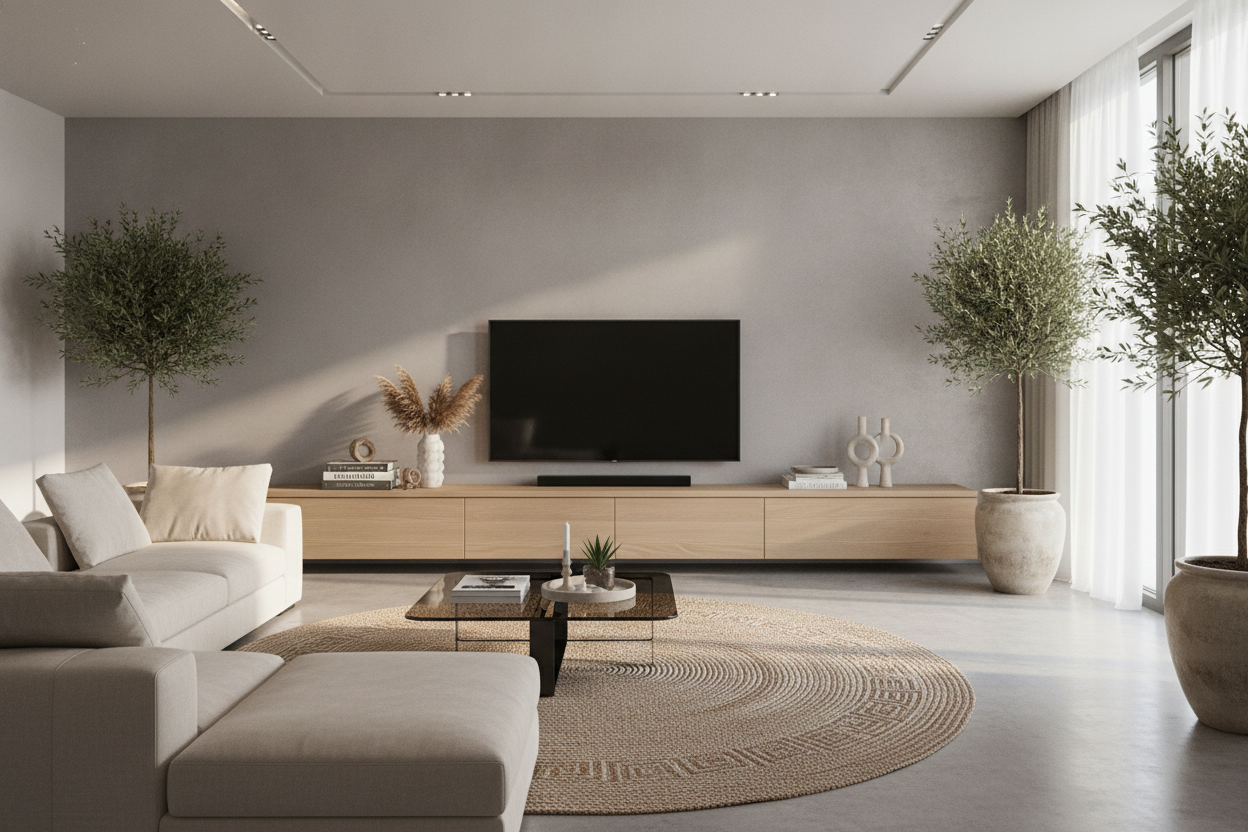
I spent three years staring at my 55-inch TV sitting on a 58-inch stand. Every time I walked into the room, something felt off. It wasn't the TV, and it wasn't the wall color. It was the fact that my setup looked like a temporary holding cell for electronics. I had fallen into the trap of buying furniture that was 'just enough' instead of what the room actually needed.
Most of us buy furniture based on the bare minimum requirements. We measure the TV, add two inches for safety, and call it a day. But if you want a space that feels like a home instead of a showroom, wide tv consoles are the hill I am willing to die on. Going big isn't just about storage; it's about fixing the broken geometry of the modern living room.
- The 2/3 Rule: Your TV should ideally occupy about 60-70% of the console's width to avoid looking top-heavy.
- Visual Weight: A longer piece of furniture anchors a large wall, preventing the 'floating screen' effect.
- Functional Decor: Extra width provides space for secondary lighting and organic textures like plants.
- Cable Management: Wider units usually offer more internal volume to hide the inevitable nest of HDMI cords.
The 'Tech Altar' Problem (And Why Standard Stands Fail)
When your media stand is the same width as your TV, you've built a tech altar. It screams that your life revolves around the screen. It’s a vertical stack of black glass and plastic that draws the eye to the hardware, not the room. I’ve seen this mistake in a hundred apartments. A 65-inch screen perched on a 60-inch stand with the edges hanging over by a hair looks precarious and, frankly, cheap.
The problem is that a TV is a giant, unappealing black rectangle when it's off. If the furniture underneath it is the same size, you're just highlighting that void. You want your furniture to frame the technology, not just hold it up. By choosing a stand that is significantly wider, you soften the impact of the screen and make it feel like a deliberate part of the architecture.
How a Wide Media Cabinet Fixes Your Wall Proportions
Think about the visual weight of your room. A massive TV is a heavy element. To balance that out, you need a base that feels substantial. A wide media cabinet provides a horizontal anchor that stretches the eye across the room. This makes the wall feel intentional. If you have a 12-foot wall and a 4-foot TV stand, that stand looks like a postage stamp in the middle of a desert.
The designer rule of thirds is your best friend here. If you have an 80-inch wide media console, a 55-inch or 65-inch TV looks balanced. You have roughly 12 inches of breathing room on either side. This creates a sense of stability. It’s the difference between a house that feels decorated and one that feels assembled. I always tell people to measure their wall first, then their TV. The furniture should fit the wall, not just the screen.
You Finally Have Room for Stuff That Isn't a Screen
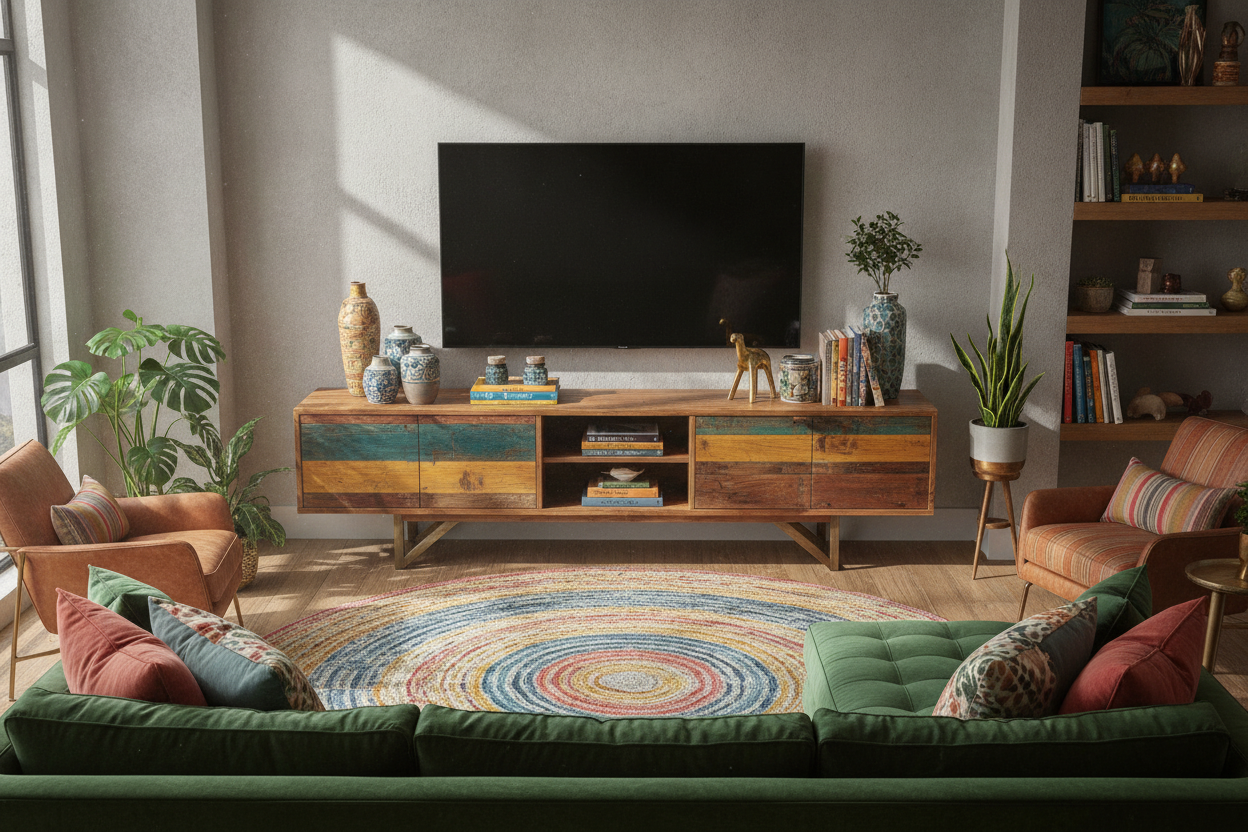
The best part about a massive console? You get your surfaces back. In my old setup, there was zero room for anything but the TV feet. It was a utilitarian wasteland. Now, I have a ceramic lamp on one end and a stack of oversized art books on the other. This matters because it introduces different heights and textures into the space.
I always suggest adding a trailing plant like a Pothos on one side. The organic lines of the leaves break up the harsh, sharp corners of the screen. Without that extra width, you’re stuck trying to squeeze a tiny succulent onto a corner where it just looks sad. With a wider unit, you can actually layer items—a small tray for remotes, a candle, maybe a vintage bowl. It turns the TV area into a styled zone.
Wait, Will a Massive Unit Swallow My Room?
I get the hesitation. You think a 90-inch piece of furniture will turn your living room into a narrow hallway. But the opposite is often true. One long, continuous piece of furniture actually makes a room look larger than three small, choppy pieces scattered around. It creates a long, unbroken line that the eye follows, which expands the perceived width of the room.
If you are worried about the bulk, look for height. A TV cabinet on legs is the secret weapon here. When you can see the floor underneath the unit, it maintains the visual airflow. It doesn't feel like a heavy block of wood sitting on your carpet; it feels like it's floating. Plus, it makes cleaning much easier—no more dust bunnies living in the three-inch gap behind a heavy plinth base.
When to Go Wide, and When to Actually Downsize
Look, I love a massive console for a primary living space. It’s the centerpiece. But don't try to force an 84-inch unit into a 10x10 guest bedroom. You’ll be bumping your shins every time you try to make the bed. Proportions work both ways. If the furniture is so long that it touches both side walls, it can start to look like a built-in gone wrong.
For those tight corners or secondary rooms where you just need a spot for a small screen or some extra linens, stop trying to find a mini TV stand. Instead, consider a 22 inch wide accent cabinet. It has a smaller footprint but offers better vertical storage. It's about being smart with the square footage you have, rather than trying to scale down a living room look into a bedroom corner.
My Own Console Catastrophe
I once bought a beautiful mid-century modern stand that was exactly 50 inches wide for my 50-inch TV. On paper, it fit. In reality, it was a nightmare. The TV feet were less than an inch from the edge. Every time my dog ran past, I held my breath. Beyond the safety hazard, it looked like I was living in a dorm room. I eventually swapped it for an 80-inch sideboard, and the entire room suddenly felt finished. The extra cost was annoying at the time, but the lack of daily visual stress was worth every penny.
How much wider should my console be than my TV?
Aim for at least 10-12 inches of total extra width. If you have a 55-inch TV, which is actually about 48 inches wide, a 60-inch console is the absolute bare minimum. A 72-inch or 80-inch console is where you really start to see the professional, styled look.
Can a TV stand be too wide?
Only if it physically blocks the flow of the room. As long as you have at least 24 inches of clearance from other furniture or doorways, you can go as wide as the wall allows. A wall-to-wall console can actually look very high-end and custom.
Should I wall-mount the TV if I have a wide console?
If you can, do it. Mounting the TV about 6 to 8 inches above the console looks much cleaner. It separates the tech from the decor and gives you the entire surface of the wide media cabinet to play with for styling books, lamps, and objects.

Laisser un commentaire
Ce site est protégé par hCaptcha, et la Politique de confidentialité et les Conditions de service de hCaptcha s’appliquent.