


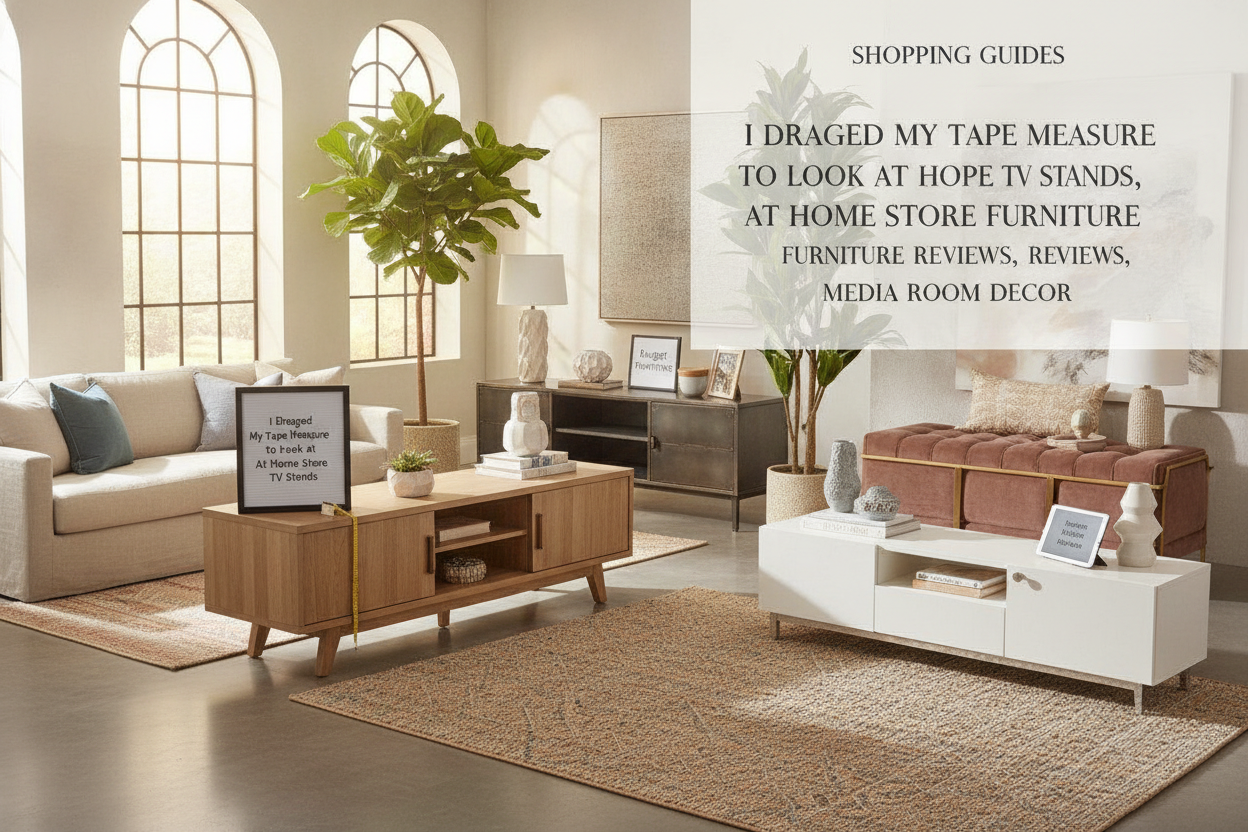
I have spent way too many Saturdays staring at 47 different browser tabs, trying to guess if a 70-inch console will actually hold my TV or just buckle under the pressure. I have been hurt before by furniture that looked like solid oak in a thumbnail but felt like balsa wood in person. Last week, I finally hit my limit. I grabbed my trusty Stanley tape measure and drove to the nearest warehouse to see if at home store tv stands are actually worth the gas money.
Quick Takeaways
- Style over Substance: Most pieces look incredible from six feet away, but the hardware often feels light.
- Assembly Required: Almost everything comes flat-packed; prepare for a two-hour project.
- Value Prop: These are 'right now' pieces, not 'forever' heirlooms.
- Size Matters: They carry larger 70+ inch consoles that are hard to find at other budget retailers.
Navigating the Warehouse: My First Impressions
Walking into an At Home store is like entering a labyrinth of seasonal decor. You have to dodge three aisles of pumpkin-scented candles and a literal wall of throw pillows just to find the furniture section. It is a lot to take in, but once you find the at home tv stand aisle, the variety is undeniable. Unlike some boutique shops that only carry one aesthetic, this place feels like a buffet of mid-century modern, farmhouse, and industrial styles.
I noticed right away that the floor models are pushed to their limits. Hundreds of people touch these things every week, which is actually a great stress test. I saw a few tv stand home furniture pieces that already had chipped corners or loose handles. It is a reminder that what you see is exactly what you get. If the display model is already struggling, you know you will need to be gentle with it during your own assembly.
My tape measure came out within five minutes. I found that their 'large' consoles are often a bit shallower than high-end brands. This is fine for a slim OLED, but if you are still rocking an older, heavier screen or a massive soundbar, those extra two inches of depth you lose might matter more than you think.
The Wiggle Test: Are These Things Actually Sturdy?
I did the wiggle test on at least six different models. You know the move: you grab the corner of a display unit and give it a firm shake. Some of the at home tv stand models felt surprisingly rigid, while others swayed like a reed in the wind. I wanted to see if what designers actually think about these pieces holds up—many pros suggest they are great for staging, but maybe not for a house with a rambunctious Labrador or a toddler who thinks the TV console is a jungle gym.
The sturdiness usually comes down to the base. The models with solid, continuous metal frames felt significantly better than the ones with four individual screw-in wooden legs. I found a sleek black at home tv console that looked great, but when I leaned on it, the center support beam didn't even touch the floor. That is a recipe for a sagging middle within six months. If you buy one, check that center support before you leave the store.
It is easy to get distracted by the trendy fluted glass doors or the brass hardware. But under those fluorescent warehouse lights, you have to look at the joints. Most of these use cam-lock fasteners. They are fine, but they aren't the same as dowels or screws driven into solid wood. If you move houses frequently, these pieces might not survive the third or fourth truck ride.
Particle Board vs. Real Wood (A Drawer-Pulling Investigation)
Let's talk materials. Most of what you will find is engineered wood—think MDF or particle board—wrapped in a paper or plastic veneer. Up close, some of the wood grain looks a little pixelated, like a low-res JPEG. If you are looking for something that won't bow under a heavy 75-inch screen, you might want to compare these to a heavy-duty 4-drawer tv stand media console that uses thicker bracing and more robust drawer glides.
I pulled every drawer in the aisle. Some felt like sandpaper on sandpaper. The at home tv console options at the lower price points often skip the ball-bearing glides entirely. That might not seem like a big deal until you are trying to grab a controller in the dark and the drawer gets stuck halfway. I also noticed that the 'back' of these units is almost always that thin, floppy cardboard you nail on at the end. It does the job for cable management, but it provides zero structural support.
The veneers are hit or miss. The darker 'walnut' finishes looked more expensive than they were, but the 'reclaimed wood' textures felt a bit like contact paper. I scratched a floor model with my fingernail (don't tell the manager), and the color stayed put on the higher-end models. On the cheapest ones, the finish felt thin enough to rub off with a damp cloth and some elbow grease.
The Price Tag Reality Check
The price is the real hook here. You can walk out with a 60-inch at home tv console for under $300 today. In a world where custom furniture takes 12 weeks to ship, that immediate gratification is tempting. But you have to weigh that against the longevity. If you have to replace a cheap stand in two years because the hinges failed or the top warped, you haven't actually saved any money.
If you have a truck and need a solution for a guest room or a basement setup where the TV isn't the main event, these are a steal. However, if you want a piece that acts as the anchor of your living room, you might be better off taking a breath and deciding to browse dedicated tv stands online where you can vet the weight ratings and hardware specs before committing your trunk space.
I also factored in the 'frustration tax.' Assembling these big-box pieces is rarely a smooth process. Missing screws or misaligned pre-drilled holes are common complaints in the reviews. When you buy from a dedicated furniture site, you often get better quality control than you do with mass-produced warehouse stock that has been sitting in a shipping container for months.
The Verdict: Would I Put One in My Living Room?
After two hours of measuring and shaking furniture, here is my take: I would buy an at home tv stand for a specific purpose. If I were furnishing a rental property or a kid's playroom, I’d grab one in a heartbeat. They look current, the prices are unbeatable, and they hide cables well enough. They are the fast fashion of the furniture world—great for a season, but maybe not a lifetime.
But for my main living room? I’m holding out. I want something with a bit more soul and a lot more solid wood. I want drawers that glide like butter and a frame that doesn't groan when I set a heavy lamp on it. If you are on a strict budget, At Home is a goldmine. Just bring your own screwdriver and maybe some wood glue to reinforce those joints during assembly.
FAQ
Do At Home store TV stands come assembled?
Almost never. Most of their furniture is flat-packed in heavy boxes. You will need a vehicle with a decent amount of cargo space and a friend to help you lift it. Assembly usually takes between one and three hours depending on the complexity of the doors and drawers.
What is the weight limit for an at home tv console?
Most of their standard units are rated for 100 to 150 pounds. This is plenty for a modern LED TV, but if you have a massive vintage setup or heavy speakers, you should check the specific box for a weight rating before buying. Always place the TV centrally to avoid bowing the top board.
Can I return a TV stand if it doesn't fit?
Yes, but it is a massive hassle. You generally have to bring the item back to the store. If you have already assembled it, they may not take it back unless it is defective. Always measure your space twice and check the box dimensions to ensure it fits in your car before you buy.


Laisser un commentaire
Ce site est protégé par hCaptcha, et la Politique de confidentialité et les Conditions de service de hCaptcha s’appliquent.