


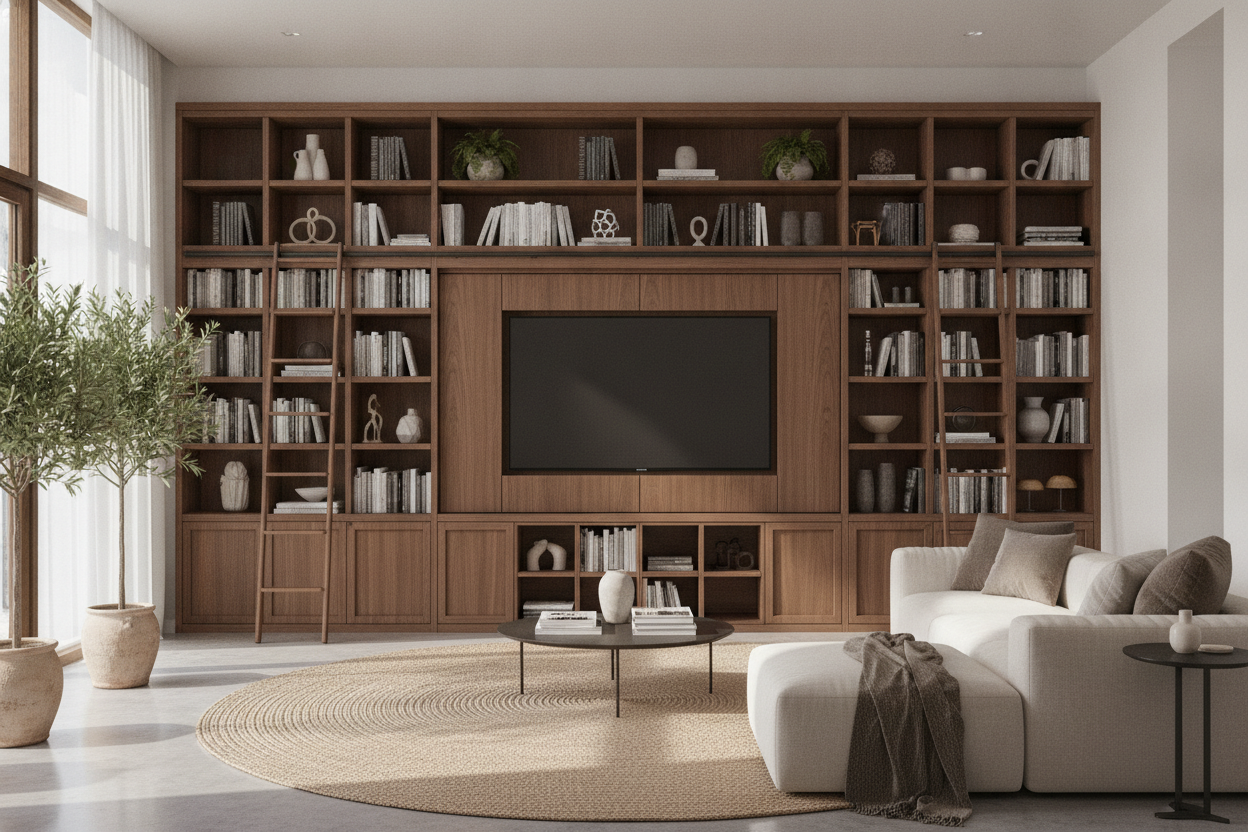
I remember the day I unboxed my 65-inch OLED. It was glorious for movies, but the second I turned it off, my living room felt like a Best Buy clearance aisle. A giant black void just sitting there on a spindly little mid-century modern stand. It didn't look like a home; it looked like a staging area for a tech enthusiast who forgot to buy decor. I needed a media console bookcase to stop the screen from swallowing my entire personality.
Quick Takeaways
- Verticality is your friend; floor-to-ceiling units make the TV look like an intentional design choice rather than a tech eyesore.
- Always leave at least 3 to 5 inches of 'breathing room' between the TV and the shelves to avoid a cramped, dated look.
- Mix hardback books with negative space—the 80/20 rule prevents the unit from feeling like a cluttered warehouse.
- Closed storage at the bottom is mandatory for hiding the inevitable rat's nest of HDMI cables and routers.
The 'Floating TV' Problem (And Why I Hated It)
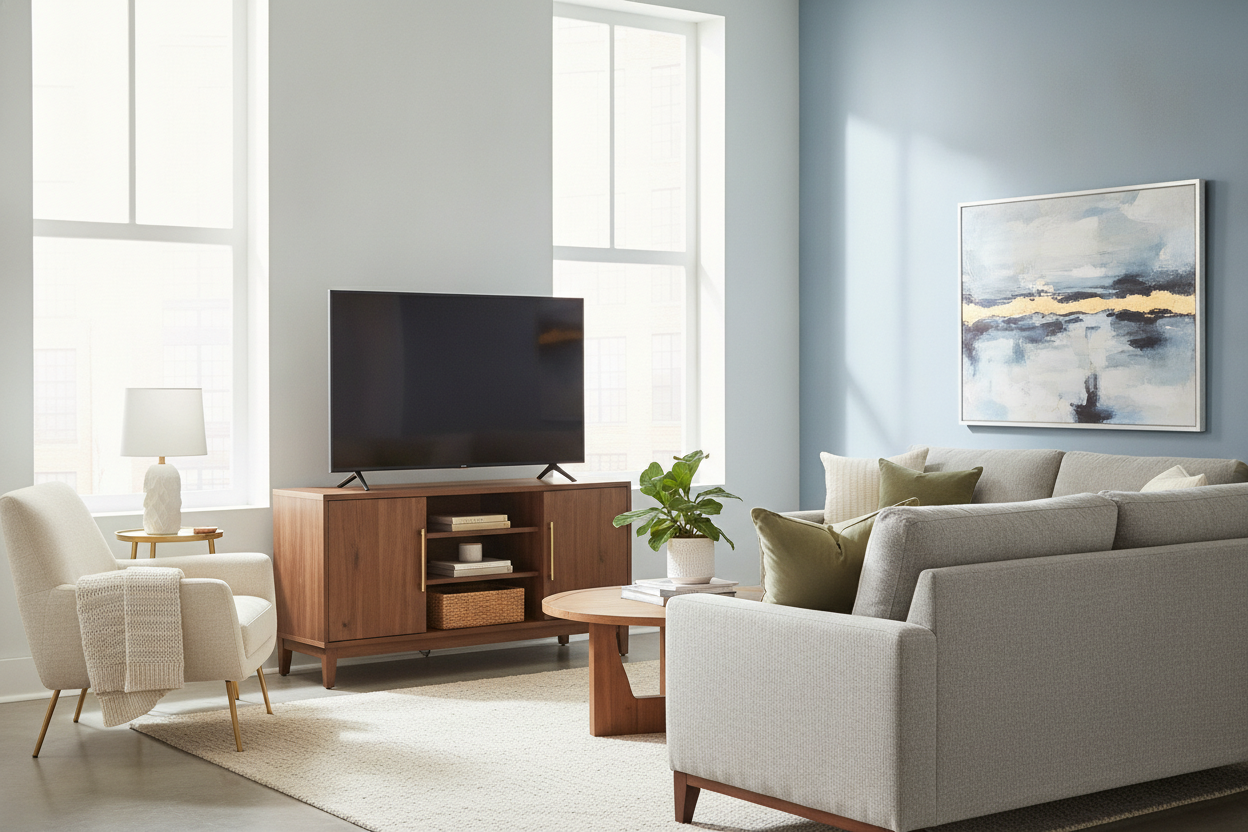
For a year, I lived with what I call the 'Lollipop Effect.' I had this massive, expensive screen perched on a low, 40-inch-wide stand. Against my twelve-foot white walls, the TV looked like it was floating in a vacuum. It was visually top-heavy and made the rest of my furniture look like dollhouse miniatures. I tried the classic 'gallery wall' hack, surrounding the screen with framed prints, but it just looked messy. The frames felt like they were trying to escape the magnetic pull of the black rectangle.
I went through a phase where I considered every cheap fix in the book. I thought I could buy a 'real' media console over an IKEA shelf TV stand, but the real issue wasn't the quality—it was the scale. A low-profile unit, no matter how expensive the wood, wasn't going to solve the problem of a massive empty wall. I realized that if I wanted the TV to disappear, I had to build a world around it. I needed height, weight, and a lot of shelves.
Why a Media Console Bookcase Fixed the Vibe
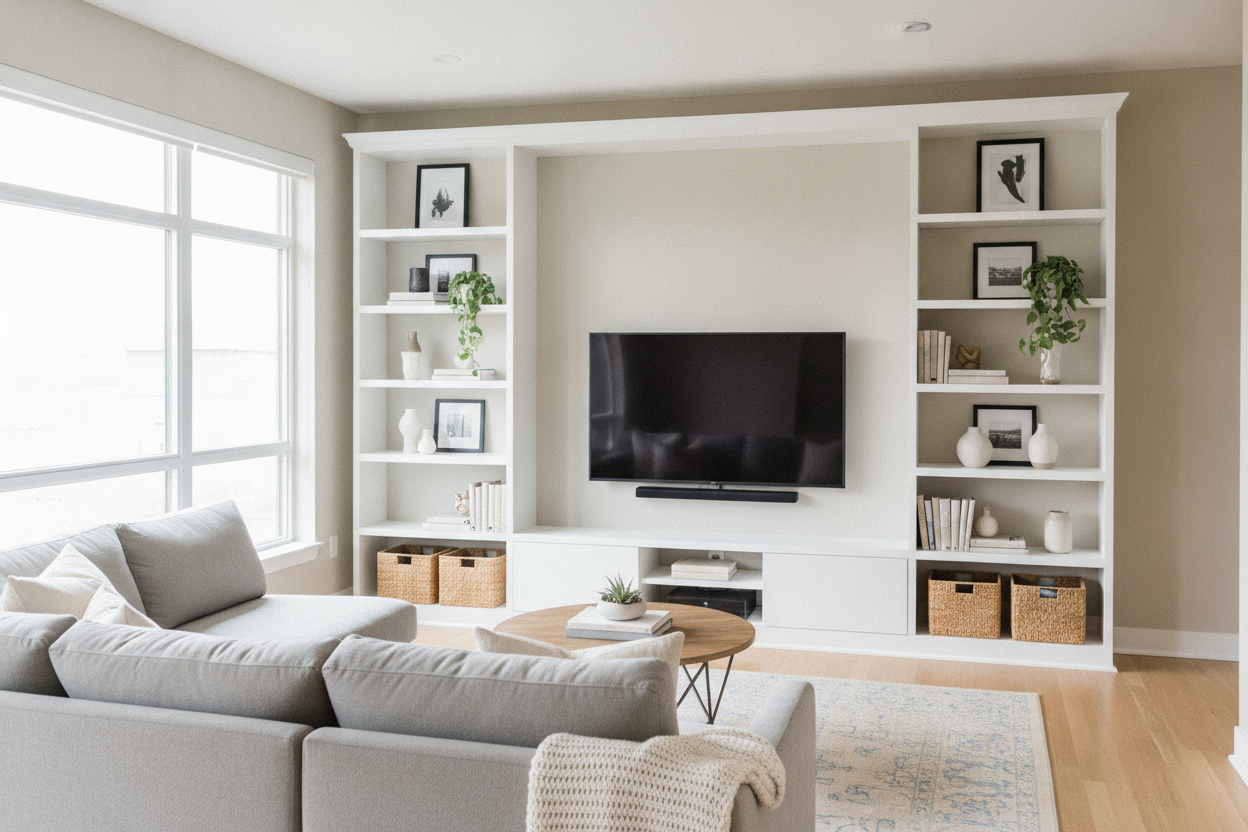
Upgrading to a media console with bookcase attachments changed the architecture of the room. It stopped being a 'TV room' and started feeling like a library that just happened to have a screen in it. A tv stand with bookshelves on each side creates a frame that grounds the entire wall. Suddenly, the eye is drawn to the colorful spines of my favorite novels and the texture of ceramic vases instead of the plastic bezel of the TV.
The academic aesthetic is real. By using a media console with matching bookcases, you create a cohesive, built-in look that usually costs thousands in custom carpentry. It adds a layer of 'grown-up' sophistication that a standalone stand just can't touch. My living room finally feels balanced because the vertical lines of the bookcases compete with the horizontal line of the TV, neutralizing the 'big black box' effect.
Getting the Proportions Right (Don't Box It In)
The biggest mistake people make with a bookcase media unit is buying one that is too small for their screen. If your TV fits perfectly into the opening with only a half-inch to spare, it looks like a cheap hotel setup. It's suffocating. You want air. I always recommend at least 3 to 4 inches of clearance on all sides. This 'breathing room' makes the media unit with bookshelves feel airy and modern rather than like a heavy wall of 90s-era particle board.
How to Style a Bookcase Media Unit Without It Looking Chaotic
Once you have the media cabinet bookcase in place, the temptation is to cram every single shelf with books. Don't do it. That's how you end up with a room that feels smaller and more stressful. I follow the 80/20 rule: 80% books (stacked both vertically and horizontally for visual interest) and 20% 'breathing space' or decorative objects. A single sculptural bowl on a shelf does more for the room than a row of dusty paperbacks.
Also, let's be honest: your open TV unit is a dust magnet. If you have open shelving all the way to the floor, you'll be swiffering every three days. This is why I'm a stickler for units that have closed cabinets or drawers at the base. Use that bottom real estate for the ugly stuff—routers, gaming consoles, and the mountain of chargers we all seem to accumulate. It keeps the visual weight at the bottom and leaves the upper shelves for the pretty things. Link: open TV unit is a dust magnet.
The Final Verdict: Is the Extra Bulk Worth It?
People often worry that an entertainment center with matching bookshelves will make a small room feel cramped. In my experience, it's the opposite. Taking up an entire wall from edge-to-edge actually tricks the eye into thinking the room is larger and the ceilings are higher. It’s the same logic as hanging curtains wide and high.
Yes, it's a beast to assemble. I spent six hours and lost a literal pint of sweat putting mine together, and I definitely measured wrong the first time (always double-check your baseboard thickness!). But giving up 18 inches of floor depth was a small price to pay for a room that finally feels curated. If you're tired of your TV being the only thing people notice when they walk in, go big and go vertical.
FAQ
Is a media console bookcase hard to move if I'm a renter?
It’s not fun, but it’s doable. Most are modular, meaning the side bookcases are separate pieces from the center console. Just make sure you anchor them to the wall—safety first, especially if you have pets or kids.
How do I hide the wires in a unit with open shelves?
Look for units with pre-drilled cable management holes. If they don't have them, a 2-inch hole saw bit and a power drill are your best friends. Run everything behind the back panels or use adhesive cord clips along the inner 'spine' of the shelves.
Can I put a TV larger than the recommended size in the unit?
Only if you want it to look like a disaster. If the TV overhangs the stand or touches the side bookshelves, it ruins the entire 'built-in' illusion. Always size the furniture to the TV, not the other way around.

Laisser un commentaire
Ce site est protégé par hCaptcha, et la Politique de confidentialité et les Conditions de service de hCaptcha s’appliquent.