


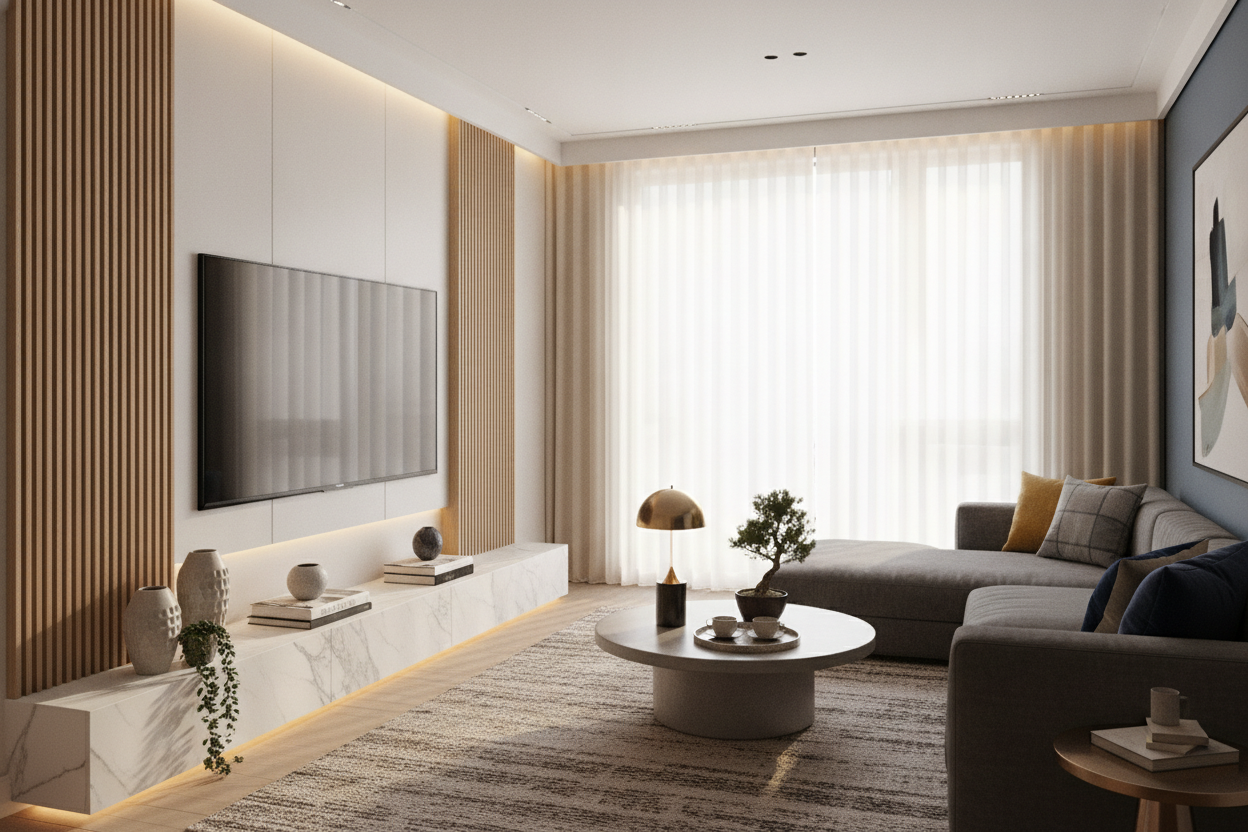
I remember standing in my living room at 6 PM, the sun setting at just the right angle to turn my expensive new OLED into a high-tech mirror. Instead of seeing a cinematic masterpiece, I was staring at a crisp reflection of my messy kitchen and a half-eaten pizza box. It’s the realization every decor lover hits eventually: that gorgeous tv screen glass is basically a giant, soul-sucking void the moment you hit the power button.
- Lean into the gloss rather than trying to hide it with matte textures.
- Use glass-front cabinetry to repeat the reflective texture lower in the room.
- Prioritize low-level ambient lighting to minimize screen glare.
- Ensure your stand is at least 20% wider than the screen to fix proportions.
The 'Black Mirror' Problem in Modern Living Rooms
We spend months obsessing over refresh rates and peak brightness, but we rarely talk about what a tv with glass screen looks like when it’s off. It’s heavy. It’s dark. It’s a literal black hole for light. In a room filled with soft linens and organic wood grains, that 65-inch slab of tv glass feels like a piece of office equipment that wandered into your sanctuary by mistake.
The mistake most people make is trying to camouflage it. They surround it with tiny framed photos or small succulents, which only makes the scale of the screen look even more aggressive. You can't hide a 50-pound sheet of glass with a 4-inch cactus. You have to balance it with furniture that has enough visual weight to hold its own.
Why You Need to Echo the Gloss (Not Fight It)
Design is all about repetition. If your glass panel tv is the only shiny thing in a room full of matte paint and flat wood, it’s going to stick out like a sore thumb. You need to introduce other reflective elements to make the TV look like a deliberate part of the design scheme. This is why I finally swapped my solid console for a wood TV cabinet after years of staring at a mismatched setup.
A storage credenza with sliding glass doors is the perfect tool for this. The glass in the doors catches the light in the same way the screen does, creating a vertical flow of texture. It makes the screen feel like the top half of a cohesive unit rather than a stray monitor bolted to the wall. I’ve found that mixing a warm walnut or oak frame with those glass inserts prevents the room from feeling too 'cold' or tech-heavy.
Lighting Tricks to Kill the Glare
Nothing kills the vibe faster than seeing the reflection of your ceiling fan light dancing on your tv glass. To fix this, you have to move your light sources down. Overhead lighting is the enemy of a clear picture. I prefer using a media console with glass doors and light built right into the shelving.
By illuminating the interior of your cabinet, you draw the eye downward. This 'glow' at the base of your setup provides enough ambient light to navigate the room without bouncing off the screen. It also provides a soft backlighting effect that reduces eye strain during those late-night Netflix marathons. It’s a subtle shift that makes the black void of the screen feel much softer.
Does a Massive Screen Demand a Massive Stand?
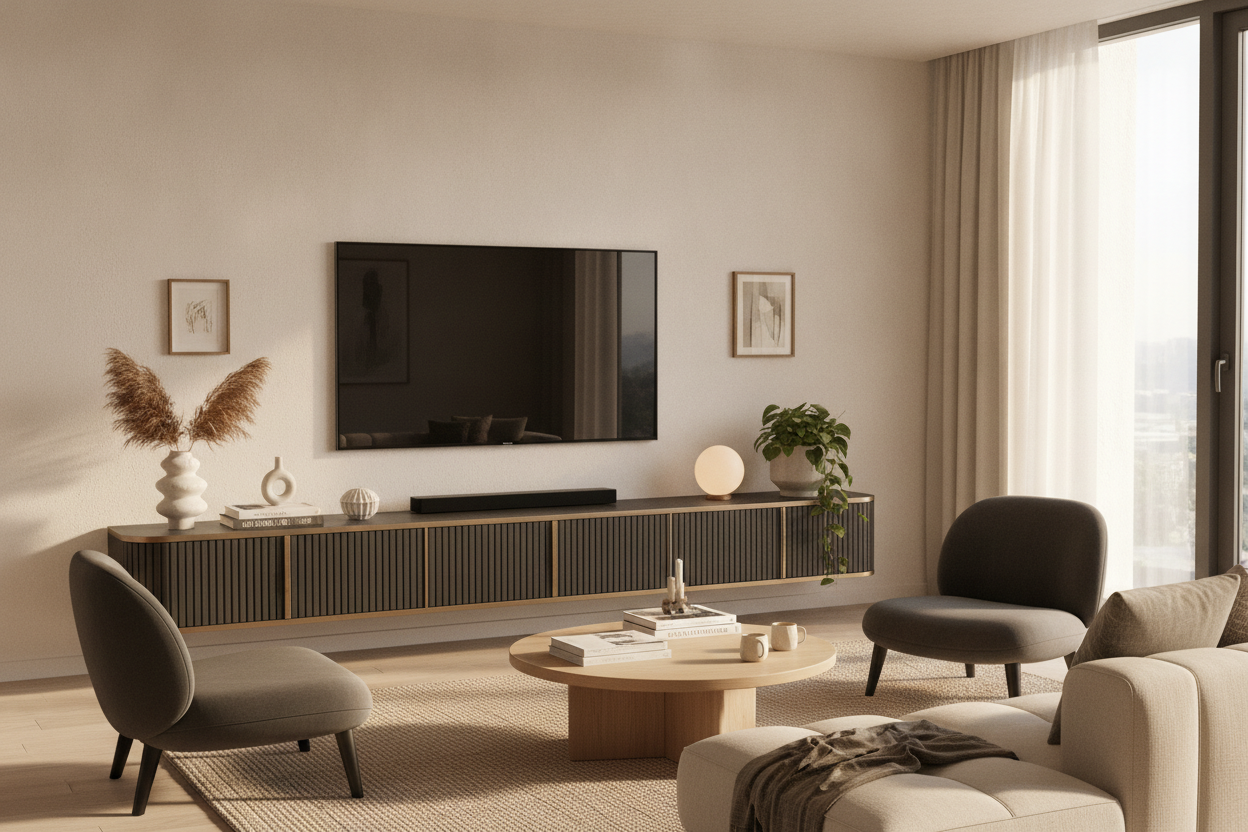
Proportion is the hill I will die on. A tv in glass panel form is visually heavy, and if you put it on a stand that is the same width as the screen, it looks like a lollipop. It’s top-heavy and looks like it might tip over if someone sneezes. I solved my own bulky screen problem with a glass TV stand that offered an extra 12 inches of breathing room on either side.
When your console is wider than your TV, it creates a visual 'base' that grounds the tech. It allows you to place a few substantial items—like a heavy ceramic vase or a stack of oversized art books—on the ends. This frames the screen and integrates it into the room's architecture rather than letting it float in the middle of the wall.
The Final Verdict: Stop Hiding Your Tech
We live in a digital age; there is no point in pretending you don't own a television. Instead of buying those weird 'art mode' frames that never quite look like real canvas, focus on the furniture underneath. When you browse various TV stands, look for pieces that bridge the gap between high-tech glass and homey textures. Once you get the proportions and the lighting right, that 'black mirror' stops being a problem and starts being a feature.
FAQ
How do I clean my TV screen without streaks?
Never use window cleaner. The chemicals can strip the anti-reflective coating. Use a dry, high-quality microfiber cloth. If you have a stubborn smudge, a tiny drop of distilled water on the cloth is all you need.
Will glass cabinet doors interfere with my remote?
Most modern remotes use Bluetooth, so they work through wood and glass. If you have older infrared (IR) gear, glass is actually your best friend because the signal passes right through it, unlike solid wood doors.
What is the best height for a TV stand?
Your eyes should be level with the bottom third of the screen when seated. For most sofas, this means a console height of 22 to 28 inches. Don't pull an 'r/TVTooHigh' and mount it near the ceiling.

Laisser un commentaire
Ce site est protégé par hCaptcha, et la Politique de confidentialité et les Conditions de service de hCaptcha s’appliquent.