



Short answer: start with the no-drill fixes: level the island, put rubber anti-slip pads under the feet, lock any casters and store heavy items in the bottom cabinets. If it still slides, fasten it to the floor with L-brackets or a hidden wood cleat screwed into the subfloor, or with concrete screws on a slab. Do not screw through a floating laminate or vinyl plank floor; renters should stick to pads, caster locks and weight.
A freestanding kitchen island is furniture, not built-in cabinetry, so it is not designed to be bolted down. Most stay put under their own weight, but lighter models on tile floors or hardwood can creep when you lean on them, knead dough or bump them with a hip. This guide covers why islands move and the best way to secure one to prevent movement, from renter-friendly options to permanent installation. If you are still choosing, the FUFU&GAGA kitchen islands collection lists each model's weight and dimensions.
Does a Kitchen Island Need to Be Anchored?
It depends on the type of island:
- Built-in islands made from base cabinets or stock kitchen cabinets, especially with a sink, cooktop or wiring, should be fastened to the floor like the other cabinets in the house, so movement cannot stress plumbing or open gaps under the countertop.
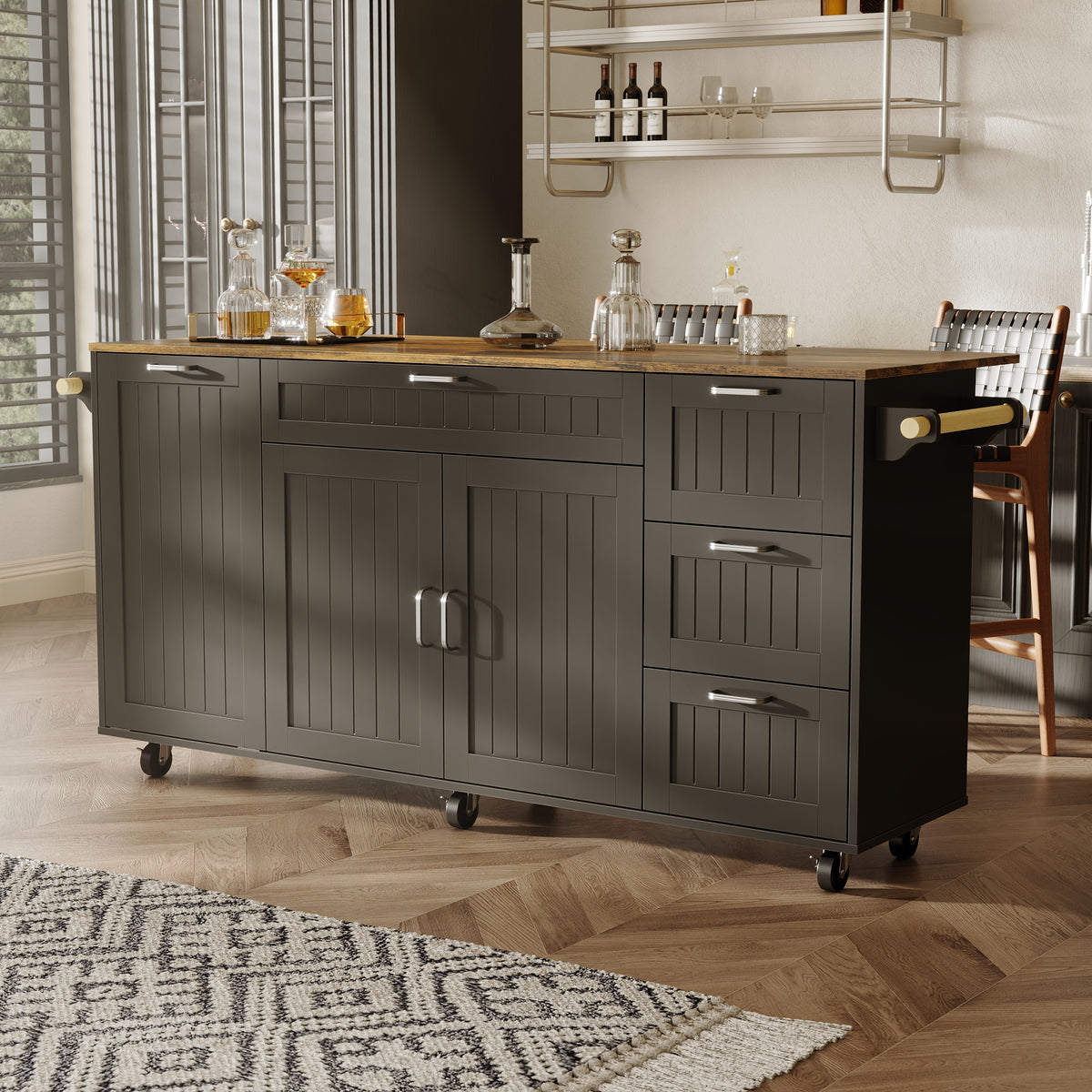
- Freestanding furniture islands usually do not need anchoring. A heavy island rarely moves on its own; our 94.5-inch black island, for example, weighs 340 lb.
- Light or rolling islands benefit most from securing. Models around 100 to 130 lb, or any island on wheels, can shift during heavy prep if the casters are not locked.
Secure a freestanding island if it slides when you push on the countertop, rocks on an uneven floor, sits in a busy walkway or has children climbing on open drawers.
Why Freestanding Kitchen Islands Move
- Smooth floors: tile, polished hardwood and luxury vinyl give feet very little grip.
- Uneven floors: if one corner is high, the island rocks and walks a little each time you lean on it.
- Light weight vs. side pressure: rolling dough, chopping or leaning on the counter from bar stools pushes sideways on the counter top, and a light island has little weight to resist it.
- Unlocked casters: one unlocked wheel is enough to let a rolling island drift.
- Rugs: an island with some feet on a rug and some off sits unevenly and slides with the rug.
Renter-Friendly Ways to Keep a Kitchen Island From Moving
These methods need no drill and leave no holes, so they are the best first step for most people.
1. Level the island
Check the countertop with a level in both directions. Use the island's adjustable feet if it has them, or slide thin furniture shims under the low corner. A level island stops rocking, and rocking is often what makes it walk.
2. Add anti-slip furniture pads
Rubber or textured anti-slip pads under each foot add grip on tile and hardwood and protect the floor finish. Larger pads spread the load over more surface area. Replace any felt pads: felt is designed to help furniture slide. Avoid gluing the island to the floor with adhesive; glue is permanent and can ruin a finished floor, which matters in a rental.
3. Lock the casters
On a rolling island, lock every caster that has a lock before you work, and keep them locked when the island is parked. Caster cups (small rubber cups that sit under each wheel) add grip and stop rolling on smooth floors.
4. Put weight low
Store cast iron, stacked plates, small appliances and other heavy items in the bottom cabinets and drawers. Weight low in the island lowers its center of gravity and makes it harder to push. Keep within the listed shelf weight capacity, which is 22 to 33 lb per shelf on many of our islands.
5. Get the rug right
Either keep the island fully off the rug or place it fully on one large enough that all feet sit on it. Use a non-slip rug pad underneath, choose a low-pile or flatweave rug so the island stays level, and keep rolling islands off thick rugs, where casters sink and stick.

How to Secure a Freestanding Kitchen Island to the Floor
If the island still moves, a permanent installation fixes it.
Planning: check the floor and the island cabinets first
Before drilling, check for hidden utilities such as pipes, wiring or radiant heating under the floor, and confirm what your floor is made of (see the table below). Mark the island's final position with tape so the layout keeps clear aisles. Then look underneath: furniture islands usually sit on legs or a solid bottom panel, while island cabinets built like kitchen cabinets have an open bottom and a toe kick, which suits the cleat method. Use screws, not nails, which can work loose, and match screw length to the thickness of the bottom panel or cleat.
Method 1: L-brackets inside the base
This works for furniture islands with a solid bottom panel or a base frame you can reach from inside the cabinets.
- Set the island in its final position and level it.
- Place two or more small steel L-brackets (corner braces) inside the cabinets, one leg against the cabinet side or base frame and one leg on the floor.
- Mark the holes, move the island, and pre-drill the floor.
- Vacuum the drilling dust, screw the brackets into the subfloor, return the island, then drive screws (short cabinet screws) through each bracket into the island frame. Use screws short enough that they do not come through the visible side panels.
Method 2: A hidden wood cleat for island cabinets
The cleat method is a common approach for cabinet-style islands with an open bottom or a toe kick:
- Trace the inside perimeter of the island base on the floor.
- Cut wood cleats (2x4 blocks) to fit just inside that outline, about 1/4 inch shorter than the lowest part of the island so shims can take up the gap.
- Fasten the cleats to the floor; on concrete, use a pressure-treated bottom board with concrete fasteners and a little construction adhesive.
- Lower the island over the cleats, shim it snug and level, and drive at least two screws through each cabinet box into the cleats.
In its guide to a tip-proof kitchen island on a concrete floor, Fine Homebuilding recommends the same key details: a cleat about 1/4 inch shorter than the island so shims fill the gap, pressure-treated lumber with concrete fasteners and construction adhesive on a slab, and at least two screws into each cabinet box. Drawer boxes hide the screws well; behind cabinet doors, countersink the screws and cover them with caps.
Fasteners by floor type
| Floor | What to use | Notes |
|---|---|---|
| Hardwood floor or engineered wood over plywood | Wood screws into the subfloor | Aim for floor joists for the strongest hold |
| Tile | Tile or masonry bit, then masonry anchors or screws into the subfloor | Drill slowly without hammer action to avoid cracking tile |
| Concrete slab | Concrete screws in holes drilled with a hammer drill and masonry bit, as deep as the screw maker specifies | Use pressure-treated wood for any cleat touching the slab |
| Floating laminate or vinyl plank | Do not screw through | Use pads and weight instead (see below) |
| Heated floors | Do not drill unless you know where the heating runs | Stick to no-drill methods |
Floating floors: why you should not screw through
Floating laminate and vinyl plank floors expand and contract as a single sheet. Flooring maker Flooret explains that cabinets installed on top of a floating floor pin it in place, which can cause buckling or joint failure, while freestanding islands that are not anchored can sit on top. On these floors, rely on anti-slip pads, levelers and weight, or install the island before the floor with the correct expansion gap.
How to Secure a Kitchen Island With Wheels
A rolling island cannot be bolted down without losing its purpose, so focus on the casters. Lock all lockable wheels, add caster cups when it stays in one spot for weeks, and push it against a wall or counter end so it can only move in one direction. The 63" rolling island with drop leaf and the 63" farmhouse rolling island both ride on casters, so keep them locked during prep. If you need a surface that never moves, our kitchen island vs kitchen cart guide explains when a stationary island is the better choice.
How to Secure an Island Countertop
On a freestanding island, the countertop is attached to the base with the hardware supplied in the box. If the top feels loose:
- Re-tighten every assembly screw and cam lock, then check them again a few weeks after assembly.
- Make sure the island is level; a twisted base can lift one corner of the top.
- Keep the load within the listed weight capacity, which is 150 to 330 lb on most FUFU&GAGA islands.
Missing or damaged hardware? Our replacement parts service reviews requests within 24 hours, including for islands bought through Amazon or Home Depot.
Which Islands Need the Least Securing?
Heavier, wider islands with a broad base resist movement on their own. The 94.5" black island (340 lb) and the 61" black island with 4 pull-out drawers (220 lb) are examples. Lighter compact models such as the 47.2" island with marble veneer countertop (100 lb) suit small kitchens but benefit more from anti-slip pads on smooth floors.

Tall kitchen storage is a different story. Pantry cabinets and hutches can tip forward and should be anchored to the wall; see how to anchor a bookcase to the wall for the hardware and steps, which apply to our pantry cabinets as well. For the island itself, browse kitchen islands by weight and footprint to find one that stays steady in your kitchen.
FAQ
How do I keep a kitchen island from moving without drilling?
Level it, add rubber anti-slip pads under each foot, lock the casters and store heavy items low. On a rug, use a non-slip rug pad and keep all feet on the rug.
What is the best way to secure a kitchen island to the floor?
For cabinet-style islands, a wood cleat screwed to the subfloor is a common, hidden method. For furniture islands with a solid base, L-brackets inside the cabinets work well.
Can you anchor a kitchen island on a floating floor?
Not by screwing through the floating floor, because anchoring pins it and can cause buckling. Use pads and weight, or install the island on the subfloor before the floating floor goes down.
Should a rolling kitchen island have locking wheels?
Yes. Locking casters keep the island steady while you work, and caster cups add grip on smooth floors when it stays in one place.


Laisser un commentaire
Ce site est protégé par hCaptcha, et la Politique de confidentialité et les Conditions de service de hCaptcha s’appliquent.