


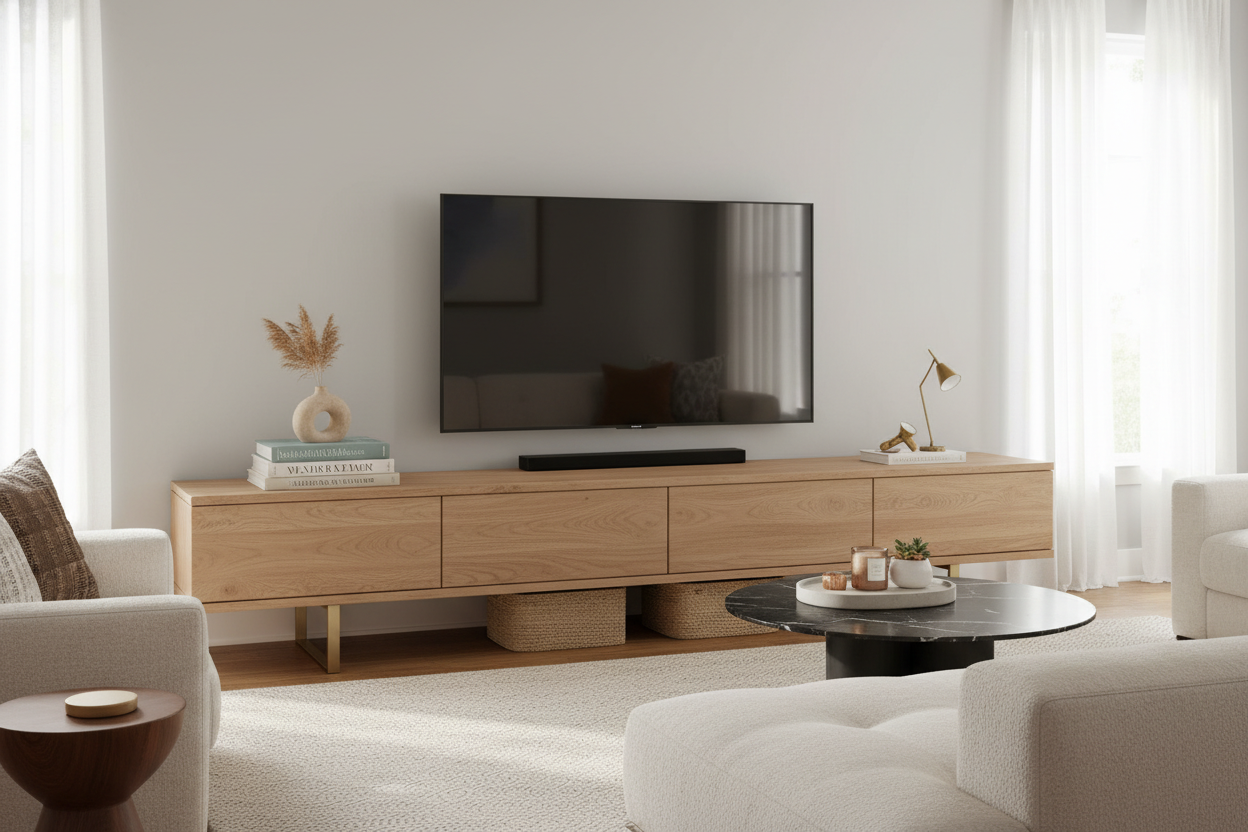
I spent three weeks staring at a mess of tangled HDMI cables and a 'modern' tempered glass stand that looked like it belonged in a Best Buy clearance aisle. It was depressing. My 50 inch tv stand should have been a deliberate design choice, but instead, it felt like a utilitarian slab of plastic and metal that sucked the soul out of my living room.
We spend thousands on the screen technology and then stick it on a piece of furniture that has all the personality of a server rack. I finally hit a breaking point when I realized my media setup was the only thing standing between my apartment looking like a grown-up home and looking like a dorm room. Here is how I fixed it.
Quick Takeaways
- Ditch the glass and metal; opt for wood, cane, or fluted textures to add warmth.
- Ensure your stand is at least 10-12 inches wider than the TV itself to avoid the 'mushroom' look.
- Use asymmetrical styling with lamps and books to distract from the 'black void' of the screen.
- Cable management is not optional—if you can see a wire, the look is ruined.
The Problem With Standard Living Room 'Tech' Furniture
Most media consoles are designed by people who clearly hate interior design. They focus on 'airflow' and 'cable ports' while completely ignoring the fact that this piece of furniture occupies a massive amount of visual real estate in your home. I am tired of the 'tech-bro' aesthetic—those cold, black-on-black units that look like they were built to hold a 1990s desktop computer.
The biggest issue is the materials. Cheap MDF with a shiny laminate finish reflects the light from the TV in the worst way possible. It creates a glare that makes the whole room feel like a sports bar at 1 AM. When you are looking for a tv stand for 50 inch screens, you are looking for a piece of furniture first and a tech housing unit second. We need to stop settling for furniture that feels disposable just because it's holding an electronic device.
I’ve assembled those 'easy-build' units from big-box stores, and they always start wobbling after six months. The hardware is flimsy, the back panels are literally made of cardboard, and they offer zero character. If you want your living room to feel intentional, you have to stop buying furniture that screams 'I only care about my refresh rate.'
Embracing the 'Credenza Mindset' for Your 50 Inch TV Stand
The secret to a high-end look is simple: stop searching for 'TV stands' and start searching for credenzas, sideboards, or buffets. This mental shift changes everything. A credenza is designed to look beautiful in a dining room or hallway, which means it usually has better proportions, more interesting hardware, and higher-quality finishes. When I finally decided to browse traditional media units that leaned into this classic aesthetic, the vibe of my room shifted instantly.
I chose a piece with fluted wood doors and brass legs. The texture of the wood softens the hard edges of the television. Instead of a cold tech station, I now have a focal point that looks like a custom-built piece of cabinetry. Natural materials like oak, walnut, or even cane webbing provide a tactile contrast to the glass and plastic of the screen.
Don't be afraid of height, either. A slightly taller sideboard can bring the TV to a more comfortable eye level while providing massive amounts of storage for things that aren't tech-related—like board games, linens, or that stack of magazines you'll eventually read. It makes the furniture feel integrated into your life, not just your Netflix habit.
Getting the Proportions Right (Without Dominating the Room)
This is where most people fail. They buy a stand that is the exact same width as their TV. If you do this, your TV will look top-heavy and awkward. A 50-inch TV is actually about 44 inches wide. If you put it on a 44-inch stand, it looks like a mushroom. You need breathing room. I follow a strict rule for perfectly proportioned consoles: your stand should be at least 20-30% wider than your screen.
For a 50-inch screen, I wouldn't go any smaller than a 56-inch wide unit, and a 60-inch unit is the sweet spot. This extra length allows you to place items on either side of the TV, which anchors the screen and prevents it from looking like it’s floating in a void. It’s about visual balance. When the furniture is wider than the tech, the furniture wins the visual battle, which is exactly what you want.
I once made the mistake of buying a massive 80-inch console for a small studio apartment because I thought 'more is better.' I was wrong. It swallowed the room and made my 50-inch TV look tiny and pathetic. Scale is everything. You want the stand to feel substantial enough to ground the TV, but not so large that you're losing floor space for no reason. Measure twice, buy once.
My 3 Rules for Styling Around the Black Void
Once the furniture is in place, you’re left with a giant black rectangle that sucks the light out of the room when it's off. Styling is how you fix this. My first rule is asymmetry. Don't put two identical vases on either side of the TV; it looks like a shrine. Instead, put a tall, slim lamp on one side and a stack of three oversized art books on the other.
The second rule is to use 'the lean.' I love leaning a piece of framed art against the wall behind the TV, slightly overlapping the edge of the screen. It sounds counterintuitive, but it breaks up the harsh lines of the television and makes the whole setup feel like part of a curated gallery wall. It signals that the TV is just one part of the room, not the main event.
Finally, add something organic. A small potted plant or a bowl of dried moss adds a pop of color and life. Tech is sterile; plants are not. That contrast is what makes a room feel lived-in. I personally use a small snake plant because it handles the warmth from the electronics well and doesn't require constant attention. Just make sure your pots have a tray underneath—nothing ruins a wood finish faster than a water leak.
What If You Just Want to Hide the Screen Entirely?
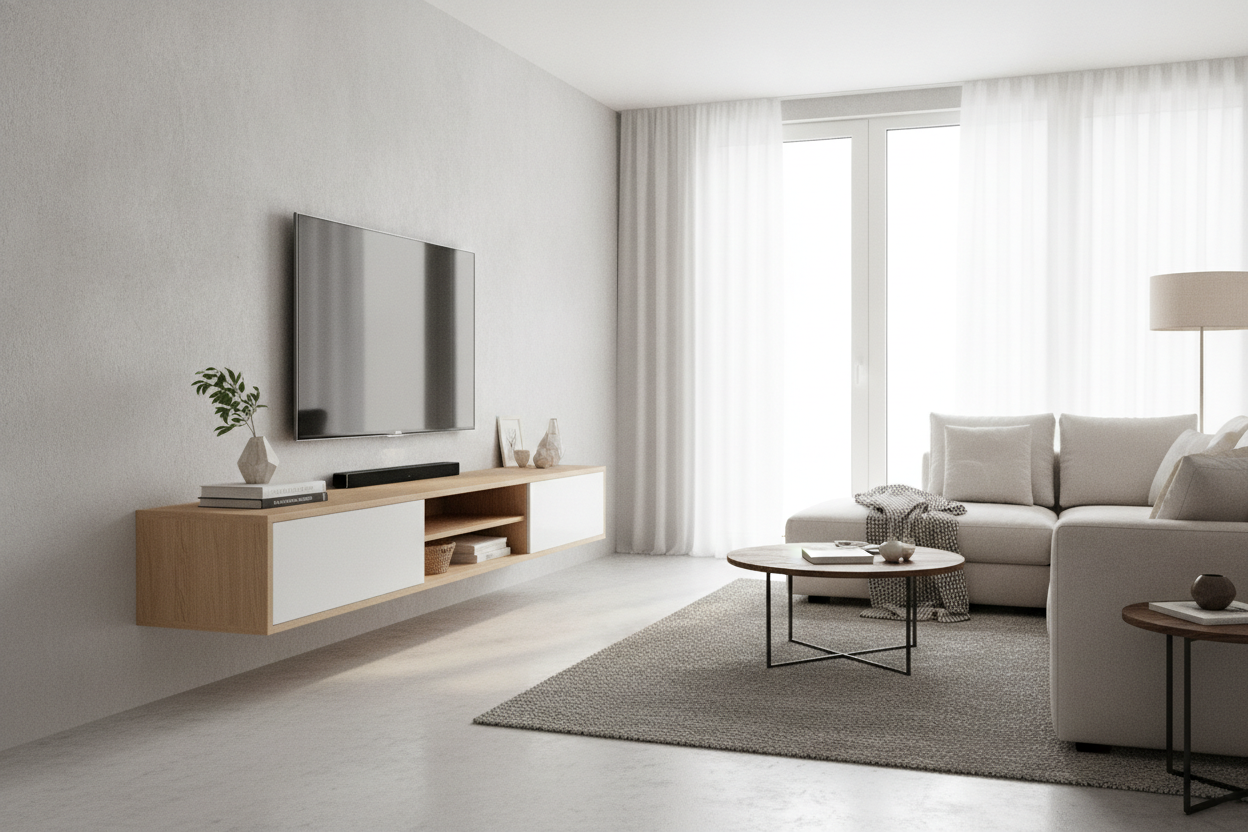
I’ll be honest: some days I hate looking at a TV at all. If you’re a purist who wants a 'no-tech' look in your living room, styling can only go so far. In those cases, you might want to ditch the traditional console for a motorized hidden TV cabinet. These are the ultimate flex for design enthusiasts.
With a push of a button, the TV disappears into the body of the furniture, leaving you with a clean, beautiful wood surface. It’s the closest you can get to having a custom-built home theater without the renovation costs. While it's a bigger investment than a standard stand, the psychological benefit of not having a 'black hole' in your living room during a dinner party is worth every penny.
Whether you choose to hide it or style it, the goal is the same: treat your media furniture with the same respect you give your sofa or your dining table. Your home shouldn't feel like a showroom for electronics; it should feel like a home.
FAQ
How high should a TV stand be for a 50 inch TV?
For the best viewing angle, the center of your screen should be at eye level when you're sitting. For most sofas, this means a stand height of about 22 to 28 inches. If you go taller, you'll be craning your neck like you're in the front row of a movie theater.
Can I put a 50 inch TV on a 40 inch stand?
Technically yes, if the legs fit, but please don't. It will look unstable and cheap. The overhang makes the room feel cluttered and top-heavy. Always aim for a stand that is wider than the TV.
How do I hide cables without drilling into the wall?
Use adhesive cable clips along the back edge of your furniture and 'cable snakes' to bundle wires together. You can also use a decorative box on the bottom shelf to hide your router and power strip. If you can't see the mess, it doesn't exist.


Laisser un commentaire
Ce site est protégé par hCaptcha, et la Politique de confidentialité et les Conditions de service de hCaptcha s’appliquent.