



I spent weeks researching the best motorized frames, comparing lift capacities and decibel levels, only to realize the 'wood' top that came in the box was basically contact paper over compressed sawdust. It looked fine in the staged photos, but in person, it felt like a high-school cafeteria tray. My office felt like a sterile cubicle, and I hated touching it. I knew I needed a custom desk top for standing desk frames that actually felt like real furniture.
Quick Takeaways
- Measure your frame's maximum expansion before buying wood to avoid a 'mushroom' look.
- Keep the top between 1 and 1.5 inches thick so you don't lose too much height range.
- Hardwoods like walnut are gorgeous but heavy; check your motor's weight limit first.
- Always pre-drill your holes or you will split your expensive new slab.
Why I Refused to Keep the Factory Laminate Top
Standard standing desk tops are almost always the weak link. Manufacturers spend the budget on the motors and legs, then ship a hollow-core or particle board top to keep shipping costs down. It’s light, sure, but it echoes when you type and scratches if you so much as breathe on it. Upgrading to a custom standing desk top is the only way to get away from that 'tech startup' vibe.
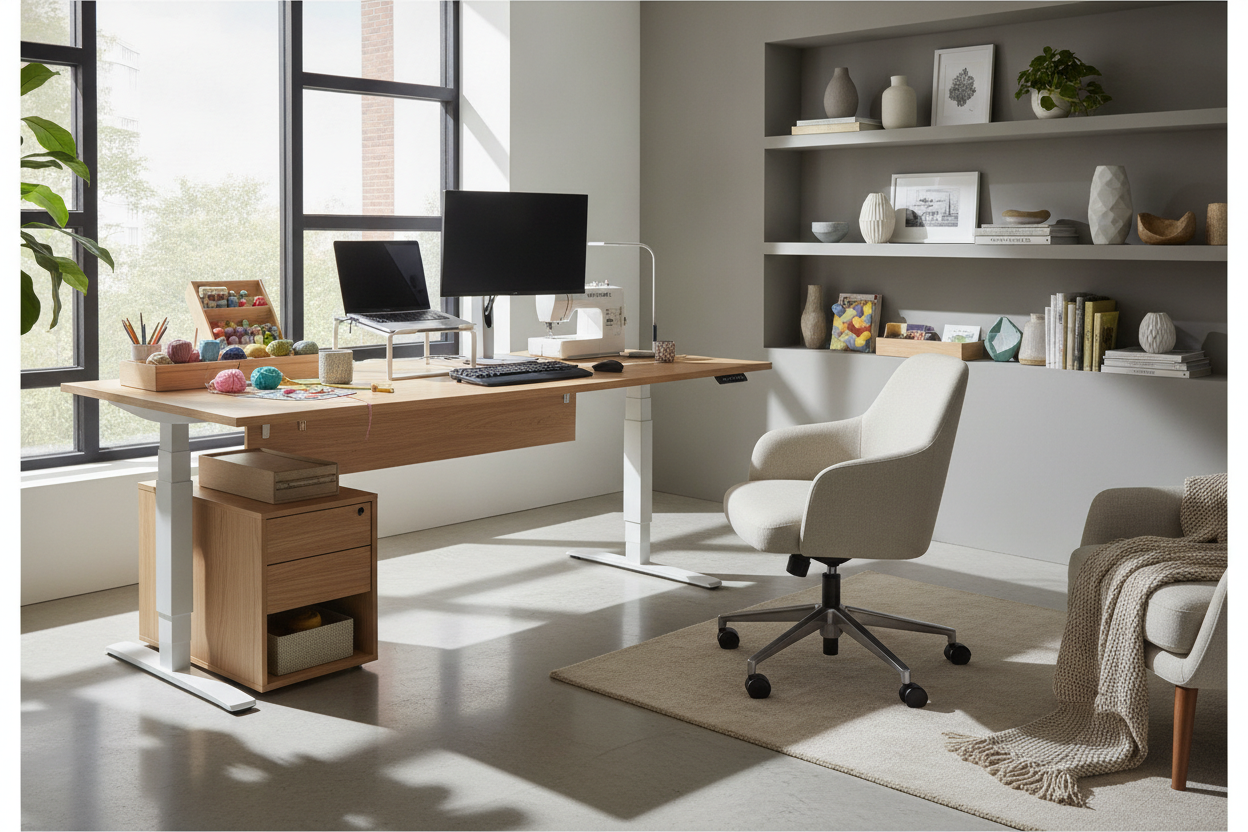
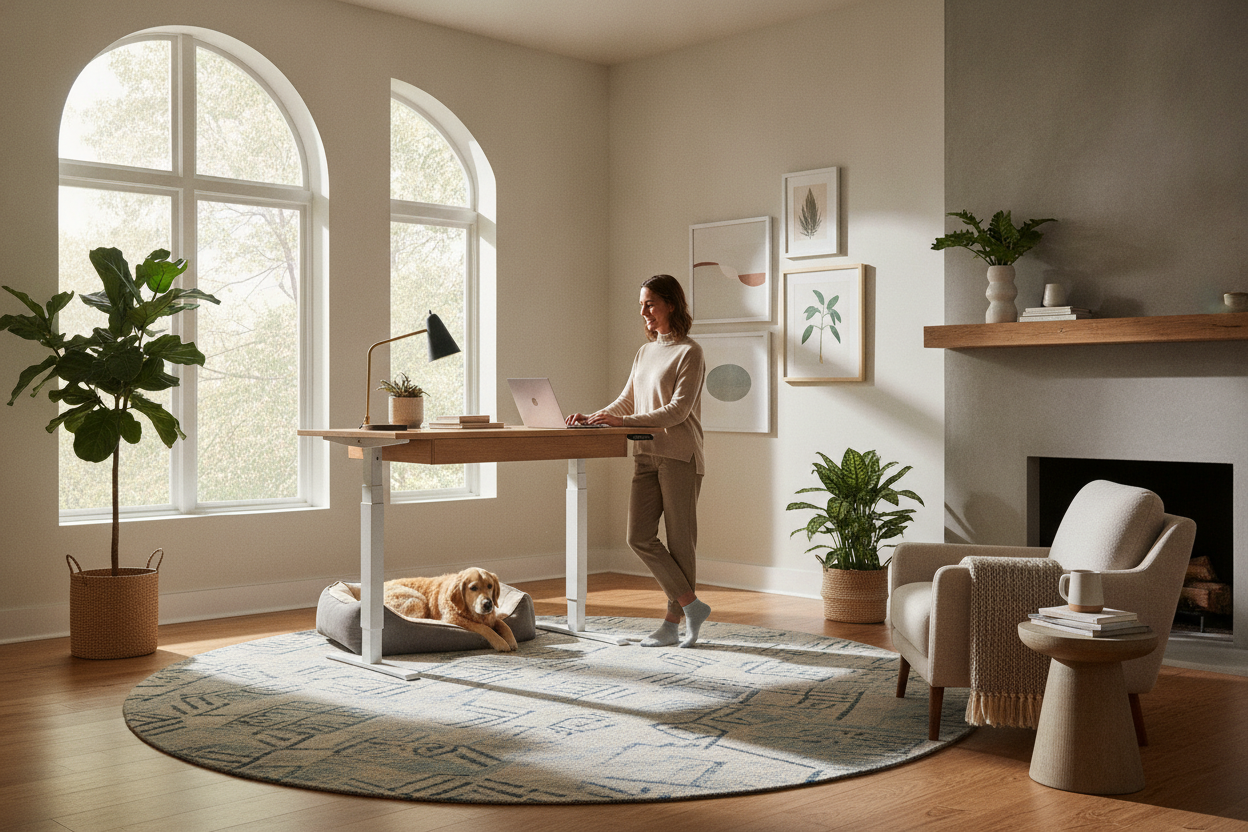
I wanted my office to feel intentional. By sourcing a solid piece of kiln-dried ash, I was able to bridge the gap between a piece of machinery and a custom built in look. Instead of a floating slab of plastic, the desk now feels like a permanent part of the room's architecture. It’s the difference between a temporary workstation and a piece of heirloom furniture.
The 3 Measurements You Cannot Mess Up
When you start looking for a custom size standing desk, you can't just guess. First, measure the 'footprint' of your frame's top brackets. You want at least an inch of overhang on the sides so you don't see the metal poking out, but don't go overboard. If the wood hangs more than 6 inches past the frame, it might tilt or wobble when you lean on the edge.
Second, check the depth. Most frames are designed for 24 to 30 inches. If you go deeper, you might find your custom height adjustable desk feels front-heavy. Third, consider the thickness. A 2-inch thick butcher block looks incredible, but it adds weight and physically raises your lowest possible height. If you are on the shorter side, that extra thickness might make your custom height desk sit too high for ergonomic typing even at its lowest setting.
I used the 71 W height adjustable standing desk dimensions as my baseline. It’s a sweet spot for most home offices—large enough for two monitors and a coffee mug without feeling like a conference table.
Choosing the Right Wood (Without Crushing Your Motors)
Not all wood is created equal. A solid oak slab is significantly heavier than a pine or cedar top. Before you fall in love with a 100-pound piece of black walnut, check the specs on your frame. Most mid-range motors can handle 200 to 300 pounds, but that includes your monitors, mounts, and everything else you pile on top. A custom made standing desk shouldn't be so heavy that the motors groan every time you hit the 'up' button.
I chose a medium-density hardwood because I use my setup as a primary writing computer desk. I needed a surface that was hard enough to write on without the pen tip sinking through the paper into the grain, but light enough that the transition from sitting to standing remained smooth. If you do a lot of analog work, avoid softwoods like reclaimed pine—they have too much 'character' (read: bumps and knots) for smooth handwriting.
How to Drill the Frame Without a Disaster
This is the part that scares everyone. You have a beautiful piece of wood and a heavy metal frame, and now you have to marry them. Flip the wood upside down on a rug, then center the frame on top. Use a measuring tape to ensure the overhang is identical on both sides. I made the mistake of eyeballing my first custom adjustable height desk and ended up with a lopsided mess that drove me crazy for a year.
When you're ready to attach the electric lift system with memory presets, be mindful of the control box. Most people forget to leave room for the wires to reach the motor. Pre-drill every single hole using a drill bit slightly smaller than your screws. If you skip this, the torque from the screw will split the wood grain, and you'll hear a sickening 'crack' that marks the end of your expensive DIY project.
Was the Custom Route Actually Worth It?
Total transparency: I spent about $250 on the raw wood and another $40 on finishing oils. Combined with a $400 frame, I spent more than a basic big-box standing desk would cost. But compared to a high-end designer desk that uses real wood, I saved nearly $800. The result is a rock-solid, beautiful surface that doesn't bounce when I type and smells like real timber instead of factory chemicals. If you spend eight hours a day at your desk, the upgrade is absolutely worth the afternoon of labor.
FAQ
Can I use any tabletop for a standing desk?
Mostly, yes, as long as it is solid. Avoid 'honeycomb' or hollow-core tops (like the cheap ones from IKEA) because the screws won't have anything to grab onto, and the desk will eventually collapse.
How thick should a custom standing desk top be?
The sweet spot is 1.25 to 1.5 inches. It’s thick enough to feel premium and hold screws securely, but not so heavy that it stresses the lift motors.
Do I need to seal the bottom of the desk?
Yes. If you only seal the top, the wood will absorb moisture unevenly from the air and start to warp or 'cup' over time. Treat both sides equally.

Laisser un commentaire
Ce site est protégé par hCaptcha, et la Politique de confidentialité et les Conditions de service de hCaptcha s’appliquent.