


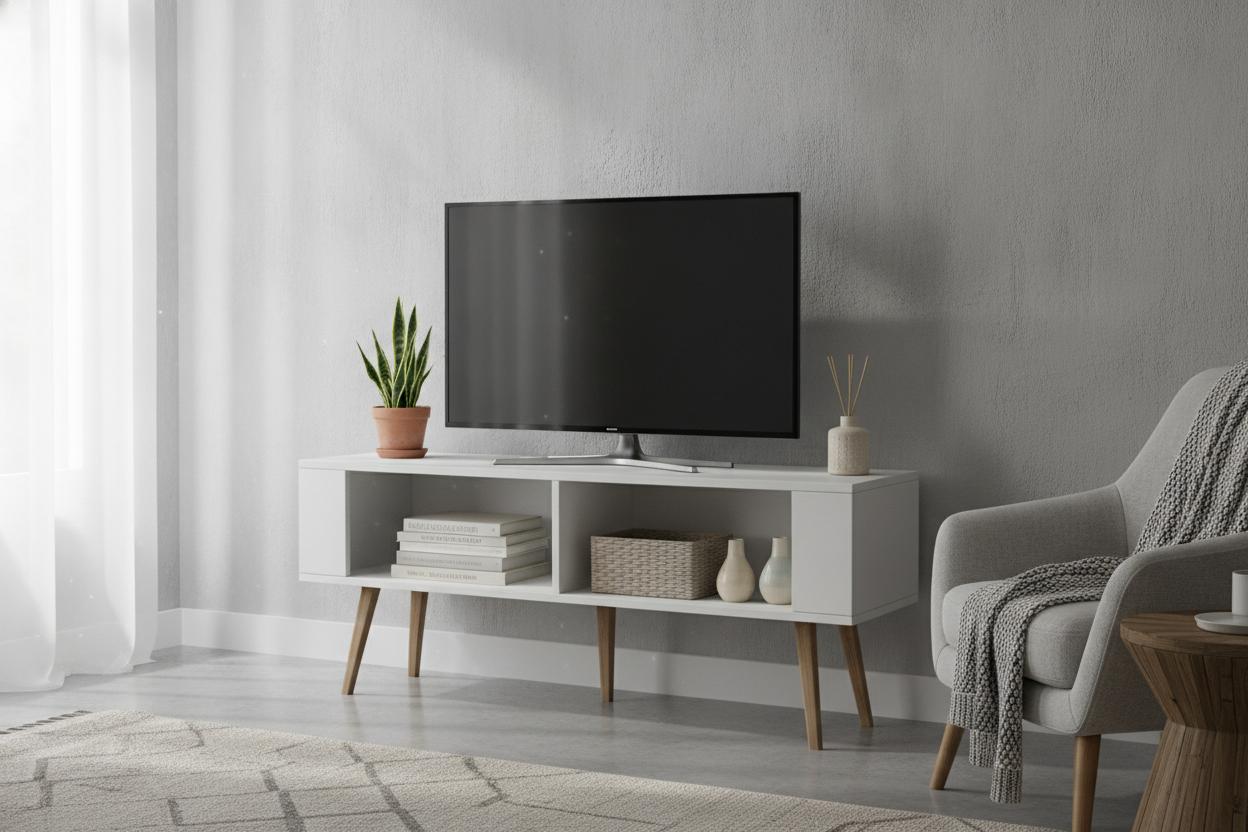
I spent three hours last Tuesday trying to hide the tangled mess of black wires behind my bedroom dresser, only to realize the real problem wasn't the cables—it was the legs. I’d just bought a decent little screen for the corner, but the factory-issue plastic feet were so wide they barely fit on the wood surface. It looked like a temporary college dorm setup, not a grown-up bedroom. That’s when I realized that a proper 32 inch tv base isn't just an accessory; it’s the difference between a room that looks finished and one that looks like an afterthought.
Quick Takeaways
- Factory 'spider legs' are space hogs and usually look cheap.
- A centralized pedestal base frees up dresser space for actual decor.
- Height matters—if you're watching from bed, you need a taller stand than a standard console.
- Always check your VESA pattern (the screw holes on the back) before buying.
The 'Postage Stamp' Problem (And Why Factory Legs Are the Worst)
Most 32-inch TVs come with what I call 'spider legs.' They are these two splayed pieces of plastic that sit at the very edges of the frame. Manufacturers do this because it’s cheap and stable, but it’s an aesthetic nightmare. Because the legs are so far apart, you’re forced to use a piece of furniture that is at least as wide as the TV itself. This makes the screen look like a lonely postage stamp on a giant envelope. It’s a waste of prime real estate on your dresser or desk.
Beyond the footprint, these legs are usually made of the flimsiest hollow plastic imaginable. They have zero height adjustment, meaning you’re stuck with whatever awkward angle the factory decided on. In a small room, every inch of horizontal surface is precious. When those legs take up the entire top of a nightstand, you lose the spot where your lamp, book, or coffee should go. It makes the whole room feel unpolished and cramped, regardless of how much you spent on the rest of your decor.
Why a Centralized Base is a Total Shift
Swapping to a centralized pedestal or a VESA-mounted 32 inch tv base is the single fastest way to make a small screen look high-end. By moving the support to the center, you suddenly have six to ten inches of open space on either side of the stand. It’s the perfect spot for a small plant or a stack of books, which helps the TV blend into the room rather than dominating it. I’ve found that even a relatively cheap tv stand for 32 inch setups can look like a custom piece of furniture if it has a heavy tempered glass base and a sleek metal neck.
Functionally, these stands are miles ahead of the box-stock feet. Most of them allow for swiveling, which is a lifesaver in a studio apartment where you might want to turn the screen toward the kitchen while you’re cooking and back toward the bed when you’re winding down. I highly recommend replacing those flimsy feet with a sturdy tabletop option if you want to actually use the surface area you paid for. It’s about taking control of the furniture layout instead of letting a plastic mold from a factory in Shenzhen dictate where your lamp goes.
Matching the Stand to the Room: Cabinets vs. Glass
When you're shopping for a tv table for 32 inch tv setups, you have to decide if you want to hide the tech or highlight it. In my home office, I went with a closed tv cabinet for 32 inch tv storage. Why? Because I have a Roku, a soundbar, and a mess of power strips that I never want to see. A small cabinet with a cord management hole in the back keeps the 'tech clutter' at bay, making the office feel like a place of work rather than a junk room. If you choose a cabinet, make sure it’s made of solid MDF or real wood; the ultra-cheap particle board stuff will sag under even a light TV within a year.
On the flip side, if you’re working with a tiny guest bedroom, a bulky cabinet can feel like an elephant in the room. This is where a sleek glass tv stand 32 inches wide really shines. Glass creates 'visual transparency,' meaning your eyes track right through it to the wall behind, making the room feel larger than it actually is. You can browse dedicated TV stands that use a mix of glass and chrome to achieve a mid-century modern or ultra-minimalist look. Just remember that glass requires a bit more dusting—fingerprints and cat hair are the enemies of the 'airy' look. I usually keep a microfiber cloth tucked behind the screen for quick touch-ups.
Going Vertical: When You Actually Need a Tall Stand
The biggest mistake people make with small TVs is mounting them too low. If you are sitting on a sofa, a standard 20-inch high console is fine. But if you are watching from a 24-inch tall mattress with a pile of pillows, you are going to be straining your neck looking down. This is where a tall tv stand for 32 inch flat screen becomes essential. You want the center of the screen to be at eye level while you’re propped up, not down at your shins.
Ergonomics aren't just for office chairs. A taller cabinet provides better viewing angles and prevents that annoying 'chin-to-chest' posture that leads to tension headaches. I once tried to use a standard side table for my bedroom TV, and after three nights of Netflix, I felt like I needed a chiropractor. Switching to a stand that added just six inches of height changed everything. Look for stands that offer 'telescoping' necks so you can fine-tune the height to your specific bed-and-pillow configuration.
The Final Verdict on Small Screen Proportion
At the end of the day, interior design is a game of proportions. A common trap is buying a massive console because you think you need the storage, then plopping a 32-inch screen in the middle of it. It looks ridiculous. Any tv stand up to 32 inches should be scaled appropriately. You want the stand to be slightly wider than the TV, or significantly narrower (in the case of a pedestal), but never so large that it swallows the screen whole.
Avoid those massive consoles built for 70-inch screens unless you plan on filling the extra space with some very intentional decor. A dedicated tv table for 32 inch tv screens should feel like a cohesive unit. When the scale is right, the TV stops being a black plastic rectangle and starts being a part of the room’s architecture. It’s a small investment that pays off every time you walk into the room and don't see a mess of plastic legs and tangled cords.
Personal Experience: The VESA Lesson
I once bought a beautiful, 'universal' brushed nickel base for my kitchen TV. I spent forty minutes unboxing it, only to find that the VESA pattern on my TV was 100x100mm, but the stand only supported 200x200mm and up. I tried to 'hack' it with some zip ties—don't do that. It looked terrible and nearly crashed onto my toaster. I ended up having to drive to the hardware store for an adapter plate. My advice? Turn your TV around and measure the distance between those four screw holes in millimeters before you hit 'buy.' It’ll save you a Saturday of frustration.
FAQ
Will any 32 inch tv base fit my TV?
Not necessarily. You need to check the VESA pattern on the back of your TV (e.g., 75x75, 100x100, or 200x100). Most 'universal' stands cover these, but always double-check the specs to be sure.
Are glass stands safe for households with kids or pets?
Most modern glass stands use tempered safety glass, which is incredibly strong. However, if you have a high-energy dog or a toddler, a weighted metal pedestal or a closed wooden cabinet is usually a more stable, 'tip-proof' choice.
How high should a 32-inch TV be from the floor?
For a living room, aim for the center of the screen to be about 42 inches from the floor. For a bedroom, you’ll likely want it higher—closer to 50 or 55 inches—to account for the height of the bed and your reclined position.

Laisser un commentaire
Ce site est protégé par hCaptcha, et la Politique de confidentialité et les Conditions de service de hCaptcha s’appliquent.