


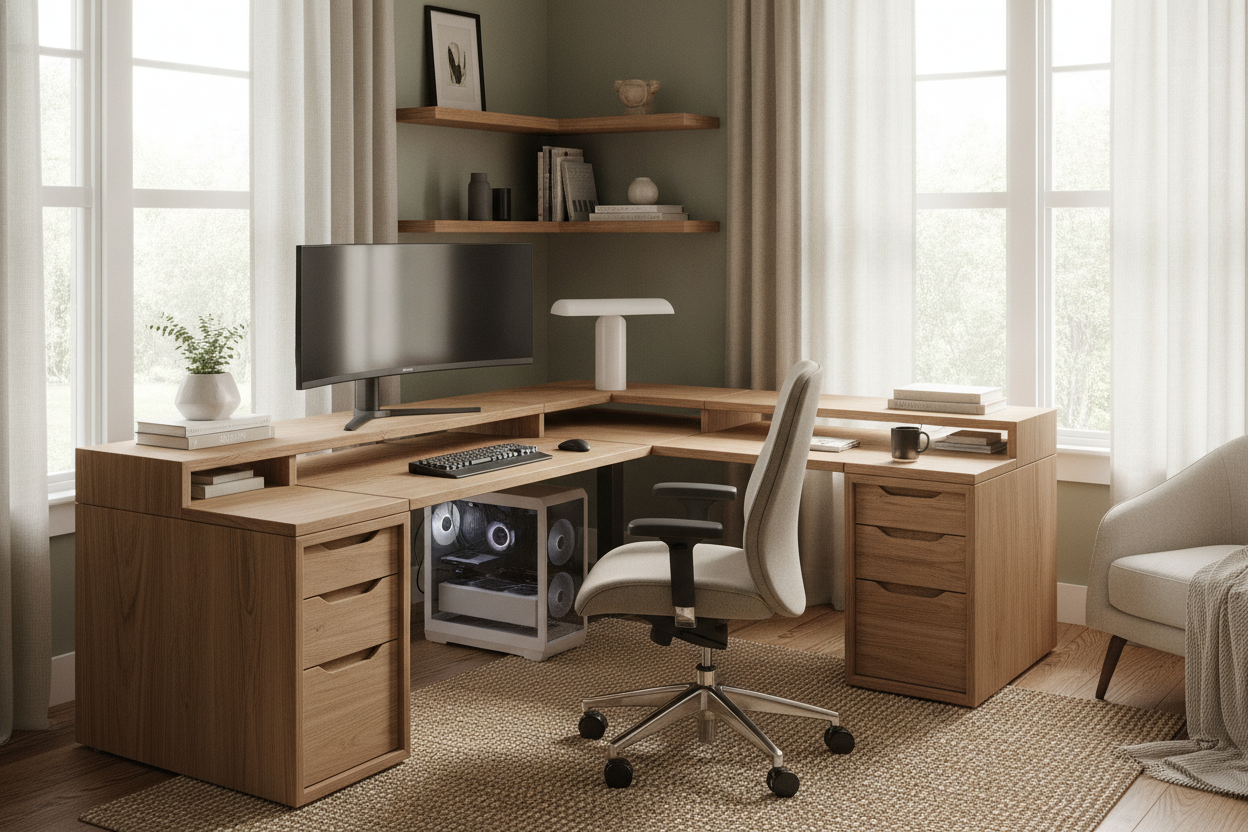
I spent three years working from a desk that was basically a glorified dining table. Every time I reached for my coffee, I felt a twinge in my shoulder because the height was just... off. We've all been there, staring at a desk that looked great in a showroom but feels like a torture device after four hours of Zoom calls. I finally realized that my productivity wasn't the problem—my furniture was.
Investing in customizable computer desks seemed like a 'future me' project, but after the third time I tripped over a power strip, I hit my limit. Standard desks are built for a hypothetical person who doesn't exist. If you've got a weirdly shaped room or a specific tech stack, you need a setup that actually fits your life.
Quick Takeaways
- Standard 29-inch desk heights are an ergonomic disaster for most people.
- Depth matters more than width if you use large or dual monitors.
- Integrated power and cable routing are mental health essentials, not luxuries.
- A custom setup usually pays for itself in reduced physical strain and better focus.
The 'One Size Fits All' Desk Lie That Ruined My Posture
Most big-box retailers sell desks that are exactly 29 or 30 inches tall. That is a total lie for anyone under 5'10 or over 6'2. I spent months hunched over like a gargoyle because my chair couldn't go high enough to meet the table without my feet dangling. It’s not just about height, though. It’s about the 'standard' 24-inch depth that forces your 27-inch monitor right into your retinas.
When you have a weirdly shaped corner or a dual-monitor setup, generic layouts fail. You end up with dead space behind the screens and no room for a notebook or a glass of water. A custom computer desk allows you to dictate the footprint so the furniture works for the room, instead of the other way around. I stopped trying to adapt my body to a piece of particle board and started demanding more from my workspace.
Why I Finally Caved and Looked for Customizable Computer Desks
The breaking point came when I tried to add a second monitor and realized my desk was literally bowing in the middle. I was using a basic writing computer desk that I’d bought during a move because it was cheap and easy to carry. It was fine for a laptop and a succulent, but for a full-time remote career? It was a disaster. The 'spaghetti' of cables underneath was a constant source of low-grade anxiety.
I realized that a custom computer table wasn't just a vanity purchase. It was about creating a dedicated zone where I didn't have to fight my environment. Every time I had to unplug something or move a peripheral, I was reminded of how much I hated that wobbly, generic setup. I needed a solution that accounted for my specific PC tower, my cable management needs, and the fact that I like to keep my legs crossed while I work.
Finding a Custom PC Desk Builder That Actually Gets It
When you start looking for a custom pc desk builder, don't get distracted by flashy RGB lights. Focus on the bones. You want kiln-dried hardwoods or high-pressure laminates that won't sag under the weight of a heavy rig. Check their modularity options—can you add a drawer later? Do they offer grommet holes in specific spots, or just one sad hole in the middle?
I looked for makers who understood that a 'custom' piece should solve a problem. If they don't ask about your cable routing or how many monitors you're mounting, they're just selling you a fancy table. Real customization is about the details, like a chamfered edge so the desk doesn't dig into your forearms while you type.
The 3 Specs I Chose for My Custom Built Computer Desk
First, I went for a 30-inch depth. Most standard desks are 24 inches, which is fine for a tablet but cramped for a mechanical keyboard and a large screen. That extra six inches gave me breathing room and space for my wrists to actually rest on the surface. It sounds small, but it changed my entire posture overnight.
Second, I insisted on integrated power. I was inspired by heavy-duty setups like the 6 drawer computer desk with hutch and socket because I realized that having outlets at desk level is a total game-changer for someone who swaps gear constantly. My custom built computer desk now features a recessed power strip that handles my monitors, speakers, and charger without a single cord trailing across the floor.
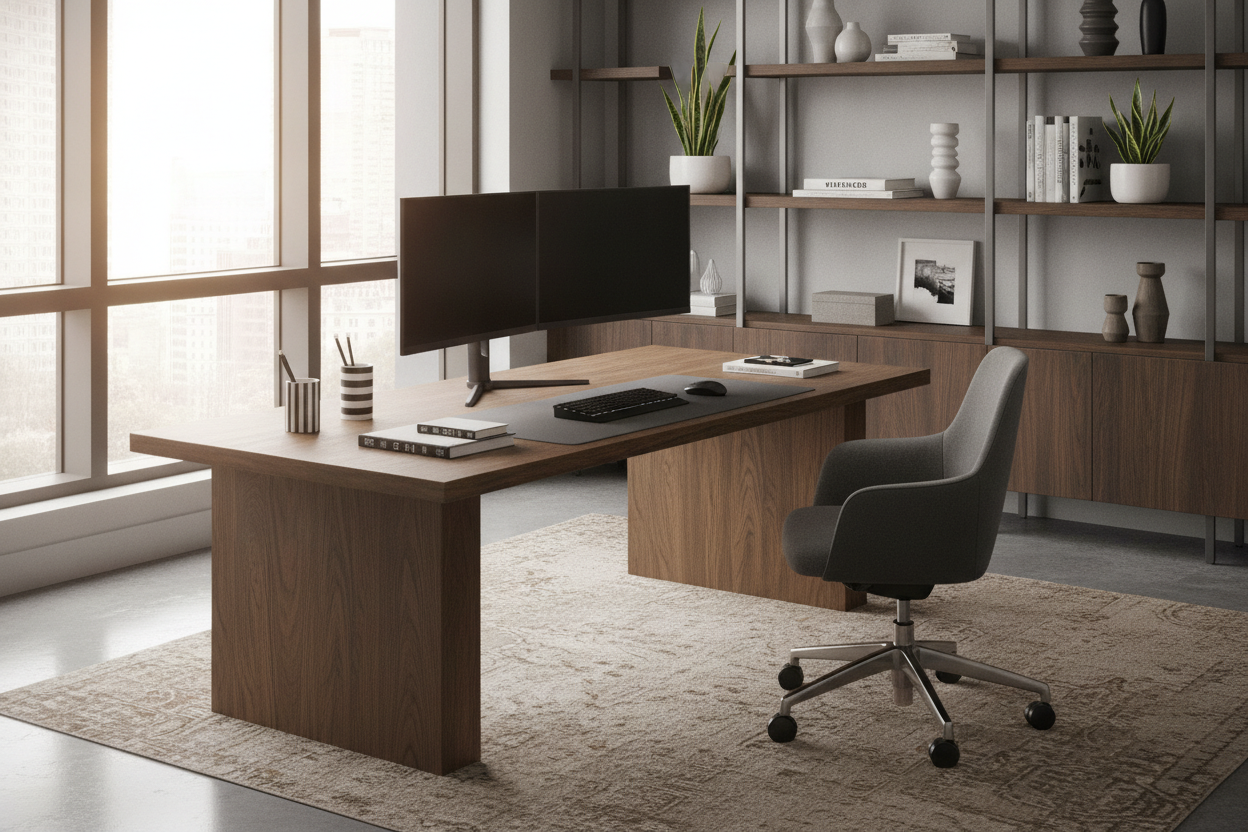
Finally, I chose a 1.5-inch thick solid oak top. My old desk was 0.5-inch MDF, and it vibrated every time I typed. The mass of a solid wood top absorbs those micro-vibrations, making the whole experience feel more stable and premium. It’s the difference between driving a budget compact car and a luxury sedan; the 'thud' of quality is real.
Blending the Tech: Making a Custom PC Desk Look Chic
The biggest fear with a custom pc desk is that it will look like a 'gamer' cave. I live in a 700-square-foot apartment; my office is also my living room. I didn't want a neon-lit eyesore. To fix this, I used matte black steel legs and a natural wood finish that matched my bookshelves. It makes the tech feel intentional rather than intrusive.
If you have the space, you can style a cabinet desk combo for a custom built-in look that effectively hides your tower and printer behind closed doors. This keeps the 'office' part of your life from bleeding into your 'relaxing' part. By matching the hardware of the desk to the rest of your room's accents, the workstation becomes a piece of furniture first and a tech hub second.
FAQ
Are customizable computer desks more expensive?
Usually, yes. You're paying for better materials and the labor of someone actually measuring twice. But since you won't need to replace a sagging desk in two years, the cost per year is actually lower.
What is the best material for a custom computer table?
Solid wood (like oak or walnut) is the gold standard for durability and feel. If you're on a budget, look for high-grade birch plywood with a thick veneer—just avoid hollow-core 'honeycomb' fillers.
How do I know what height I need?
Sit in your favorite chair with your feet flat on the floor and your elbows at a 90-degree angle. Measure from the floor to the bottom of your elbows. That is your ideal desk height. For most, it's actually closer to 27 or 28 inches than the standard 30.

Laisser un commentaire
Ce site est protégé par hCaptcha, et la Politique de confidentialité et les Conditions de service de hCaptcha s’appliquent.