


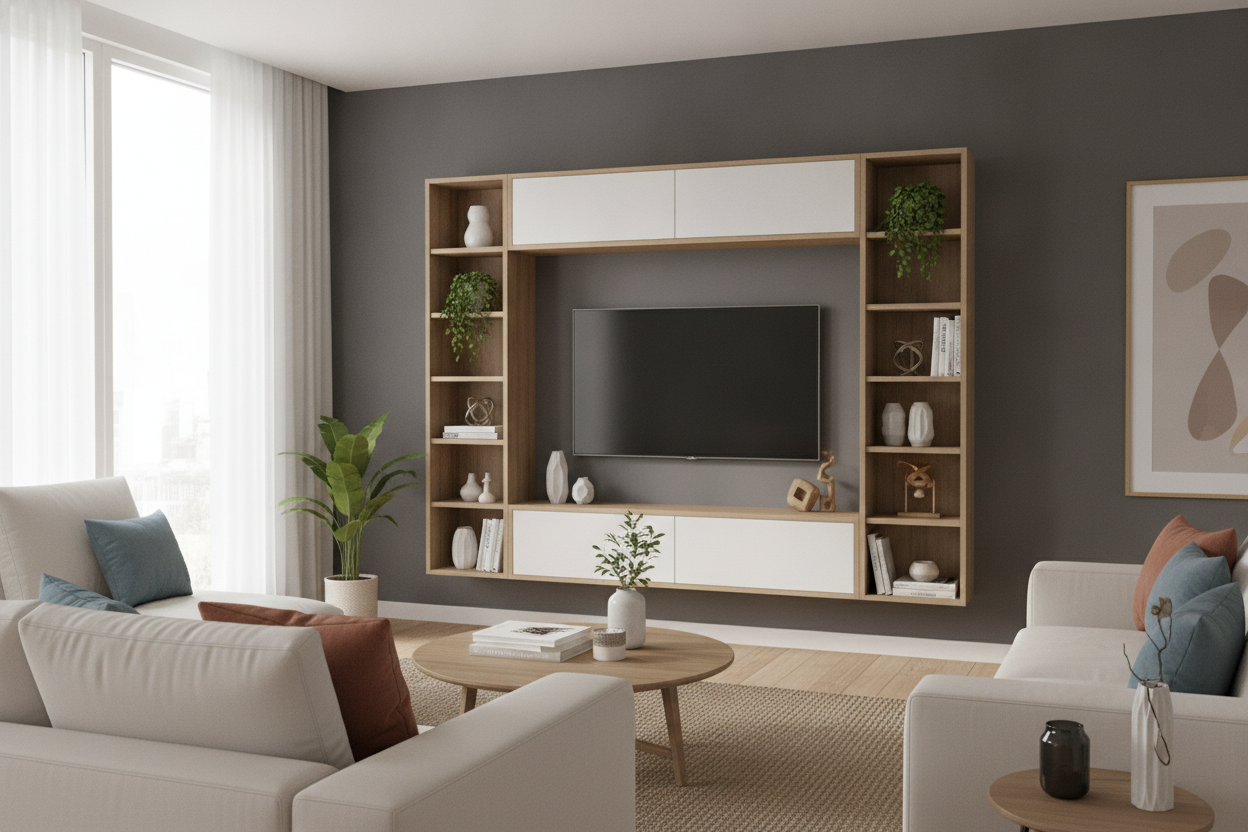
I spent three years side-stepping a mid-century console that was basically a glorified dust magnet. In my 12x12 living room, every inch counts, and that thing was a thief. It looked great in the catalog, but in reality, it was an 18-inch deep barricade that blocked my path to the balcony. I eventually realized that a tv wall shelving unit wasn't just a design choice; it was a survival tactic. Most floor units are built for suburban basements, not tight city layouts where you need to see the floor to feel like you can breathe.
- Vertical storage reclaims wasted floor space for foot traffic.
- Floating units create an illusion of a larger room by exposing more flooring.
- Integrated shelving allows you to blend tech with personal decor.
- Cable management is the secret to making it look expensive.
The Chunky Floor Console Was Eating My Floor Plan Alive
My old console was a solid oak beast. It was beautiful, sure, but it was also a massive physical hurdle in a narrow room. Standard media cabinets are often surprisingly deep, taking up nearly two feet of space once you account for the gap needed for plugs. In a small apartment, that’s prime real estate. I was tired of stubbing my toe on solid oak legs just to change the channel or reach the window. The room felt heavy, cluttered, and honestly, a bit claustrophobic.
Why I Finally Caved and Bought a TV Wall Shelving Unit
I realized my walls were vast and empty while my floor was a crowded mess of legs and cables. I finally used wall shelves for tv storage to lift the entire operation off the ground. Switching to a tv storage wall unit was the only way to stop the furniture creep that was eating my rug. When you mount your storage, you create a sightline under the unit, which trickles into your brain and says, 'Hey, there's actually room here.' It’s a psychological trick that works every time. Plus, I no longer have to move a 100-pound cabinet just to vacuum the dust bunnies that congregate behind the router.
Hunting Down the Perfect Small TV Wall Unit
Finding a small tv wall unit that actually feels sturdy is harder than it looks. You have to be ruthless with your tape measure. For a small wall unit for tv, I look for a depth of no more than 12 inches. Anything deeper starts to feel like it's looming over you. Unlike standard tv stands, these systems are permanent-ish, so you need to find the studs. I learned the hard way that cheap drywall anchors and a 55-inch OLED are a recipe for a very expensive heart attack. Ensure your unit has specific cutouts for your router—nothing ruins the floating vibe faster than a mess of black spaghetti hanging down.
Styling TV Wall Units With Shelves (So It Doesn't Look Like a Dorm)
A giant black screen is a visual void that sucks the soul out of a room. I used tv wall units with shelves to surround the tech with things I actually like looking at. I put a trailing Pothos on the top shelf to soften the edges and a stack of textured linen-bound books on the bottom. If you’re working with a massive screen, a wall unit for 75 inch tv is essential for grounding the display. Without surrounding shelves, a big TV looks like a dark window into nothingness. I also suggest mixing in some vintage art or a small ceramic vase to break up the tech feel. It should look like a library that happens to have a TV, not a big-box store display.
The Verdict: Is a TV Wall Unit With Storage Worth the Assembly?
Assembly is a two-person job, no matter what the manual says. You will be drilling, leveling, and probably sweating. But once it’s bolted in, a tv wall unit with storage provides a modern design with ample storage that a floor unit just can't match. My living room finally feels like a place to relax instead of a storage unit for my electronics. The cable management took me an extra hour of zip-tying, but seeing that clean, floating look every evening makes the effort worth it. It’s the single best upgrade I’ve made for my small-space sanity.
FAQ
Can I install this in a rental?
Yes, but you'll need to patch and paint the holes when you move. Use a stud finder to ensure it's secure; four small holes are easier to fix than a collapsed wall.
How do I hide the power cords?
Use a paintable cable raceway that runs down the wall, or if you're handy, install an in-wall power kit to hide everything behind the drywall.
Will my gaming console overheat?
Only if you shove it into a closed cabinet. Open shelving units are actually better for airflow than traditional consoles with backs.

Laisser un commentaire
Ce site est protégé par hCaptcha, et la Politique de confidentialité et les Conditions de service de hCaptcha s’appliquent.