


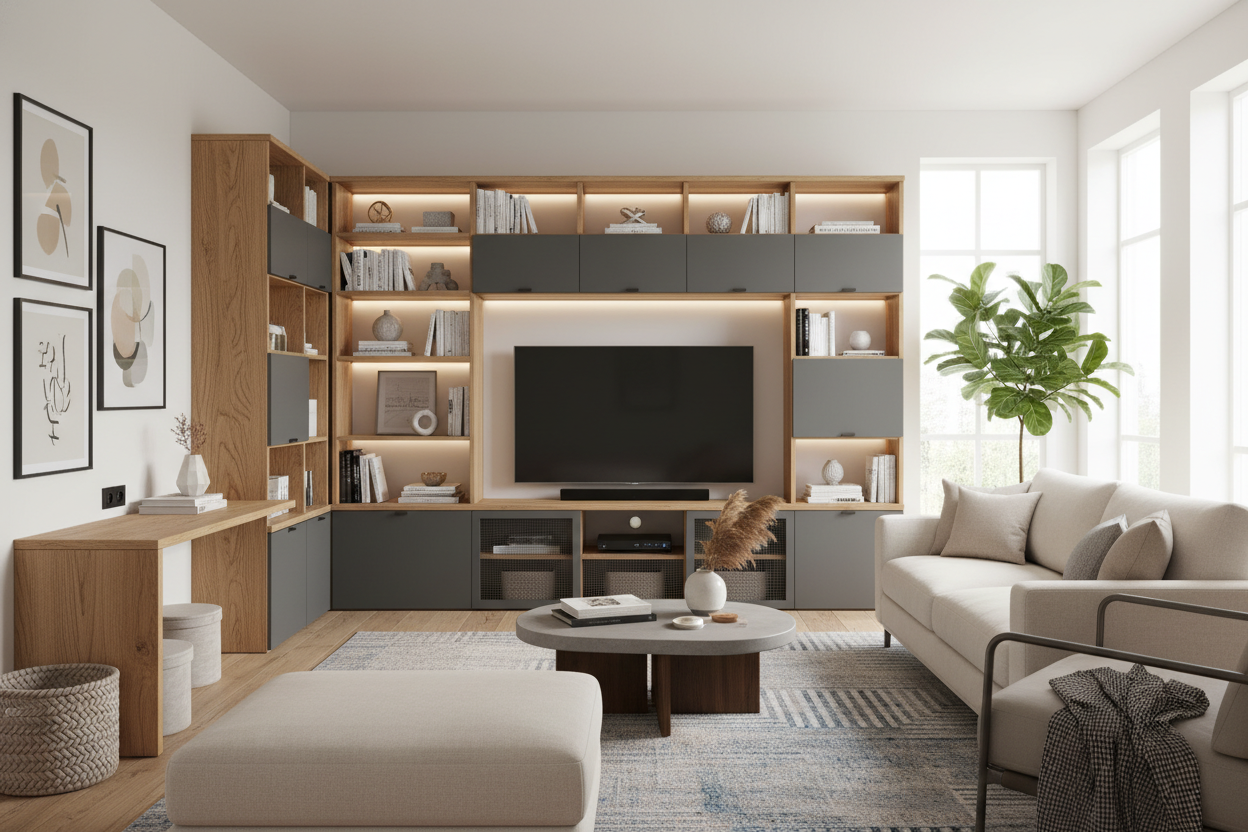
J'ai un jour passé trois heures à essayer d'encastrer une console média «standard» dans une alcôve d'appartement à Brooklyn qui était exactement un demi-pouce trop étroite. J'ai fini par rayer les plinthes, me froisser l'ego et transpirer à grosses gouttes à travers ma chemise préférée. C'est ce jour-là que j'ai renoncé aux meubles massifs, d'un seul tenant, et que j'ai finalement adopté le meuble TV modulaire.
- Flexibilité pour les futurs déménagements et les différentes longueurs de murs.
- Conception évolutive qui s'adapte lorsque vous améliorez votre téléviseur.
- Plus facile à transporter en pièces individuelles plutôt qu'en une seule bête lourde.
- Permet d'obtenir un aspect encastré haut de gamme pour une fraction du coût.
Le problème avec les meubles TV "parfaits" d'un seul tenant
Nous sommes tous passés par là. Vous trouvez un magnifique meuble TV en bois massif qui s'intègre parfaitement à votre salon actuel. Vous dépensez 800 $, le transportez à l'étage et vous vous sentez comme un génie du design intérieur. Puis, deux ans plus tard, vous déménagez. Soudain, cette unité "parfaite" bloque une porte ou a l'air ridiculement petite sous le téléviseur OLED de 75 pouces que vous avez acheté en solde.
Les unités monobloc sont statiques. Elles ne se soucient pas de votre vie changeante. Si votre nouveau salon a un radiateur à un endroit étrange ou un mur plus court, cette console massive devient un problème. J'ai vu trop d'amis contraints de vendre de beaux meubles pour une bouchée de pain simplement parce qu'ils n'étaient pas conçus pour s'adapter.
Qu'est-ce qui rend réellement une installation multimédia modulaire ?
Une configuration modulaire n'est pas seulement un assemblage de boîtes aléatoires. C'est un système cohérent conçu pour bien fonctionner ensemble. Au lieu d'une longue dalle de bois, vous avez une console multimédia modulaire centrale flanquée d'unités assorties que vous pouvez ajouter ou retirer en fonction de votre plan d'étage.
La magie opère lorsque vous mélangez et assortissez des composants de rangement modulaires. Vous pourriez commencer par une base basse pour le téléviseur, puis ajouter une bibliothèque haute d'un côté pour équilibrer une fenêtre. Si vous déménagez dans un endroit plus grand, vous achetez simplement le meuble assorti pour l'autre côté. Cela crée un look homogène qui imite les menuiseries sur mesure sans la facture de menuisier à quatre chiffres.
Comment construire une installation qui évolue avec votre technologie
La technologie évolue plus vite que les tendances en matière de mobilier. Si vous utilisez toujours un support conçu pour un plasma de 40 pouces, votre écran moderne déborde probablement de quelques centimètres, ce qui est une faute de goût majeure à mon avis. Un meuble média modulaire résout ce problème en vous permettant d'agrandir l'empreinte à mesure que la taille de votre écran augmente.
Je suggère toujours de commencer par un meuble console média de longueur réglable comme ancre. Ces unités peuvent se déplier pour s'élargir ou se comprimer pour s'adapter aux coins étroits. Lorsque vous passez d'un écran de 50 pouces à un écran de 75 pouces, vous ne jetez pas les meubles ; vous ajoutez simplement un meuble console modulaire à chaque extrémité pour donner au téléviseur le poids visuel dont il a besoin.
Attendez, ça ne va pas ressembler à une chambre d'étudiant ?
Il y a une peur persistante que "modulaire" ne soit qu'un mot sophistiqué pour "cubes en plastique bon marché". Je comprends. Nous avons tous vu ces étagères métalliques fragiles dans les dortoirs universitaires. Mais les unités de divertissement modulaires modernes ont fait beaucoup de chemin. La clé est de rechercher des matériaux de haute qualité comme le chêne séché au four ou les placages de noyer et des quincailleries robustes.
Pour maintenir une ambiance sophistiquée, faites attention à la base. Je suis un fervent défenseur de l'utilisation d'un meuble TV sur pieds. Soulever le meuble média modulaire du sol crée un "espace négatif" qui donne l'impression qu'une petite pièce est beaucoup plus grande. Cela évite également que le rangement média modulaire ne ressemble à un bloc de bois lourd et disjoint posé sur votre tapis.
Mon verdict final sur le rangement média modulaire
Après avoir déménagé cinq fois en sept ans, je n'achèterai plus jamais un grand meuble non modulaire. C'est une question de calcul à long terme. Vous pourriez dépenser un peu plus au départ pour un système modulaire de haute qualité, mais vous le garderez pendant une décennie car il s'adaptera réellement à chaque logement où vous vivrez.
Investir dans un meuble média modulaire, c'est en quelque sorte pérenniser votre salon. Vous devenez l'architecte de votre propre espace, ajustant l'aménagement au gré de vos besoins. C'est la façon la plus intelligente de décorer si vous accordez de l'importance au style et à la tranquillité d'esprit.
Puis-je mélanger différentes marques d'unités modulaires ?
Je ne le recommanderais pas. Même si deux marques disent "Noyer", les teintes et les grains de bois ne correspondent que rarement parfaitement. Tenez-vous-en à une seule collection pour garantir que les hauteurs et les profondeurs s'alignent pour un look intégré.
Les unités modulaires sont-elles suffisamment robustes pour les téléviseurs lourds ?
Absolument, mais vérifiez les charges admissibles. La plupart des consoles TV modulaires sont conçues pour supporter plus de 45 kg, ce qui est suffisant pour les téléviseurs LED modernes, mais vérifiez toujours les spécifications du module central.
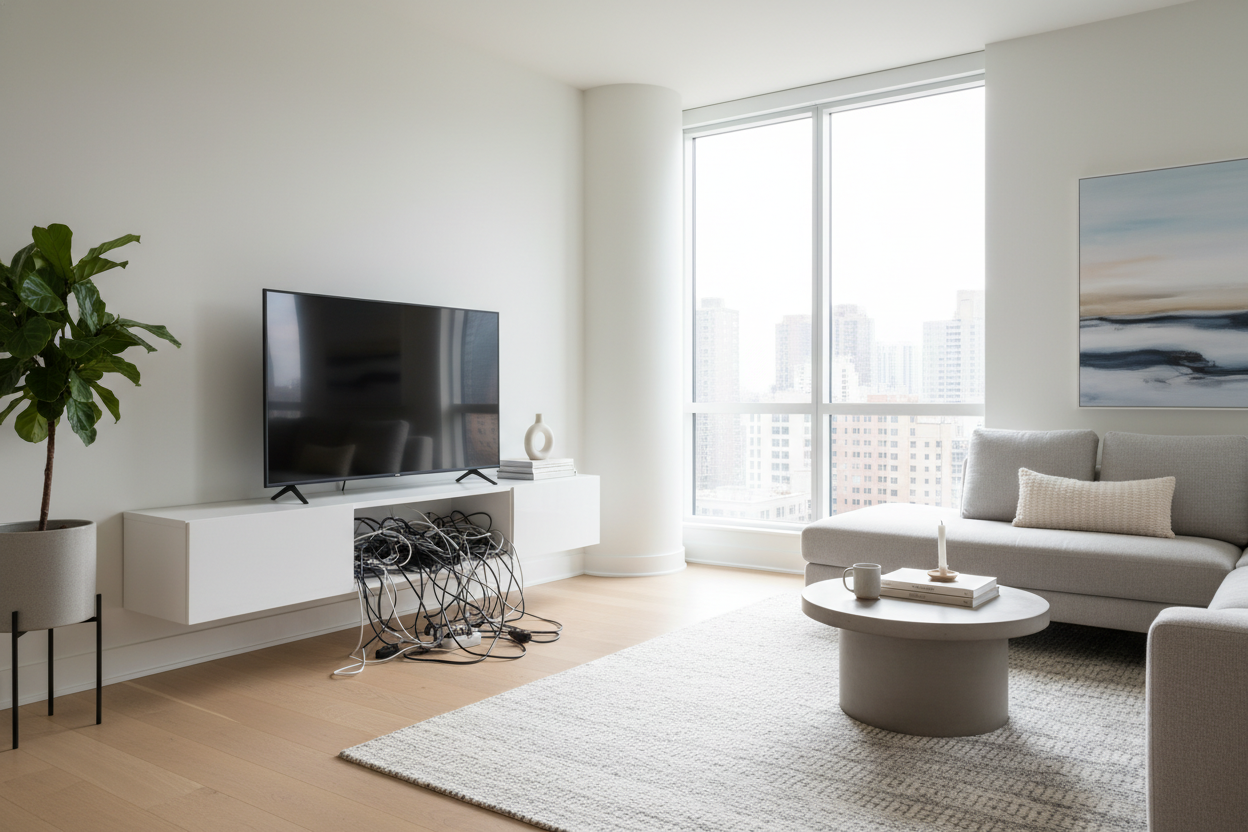
Comment cacher les câbles dans une configuration modulaire ?
Recherchez les unités avec des trous de gestion des câbles pré-percés. Si vous combinez plusieurs pièces, vous pouvez faire passer les câbles derrière les unités ou utiliser des clips adhésifs pour tout maintenir rangé contre le dos des cadres.

Laisser un commentaire
Ce site est protégé par hCaptcha, et la Politique de confidentialité et les Conditions de service de hCaptcha s’appliquent.