


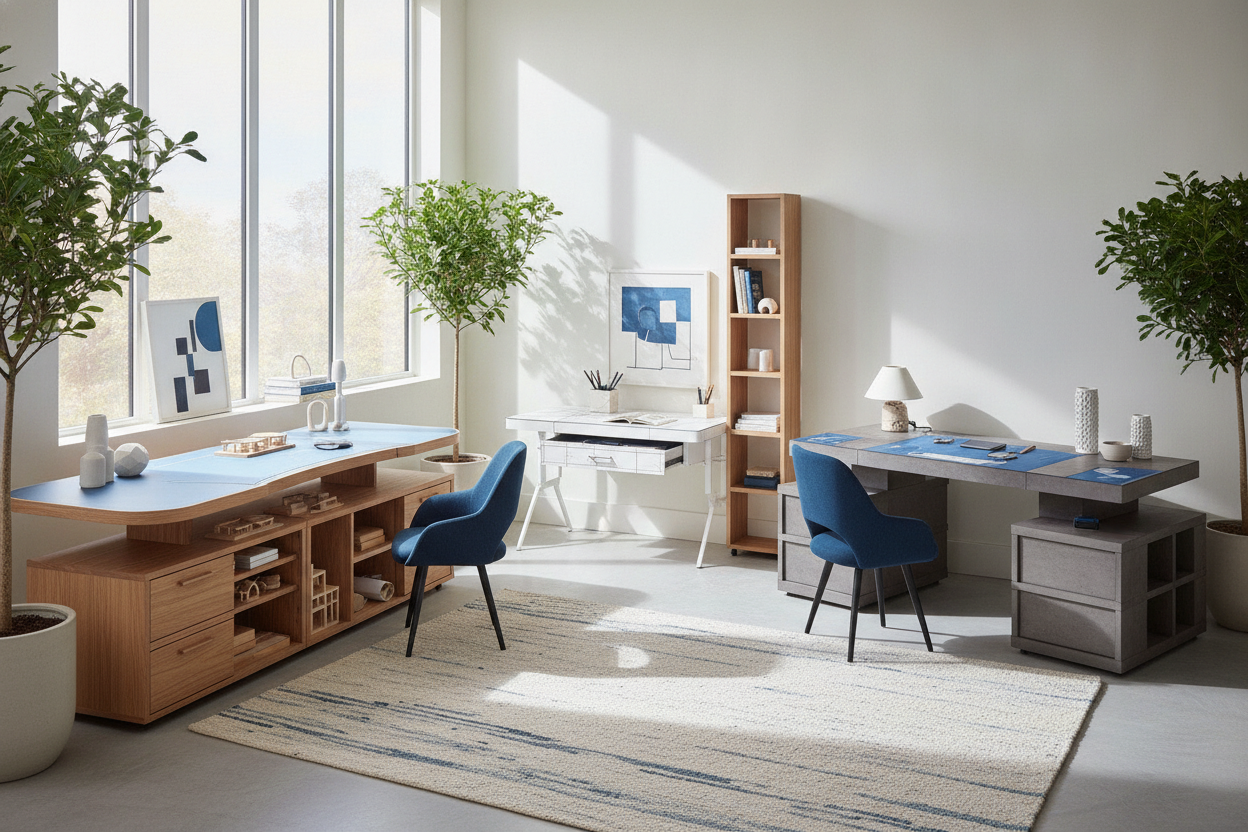
Introduction: Rethinking the Modern Home Office Desk
Planning a modern workspace requires moving beyond the concept of a simple flat board resting on four posts. A high-functioning workstation balances adequate work surface, bodily movement, hardware placement, and ambient room traffic. When workspace layouts fail, the culprit is often a mismatch between desk proportions and everyday workflow needs.
Selecting the right desk starts with evaluating how a room breathes. Placing a deep executive credenza in a modest multi-use bedroom restricts walkway clearance and disrupts visual balance, while placing an undersized console desk in a dedicated study can leave hardware overflowing onto the floor. Reviewing designer-tested home office desk concepts illustrates how professional spatial planning establishes deliberate zones for digital hardware, analog paperwork, and concealed storage.
Core Workstation Blueprints: Matching Desk Geometry to Room Flow
Every home office layout relies on matching the desk's physical footprint to the room's architectural parameters. Choosing the appropriate geometry ensures your daily tasks feel natural and uncluttered.
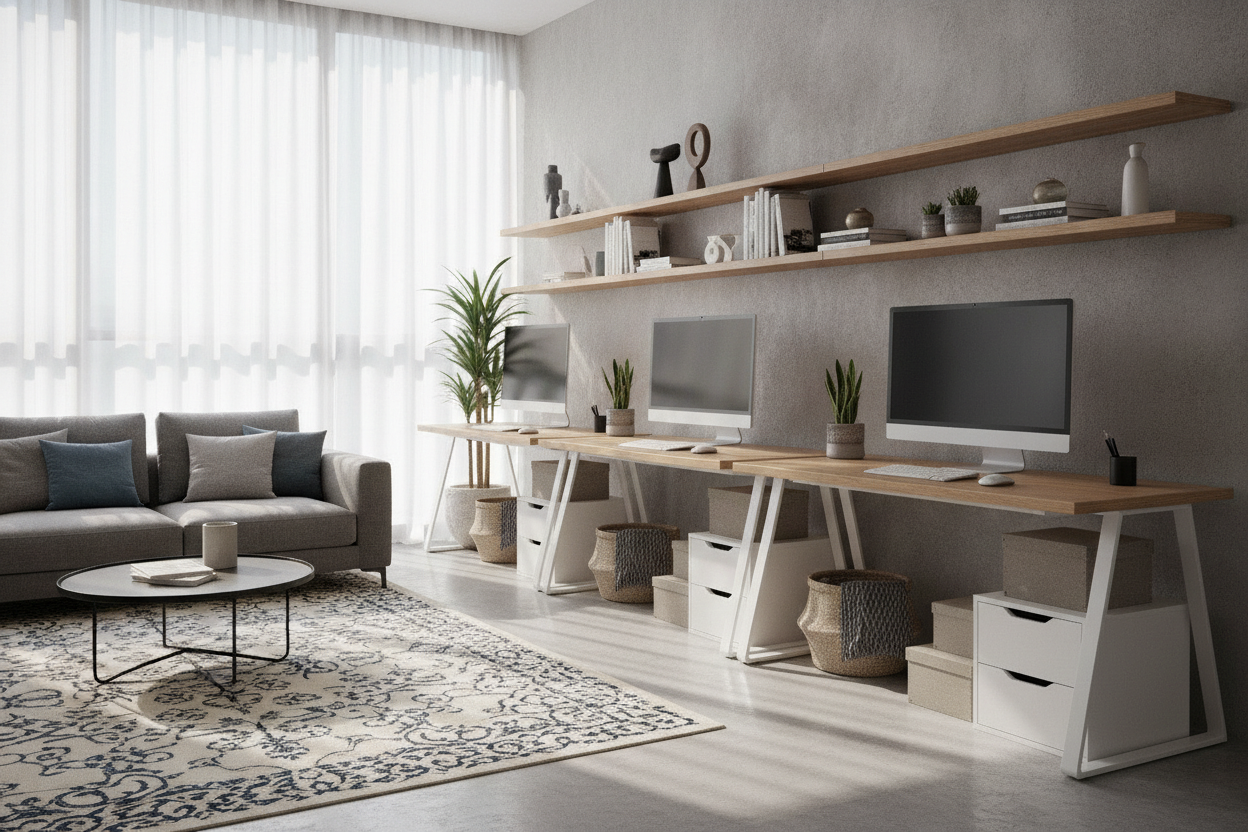
- Linear Wall-Aligned Desks: The most adaptable configuration, linear desks preserve open floor space in long or narrow rooms. Placing a linear desk against a main wall allows for straightforward cable access and clear sightlines toward entryways.
- Corner and L-Shaped Configurations: L-shaped designs establish distinct operational wings. One wing can host stationary monitors, docking stations, and external peripherals, while the adjacent return surface remains clear for notebook writing, physical document review, or sketching.
- Floating Center-Room Desks: Positioning a desk centrally facing inward gives a room an open, executive character. This orientation demands careful attention to rear modesty panels and floor-level wire concealment since the back and sides remain fully visible.
- Multi-Functional and Convertible Units: For multi-purpose spaces such as guest rooms, vanity alcoves, or living room corners, multi-functional vanity desk units provide flexible dual-purpose surfaces that transition smoothly between morning routines and focused daytime work.
Desk Top Ideas and Surface Sizing Framework
Tabletop surface architecture directly influences posture, focus, and visual clarity. Structuring your desktop into physical reach tiers helps maintain an organized layout throughout long work sessions.
A practical desktop layout separates gear into distinct tiers:
- Primary Active Tier: The immediate physical zone within comfortable forearm reach, reserved solely for active keyboards, mice, and immediate writing pads.
- Secondary Reference Tier: The mid-reach surface holding laptop stands, primary displays, reference books, and task lamps.
- Perimeter Utility Tier: The outer boundary where cable grommets, desktop organizers, and secondary decor sit without interrupting movement.
Material finishes also dictate long-term maintenance and aesthetic presence. High-grade engineered wood boards finished with durable melamine or structured laminates provide strong resistance to daily wear, liquid condensation, and surface scuffs. Natural wood veneers offer warm grain character that complements residential decor, while matte, non-reflective surfaces help reduce visual glare under concentrated overhead and task lighting.
Integrated Storage Architecture: Desks with Cabinets and Hutches
Desk clutter rarely stems from a lack of surface area; it is usually caused by inadequate containment systems beneath and above the primary tabletop. Integrating storage directly into the desk framework keeps daily tools accessible without consuming valuable room floor space.
Choosing an office storage cabinet with integrated desk merges deep filing drawers, open utility shelving, and hardware containment into a unified silhouette. This architecture conceals power strips, bulky paper supplies, and external backup drives behind closed joinery, maintaining clean sightlines across the room.
When floor dimensions are limited, vertical expansion provides substantial utility. Implementing coordinated above-desk storage strategies through matching wall-mounted shelving or structural desk hutches allows you to store reference binders, office supplies, and decorative accents vertically, freeing the active desk surface for daily tasks.
Practical Ideas for Home Office Desk Placement and Assembly
Proper physical placement and assembly ensure your workstation remains stable, quiet, and comfortable over years of regular use.
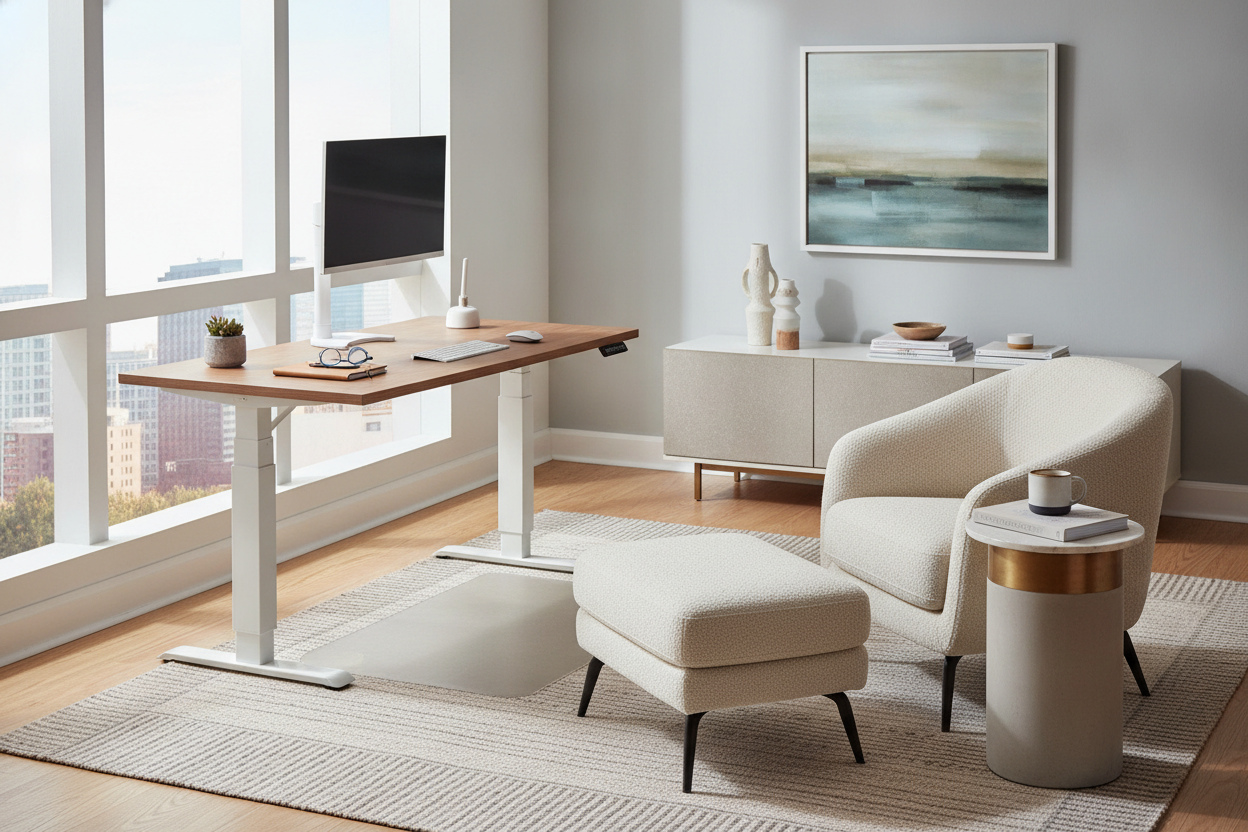
- Natural Lighting Angles: Position the desk perpendicular to exterior windows whenever possible. Facing a window directly can create intense contrast and eye fatigue, while sitting with your back directly to a window produces heavy screen reflections.
- Leveling on Varied Flooring: Floor surfaces are rarely perfectly level. Utilize adjustable base glides on desk legs and cabinet bases to eliminate subtle wobbles on area rugs, hardwood, or tiled floors.
- Sub-Surface Cable Management: Attach wire management baskets or horizontal raceways directly underneath the rear tabletop edge. Suspending power bars and adapter bricks off the floor protects wiring from accidental foot contact and creates a tidy appearance.
Styling and Coordinating Home Office Desk Designs
A home office desk should integrate smoothly with the overall interior palette of your home rather than feeling like an isolated commercial fixture. Matching finishes, hardware tones, and functional accessories establishes a cohesive look across the entire room.
Pair crisp white desks with brushed metal accents and neutral walls to create an airy, focused environment. Rich wood tones, such as walnut, oak, and espresso, add warmth and depth to traditional studies, especially when matched with surrounding credenzas or bookshelves. For dynamic, modular spaces, a modular rotating multi-use desk allows you to adjust the surface angle to suit changing room layouts, natural light, and varied daily tasks.
By harmonizing tabletop proportions, structural storage cabinets, and clean cable routing, your home office desk becomes a reliable foundation for comfortable, distraction-free productivity.

Laisser un commentaire
Ce site est protégé par hCaptcha, et la Politique de confidentialité et les Conditions de service de hCaptcha s’appliquent.