


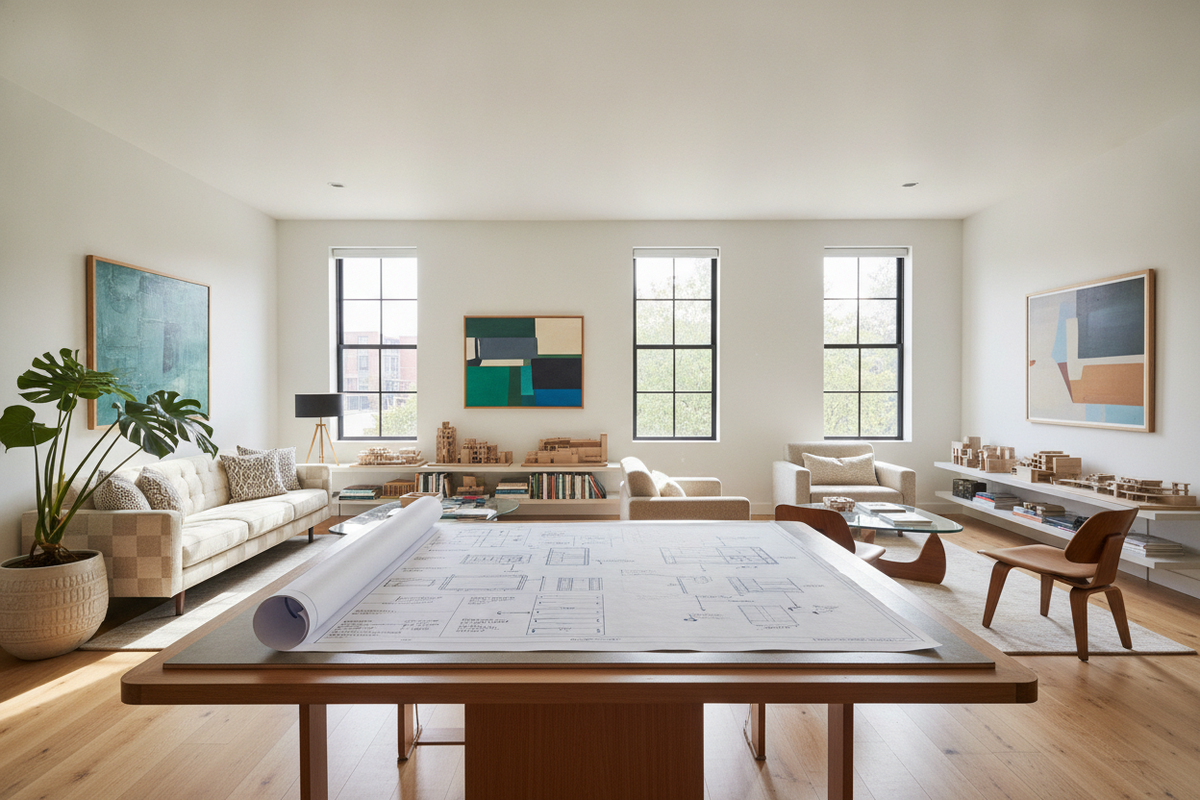
The evolution of modern office design reflects an ongoing balance between open accessibility and visual calm. While traditional roll top desks evoke images of heavy, dark-stained Victorian cabinetry filled with ornate carvings, mid-century modern pioneers reimagined this form into an emblem of streamlined efficiency. Central to this transformation is the heritage of the herman miller roll top desk, an architectural concept that adapted kinetic woodworking into executive workspaces.
Understanding how mid-century designers transformed roll top mechanics allows interior planners and homeowners to appreciate both vintage collector workstations and modern multi-functional pieces. By exploring the spatial footprints, mechanical tambour tracks, and compartmental layouts of these desks, you can design a focused work environment that maintains clean visual lines throughout your home.
Architectural Origins: The Mid-Century Reinvention of the Roll Top Desk
During the mid-twentieth century, designers sought to eliminate visual clutter in creative studios and corporate headquarters. The traditional roll top desk was stripped of its ornamental bulk, leaving behind an agile workstation built on minimalist proportions and functional geometry. For an overview of design heritage across classic office pieces, exploring a broader herman miller guide provides context on how structural simplicity defined the era.
From Victorian Bulk to Modernist Slenderness
Traditional roll top units relied on solid, floor-to-ceiling pedestal drawers that anchored the furniture heavily within a room. In contrast, modernist iterations elevated the work surface on slender legs or cast metal pedestals, allowing ambient light to flow beneath the chassis. This shift made the desk feel weightless while preserving the functional benefit of an enclosed desk hood.
The George Nelson Action Office Roll Top Desk Heritage
The iconic george nelson roll top desk concepts, developed as part of pioneering office system programs, introduced smooth-gliding tambour hoods paired with cast aluminum frames and durable work surfaces. Known widely in connection with the george nelson action desk lineage, these units treated the rolling shutter not merely as an aesthetic choice, but as an active organizational tool that could instantly hide ongoing project materials when stepping away from the workstation.
Spatial Footprint Tiers and Workspace Clearances
Choosing and placing a tambour desk requires evaluating how its three-dimensional form interacts with surrounding pathways, vertical walls, and seating clearances.
- Compact Writing Nook Footprints: Ideal for secondary living areas or bedroom corners, smaller roll top stations offer a narrow depth while using vertical height to house stationery and small electronics.
- Mid-Scale Dedicated Office Footprints: Balanced units that provide sufficient surface depth for laptops, task lighting, and writing blotters, while maintaining a moderate width suitable for dedicated study rooms.
- Executive Suite and Open-Plan Anchors: Broad freestanding desks designed to be viewed from all angles, requiring generous perimeter circulation space so the sculptural profile remains unobstructed.
When positioning a roll top desk against a perimeter wall, ensure sufficient vertical clearance for the upper canopy, particularly if hanging framed prints or wall sconces nearby. When floating a desk in the center of an open layout, maintain ample perimeter buffer space to allow easy passage around the chassis.
Tambour Mechanics and Concealed Storage Architecture
The core innovation of any roll top desk is the tambour hood—a flexible curtain constructed from narrow, parallel slats bonded to a backing fabric or linked along an internal channel track.
Track Slat Engineering and Kinetic Glide
In mid-century designs, each wooden or composite slat is precision-milled to ride along curved side grooves routed directly into the side panels. When pushed upward, the tambour smoothly curves back into an internal cavity, disappearing from sight to reveal the work surface. For readers considering how modern tambour and shutter desks compare with classic silhouettes, our roll desk guide outlines essential mechanical considerations.
Interior Compartment Geometry and Organization Zones
Beneath the rolling shutter lies a structured matrix of interior pigeonholes, horizontal paper trays, and shallow accessory slots. This compartmentalization ensures that desktop tools remain neatly categorized without spilling into the primary writing zone. When the day ends, sliding the hood downward creates an immediate transition between professional focus and domestic relaxation.
Structural Materials, Framing Dynamics, and Tactile Finishes
The structural longevity of a roll top workstation depends on how the framing materials accommodate the continuous movement of the tambour door.
- Molded Hardwood Veneers: Natural walnut, teak, and oak veneers provide organic warmth and dimensional stability, reducing the risk of wood warping inside track grooves.
- Extruded Metal and Cast Aluminum Bases: Cantilevered metal legs reduce visual mass and resist movement, ensuring the upper desk box remains perfectly square over years of use.
- Protective Top Finishes: Durable satin lacquers and modern laminates shield the main writing plane from daily pen friction, moisture, and sunlight exposure.
Integrating Roll Top Desks into Modern Interior Layouts
Integrating a vintage or mid-century-inspired roll top desk into a modern interior requires thoughtful coordination with surrounding cabinetry, power routing, and task lighting. To discover creative strategies for styling modular storage elements alongside functional surfaces, review our practical desk guide.
Pairing with Contemporary Storage Units
Because roll top hoods limit the ability to mount monitor arms directly to the rear edge, pairing the desk with adjacent low credenzas or tall modular shelving creates dedicated homes for printers, auxiliary drives, and reference binders.
Multifunctional Dual-Purpose Rooms
In compact apartments, a concealed-surface desk can serve as both a private writing corner and a discreet vanity. For spaces demanding transformable surfaces with internal compartments, exploring an adaptable desk product provides a space-saving alternative that balances concealed storage with daily utility.
Buyer and Collector Decision Framework
Whether you are searching for an authentic collector piece or evaluating modern convertible alternatives, a thorough inspection of structural points is essential before purchasing.
- Track Alignment and Smoothness: Verify that the tambour shutter glides evenly without sticking, catching, or racking diagonally in its side channels.
- Backing Material Condition: On vintage units, examine the canvas or fabric backing behind the slats for fraying, tears, or dry rot.
- Chassis Squareness: Ensure that the outer frame has not sagged over time, as any structural racking directly impairs the smooth kinetic glide of the roll top hood.
- Modern Adaptability: For spaces requiring versatile positioning and built-in features, consider multi-angle convertible units such as an adjustable desk product that accommodates flexible room layouts.
By assessing mechanical integrity, spatial proportions, and material harmony, you can introduce a roll top desk that honors classic mid-century architecture while enhancing the everyday workflow of your modern home.

Laisser un commentaire
Ce site est protégé par hCaptcha, et la Politique de confidentialité et les Conditions de service de hCaptcha s’appliquent.