


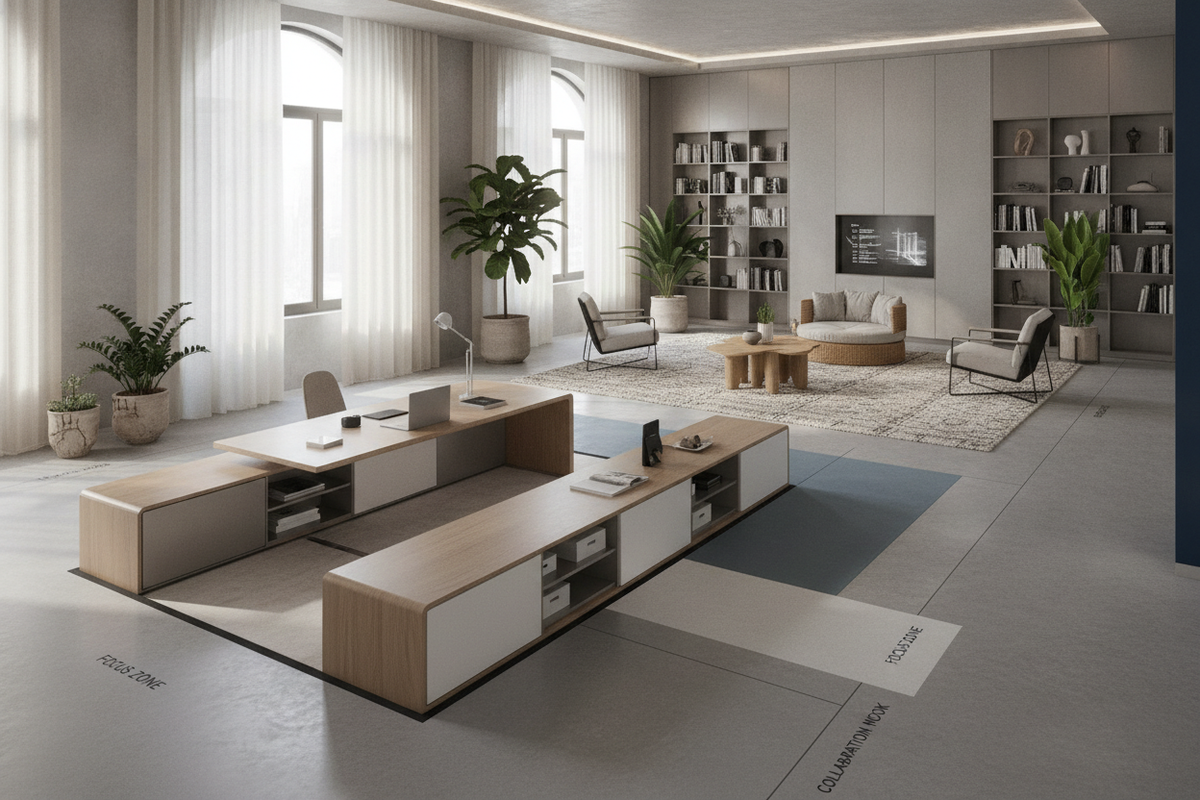
Architectural Fundamentals of a Dedicated Floor Workspace
Designing a dedicated floor workspace introduces an intentional shift in how interior volume, daily focus, and spatial circulation interact. By dropping the working plane closer to the ground, a low-profile office layout redistributes the visual weight of furniture downward, creating a calmer atmosphere in contemporary living environments.
Spatial Sightlines and Vertical Volume Optimization
Standard desks, high-back task chairs, and tall shelving towers often divide compact rooms, interrupting natural light paths and sightlines. In contrast, incorporating a floor level desk keeps the central horizontal plane clear. This low center of gravity opens up vertical wall space, making ceilings feel higher and rooms feel considerably more expansive. For studio apartments, lofts, or multi-use guest areas, a low-profile arrangement preserves an open-concept flow while still defining an autonomous work zone.
Structural Transitions Between Floor Sitting and Standard Desking
Shifting to low-profile furnishings does not require completely abandoning conventional home office setups. Many households choose hybrid layouts, pairing standard standing or seated stations with a grounded zone for reading, drafting, or deep creative work. When evaluating how low-profile workstations complement conventional desks across hybrid rooms, exploring a broader computer desk collection helps balance varied work zones without sacrificing stylistic continuity.
Dimensional Tiers and Clearance Geometry for Floor Desks
A successful low-profile setup relies on precise proportions between tabletop height, leg spread, and screen positioning. Unlike standard desks that accommodate high-travel gas cylinders, a floor computer table must allow comfortable physical entry and exit directly from floor level.
Under-Desk Clearance and Leg Architecture
A primary consideration for any computer floor table is unhindered lower-body clearance. Because sitting at floor level encourages alternating positions throughout the day, the desk underside must accommodate cross-legged postures, legs outstretched forward, or kneeling arrangements. Desks with wide sled bases, perimeter leg posts, or open C-frames generally provide better clearance than units with bulky center supports that constrict knee movement.
Surface Depth and Visual Ergonomics for Low-Profile Screens
Maintaining balanced visual ergonomics on an ergonomic floor desk requires adequate surface depth and monitor elevation. Resting a laptop flat on a low surface often promotes neck flexion over extended periods. Implementing an integrated monitor riser, an adjustable arm, or an angled laptop stand brings screens closer to eye level. Selecting a floor desk table with sufficient depth ensures that keyboards, mice, and reference materials remain within arm's reach while preserving a comfortable viewing distance.
Posture Dynamics and Low-Profile Seating Coordination
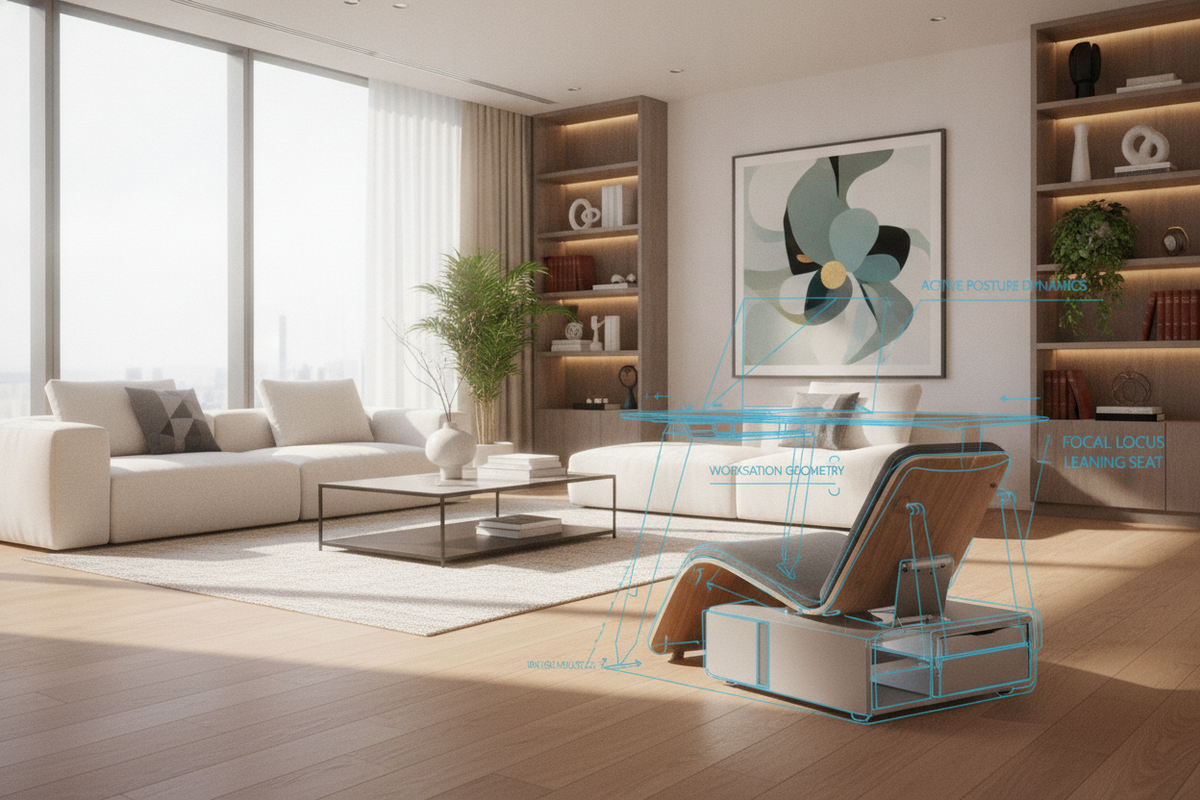
Working near the floor encourages active sitting postures, engaging stabilizing core muscles that remain relatively passive in standard office chairs. However, achieving lasting comfort requires matching the work surface to supportive seating foundations.
Active Floor Sitting Styles and Pelvic Alignment
Floor sitting naturally invites varied physical orientations, such as cross-legged sitting (sukhasana), kneeling (seiza), or resting with extended legs. The essential goal across all these postures is maintaining neutral pelvic tilt to support the spine's natural curvature. When paired with a properly proportioned floor sitting floor desk, minor shifts in posture throughout the day help distribute physical pressure evenly across the lower body.
Floor Cushions, Tatami Mats, and Backrest Support Systems
Pairing a sitting desk floor setup with targeted support accessories makes long work sessions comfortable. High-density foam cushions (zafu), tatami woven mats, and legless chairs with adjustable backrests (zaisu) provide reliable lumbar support while maintaining a grounded posture. The firm foundation of a woven mat or dense cushion prevents pelvic slumping and stabilizes the lower back during intensive tasks.
Storage Architecture: Integrating Drawers, Shelves, and Auxiliary Units
Without intentional storage planning, a ground-level setup can quickly accumulate visual clutter. A well-designed floor workspace integrates low-profile storage elements to keep surfaces organized and essentials easily accessible.
Floor Desks with Built-In Drawers vs. Perimeter Low Credenzas
Deciding between a self-contained floor desk with drawers and an open desk paired with a low perimeter credenza depends on your daily workflow. Built-in drawers offer immediate access to stationery, pens, and cables directly from a seated position. To maintain seamless accessibility from a seated floor posture, applying principles from a desk drawers office guide ensures small tools stay compartmentalized and within arm's reach. Alternatively, low horizontal credenzas set along the room perimeter preserve maximum leg space beneath the desk while offering ample capacity for archives and books.
Power Hub Integration and Low-Profile Cable Management
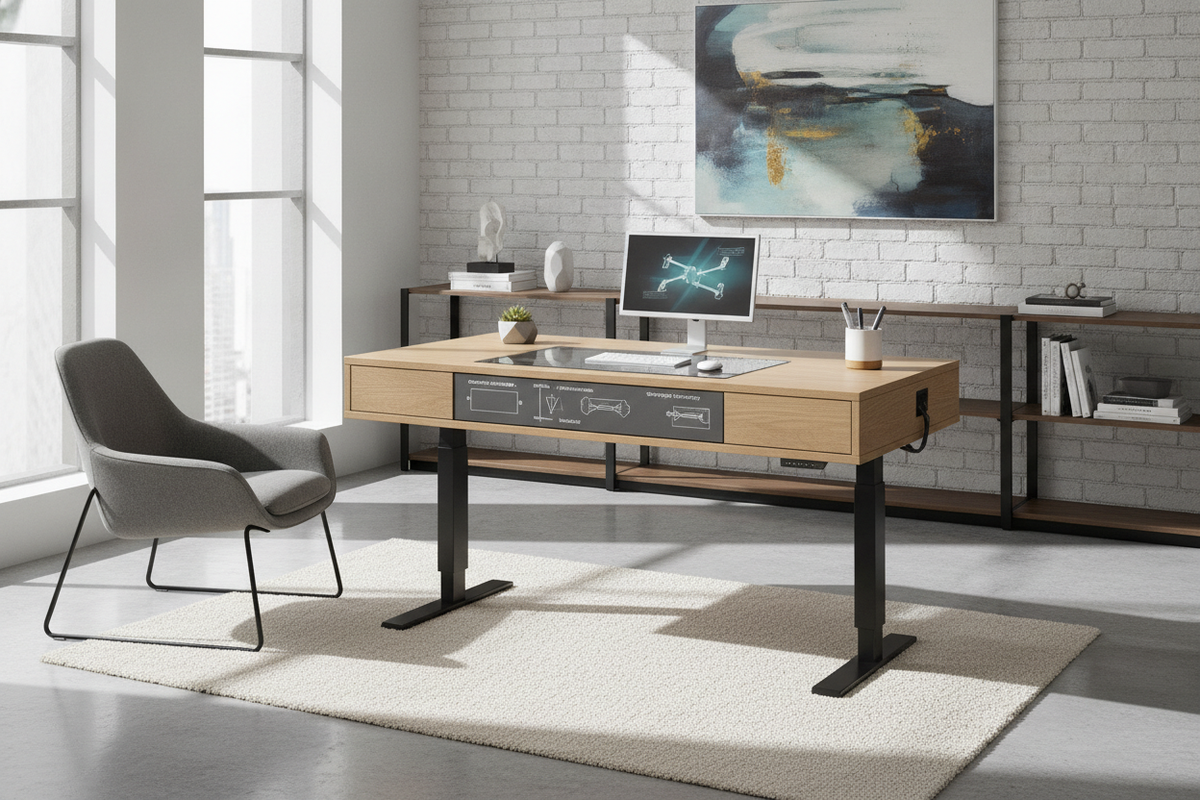
Cable management requires deliberate attention in ground-level configurations, as cords can create tripping hazards and visual clutter across the floor. Routing cables through rear grommets, under-desk raceways, and baseboard channels keeps wires secure and organized. For setups requiring built-in charging connectivity and elevated display tiers alongside low cabinetry, examining a computer desk drawers product illustrates structured power containment that simplifies daily device management at an accessible height.
Dual-User and Shared Floor Workspace Configurations
Low-profile furniture is well-suited for shared home offices and dual-user arrangements, offering an open aesthetic that prevents multi-desk rooms from feeling overcrowded.
Side-by-Side and Corner Layout Planning
In shared rooms, linear side-by-side or L-shaped corner configurations make efficient use of perimeter walls while keeping central floor areas open for movement. When partitioning multi-user layouts where corner geometry and perimeter cabinets meet, an office computer desk product demonstrates balanced corner footprint allocation that maximizes work surface area without obstructing floor movement.
Concealment and Multi-Purpose Room Transformations
Because low-profile desks frequently occupy multipurpose living rooms, bedrooms, or shared dens, selecting furniture with clean profiles allows the workspace to blend quietly into everyday living zones. For multi-functional living zones requiring complete visual discretion after work hours, consulting a computer desk office guide offers useful concealment methods and dual-purpose styling ideas to transition the room from a productive zone to an evening retreat.
Material Selection, Assembly Integrity, and Floor Surface Protection
Selecting durable, high-quality materials ensures that your floor office desk remains stable, functional, and visually appealing through years of active daily use.
Engineered Wood, Solid Timber, and Metal Sled Bases
Worksurfaces crafted from high-density engineered wood with durable laminate finishes provide exceptional resistance to daily scuffs, heat, and moisture. Solid timber adds organic warmth, tactile texture, and enduring strength, complementing minimalist and natural interior palettes. For structural framing, powder-coated steel sled bases and reinforced apron joints ensure lateral stability, preventing tabletop wobble during typing and drafting.
Subfloor Protection: Rugs, Felt Pads, and Weight Distribution
Because floor desks and seating rest directly on finished flooring, safeguarding hardwood, laminate, or tile from point-load friction is essential. Placing a flat-weave wool rug, low-pile runner, or tatami platform beneath the desk spreads weight evenly and introduces tactile comfort. Equipping desk bases and storage units with thick adhesive felt pads or smooth glide feet provides extra protection against surface abrasions whenever furniture is repositioned.

Laisser un commentaire
Ce site est protégé par hCaptcha, et la Politique de confidentialité et les Conditions de service de hCaptcha s’appliquent.