



I once lived in a 400-square-foot studio where every furniture purchase felt like a high-stakes negotiation. I spent three nights measuring a corner for a small tv media stand only to realize the 'slim' unit I bought blocked the radiator and made the whole room feel like a storage locker. It is the classic small-space struggle: do you go for the sleek, wall-mounted look or the reliable floor unit?
Choosing between floating and freestanding isn't just about aesthetics; it is about how much you trust your drywall and how often you plan on moving. After testing both setups in four different apartments, I have learned that what looks good on Instagram usually requires a lot more hardware and patience than the box suggests.
Quick Takeaways
- Floating units create a visual 'weightless' effect that makes tiny rooms feel bigger.
- Freestanding consoles are much better for heavy equipment like older receivers or gaming towers.
- Wall-mounted setups are a vacuuming dream but a cable management nightmare if you don't route through the wall.
- Renters should almost always choose a floor unit to avoid massive patch-and-paint jobs later.
The Illusion of Floor Space
There is a reason interior designers obsess over 'seeing the floor.' When you can see the baseboards running uninterrupted from one corner to the other, your brain perceives the room as larger. This is the primary selling point of a floating unit. By getting that bulk off the ground, you eliminate the visual clutter that usually anchors a room down.
In my last place, switching to a wall-mounted piece was essential for maximizing traffic flow in small spaces. When the floor is clear, you don't feel like you are dodging furniture every time you walk to the kitchen. However, remember that this trick only works if you keep the space underneath empty. If you just end up shoving baskets and shoes under a floating shelf, you have defeated the purpose and created a dust trap.
The Case for Keeping It on the Ground
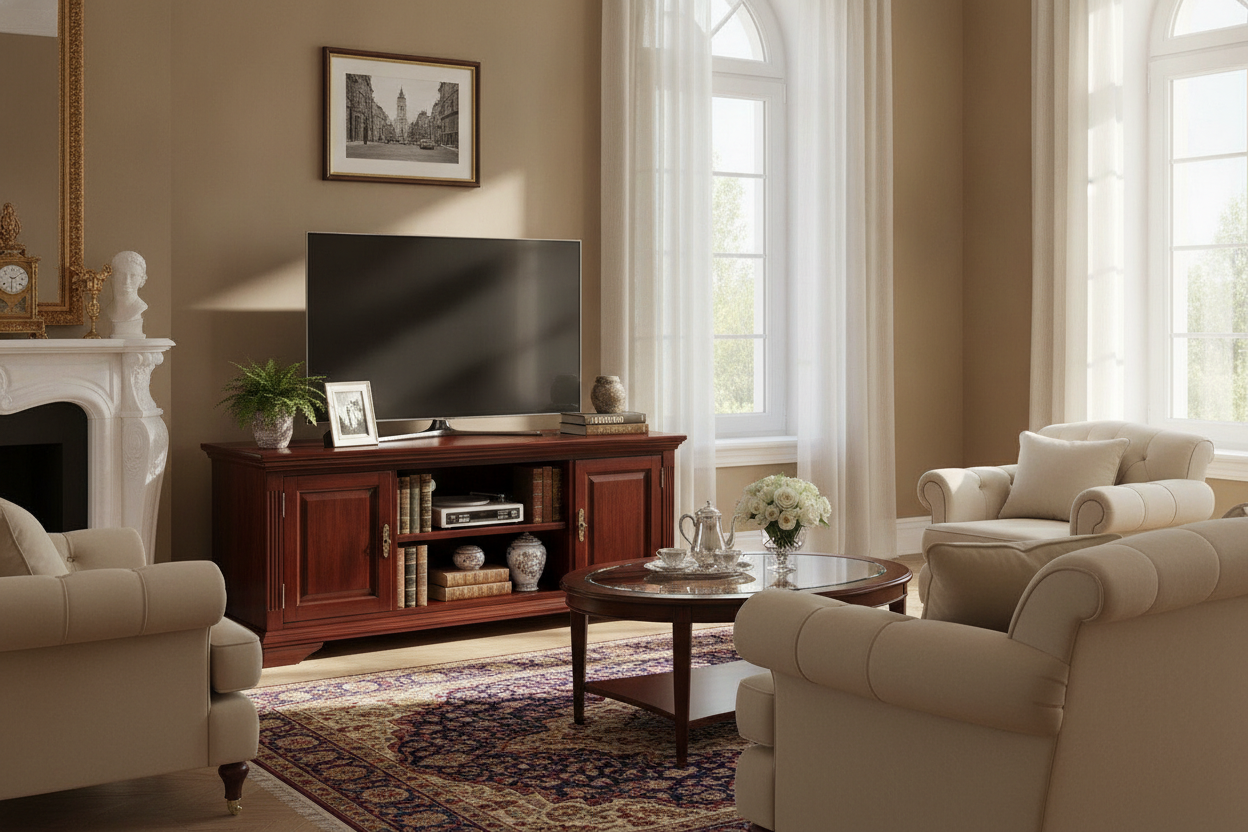
If you are looking for a small tv console stand that you can set up in twenty minutes and never think about again, go freestanding. There is a certain peace of mind that comes with knowing gravity is doing the heavy lifting. I have seen 'solid wood' floating shelves sag over time because the brackets couldn't handle the weight of a 50-inch screen and a soundbar.
A floor-based unit also offers superior storage. You get deep drawers and sturdy shelves that can hold everything from a heavy vinyl collection to a chunky Xbox. Plus, if you decide to rearrange your living room next month, you just slide the unit three feet to the left. No holes to patch, no studs to find, and no structural anxiety.
The Allure (and Anxiety) of the Floating Setup
I will be honest: nothing beats the look of a well-installed floating wall mounted media console. It looks custom, expensive, and incredibly clean. It also makes cleaning a breeze. You can run a Robot vacuum or a Swiffer directly under the TV without hitting a single furniture leg. No more 'dust bunnies' living behind the media center for three years.
But the anxiety is real. Most small-space dwellers live in older buildings where studs are rarely 16 inches apart or made of crumbling plaster. I once spent four hours with a cheap stud finder only to realize I was hitting a water pipe. If you aren't comfortable using a drill and a level, or if you don't have a solid lease agreement that allows for heavy-duty anchors, the floating dream can quickly become a security deposit nightmare.
Which One Actually Hides Cables Better?
Cables are the enemy of the small tv media stand. On a freestanding unit, you can usually zip-tie your mess of HDMI cords and hide them behind the back panel or a thick furniture leg. It is messy, but it is hidden. It is a 'good enough' solution for most of us who just want to watch Netflix.
Floating units are less forgiving. If the unit is floating but you have five black cables dangling down to the floor outlet, the 'sleek' look is ruined. To do it right, you either have to install a cable raceway (which looks okay, but not great) or cut holes in your drywall to route the wires behind the scenes. Unless you are ready for a DIY project involving a drywall saw, the floor unit wins the cable war every time.
My Final Verdict for Renters vs. Owners
If you own your place and you are tired of your living room feeling like a cramped hallway, go floating. It is a permanent upgrade that pays off in style and ease of cleaning. Just make sure you buy a unit with a high weight rating and use a real level during installation.
For my fellow renters, stick to the small tv console stand. I have moved six times in eight years, and the last thing I want to do during a move-out is mud and sand eight massive toggle bolt holes. Find a unit with tall, tapered legs—it gives you 80% of the 'airy' look of a floating stand with 0% of the structural risk. Your security deposit will thank you.
Personal Experience: The 'Floating' Disaster
I once tried to mount a 48-inch shelf in a pre-war Brooklyn apartment. I thought I found the studs, but I was actually drilling into thin lath and old plaster. Two weeks later, I woke up at 3 AM to a crash—the entire unit had pulled away from the wall, taking a chunk of the paint with it. My TV survived, but my pride did not. Now, I always check my wall type before I even look at a floating unit.
FAQ
Is a floating TV stand safe for heavy TVs?
Yes, provided you are anchored into wood or metal studs. Never rely on drywall anchors alone for anything holding a television or heavy electronics.
How high should a small media stand be?
Whether floating or on the floor, the center of your TV should be at eye level when you are sitting on your sofa. Usually, that means the top of the stand sits 20 to 24 inches off the floor.
Do floating stands save actual square footage?
Technically no, because you still can't really put anything 'under' them without it looking cluttered. However, they save 'visual' square footage, which makes a room feel less claustrophobic.


Laisser un commentaire
Ce site est protégé par hCaptcha, et la Politique de confidentialité et les Conditions de service de hCaptcha s’appliquent.