


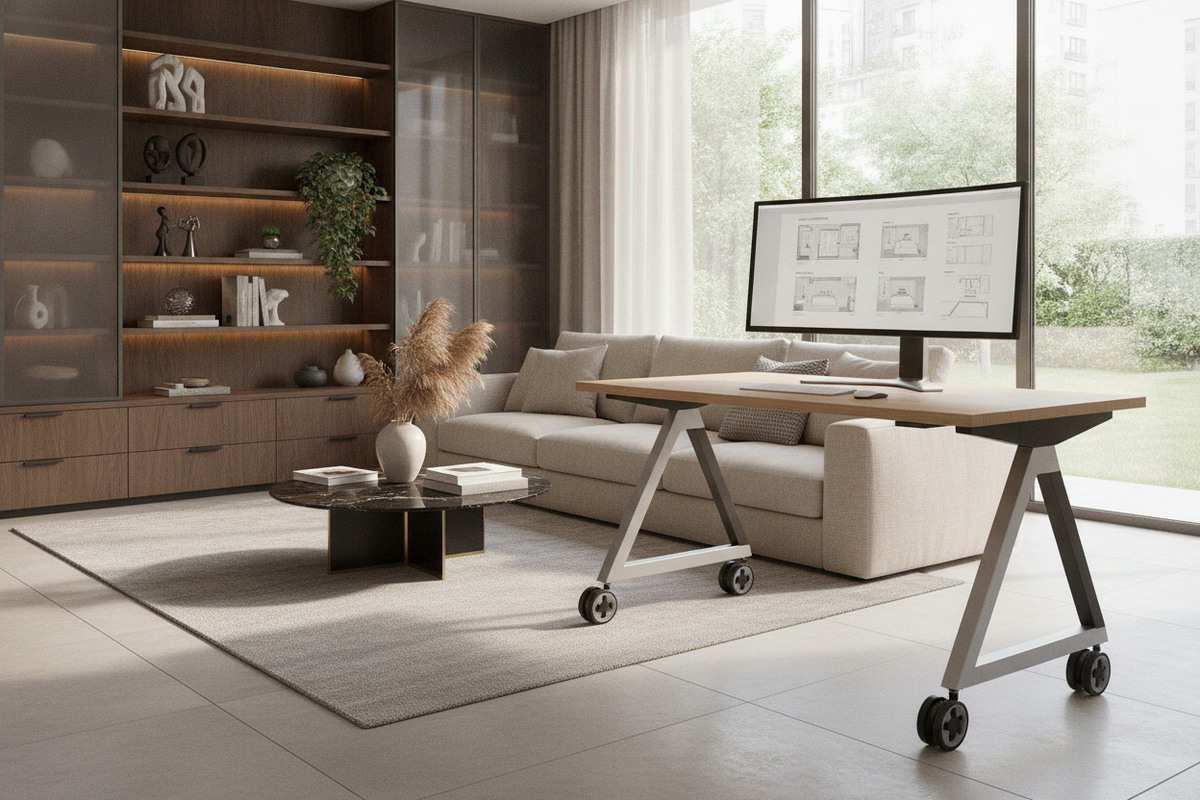
Modern dynamic work and study environments demand agility that static furniture cannot provide. The compact mobile sit-stand desk archetype—exemplified by designs like the Ergotron LearnFit and related pneumatic rolling workstations—bridges the gap between active posture variation and spontaneous spatial reconfiguration. By uniting a compact footprint, unpowered gas-spring height adjustments, and smooth-rolling casters, these desks allow users to transition between sitting and standing while moving effortlessly across rooms.
Understanding how to integrate an ergotron rolling desk or similar mobile workstation requires looking beyond simple height adjustments. Successful deployment depends on evaluating base geometry, caster stability across varied floor surfaces, primary ergonomic reach envelopes, and harmonious pairings with stationary perimeter storage.
Mobile Workstation Archetypes: Spatial Mechanics of Compact Rolling Desks
Unlike motorized full-scale office furniture, the mobile sit-stand workstation prioritizes physical nimbleness and cord-free operation. These units are built around a central telescoping column anchored by a broad, low-profile base. This layout keeps the center of gravity low and centered, minimizing tipping risks during sudden movements or height transitions.
When evaluating compact rolling units, the architectural differences between an agile mobile cart and a broad-surface height-adjustable standing desk become immediately clear. While wide-format desks serve as anchored command centers for multi-monitor rigs, mobile rolling desks function as focused, high-mobility task platforms designed for laptops, tablets, and essential paperwork.
Base Geometry and Caster Dynamics Across Flooring Types
The stability of any mobile workstation depends on its base footprint. High-performing rolling desks typically feature a balanced H-frame, star base, or open arched pedestal base that provides ample clearance for natural foot movement whether sitting or standing. Key considerations for base mechanics include:
- Base Footprint Clearance: An open forward base design ensures your feet do not hit the frame during walking strides or standing shifts.
- Caster Wheel Geometry: Dual-wheel hooded casters reduce rolling friction and distribute load evenly, facilitating smooth glides over low-pile carpet, hardwood, and smooth tile.
- Braking and Locking Mechanisms: Independent front-caster locks allow users to secure the desk in place during intensive typing sessions, preventing unintended drifting.
- Doorway Threshold Traversal: Low-profile base legs navigate room transitions and narrow doorways without snagging on area rug edges or transition strips.
Pneumatic Kinetic Adjustment and Untethered Workflow Freedom
A defining hallmark of the Ergotron LearnFit sit-stand desk design is its reliance on unpowered mechanical pneumatic lift systems. Powered by internal gas springs and controlled via an intuitive hand lever, pneumatic columns offer near-instantaneous height transitions. Because they require no power cables or wall outlets, these desks offer complete freedom of movement, allowing you to roll from a sunlit window nook to a collaborative living area without unplugging equipment.
Surface Geometry and Ergonomic Reach Envelopes on Compact Desktops
Compact mobile standing desks feature focused surface dimensions designed to conserve floor space while supporting core computing gear. Maximizing productivity on a streamlined desktop requires an intentional layout organized by ergonomic reach zones.
Primary Touchpoints and Integrated Peripheral Channels
Worksurface utility relies heavily on tailored contours and thoughtful component placement:
- The Primary Reach Zone: Keep your laptop keyboard, mouse, or active writing surface within direct forearm reach to maintain relaxed shoulders and neutral wrist angles.
- Edge Contours and Beveled Rims: Angled or gently radiused front edges reduce contact stress along the forearms during prolonged standing or seated typing.
- Integrated Utility Channels: Built-in accessory recesses, tablet docking slots, and cupholders prevent drink spills or device slips when wheeling the cart over floor transitions.
- Under-Desk Cable Containment: Routing power cords and device cables along the central support column prevents dangling wires from catching on caster wheels during transit.
Room Archetypes: Deploying Rolling Sit-Stand Desks Across Living Spaces
Because mobile workstations do not require dedicated wall outlets or expansive footprints, they excel across diverse residential and multi-use room layouts. Exploring designer standing desk layouts reveals how flexible furniture elements can unlock previously unusable spatial nooks.
The Hybrid Living-Office Nook and Tuck-Away Clearance
In compact apartments and multi-purpose rooms, a mobile sit-stand desk can be deployed for focused work during the day and rolled away when evening arrives. Planning for these micro-layouts requires clear spatial pathways:
- Active Circulation Pathways: Maintain clear perimeter clearance around the desk to allow natural walking flow and smooth sit-stand adjustments.
- Tuck-Away Parking Zones: When not in use, lower the workstation and roll it under counter overhangs, into closet alcoves, or flush against an unused wall niche.
- Multi-Zone Roaming: Shift the desk from bedroom focus sessions in the morning to living room collaborative work in the afternoon to vary your daily working environment.
Stationary and Mobile Storage Synergy: Anchoring the Compact Rolling Desk
A compact mobile desk intentionally limits surface area to preserve mobility. To prevent clutter from overwhelming the desktop, pair your mobile station with nearby vertical storage solutions that follow established standing desk setup principles.
Coordinating with Modular Cabinets and Adjustable Shelf Towers
Integrating perimeter storage creates a balanced ecosystem where the rolling desk serves as the dynamic input station while nearby credenzas, sideboards, and towers house secondary items. Utilizing dedicated adjustable shelf storage systems allows you to store reference binders, heavy hardware, printing equipment, and office supplies within easy reach of your mobile workstation.
Consider organizing your surrounding storage by frequency of use:
- Immediate Peripheral Storage: A low-profile rolling caddy or stationary side unit placed adjacent to the desk holds charging docks, spare notebooks, and daily accessories.
- Vertical Perimeter Shelving: Wall-adjacent book towers and modular cabinets store reference materials, decorative accents, and archival files, keeping the main room open and uncluttered.
- Concealed Credenzas: Closed-door storage keeps cords, spare hardware, and bulky items out of sight, maintaining a serene visual balance across multi-use rooms.
Material Selection, Durability, and Assembly Considerations
The long-term performance of an Ergotron LearnFit mobile desk or comparable sit-stand rolling cart depends on high-grade construction materials capable of handling continuous movement and frequent height shifts. Look for heavy-gauge powder-coated steel columns that resist wobbling when raised to full standing heights, paired with high-density composite work surfaces featuring protective laminate coatings. Smooth-operating pneumatic cylinders and impact-resistant edge banding will protect both the furniture and your surrounding walls during daily room-to-room transitions.
By harmonizing unpowered pneumatic adjustment, stable caster dynamics, and smart perimeter storage, a mobile sit-stand desk turns any corner of your home into an ergonomic, highly productive workstation.

Laisser un commentaire
Ce site est protégé par hCaptcha, et la Politique de confidentialité et les Conditions de service de hCaptcha s’appliquent.