


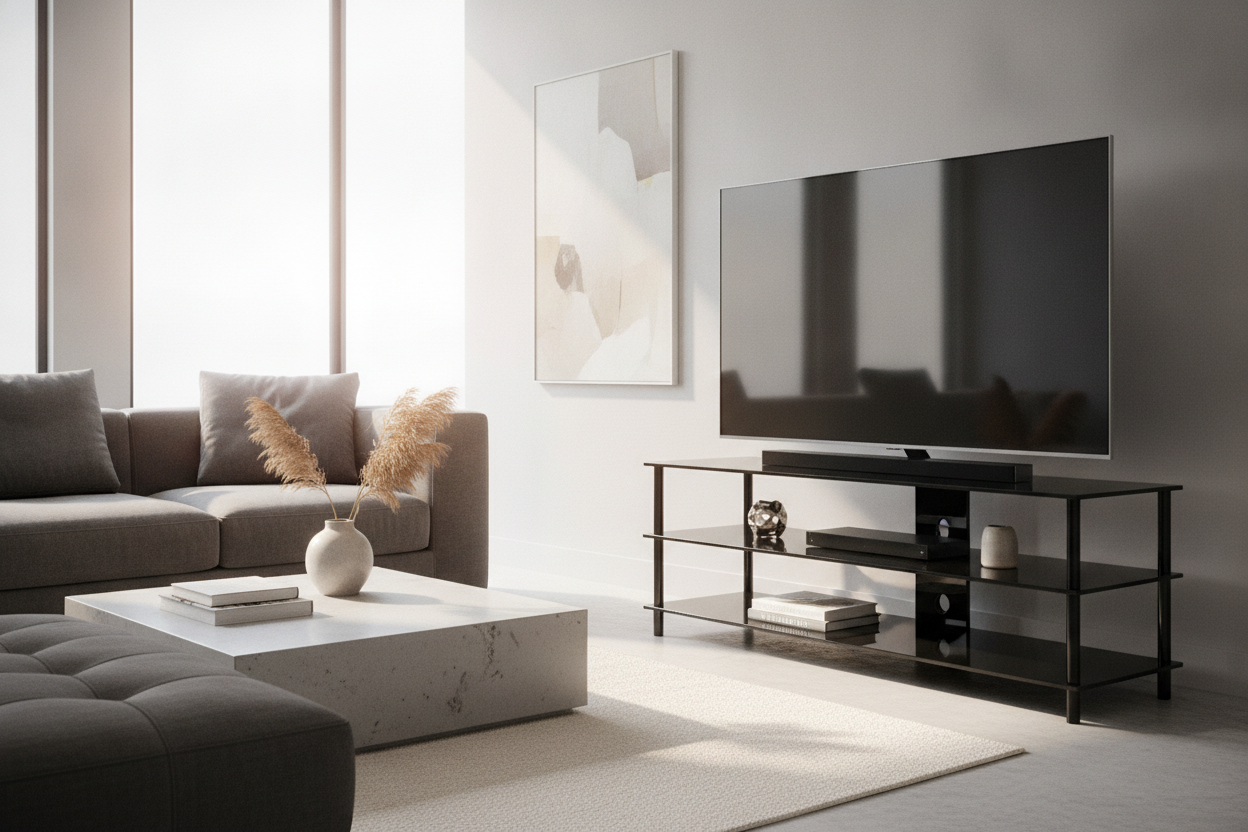
I remember unboxing my first 65-inch OLED. It felt like I had just invited a giant obsidian monolith into my living room that sucked every bit of light out of the corner. My first instinct was to hide it on a chunky oak console, but that just made the whole wall feel like a basement. I eventually pivoted to a black glass tv stand for 65 inch tv setups, and honestly, I was terrified of the maintenance.
We have all seen that one friend's house where the glass furniture looks like a crime scene of fingerprints and cat hair. But after living with one for three years, I have realized that the 'dust trap' reputation is a bit dramatic. If you know how to style it and how to clean it (hint: put down the paper towels), it is actually the sharpest way to anchor a massive screen.
- Dust is visible but manageable: A dry high-pile microfiber cloth is your best friend—skip the Windex for daily maintenance.
- Visual Weight: Glass stands keep small rooms from feeling cramped by letting light pass through.
- Proportions Matter: Never buy a stand narrower than your screen; it looks unstable and cheap.
- Cable Management: Open glass stands require aggressive wire-tucking skills.
The Elephant in the Room: Let's Talk About Dust and Smudges
Yes, black glass shows dust. If you live in a house with a shedding dog or a drafty window, you will see a fine grey layer within three days. But here is the secret: it takes exactly thirty seconds to wipe down. I keep a dedicated microfiber cloth tucked in a drawer nearby. A quick dry-swipe every few days keeps it looking like a showroom piece.
The real enemy isn't dust; it's fingerprints. If you have toddlers or someone in the house who insists on touching the furniture to find the remote, you will be annoyed. However, unlike wood veneers that can warp or stain, glass is non-porous. You can spill a whole glass of wine on it, wipe it up, and it looks brand new. I'll take a little dust over a permanent water ring any day.
Why I Chose a Black Glass TV Stand for 65 Inch TV Setups Anyway
When you have a 65-inch screen, you are dealing with a lot of 'dead' black space when the power is off. A solid black wooden console under a black TV creates a heavy, dark hole in your decor. A glass unit, however, has a reflective quality that bounces ambient light from your windows or lamps. It makes the tech feel integrated rather than just dumped in the room.
I have always argued that Heavy Consoles Are Out: The Case for a 65 Inch Glass TV Stand because of the footprint. A 65-inch TV is roughly 57 inches wide. Placing that on a solid wooden block makes the furniture feel like a permanent architectural feature. Glass feels like it is barely there, which is exactly what you want when the screen is the star of the show.
The Open vs. Closed Storage Dilemma
Choosing a 3 tier tv stand black glass model is a bold move for the minimalist. It looks incredibly breezy, but it leaves your wires with nowhere to hide. If you are the type of person who has a tangled rat's nest of HDMI cables, power strips, and gaming controllers, the open-shelf look will drive you insane within a week.
For those who struggle with 'cable chaos,' I usually suggest looking at a Black Cabinet With Glass Doors. You get that same moody, reflective aesthetic on the outside, but you can hide the router and the messy wires behind a structured facade. I personally use Velcro ties to strap all my cables to the rear support pillar of my glass stand, keeping the 'floating' look intact.
Getting the Proportions Right (Please Don't Skimp on Width)
This is the hill I will die on: do not put a 65-inch TV on a black glass tv stand 50 inch model. I see people do this all the time to save floor space, and it looks terrible. A 65-inch TV has a physical width of about 57 or 58 inches. If your stand is only 50 inches wide, the TV hangs over the edges like a muffin top.
It makes the whole setup look top-heavy and accidental. You want at least two to three inches of 'breathing room' on either side of the TV base. For a 65-inch screen, look for a stand that is at least 60 inches wide. It grounds the TV and makes the whole setup feel intentional and high-end.
Warming Up the Glass: How to Avoid the 'Tech Store' Vibe
The biggest risk with black glass and metal is that your living room starts to look like a 2005 Best Buy. To avoid that cold, sterile feeling, you have to layer in organic textures. I like to stack a few matte-finish coffee table books on the middle shelf. The paper and cloth bindings provide a much-needed break from all the shine.
I also highly recommend a trailing plant, like a Pothos, on one of the lower tiers. The green leaves against the black glass look stunning and soften the hard angles of the metal frame. If you want more specific layout ideas, check out these 4 Rules for Styling a Black Glass Door TV Stand Without the Clutter. It is all about balance—shiny glass needs matte ceramics and soft greenery to feel like a home.
FAQ
Is tempered glass safe for a heavy 65-inch TV?
Absolutely. Most modern black glass stands use tempered safety glass rated for 100+ lbs. A typical 65-inch LED TV weighs between 50 and 75 lbs, so you are well within the safety margin. Just don't hit the edges with a vacuum cleaner.
How do I hide wires on an open glass stand?
Velcro cable ties and split-sleeve tubing are your best friends. Run everything down the center support post of the stand and use black ties so they blend into the shadows. If you have a lot of peripherals, consider a stand with a built-in cable management channel.
Does black glass scratch easily?
Tempered glass is quite hard, but it isn't invincible. Avoid sliding rough ceramic pots or metal electronics across the surface. If you use felt pads on the bottom of your decor, your glass will stay pristine for years.

Laisser un commentaire
Ce site est protégé par hCaptcha, et la Politique de confidentialité et les Conditions de service de hCaptcha s’appliquent.