


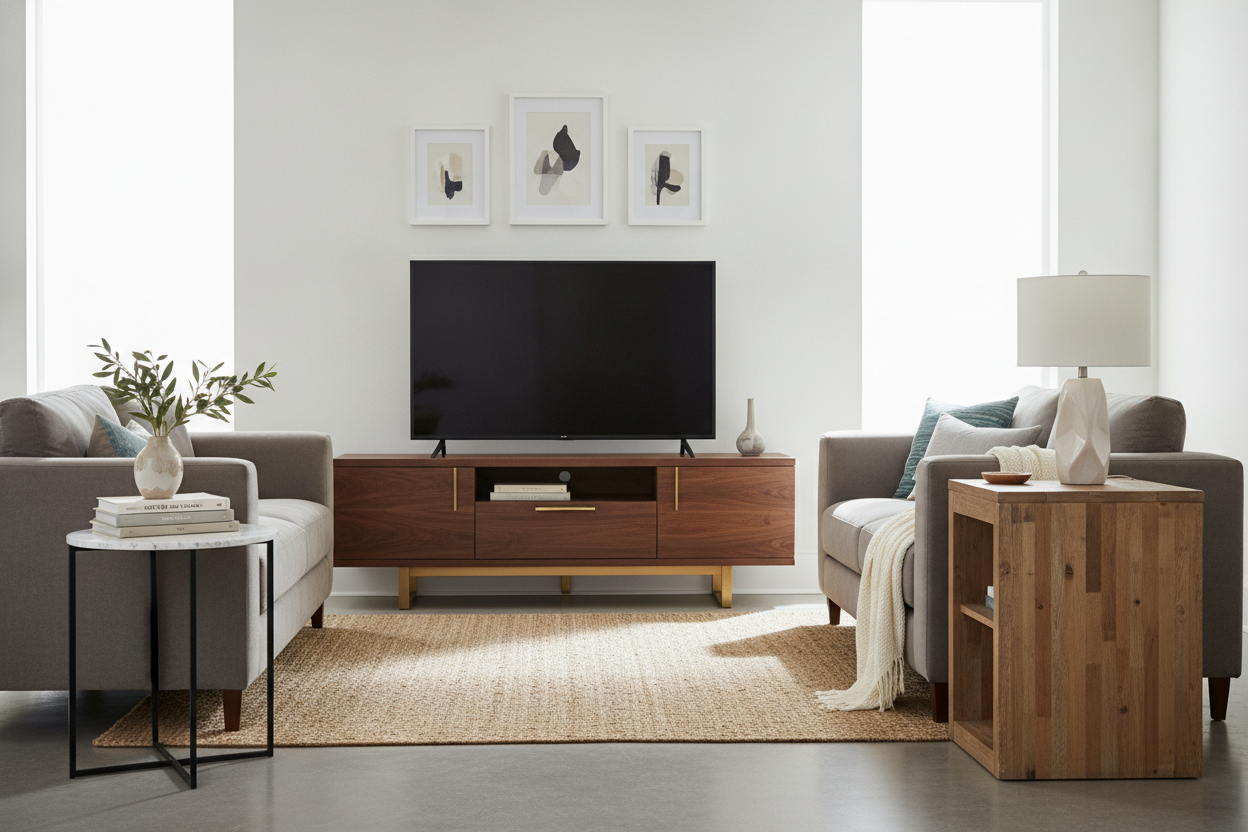
I once spent three hours at 2 AM comparing walnut veneers on my phone, convinced that if my end tables were two shades lighter than my media console, my entire apartment would look like a thrift store accident. It is a common panic. We are terrified that if our side tables and tv stand do not come from the exact same collection, the room will feel messy or unfinished.
The truth is, buying the 'complete set' is usually the fastest way to make a room feel like a staged home for sale rather than a place where people actually live. I have seen enough soulless showrooms to know that matching everything is a design crutch, not a rule.
Quick Takeaways
- Matching sets often look dated and lack personal character.
- Focus on shared undertones (warm vs. cool) rather than identical colors.
- Mix materials—like metal and wood—to create visual interest.
- Hardware and scale are the secret 'glue' that makes mismatched pieces work.
The Problem With the 'Furniture Showroom' Look
When you buy a matching side table tv stand set, you are essentially letting a big-box retailer decide your entire aesthetic. It is easy, sure, but it is also flat. A room needs layers to feel cozy. If every leg, every grain of wood, and every handle is identical, your eyes just slide right over the furniture. There is no friction, and in design, friction is a good thing.
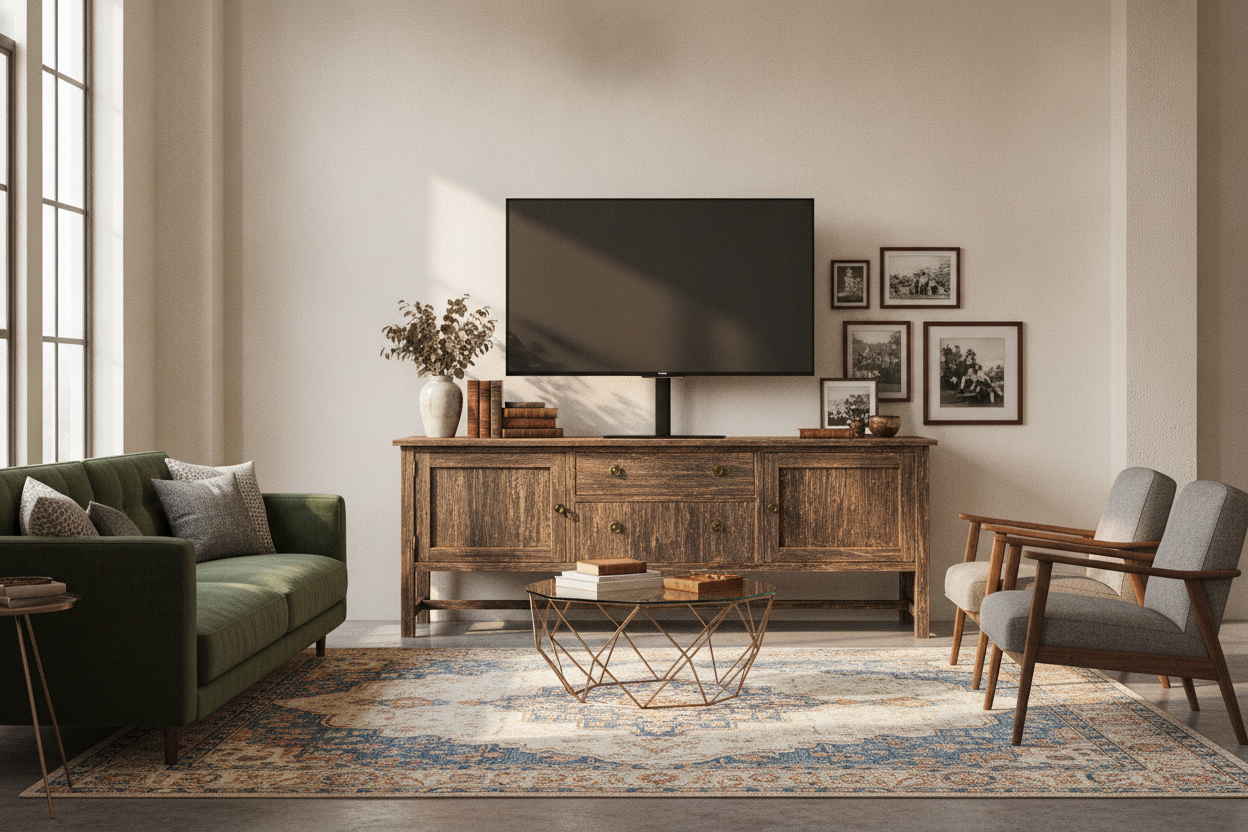
I have made the mistake of buying the 'package deal' before. Within six months, I was bored. The room felt one-dimensional. It lacked the 'collected over time' vibe that makes a home feel high-end. Real style comes from the tension between a heavy, rustic console and a pair of sleek, modern side tables. It tells a story that you did not just click 'Add All to Cart' on page one of a catalog.
The 'Cousins, Not Twins' Rule for Wood Tones
You do not need an exact match, but you do need a conversation. Think of your furniture as cousins, not twins. They should share some DNA. The easiest way to do this is by matching the undertone. If your TV stand has a warm, reddish cherry hue, do not pair it with a cool, grey-washed oak side table. They will fight each other every single day.
If you have a ultra-modern LED TV stand console table with a high-gloss finish, you might think you need glossy side tables to match. You do not. In fact, that is a great time to bring in a matte wood or even a stone-topped side table. The contrast between the shiny console and the organic texture of the wood makes both pieces look more expensive.
If Your Media Console is Dark Wood...
Dark wood consoles—think espresso or deep walnut—can feel heavy and 'sink' into the floor. To balance this, I usually skip the matching dark side tables. Instead, I look for pieces with thinner profiles or lighter materials. A glass-topped table with a thin brass frame can make a room feel twice as large as a bulky wood end table that matches the console perfectly.
If You Have a Painted or Metal Unit...
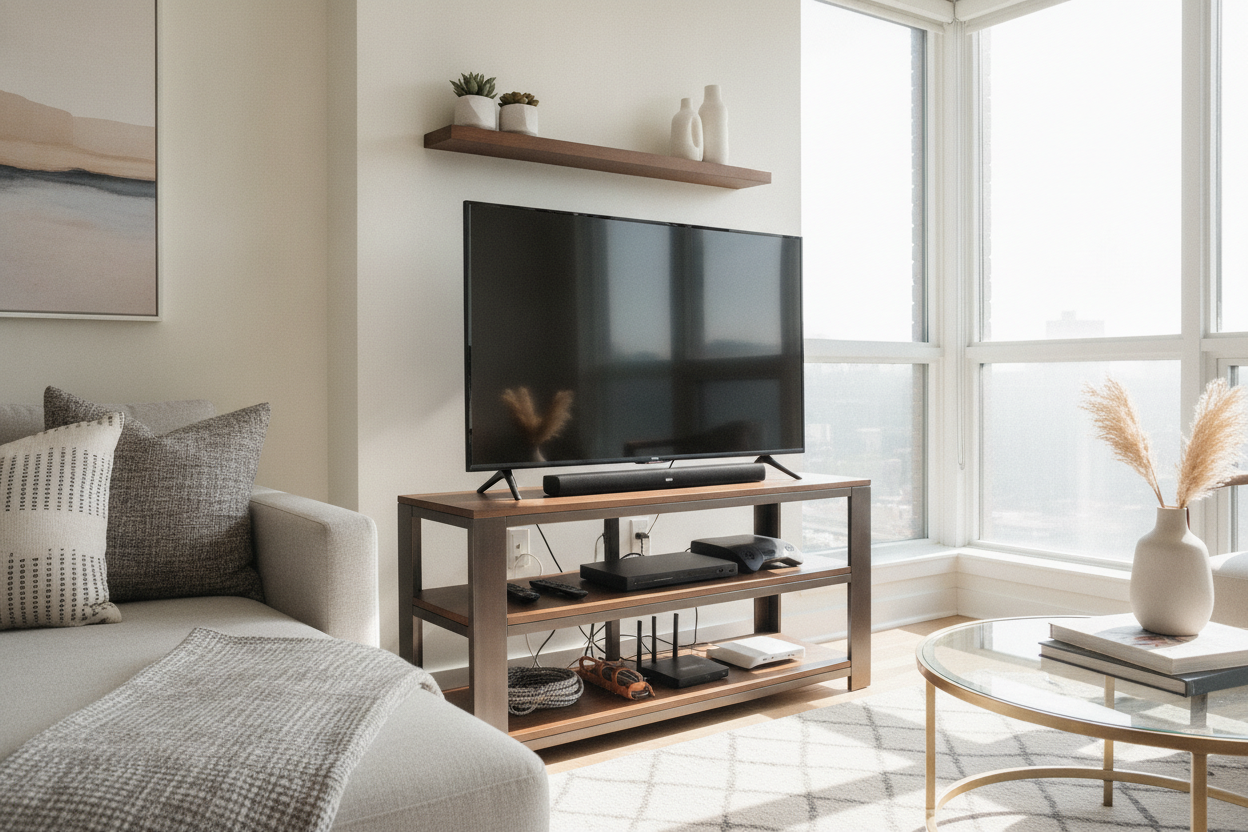
Industrial or painted metal units can feel cold if you overdo them. If you are using a TV stand with adjustable center shelf that features black metal hardware, use that hardware as your bridge. Find side tables that have black metal legs but a natural wood top. The metal handles on the console 'talk' to the legs of the tables, creating a cohesive look without being a boring set.
When You Actually Should Buy a Matching Set
I am not a total hater. There are times when matching works. In a tiny studio apartment where your bed is three feet from your sofa, visual clutter is the enemy. In those cases, having a matching set can actually calm the space down. It reduces the number of 'statements' the room is trying to make at once.
I used to be a purist about never matching, but I Was Wrong About Buying a TV Stand and Coffee Table Set in certain contexts. If you are going for a very specific minimalist or Scandinavian look where the goal is a seamless, monochromatic environment, matching is the right move. Just make sure the quality is high. Cheap matching furniture looks twice as cheap because there is so much of it.
Tying It All Together With Hardware and Scale
If you are worried your mixed pieces look too random, check the scale. Your side tables should be roughly the same height as the arms of your sofa, and your TV stand should be proportional to the wall it is on. If the heights are all over the place, the room will feel jittery. Keep the heights consistent, and you can get away with almost any mix of materials.
Finally, look at the 'jewelry' of the furniture. Swapping out the knobs on a basic side table to match the pulls on your media console is a ten-minute fix that makes mismatched furniture look like a custom commission. Before you commit to a look, browse our TV stands to find a solid anchor piece, then build your 'family' of tables around it.
FAQ
Can I mix different types of wood?
Yes, as long as the grain patterns are similar or the undertones (warm vs. cool) match. Don't mix a very grainy rustic pine with a super smooth, modern maple.
Should my coffee table match the side tables or the TV stand?
Neither! It's actually better if the coffee table is the 'odd one out.' It's the center of the room, so let it be a unique piece that stands on its own.
What is the biggest mistake people make when mixing?
Ignoring the legs. If your TV stand has mid-century tapered legs and your side tables have chunky, farmhouse-style bases, they will look like they belong in different houses. Try to keep the 'leg language' similar.

Laisser un commentaire
Ce site est protégé par hCaptcha, et la Politique de confidentialité et les Conditions de service de hCaptcha s’appliquent.