
Short answer: the most useful dining room storage is a buffet or buffet pantry cabinet on the longest free wall. Use its drawers for flatware and table linens, its lower shelves for plates and serving bowls, its top as a serving surface, and a hutch or glass doors for glassware you want to show. Choose one about 15 to 18 inches deep and 30 to 36 inches high, and keep at least 36 inches between the table edge and the cabinet front.
The dining room storage ideas below are built around the buffets, sideboards and hutches in our buffet pantry cabinet collection, with the size and clearance rules that decide whether a piece will actually fit.
Size and clearance rules for dining room storage
Before you think about style, check floor space. A buffet that blocks chairs or traffic will not get used. The NKBA Kitchen Planning Guidelines give clearances for seating areas that translate well to a dining table: 32 inches behind a seated diner where no one passes, 36 inches to edge past, and 44 inches to walk past.
Add the buffet depth to those numbers to get the distance you need from the wall to the table edge:
| Traffic behind the chairs | Clearance (NKBA) | Wall to table edge with a 15.7" deep buffet | With a 13.9" deep credenza |
|---|---|---|---|
| No one passes | 32" | 47.7" | 45.9" |
| People edge past | 36" | 51.7" | 49.9" |
| People walk past | 44" | 59.7" | 57.9" |
- Height: standard buffet cabinets are about 30 to 36 inches high. In our collection, low buffets run from 29.5 to 39.4 inches, so most sit close to dining table height, which makes serving easy.
- Depth: most low sideboards here are 15.7 inches deep. In a small dining room, a shallower piece such as the 55" mid-century rattan sideboard at 13.9 inches deep saves almost 2 inches of walkway.
- Doors: check that cabinet doors can open fully when the chairs are pushed in. Sliding or narrow doors help in tight dining areas.
What to store where in a buffet pantry
Unlike a glass-front china cabinet, a buffet pantry is mostly closed storage, so it can hold the everyday items you do not want on display. Plan it by item type:
| Item | Best spot | Spec to check |
|---|---|---|
| Flatware, serving utensils | Top drawers with dividers | Drawer interior size; some models list silverware storage |
| Table linens, placemats, napkins | Wide drawers or a middle shelf | Drawer width and depth |
| Everyday plates and bowls | Lower adjustable shelf | Shelf weight capacity |
| Serving bowls, platters, pitchers | Behind doors, tallest section | Cabinet interior height |
| Glassware and stemware | Hutch, glass doors or stemware rack | Stemware storage, glass doors |
| Small appliances (slow cooker, warming tray) | Lower cabinet; use on top only on a trivet | Weight capacity, nearby outlet |
Real numbers make this easier. The 63" fluted sideboard with gold legs lists a drawer about 29.8 inches wide, 14.4 inches deep and 6.1 inches high, which fits folded table linens and a full flatware tray, plus a cabinet interior 29.8 inches high for tall pitchers and platters stored on edge. Shelf ratings vary widely across the collection, from 11 lb to 55 lb per shelf, so stacks of stoneware plates belong on the strongest, lowest shelf. The 55.1" black buffet cabinet, for example, lists 50 lb per shelf.
7 dining room storage ideas that use a buffet pantry
1. Make the buffet your main storage wall
Instead of several small pieces, put one long buffet on the wall nearest the kitchen. It gives you a landing spot for serving dishes, keeps clutter out of sight behind doors, and frees the rest of the room. A 59- to 63-inch buffet usually gives you several door sections plus drawers, enough to split everyday and holiday pieces.
2. Add a hutch for vertical storage in a small dining room
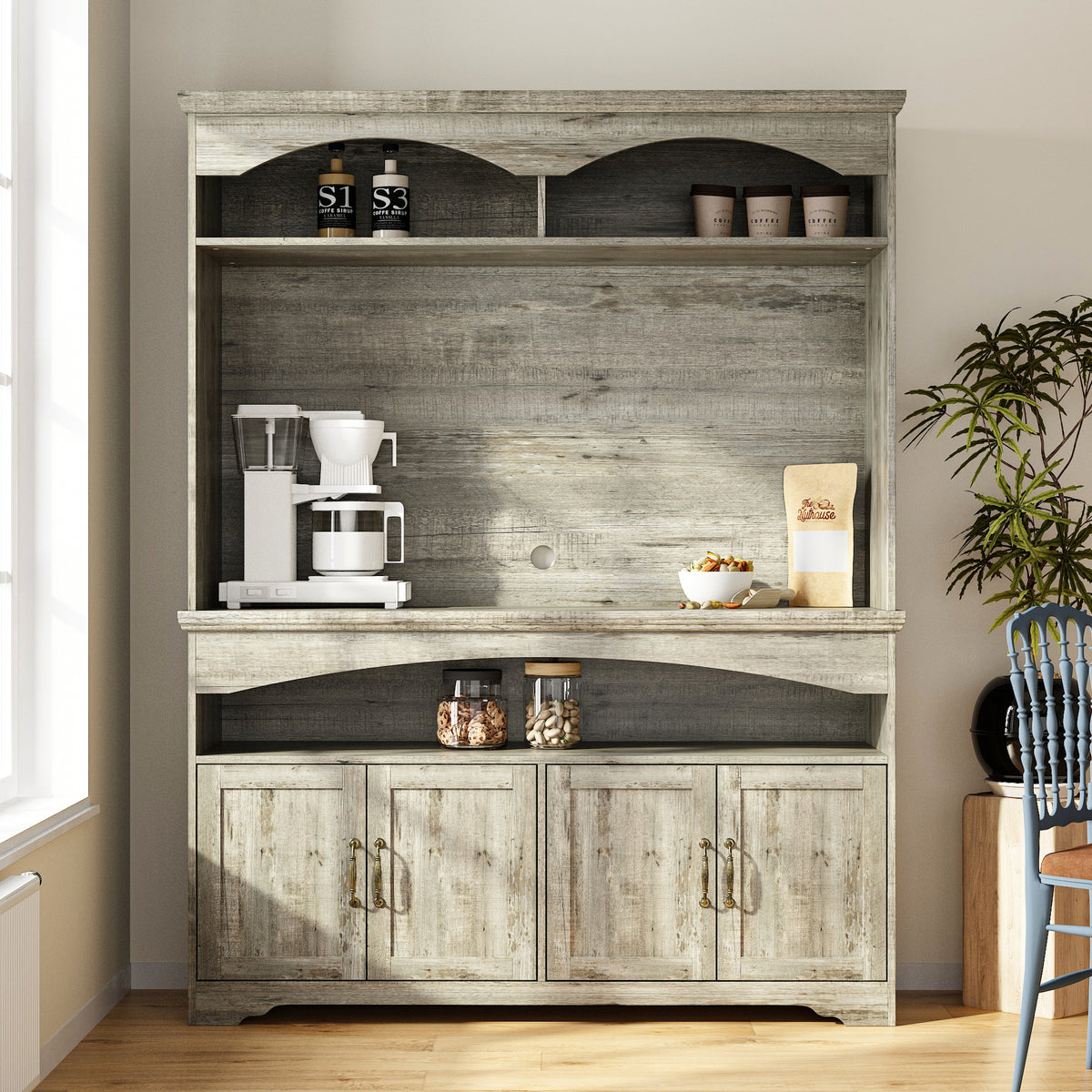
When floor space is tight, build up. A dining hutch puts display shelves above the base cabinet on the same footprint. The 53.7" retro dining hutch stands 70.9 inches tall with eight adjustable shelves, stemware storage and wall anchors included.

3. Mix display and hidden storage
Balance is easier with both open and closed storage: show your best glassware and hide the rest. The 61.2" mid-century storage cabinet combines tempered-glass doors with drawers, listing wine bottle, stemware and silverware storage and a 600 lb weight capacity. For a lower piece, the 63" black and brown sideboard with LED lights pairs glass doors with four drawers and silverware storage.

4. Use a slim credenza in a narrow dining area
If the room doubles as a hallway, a credenza under 14 inches deep keeps the walkway open. Put the items you use for every meal at the front of the shelves and seasonal pieces at the back.
5. Organize the inside with baskets and dividers
Baskets on shelves corral napkin rings, candles and placemats, and drawer dividers stop flatware from sliding. This is one of the cheapest ways to get more storage out of the cabinet you already own.
6. Keep a bar cart or rolling cart for extras
Bar carts and rolling carts add flexible storage that you can move next to the table when you host. Use one for drinks and glasses so the buffet stays free for serving dishes. For a full wine and bar setup inside a cabinet, see our home bar cabinet ideas.
7. Put corners and wall space to work
Floating shelves or ladder shelves above a low buffet add display space without using floor space. Keep heavy items off wall shelves and put them in the buffet instead.
Plan the whole wall, not just one piece
If your dining room has a long wall, a buffet flanked by tall cabinets gives you pantry-level storage for dishes, linens and serving pieces. Our pantry and sideboard set guide shows how to add up widths and heights. For glass-front display pieces, see china cabinet storage tips.
Whatever you choose, anchor hutches and tall cabinets to the wall. Most tall pieces in the collection include a tip-over restraint kit, and the CPSC's Anchor It! campaign recommends anchoring all furniture with drawers, doors and shelves.
FUFU&GAGA ships these pieces free to the 48 contiguous states with 35-day returns. Compare sizes and storage options in our kitchen pantry storage and buffet collection.
FAQ
How do I add storage to a dining room?
Start with a buffet or sideboard on the longest free wall, then add vertical storage such as a hutch or wall shelves if you need more. Keep at least 36 inches between the table and the furniture.
What can I store in a dining room buffet?
Flatware, table linens, everyday and holiday dishes, serving bowls and platters, glassware, candles and small serving appliances. Put heavy dishes on the lowest shelf.
What can I do with extra space in a dining room?
Add a coffee or drinks station on the buffet, a reading corner, or a hutch for display. A larger room can take a full pantry and sideboard set along one wall.
What are some cheap dining room storage ideas?
Baskets on existing shelves, drawer dividers, a rolling cart and wall shelves are the lowest-cost options. They work best combined with one piece of closed storage, such as a buffet.


Laisser un commentaire
Ce site est protégé par hCaptcha, et la Politique de confidentialité et les Conditions de service de hCaptcha s’appliquent.