


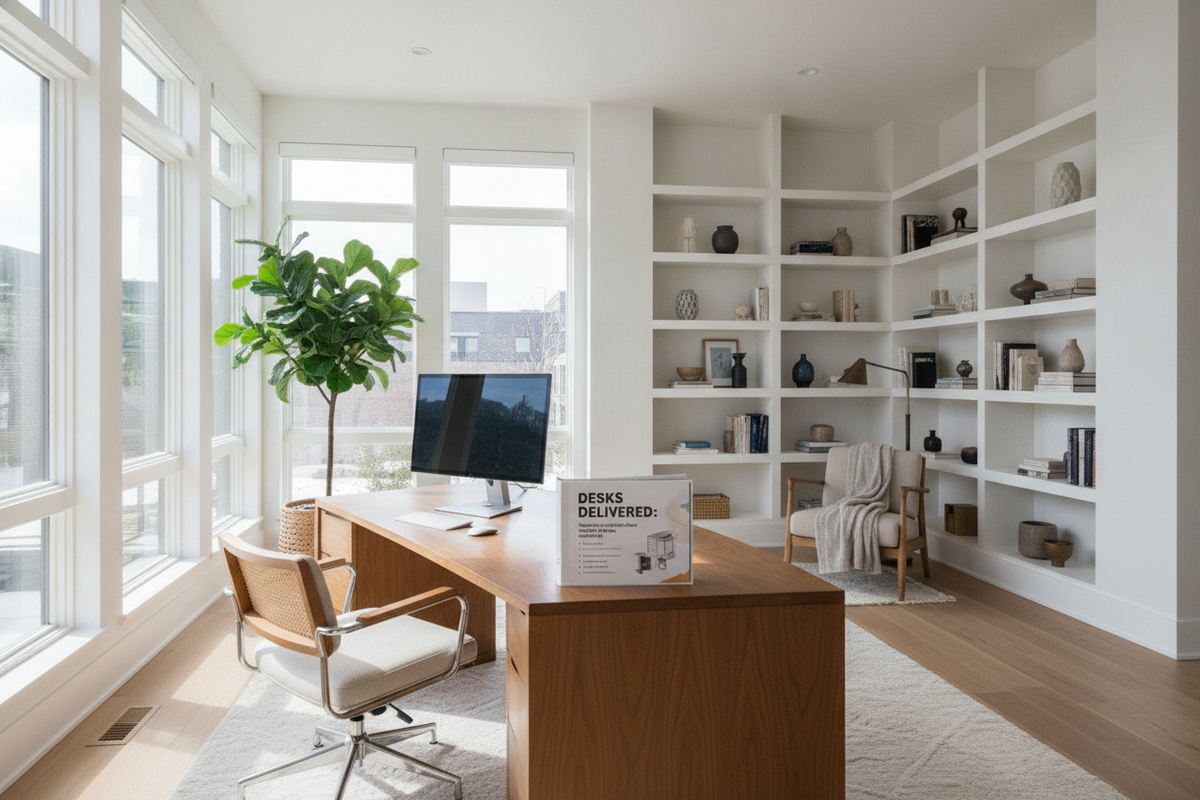
Understanding Modern Workstation Delivery Modes
Arranging modern work furniture requires coordinating between dispatch logistics and residential entry points. When planning to have desks delivered, understanding how carriers classify furniture parcels helps set realistic expectations for arrival timelines, drop-off locations, and package handling. Most flat-pack desks move through standard ground shipping networks, which balance route consolidation with regional freight hubs. However, expedited channels such as desk next day delivery or local computer desk same day delivery often rely on regional fulfillment centers situated close to metropolitan areas.
Accelerated transit options typically apply to items that fall within standard parcel size and weight boundaries. When a shipment involves multi-box configurations or extended desktop surfaces, freight carriers may schedule delivery windows rather than dropping packages directly at the doorstep without notice. Knowing whether a parcel requires signature confirmation, curbside drop-off, or doorstep release ensures that households can prepare appropriate staging areas before the delivery vehicle arrives.
Spatial Clearance and Transit Path Planning
Long before cartons arrive, mapping the indoor path from entry door to the intended room prevents unnecessary friction on delivery day. Flat-pack cartons for modern workstations are often long and rigid, making navigation around sharp corridor angles, stairwell landings, and low entryways challenging if planned without prior verification.
Carefully measuring exterior entry doors, interior passageways, and vertical clearance on staircases clarifies whether a box can travel horizontally or must be tilted vertically. If navigating tight apartment staircases or shared entryways, planning where delivery personnel can safely set cartons down avoids blocking shared passages. It is also wise to clear floor obstacles, rugs, and decorative stands along the entire path before having desks delivered, ensuring that moving heavy boxes does not disrupt home decor or risk accidental drops.
Matching Desk Profiles to Room Workflows
Different desk silhouettes translate into vastly different packaging profiles and room layout requirements. Selecting a desk involves aligning spatial capacity with storage demands, surface area needs, and the logistics of parcel management. Exploring a curated computer desk collection provides practical perspective on how varied structural designs shift from flat transit boxes into fully assembled functional workstations.
Compact Computer Workstations
Streamlined writing consoles and compact computer tables generally arrive in single, manageable cartons. These smaller footprints are well suited for shared living areas, studio apartments, or guest room alcoves where floor space remains at a premium. Because single-box profiles require less floor space during assembly, they offer straightforward maneuvering through narrow doorways. In multi-use rooms, aligning compact furniture with existing bedroom items requires spatial balance; consulting a desk next guide can help homeowners harmonize sleeping zones and working zones without visual overcrowding.
Corner and L-Shaped Configurations
Larger designs, such as corner stations and expansive executive tables, frequently arrive divided across multiple packages. Choosing an office computer desk product that incorporates integrated shelving, file pedestals, or dual desktop wings means coordinating several packages that may arrive in separate stages of transit. Multi-box shipments demand a dedicated staging area where all component boxes can remain undisturbed until the complete set is on site, avoiding partial assembly delays.
Receiving and Inspecting Your Office Desk Delivery
The moment an office desk delivery reaches your threshold, a structured inspection routine protects your investment and streamlines setup. Before opening any cardboard seams, inspect the exterior condition of every box for signs of transit stress, such as crushed corners, punctured outer walls, or torn packaging tape. Documenting visible package distress provides clear reference if interior parts require replacement.
- Check Carton Numbers: For multi-box furniture, confirm that box designations match the shipping manifest to ensure no parcel remains behind in transit.
- Inspect Edge Protectors: Look for intact cardboard corner guards, which shield delicate desktop edges against conveyor impact.
- Audit Hardware Pouches: Before discarding packing materials, locate the fastener packets and instruction manual to verify all joining hardware is present.
- Examine Finish Panels: Inspect laminated, veneered, or powder-coated surfaces under good lighting for transit abrasions prior to inserting dowels or cams.
Unboxing, Assembly Preparation, and Tool Coordination
Once boxes are moved safely inside, setting up a proper assembly zone safeguards both the new furniture components and your home flooring. Unpacking directly onto hard tile or bare floorboards risks scuffing decorative surfaces and denting corner profiles. Laying down flattened packing cartons or soft moving blankets establishes a protective, non-abrasive staging zone.
In my experience, sorting fittings into small trays before touching a single panel dramatically reduces assembly confusion. Grouping cam locks, wooden dowels, support brackets, and screws into designated bins allows for quick visual verification against the instruction diagrams. Ensure your assembly workspace provides adequate perimeter clearance so you can rotate panels, fasten side panels, and turn the frame upright without bumping surrounding walls or furniture.
Long-Term Workspace Placement and Maintenance
Completing physical assembly transitions the focus toward ergonomic placement and structural upkeep. After moving the desk to its final position, check overall stability on your room's specific floor type. Uneven flooring can cause subtle rocking that strains joint fasteners over time; utilizing built-in adjustable foot levelers or adding non-marking felt pads neutralizes wobble while shielding wood or laminate floors from scratches.
Cable management and balanced weight distribution also extend the life of your workspace. Route power conduits and monitor leads along rear modesty panels or dedicated channels to keep cords from pulling against desktop ports. Periodic inspection of primary structural fasteners ensures joints remain snug through regular daily use, keeping your workspace stable, organized, and reliable for years to come.


Laisser un commentaire
Ce site est protégé par hCaptcha, et la Politique de confidentialité et les Conditions de service de hCaptcha s’appliquent.