


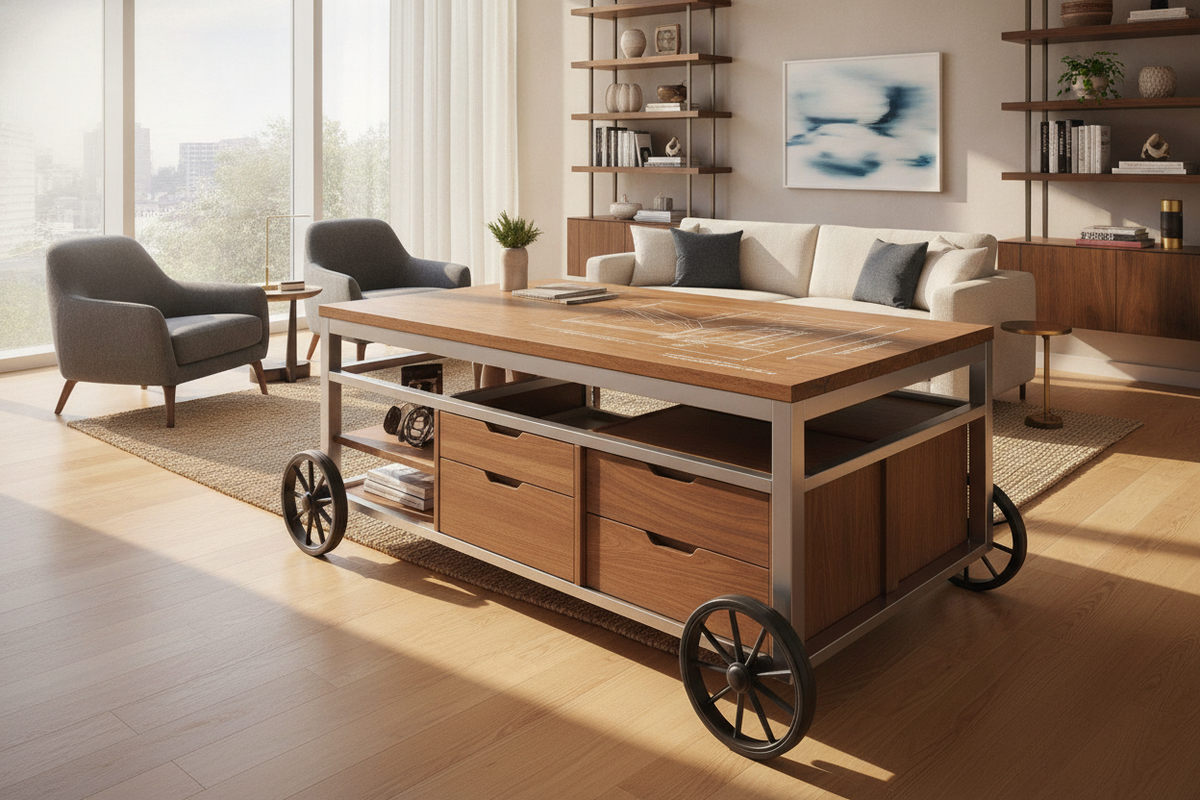
Designing a dynamic home workspace requires furniture that responds to shifting daily workflows, changing room layouts, and posture transitions. A desk with wheels and adjustable height bridges the gap between active sit-to-stand functionality and agile room mobility. Selecting the right setup requires balancing vertical lift mechanisms, rolling base stability, floor surface compatibility, and dynamic cable routing.
Mobile Elevation Archetypes: Balancing Lift Drives with Caster Foundations
Height-adjustable frames rely on distinct elevation technologies. When paired with rolling casters, each lift drive displays unique mechanical behaviors, operational speeds, and weight distributions.
Pneumatic and Gas-Spring Single-Column Mobile Carts
Pneumatic and gas-strut mechanisms utilize pressurized cylinders to counterbalance the desktop platform. Actuated via a simple hand lever, these systems allow near-instant vertical transitions without requiring an electrical connection. Single-column, pedestal-style bases provide exceptional agility, making them ideal as a compact stand up computer desk with wheels for agile laptop tasks, bedside presentations, or secondary collaborative stations.
Motorized Telescoping Dual-Stage Mobile Workstations
Electric height adjustment utilizes synchronized motorized columns to deliver quiet, level, and push-button elevation changes. Integrating casters onto an electric frame demands sturdy motor synchronicity so that rolling over uneven floor transitions does not misalign the telescoping legs. When configuring a multi-display workstation, selecting an adjustable height standing product equipped with dual-stage lift legs ensures steady vertical transitions even under heavier desktop equipment loads.
Manual Crank and Counterbalance Mobile Platforms
Manual crank mechanisms and internal mechanical counterbalances provide reliable, power-independent elevation. These platforms remain entirely untethered from wall outlets, allowing complete freedom when navigating between open-plan office zones, studio lofts, and multipurpose rooms. Because they do not rely on motor wiring, they offer a durable, mechanical solution for shared work areas.
Workstation Footprint Categories and Dynamic Spatial Clearances
Selecting a sit stand desk with casters requires planning for two distinct dimensional planes: the horizontal perimeter needed for roll clearance and the vertical envelope required for full standing travel.
Compact Mobile Presentation and Laptop Desks
Compact mobile carts feature narrow profile tops designed to slide easily through standard residential doorways and fit neatly into underutilized corners. These minimalist footprints work effectively in multipurpose living spaces where the workstation must tuck discreetly beside seating or slide into a storage alcove when not in active use.
Mid-Size Multi-Tasking Sit-Stand Surfaces
Mid-sized work surfaces balance tabletop real estate with spatial efficiency. These desks comfortably host an external monitor, laptop mount, keyboard, and writing zone without becoming cumbersome to maneuver. Exploring options within a dedicated computer desk collection helps identify balanced surface dimensions that roll smoothly around standard office layouts.
Expansive Dual-Monitor Mobile Executive Desks
Larger sit-to-stand surfaces accommodate dual monitors, desk audio gear, and peripheral hardware. For expansive configurations, anchoring your room layout with a broad height adjustable standing product provides generous tabletop real estate. These broad platforms require wider turning radiuses and robust caster wheelbases to maintain effortless directional tracking across broad floor plans.
Structural Rigidity, Caster Physics, and Flooring Dynamics
Adding rolling hardware alters the structural center of gravity and lateral stability of any workstation, particularly when elevated to full standing height.
Locking Wheel Archetypes: Dual-Wheel vs. Polyurethane Rollerblade Casters
Standard hard nylon twin-wheel casters are common, yet polyurethane rollerblade-style wheels offer smoother glide dynamics and reduced surface contact resistance. Polyurethane treads cushion movement over hard tile or hardwood floors, helping prevent floor scuffs while dampening vibrations transmitted to mounted computer equipment. Reliable independent step-locks on at least two casters are vital to eliminate unwanted drift during intensive typing.
Base Geometry and Center-of-Gravity Considerations
The structural geometry of the lower frame determines how well a standing computer desk on wheels resists forward and lateral tipping. T-leg designs center the vertical column directly over the wheelbase, providing balanced weight distribution. In contrast, C-leg configurations offset the vertical columns toward the back edge, opening up legroom beneath the surface. To maintain stability at elevated postures, reviewing a comprehensive computer desk guide can help you evaluate baseline geometry and avoid common structural pitfalls.
Dynamic Cable Management and Mobile Power Strategies
A mobile, height-adjustable workstation introduces two dynamic movement axes: horizontal room transit and vertical elevation stroke. Managing power feeds and monitor cables requires specialized layout planning to avoid cord tension or snag hazards.
Articulating Vertebrae Cable Chains and Slack Loops
Flexible cable snakes and modular spine vertebrae mount beneath the work surface and anchor to the lower frame foot. These articulating conduits guide data and power cords safely through vertical elevation shifts without dangling loose wires that could catch on caster wheels or peripheral furniture during room-to-room transit.
Single-Tether and Mobile Battery Power Solutions
To preserve effortless mobility, consolidate all desktop electronics into a heavy-duty under-desk power strip. This creates a single-tether design where only one primary power cord leaves the moving desk. For total freedom across open living areas, integrated rechargeable battery banks can power motorized lifts and laptop chargers without requiring a direct wall connection during the workday.
Assembly Logistics, Maintenance, and Modular Storage Synergy
Proper mechanical assembly and complementary storage pieces ensure that a sit to stand desk with wheels remains rigid, functional, and organized over long-term daily use.
Caster Thread Engagement and Leveling Calibration
When installing adjustable standing desk wheels into the lower frame feet, ensure the threaded stems seat fully into the metal frame bushings. Tighten locknuts securely using the provided wrench to eliminate vertical play. On slightly uneven flooring, fine-tune adjustable caster collars or leveling shims to ensure all four wheels make firm contact with the floor, preventing diagonal frame rock.
Harmonizing Mobile Desks with Mobile File Cabinets and Storage Credenzas
Because rolling desks intentionally minimize bulky built-in cabinetry to maintain a lighter footprint, pairing them with auxiliary storage units creates an organized office ecosystem. Complementing a tall desk on wheels with low-profile mobile filing pedestals or freestanding credenzas provides dedicated storage for documents and supplies. Consulting an architectural computer desk guide helps coordinate mobile workstations with surrounding storage cabinetry for a streamlined, clutter-free aesthetic.


Laisser un commentaire
Ce site est protégé par hCaptcha, et la Politique de confidentialité et les Conditions de service de hCaptcha s’appliquent.