


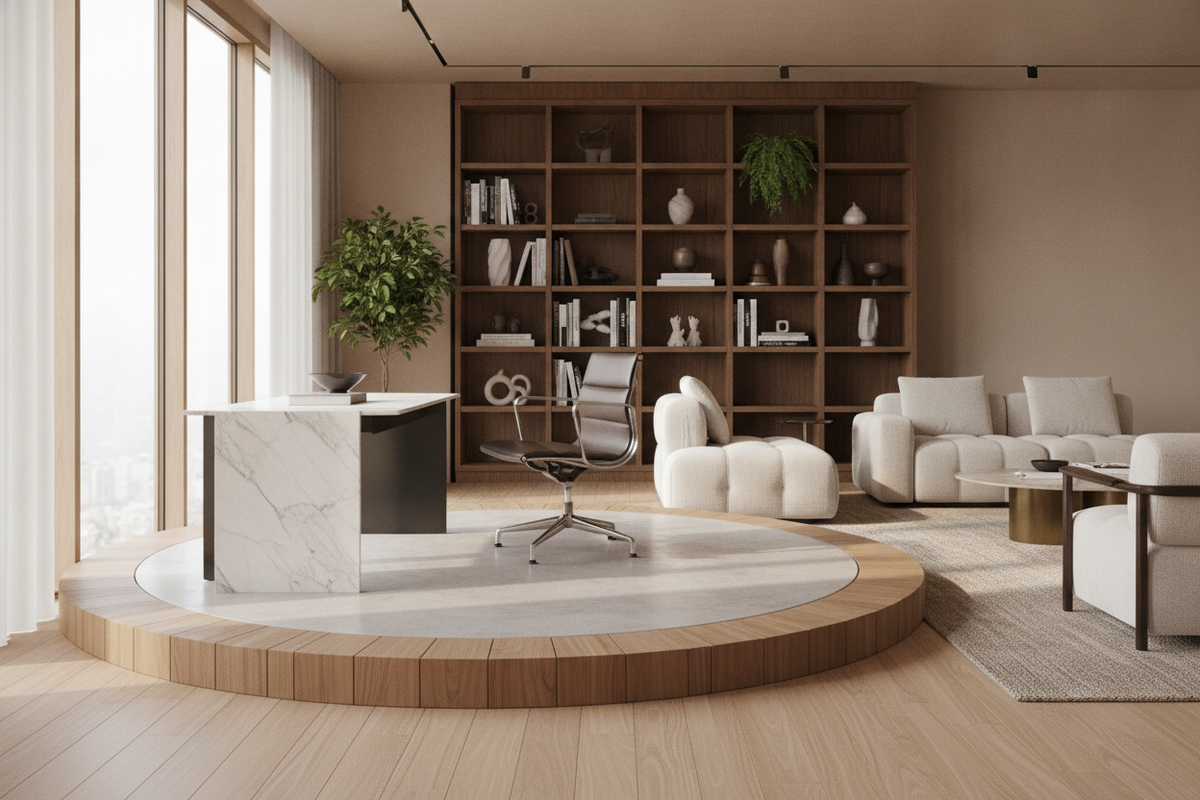
Understanding the Role of a Desk Chair Platform
A dedicated desk chair platform creates a stable, rigid surface beneath your work seating. Unlike traditional thin vinyl or flexible plastic mats that can cup, crack, or bunch under constant rolling pressure, a solid platform for office chair setups distributes weight evenly across the underlying floor. This structural base reduces rolling resistance, protects sensitive flooring from caster wheel wear, and visually anchors the seating zone within the wider home office layout.
Using an elevated or rigid office chair platform also enhances ergonomic posture. When caster wheels roll across plush carpet or uneven floorboards, micro-movements require subtle muscular corrections that can lead to lower body fatigue over long working sessions. By establishing a flat, unyielding glide plane, a solid platform allows seamless push-back, swivel, and repositioning without snagging.
Dimensional Frameworks: Sizing Your Platform to Match Workstation Flow
Selecting the right platform size depends on your daily range of motion, desk clearance width, and overall room architecture. An undersized platform risks caster wheels dropping off the edge during routine stretching or reclining, while an oversized platform can crowd walkways and bump into storage bases.
Compact Workstation Footprints for Single-Monitor Desks
For linear desks positioned in compact rooms or dedicated study nooks, a standard rectangular footprint that extends slightly wider than the chair wheel base provides adequate rolling depth. This setup accommodates standard forward-and-back motions between typing and reading positions while keeping the room layout neat and uncluttered.
Extended and L-Shaped Swivel Zones for Multi-Surface Setups
Workstations with wraparound surfaces or multi-monitor mounts demand broader lateral coverage. Pairing an expansive platform with a comprehensive office desk product allows the user to slide effortlessly between writing surfaces, peripheral trays, and filing zones. L-shaped or extended rectangular platforms ensure that both working zones share continuous, unbroken caster support.
Material Composition: Balancing Rigidity, Acoustics, and Longevity
Desk chair platforms come in several distinct core materials, each delivering unique aesthetic traits, sound profiles, and tactile experiences underfoot. For further styling ideas when coordinating platforms with seating ensembles, consult our detailed office desk chair guide.
Tempered Glass and Rigid Acrylics
Solid glass and heavy-duty transparent acrylics deliver exceptional optical clarity, letting the natural beauty of hardwood floors or patterned area rugs show through. Glass surfaces provide an ultra-smooth glide with minimal rolling friction, making posture adjustments effortless. They are impervious to curling and offer simple wipe-down maintenance, though they provide a cooler surface feel in colder seasons.
Hardwood and Engineered Wood Composite Surfaces
Wood-based platforms, including multi-ply bamboo, solid hardwood slats, and engineered composites, bring organic warmth and refined texture to executive environments. Wood platforms offer natural acoustic dampening, muting the rumble of caster wheels compared to hard synthetic floors. When sealed with durable topcoats, these platforms resist scuffs while blending seamlessly with surrounding bookcases, credenzas, and desktop finishes.
Subfloor Compatibility and Edge Transition Dynamics
Proper integration between your platform and the existing floor is essential for stability and safety. The backing material and edge design determine how securely the platform stays anchored during movement.
- Plush and Medium-Pile Carpet: Rigid platforms provide a firm bridge across soft fibers. Look for backings equipped with non-damaging grip patterns or silicone friction pads to prevent creeping without puncturing carpet backing.
- Hardwood, Laminate, and Tile: Smooth subfloors require soft felt, dense rubber, or non-slip silicone underlays to prevent surface scratches and eliminate lateral sliding when standing up from the chair.
- Beveled Edge Profiles: Sloped perimeter edges create a gentle transition between the platform and the floor, reducing trip hazards and allowing chair wheels to roll smoothly on and off the platform if needed.
Harmonizing Chair Platforms with Desk Storage and Room Architecture
A chair platform should integrate naturally into your overall office layout without obstructing storage access or primary traffic lanes. When positioning your platform alongside an integrated office desk product, ensure that the front edge tucks neatly under the primary work surface while leaving adequate clearance for lower cabinet doors and bottom filing drawers to swing open smoothly.
Maintaining parallel alignment between the platform edges and surrounding furniture outlines creates clean visual sightlines. In open-concept living spaces, choosing a platform finish that complements nearby cabinetry or accent tables helps define the workspace as a polished, intentional zone rather than a cluttered utility corner.
Maintenance, Cleaning, and Long-Term Surface Preservation
Routine care ensures that your platform retains its smooth rolling surface and visual clarity over years of daily use:
- Debris Management: Fine grit and dust can act like sandpaper beneath rolling casters. Regularly sweep or dry-mop the platform surface to keep wheels gliding freely.
- Caster Inspection: Clean chair wheels periodically to remove trapped lint, hair, and grit that could scratch wood finishes or mark acrylic panels.
- Subfloor Airing: Periodically lift the platform during deep cleaning routines to vacuum the floor underneath and allow underlying carpet fibers or hardwood surfaces to breathe.



Laisser un commentaire
Ce site est protégé par hCaptcha, et la Politique de confidentialité et les Conditions de service de hCaptcha s’appliquent.