


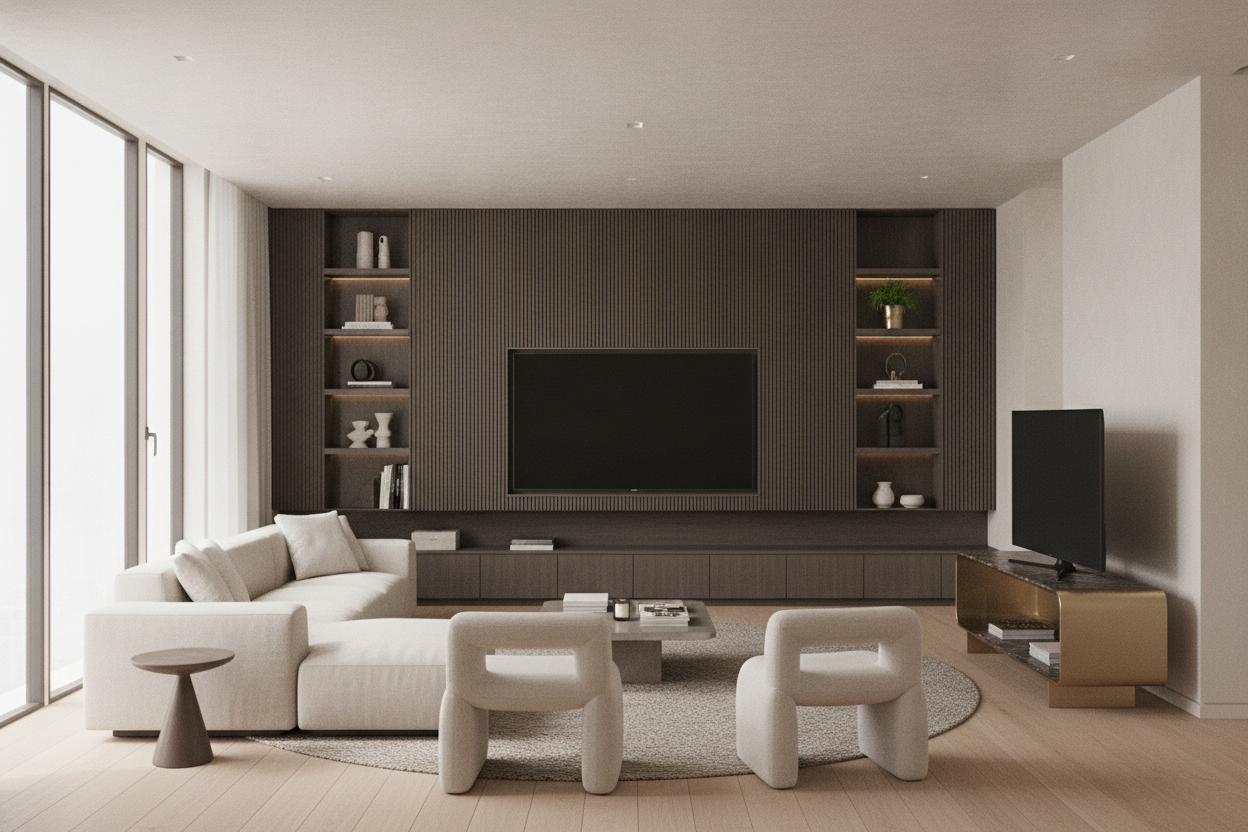
I spent three weeks staring at a blank wall in my last apartment, convinced that if I didn't hire a contractor to build a floor-to-ceiling media library, I had failed at adulthood. Then I got the quote. For the price of a used Honda Civic, I could have a permanent structure that I couldn't take with me when my lease ended. It was a wake-up call.
The truth is, we have been conditioned to think 'custom' always equals 'better.' But after years of designing spaces and seeing built-ins look dated after just five years, I have pivoted. Buying a high-end designer tv unit is often the more sophisticated, grown-up move for your living room.
- Built-ins cost 3x to 5x more than premium freestanding furniture.
- A designer unit can move with you; a built-in stays with the house.
- Contractor-grade MDF lacks the soul of solid, hand-finished wood.
- Freestanding units allow for easier tech upgrades and wiring access.
The Built-In Fantasy vs. The Contractor Reality
We all see the Pinterest boards: perfectly lit shelves, seamless drywall, and hidden wires. What Pinterest doesn't show you is the three weeks of drywall dust covering your sofa or the contractor who stops answering texts halfway through the framing process. Custom millwork is a massive undertaking that turns your home into a construction zone.
Then there is the cost. Lumber prices haven't exactly plummeted, and skilled labor is at a premium. You are paying for the labor of fitting a box into a specific corner of your room. Often, that money goes into the 'bones' of the house rather than the quality of the finish. I have seen $8,000 built-ins made of basic plywood and heavy paint that chips the moment you slide a coffee table book across it.
Why a Designer TV Unit Offers Superior Flexibility
Living rooms evolve. Today’s 'perfect' layout might feel cramped once you decide you want a larger sectional or a different rug. When you commit to a built-in, you are essentially bolting your floor plan to the floor. You lose the ability to shift the focal point of the room.
A freestanding piece is architectural furniture. It has its own presence. It allows the wall to breathe, creating a sense of depth that a flat, wall-to-wall cabinet simply can’t match. If you decide to swap your 65-inch screen for a projector or move the TV to the den, a designer unit moves with you. It adapts to your life, rather than forcing you to live around it.
You Can Actually Take Your Investment With You
Let’s talk numbers. If you spend $5,000 on a custom media wall, that money is gone. You might get a slight bump in home value, but it is rarely a dollar-for-dollar return. If you spend that same $5,000 on a premium, heirloom-quality credenza, you own a piece of art. When you move to a bigger house (or a better city), that piece comes with you. It’s an asset, not a renovation expense.
The Materials Just Hit Different
There is a tactile difference you just can't replicate with a contractor and a bucket of semi-gloss paint. Most built-ins are made of MDF or paint-grade maple because they are designed to be integrated into the wall. They lack the grain, the texture, and the warmth of a standalone piece.
When you look at high-end furniture, you are seeing fluted textures and premium hardware that feel substantial under your hand. You get solid walnuts, white oaks, and brass accents that a local carpenter would charge a fortune to source. These details create a 'designed' look that feels curated rather than just 'installed.'
Styling Your Unit So It Still Feels 'Custom'
The fear people have with freestanding units is that they will look 'small' on a big wall. The secret is scale. If you have a 12-foot wall, don't put a 60-inch stand in the middle. You need something that spans at least 75% of that width to anchor the space. Use oversized art or a pair of sconces above the unit to bridge the gap between the furniture and the ceiling.
Properly styling a high-end room involves layering. Place a tall floor plant on one side of the unit and a stack of large-format books on the other. This creates a visual 'envelope' that mimics the look of a built-in without the permanence or the price tag. It makes the piece feel like it was born for that specific spot.
My Favorite Silhouettes for That Architectural Vibe
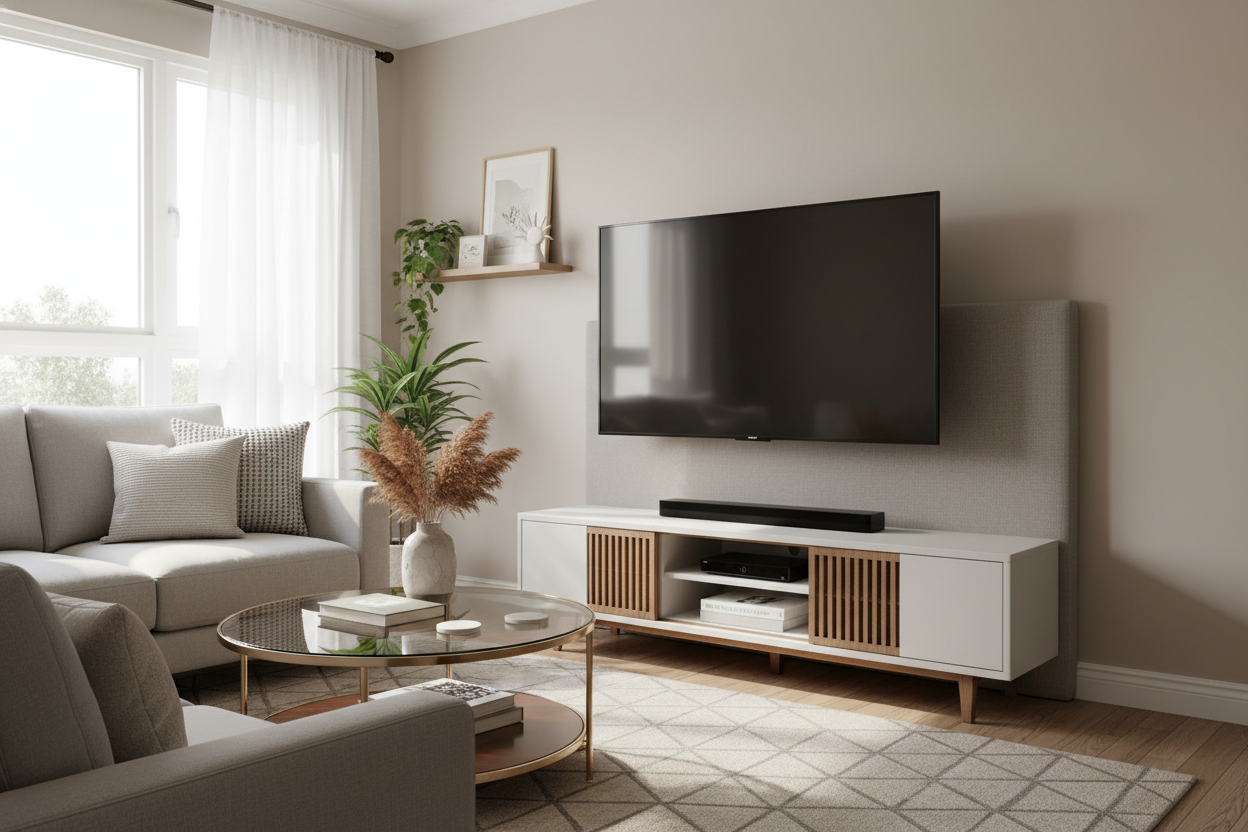
If you want that grand, custom feel, look for units with visual weight. Low-profile, extra-wide silhouettes are my go-to for modern homes. They keep the TV at a comfortable eye level while providing enough surface area to act as a gallery ledge. I especially love a sleek credenza with sliding glass doors because it offers a mix of hidden storage and a place to show off your tech or decor without looking cluttered.
Avoid anything with 'spindly' legs if you want it to feel like a built-in. You want a plinth base or heavy, recessed legs that make the unit feel grounded and permanent. The goal is for the piece to feel like a part of the architecture, not a temporary shelf you picked up because you needed a place for the remote.
Final Verdict: When to Build, When to Buy
If you have an awkward niche or a weirdly angled attic room, a custom built-in might be your only choice. But for 90% of standard living rooms, a designer piece is the smarter play. It’s faster, cleaner, and frankly, more stylish. If you are ready to skip the contractor and the sawdust, go ahead and browse premium tv stands that actually reflect your taste.
Personal Experience: My 'Semi-Custom' Disaster
I once tried to 'hack' a built-in look by buying three identical cheap cabinets and bolting them together. It looked fine from ten feet away. But the doors never quite aligned, and because I had attached them to the wall, I couldn't move them when I realized the sun hit the TV screen at 4 PM every day. I ended up ripping them out, patching the drywall, and buying one solid, well-made oak sideboard. I've had that sideboard for six years now, through three different apartments. I'll never go back.
FAQ
How wide should my TV unit be?
Ideally, your unit should be at least 6 to 10 inches wider than your TV on both sides. A TV that overhangs the edges of the furniture looks top-heavy and cheap. Scale up whenever possible.
Can I hide wires with a freestanding unit?
Yes. Most high-end units have integrated wire management ports. For the wires running up to the TV, use a paintable cord channel that matches your wall color. It disappears instantly.
Is solid wood better than veneer?
For a TV unit, a high-quality wood veneer over a stable core is actually great—it prevents warping from the heat of your electronics. However, look for solid wood edges and legs, as these take the most wear and tear.

Laisser un commentaire
Ce site est protégé par hCaptcha, et la Politique de confidentialité et les Conditions de service de hCaptcha s’appliquent.