
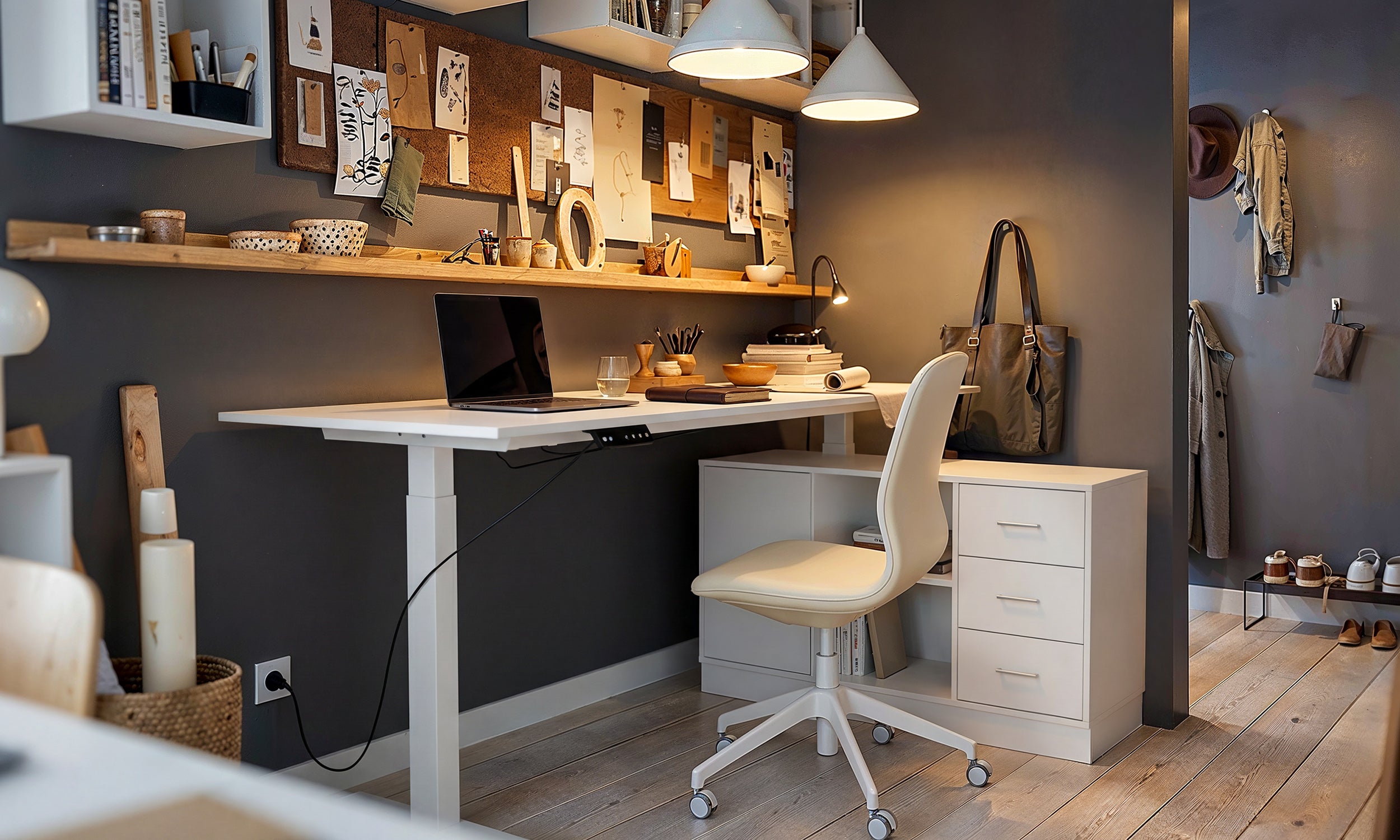
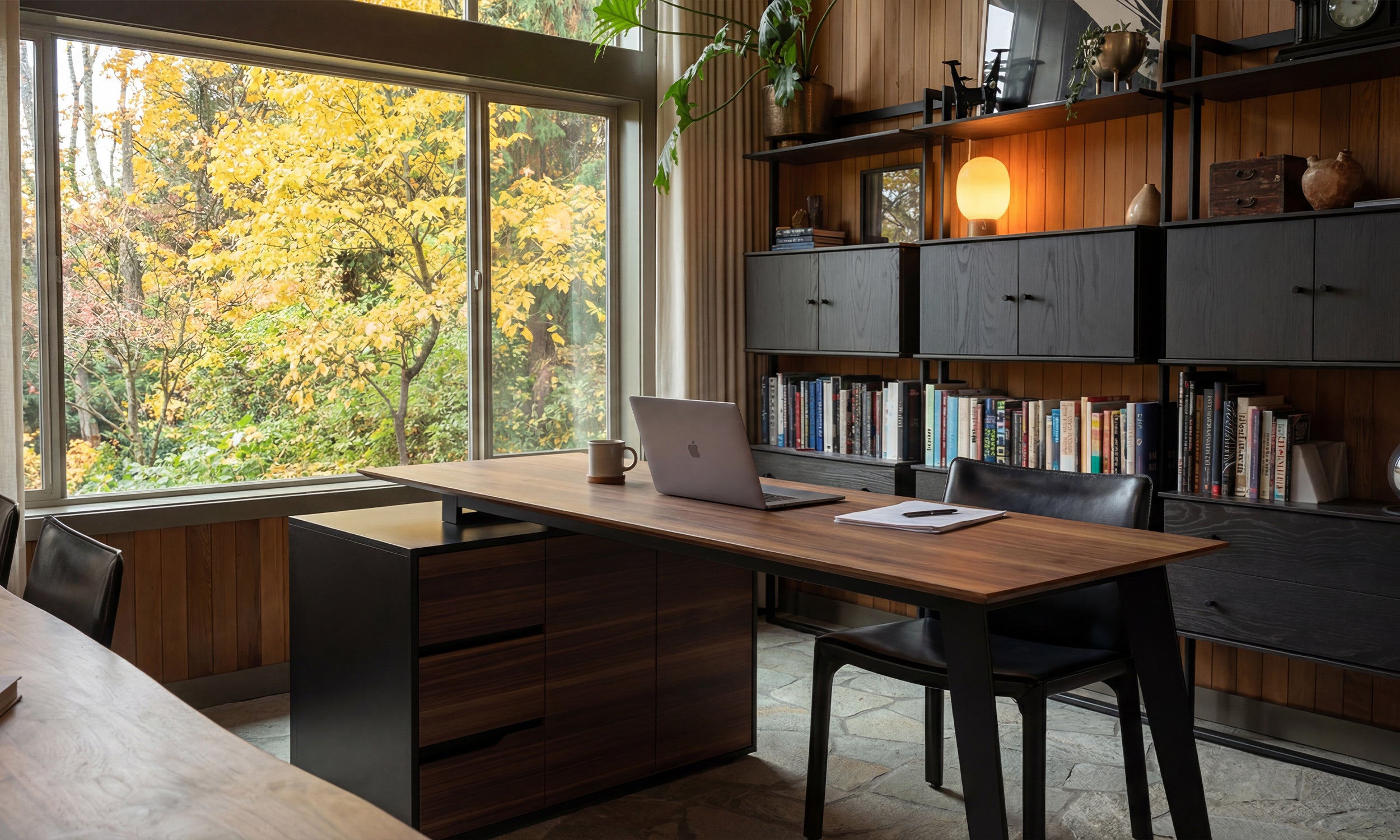
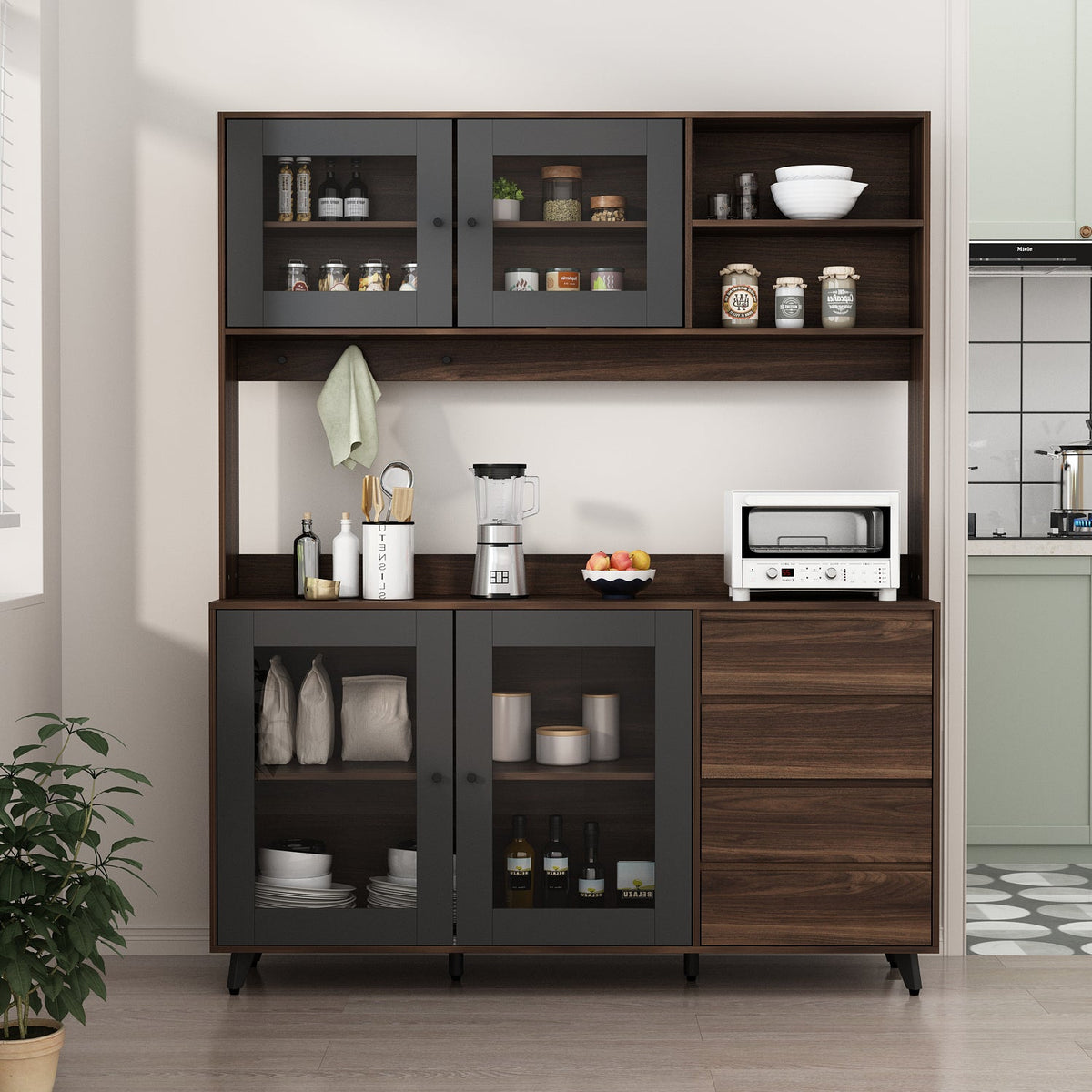
Short answer: the easiest way to build a coffee bar is to put it on a buffet or pantry cabinet that is about 30 to 39 inches tall and at least 24 inches wide, placed within cord reach of a wall outlet. Keep the coffee maker on the countertop, store beans, coffee pods and filters in the drawers, and keep mugs on shelves or behind glass doors. If the cabinet has a hutch, pull the machine forward while it brews so steam does not reach the wood above.
The coffee bar cabinet ideas below work with the low sideboards and hutch-style pieces in our buffet pantry cabinet collection. Each idea comes with the measurements that decide whether it fits your space and your machine.
Why a buffet or pantry cabinet makes a good coffee station
A home coffee bar needs three things: a stable work surface, closed storage for supplies and an outlet. A buffet pantry cabinet covers the first two in one piece, and because it is freestanding you can add a kitchen coffee bar without a remodel or a built-in coffee bar.
- Height: most coffee bar guides recommend a work surface of about 36 inches, close to standard counter height. Low buffets in our collection range from 29.5 to 39.4 inches high, so you can match your kitchen counters or go slightly lower for a seated dining room setup.
- Width: plan at least 24 inches of counter space for a single machine and a mug. A 47- to 63-inch buffet gives you enough counter space for a grinder, a kettle and a tray of cups side by side.
- Depth: most low pieces here are about 15.7 inches deep, and a few pantry cupboards reach 17.3 inches. That is shallower than a typical kitchen counter, so check your machine's footprint before you buy.
6 coffee bar cabinet ideas that work
1. The low buffet coffee station
A long, low sideboard is the simplest functional coffee station. Arrange it as a line from left to right in the order you use things: beans and grinder, then the coffee maker or espresso machine, then cups, sugar and spoons. Doors below hide refill stock, and the top stays clear enough to double as a serving surface when guests come over. A piece like the 55.1" black buffet cabinet (31.4" H, 15.7" D) lists 50 lb per shelf, which is useful if you keep a spare kettle or bulk beans below.
2. The hutch coffee nook with a microwave shelf
A sideboard with a hutch turns one wall into a coffee nook with vertical space for mugs and canisters. The 63" pantry storage cupboard with hutch stands 74.8 inches tall, has four drawers (each about 6" H x 22" W x 12" D inside), glass doors, a microwave shelf and a 300 lb overall weight capacity. Use the drawers for pods, filters and tea, and the glass-door section for coffee cups you want on display.

3. The hidden coffee bar behind cabinet doors
If you prefer a clean kitchen, choose a pantry cupboard with a central worktop and doors on both sides. The 63" white kitchen pantry cabinet with 8 doors (72" H x 17.3" D) has a large central worktop for the machine, with closed storage above and below. It works like a small butler's pantry: the brewing zone stays open for easy access, and everything else is tucked away behind doors.
4. The coffee and wine bar combination
One cabinet can serve your morning routine and evening drinks. The 56.3" home coffee and wine bar cabinet is 39.4 inches tall with a glass top, LED lighting and a wine rack listed for 15 bottles. Keep coffee on one end and wine glasses on the other so the two zones do not compete for counter space. For bottle storage and weight limits, see our home bar cabinet ideas.

5. The compact coffee bar for a small space
For a small coffee station in an awkward corner or a narrow wall, a 31.5-inch-wide cabinet is enough for a standard drip machine or a compact espresso machine. The 31.5" buffet sideboard with a 3-tier shelf is 55.1 inches tall, with a drawer and two doors below and open shelves for cups above. It fits unused space where a full sideboard or a console table would not.
6. The dining room coffee corner for guests
A coffee bar in the dining room lets guests help themselves after a meal. Place it on the wall opposite the kitchen door, keep a tray with cups, a French press or carafe and a small sugar bowl on top, and store dessert plates and spoons in the drawers. Leave at least 36 inches of walkway in front, the minimum recommended in the NKBA Kitchen Planning Guidelines.
Plan the zones before you fill the cabinet
Grouping items by task is what makes a coffee corner practical. Use this layout as a starting point:
| Zone | What goes there | Best cabinet feature |
|---|---|---|
| Brew | Coffee maker, espresso machine, kettle | Open countertop near the outlet, not under a low hutch shelf |
| Grind and beans | Grinder, airtight canisters | Countertop or a closed shelf away from the machine's heat |
| Cups | Coffee mugs, espresso cups, glasses | Hutch shelves, open shelving or glass doors at arm's reach |
| Small supplies | Coffee pods, filters, tea, spoons | Shallow drawers with dividers |
| Back stock | Spare beans, syrups, cleaning tablets | Lower cabinet behind doors |
Keep the items you use for every cup of coffee within arm's reach of the machine, and move everything else to the lower cabinet or a pull out drawer.
Appliance clearance: measure the machine, not just the cabinet
Most coffee bar ideas fail on height, not width. Before you choose a cabinet, measure your machine with the lid or water reservoir open, and add a few inches of headroom so you can refill it without sliding it out. Then compare that number with the open section of the hutch or the space under any upper cabinets or floating shelves.
- Open hutch shelves are often shallow. The 59" sideboard display cupboard with mesh doors lists a 38-inch-wide open shelf that is 17.7 inches high but 9.8 inches deep. That suits mugs and canisters better than a full-size espresso machine.
- Check counter depth. On a 15.7-inch-deep top, the machine should sit fully on the surface with its feet away from the front edge. Leave room in front for a drip tray or a cup.
- Allow for a beverage fridge only if the cabinet is built for it. Do not squeeze a mini fridge into a standard cabinet without the ventilation its manual calls for.
Outlets and cords
None of the buffet and pantry cabinets in this collection list a built-in power outlet, so the cabinet's position is set by your wall outlets. The NFPA's electrical safety tips give clear rules for a coffee bar:
- Plug only one heat-producing appliance, such as a coffee maker or toaster, into a receptacle outlet at a time.
- Plug major appliances, including microwave ovens, directly into a wall receptacle; do not use extension cords or plug strips for them.
- Extension cords are intended for temporary use. If you need more outlets near your coffee bar, have a qualified electrician add them.
- Use GFCI protection in kitchens to reduce the risk of shock.
Leave a small gap between the cabinet back and the wall so cords are not pinched, and use cord clips to keep them off the countertop.
Heat and steam: protect the cabinet
Coffee makers and kettles release hot, moist air. Simple Green's wood cabinet care guide advises keeping heat- and steam-producing appliances like coffee makers away from cabinets, because excess heat and moisture can damage wood surfaces. On a buffet pantry cabinet, which is mostly MDF with a finished surface, that means:
- Never run a machine directly under a low hutch shelf or upper cabinets. Slide it forward while it brews and push it back when it has cooled.
- Point the kettle spout and steam wand away from the hutch and cabinet doors.
- Set the machine on a tray or mat to catch drips, and wipe spills right away with a damp cloth.
- Several sideboards list water-resistant and scratch-resistant tops, such as the 63" hutch cupboard above; it is still worth protecting them.
Storage for cups, coffee beans and pods
The National Coffee Association's coffee storage guidance says beans keep best in an airtight, opaque container in a cool, dark place, away from cabinets near the oven or dishwasher, and that it is better to buy enough for one or two weeks at a time. For a coffee bar cabinet, that translates to:
- Coffee beans and coffee grounds: opaque canisters in a closed cabinet or drawer, not on a sunny open shelf and not next to the machine's heat.
- Coffee pods and filters: drawer organizers keep them sorted. Measure drawer height before you buy organizers; the hutch cupboard above lists drawers about 6 inches high inside.
- Coffee mugs: mugs add up in weight quickly, and hutch shelves in this collection are often rated 11 to 33 lb. Put heavy stoneware on the lowest shelf and lighter glass cups up top.
- Under cabinet lights: 16 pieces in the collection include LED lighting, which makes an early-morning coffee nook easier to use. Plug-in lights need their own outlet space, so count them in your outlet plan.
Most models in the collection fall between about $300 and $600, and all ship free to the 48 contiguous states. For more pantry-side organizing ideas, read our guide to smart storage for a kitchen buffet pantry, and if you want to flank your coffee station with tall storage, see how to plan a pantry and sideboard set.
Ready to choose a cabinet? Compare heights, widths and storage options across our kitchen pantry storage and buffet cabinets.
FAQ
What should I put in a coffee bar cabinet?
Keep the brewing device (coffee maker, espresso machine or kettle and French press), a grinder, airtight bean canisters, mugs, spoons, sugar and filters or pods. Store back stock and cleaning supplies behind the lower doors so the top stays clear.
How tall should a coffee bar cabinet be?
About 36 inches is the usual target because it matches standard kitchen counters. Buffets from roughly 30 to 39 inches high work well; choose the lower end if people will use it while seated in a dining room.
How much space do I need for a coffee bar?
Plan at least 24 inches of counter width for one machine, and more if you add a grinder or kettle. Leave at least 36 inches of walkway in front of the cabinet.
Do I need plumbing for a coffee bar?
No. A freestanding coffee bar on a buffet cabinet uses the machine's own water reservoir, so you only need a nearby wall outlet. Plumbed-in machines are a built-in option that requires a remodel.


Laisser un commentaire
Ce site est protégé par hCaptcha, et la Politique de confidentialité et les Conditions de service de hCaptcha s’appliquent.