
Short answer: most changing tables put the changing surface between about 34 and 42 inches off the floor, and the right changing table height for you is the one where the changing pad sits roughly at, or a few inches below, your bent elbows. At that height you can do diaper changes standing upright instead of hunching over your baby, which is what causes most changing-table back pain.
For new parents setting up a nursery, this guide covers standard changing table dimensions, a simple elbow test with a tape measure, what to do if you are a taller or shorter parent, and how rail height and the changing pad affect the final working height. Every model in our changing table dresser collection lists its overall height, so you can compare against your own numbers.
Why Changing Table Height Matters
A newborn baby needs many diaper changes a day, and each one means standing at the changing area, leaning in, lifting legs and reaching for wipes. If the table is too low, you round your lower back every time. If it is too high, your shoulders creep up and your wrists bend awkwardly. Over months of diaper duty, either one can turn into back strain or neck and shoulder pain.
The ideal height keeps your spine close to neutral, lets your forearms rest near level, and keeps the baby close to your body so you never have to reach. It also makes the station safer: when everything is at a comfortable height, it is easier to keep one hand on your baby the whole time.
Standard Changing Table Dimensions
There is no single legal height for a home changing table. Most models sold for home use fall within these typical ranges:
| Changing table type | Typical height | Typical width | Typical depth |
|---|---|---|---|
| Standard freestanding changing table | 36–42" | 32–40" | 18–22" |
| Dresser with changing top (combo) | 34–38" | 30–50" | 16–20" |
| FUFU&GAGA changing table dressers | 32.9–39" (median about 36") | Most 44.9–47.2" | About 18–19.7" |
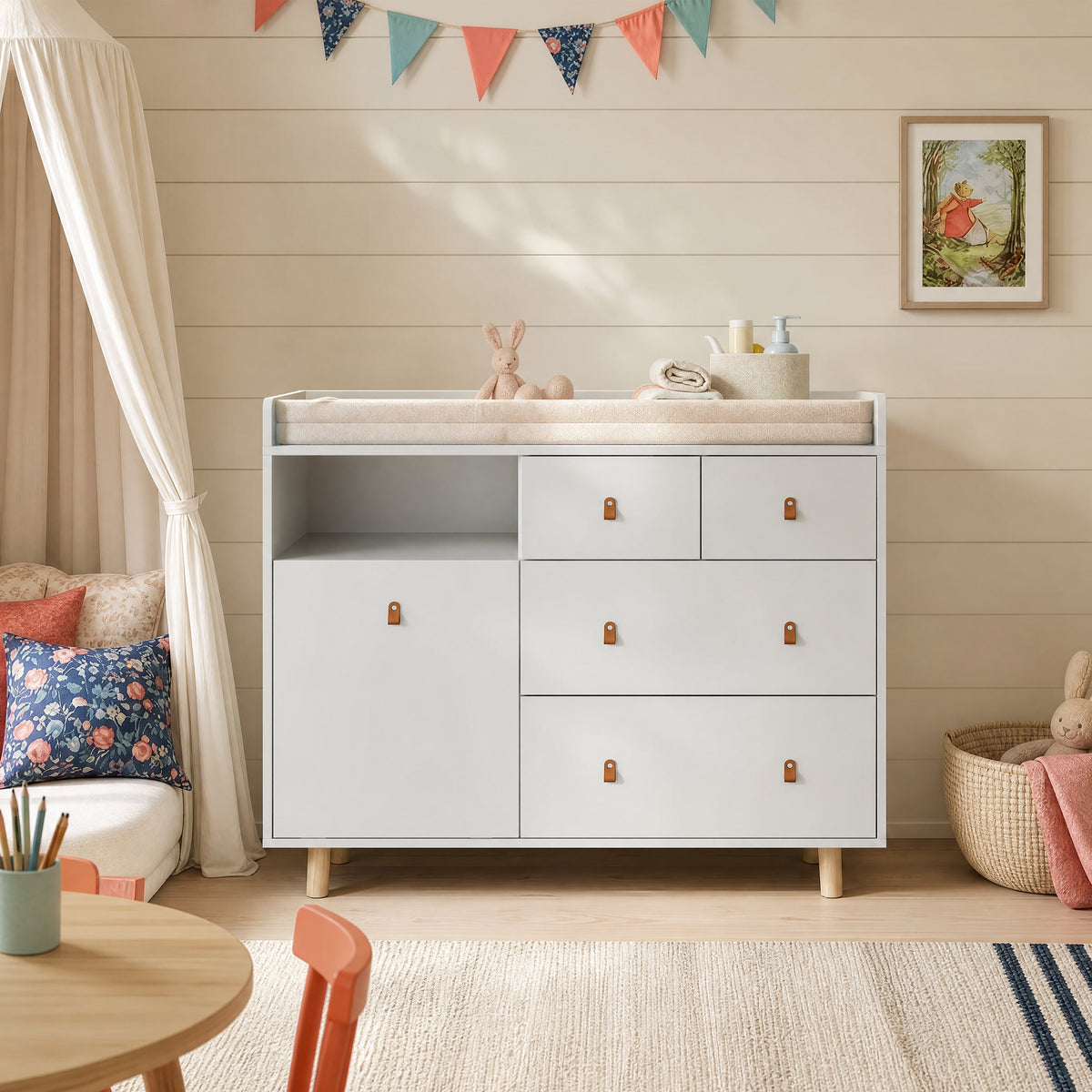
Dresser-style changing tables are typically wider and a little lower than standalone tables, because they are built to the height of a regular dresser. Wider tables give you more surface area: enough room for a changing pad plus a diaper caddy on the same top, and extra storage in the drawers below. Standalone tables use less floor space, which can matter in a small baby's room.
How to Find the Right Height for Your Changing Surface: The Elbow Test
You only need a tape measure and two minutes. Do this for each adult who will do diaper changes.
- Stand in the shoes you wear at home, feet hip-width apart, arms relaxed at your sides.
- Bend your elbows to 90 degrees, forearms parallel to the floor.
- Measure from the floor to the underside of your elbow. This is your elbow height.
- Subtract about 4 to 6 inches (10–15 cm). A common ergonomic rule of thumb puts the changing surface this far below the elbows, so your hands work slightly downward with a gentle bend at the waist rather than a deep stoop.
- Compare that number to the changing surface height: the table or dresser height plus the thickness of the changing pad or changing topper you will use.
If a store display is available, the quickest check is to stand at it and mime a diaper change. Your back should stay long, and you should not need to lift your shoulders.
Changing Table Height for Taller Parents
Taller parents usually find standard 32- to 34-inch dressers too low. Look for a changing table height of 37 inches or more. In our range, the 39" tall white changing table dresser with drawers and 2 storage cabinets is the tallest, followed by the 38.2" black changing table with 3 drawers and 2 cabinets and the 37.8" white/wood 4-drawer changing table dresser. A contoured pad then adds a little more working height.

Changing Table Height for Shorter Parents
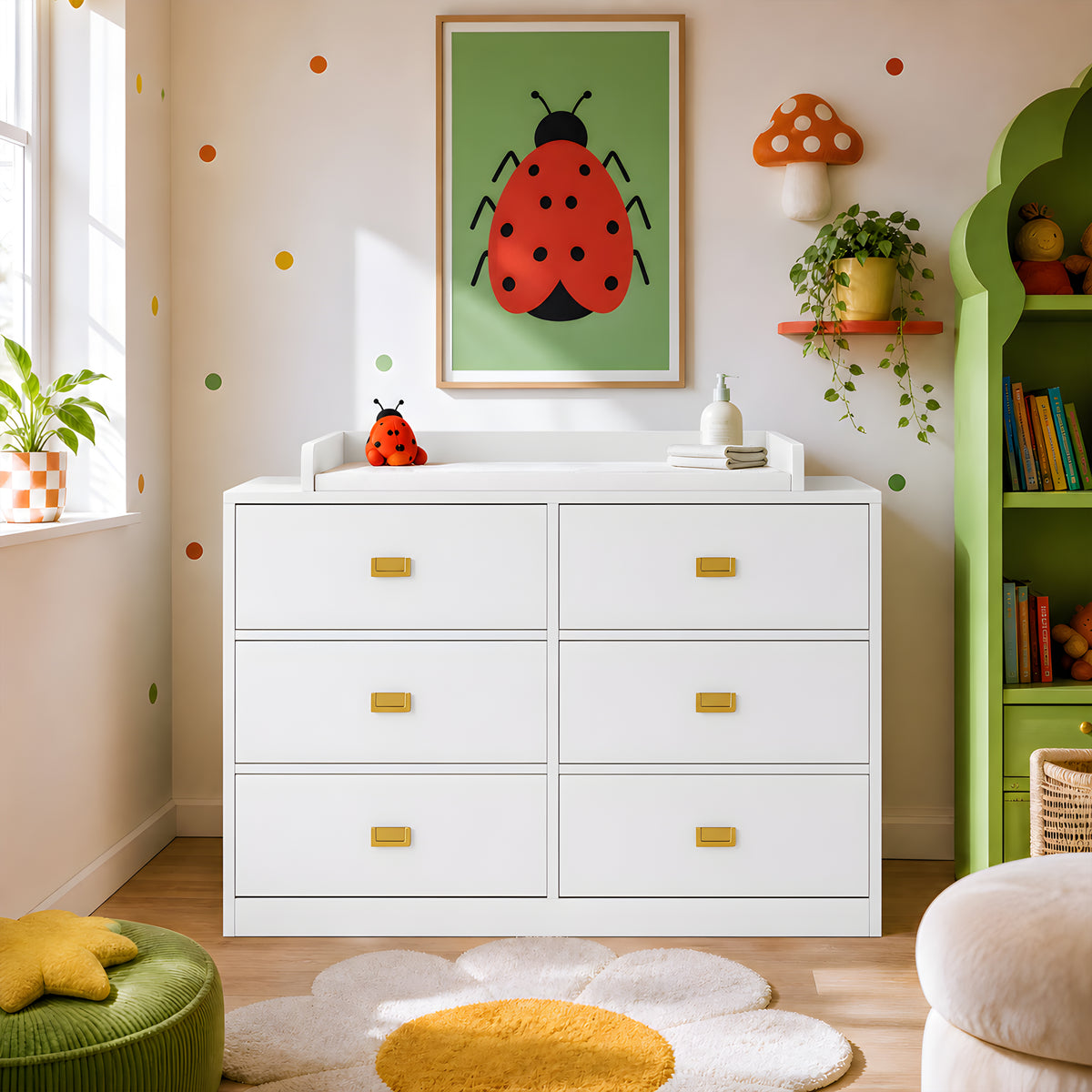
Shorter caregivers often feel their shoulders lift on a 38- to 42-inch freestanding table. A dresser-height model is usually the better fit. The 45.1" white/gray 6-drawer changing table dresser is 32.9 inches tall with a removable changing topper, and the 35.4" white 3-drawer changing table sits at 35.4 inches.
When Two Parents Are Different Heights
Pick the height for the person who will do most of the changes, then lean slightly toward the taller parent: bending a little is easier to tolerate than working with raised shoulders. A median-height model around 36 to 37 inches is a practical middle ground for many couples. The 47.2" white nursery storage dresser changing table (36.1 inches tall) sits right in that range, and our 45" white/grey model with an open shelf is 37 inches.
Rail Height and Changing Pad Fit: Getting the Perfect Fit
The number on the product page is the overall table height, but your hands work on top of the changing pad, not on the furniture. Three things change the real working height:
- Raised safety rails and raised edges. KidsHealth advises guardrails on all four sides of a flat changing surface, at least 2 inches tall. On our models that list a rail height, it is 2.8 to 3.1 inches. Rails add a little to the overall height and keep the pad from sliding.
- Contoured pads. A contoured changing pad is lower in the middle and higher at the sides. It adds working height and an extra layer of protection against rolling.
- Changing topper. A removable changing topper raises the surface above the dresser top. On six of our nine models the topper is removable, so the dresser returns to its regular height later.
Always use a pad that fits the changing area snugly, with no gaps at the edges, and secure it the way the instructions describe. Check the pad's width and length against the space inside the rails before you buy. A good fit matters more for your baby's safety than an extra inch of height, and a sturdy table on a stable surface matters more than either.
Can You Adjust a Changing Table's Height?
Some standalone tables have adjustable shelves or height settings, but dresser-style changing tables have a fixed height. That is why choosing the right model up front matters. Practical options:
- Too low: choose a thicker contoured pad, or a taller dresser model. Do not put a dresser on blocks or risers; it makes the furniture less stable.
- Too high: choose a lower dresser rather than standing on a stool while holding a baby.
- Either way: anchor the dresser to the wall with the included anti-tip kit before the first change. Our guide on anchoring furniture to the wall covers studs and drywall.
How Much Weight Should a Changing Table Hold?
Two weight numbers are easy to confuse. The CPSC's mandatory standard for baby changing products describes changing tables as designed for a child up to 30 lb, and the product's warning label gives the weight limit for the changing area. The "Weight Capacity" on a dresser spec sheet describes the furniture itself and is not a child weight limit. Follow the label, and stop using the changing area when your child reaches it. Our changing table safety guide covers straps, supervision and when to switch to floor changes.
Plan the Height Into Your Nursery Layout
A comfortable height only helps if you have enough space to stand squarely in front of the table. When you plan the nursery layout:
- Leave enough clearance in front of the dresser to stand comfortably while a drawer is fully open; our models are about 18 to 19.7 inches deep, and drawers need nearly that much room again.
- Put the diaper pail on the side of your dominant hand so you never turn away from the baby.
- Keep diapering supplies within arm's reach for quick access, on the top or in the top drawer. Our guide on how to organize a changing table shows a full layout.
- Keep the changing area away from windows, blind cords and heaters, and keep the baby's side of the nursery free of things a curious toddler could pull down.

Quick Height Picker
| If you want… | Look at | Overall height |
|---|---|---|
| Lowest top, wide drawer storage | 45.1" white/gray 6-drawer dresser | 32.9" |
| Compact footprint | 35.4" white 3-drawer changing table | 35.4" |
| Middle height with open shelves | 47.2" white nursery storage dresser | 36.1" |
| Taller top with cabinets | 46.3" black changing table, 2 cabinets | 38.2" |
| Tallest top in the range | White changing table dresser with 2 cabinets | 39" |
Ready to compare? Browse every model, with full changing table dimensions and specs, in our changing tables collection. FUFU&GAGA ships free to the 48 contiguous states, and unused, unassembled items can be returned within 35 days.
FAQ
Is 30 inches too low for a changing table?
For most adults, yes. A 30-inch surface is close to desk height, which makes most caregivers bend deeply at the waist for every change. Unless you are quite short, aim for a changing surface of about 34 inches or more, counting the pad.
Is 42 inches too tall for a dresser used as a changing table?
It can work for tall parents, but many people find 42 inches pushes their shoulders up. Use the elbow test: if the pad would sit above your bent elbows, it is too tall for you.
How wide should a changing table be?
The top should be wider than the changing pad so it fits within the rails or topper with no gaps. Freestanding tables are often 32 to 40 inches wide; dresser-style changing tables are typically wider, and most of ours are 44.9 to 47.2 inches, leaving room for a caddy.
Does the changing pad change the working height?
Yes. A contoured pad raises the surface you work on, and a changing topper raises it further. Add both to the dresser height before comparing with your elbow measurement.


Laisser un commentaire
Ce site est protégé par hCaptcha, et la Politique de confidentialité et les Conditions de service de hCaptcha s’appliquent.