


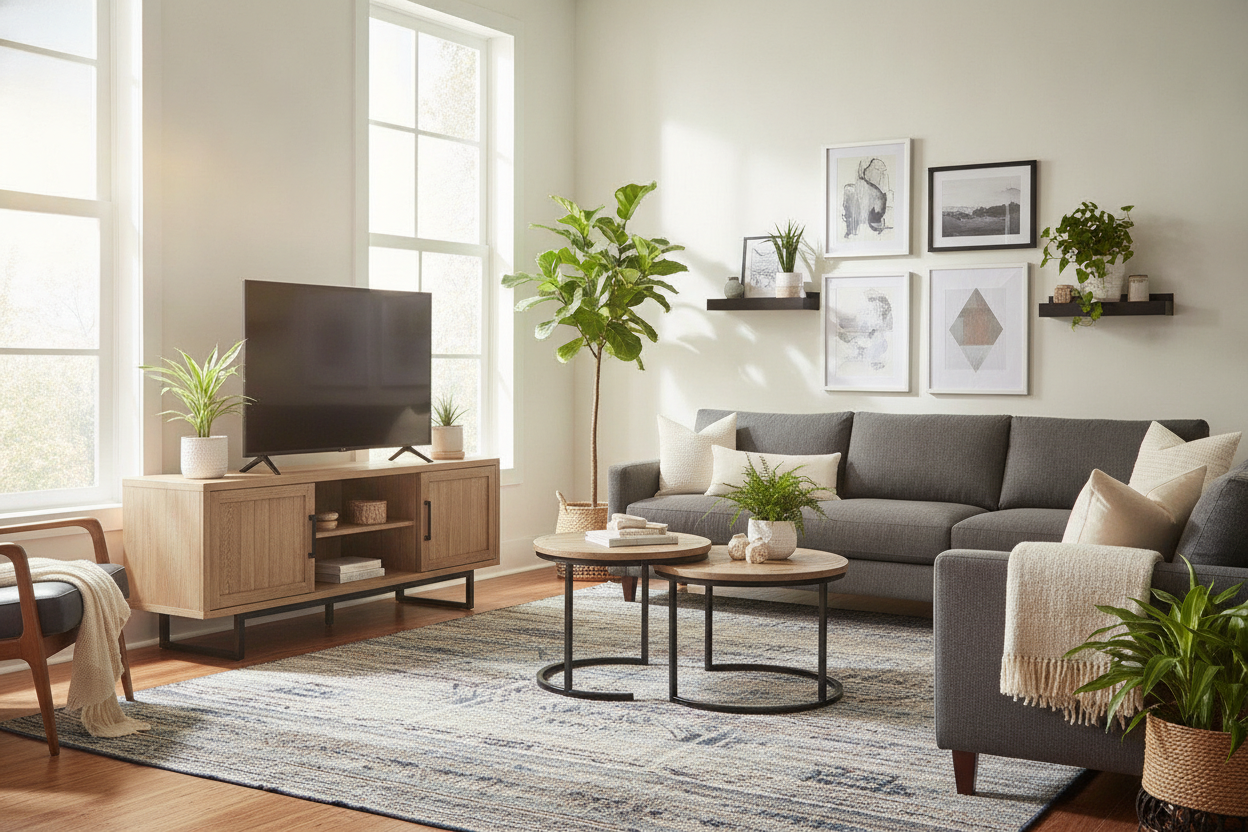
I spent three hours last night scrolling through high-end furniture sites, only to realize I was looking at the exact same media console on four different pages with four different prices. It is enough to make you want to throw your laptop across the room. You start wondering if you can just bypass the middleman and score a wholesale tv stand without being a licensed interior designer or owning a chain of hotels.
- True wholesale requires a Tax ID and a Resale Certificate in most states.
- Global manufacturing sites usually have Minimum Order Quantities (MOQs) that don't work for a single living room.
- 'Wholesale to the public' is often just a marketing label for standard retail prices.
- Direct-to-consumer (DTC) brands offer the best compromise between price and quality.
The 'Direct from Manufacturer' Illusion
When you start searching for factory-direct prices, you inevitably land on some shady-looking websites. They look like they haven’t been updated since 2004, but they promise prices that seem too good to be true. Usually, they are. These are often drop-shipping sites that don't actually hold any inventory. They are just a digital storefront for a factory in another country, and they have zero control over quality or shipping times.
I once took the bait on a 'factory direct' site for a rental property I was furnishing. The price was 40% lower than anything else I’d seen. Six weeks later, a box arrived that looked like it had been through a war zone. The wood was thin, the finish was peeling, and there was no way to get a human on the phone. By the time I paid for return shipping, I had lost money. The 'direct' route is often a gamble where the house always wins.
Real manufacturers aren't set up to talk to you. They are set up to move pallets. If a site is willing to sell you a single unit and accepts a standard credit card, they aren't a wholesaler—they are a retailer with a better marketing hook. Don't be fooled by the lack of a fancy logo; if it feels like a retail transaction, you're paying a retail margin.
Do You Actually Need a Trade Account?
There is a massive difference between a consumer-facing 'wholesale' site and a genuine B2B wholesaler. A real wholesaler requires a trade account. To get one, you usually need to provide a business license and a tax ID. This is because they aren't charging you sales tax—the assumption is that you will resell the item and collect the tax later. If you don't have these documents, you're locked out of the true 15-30% discounts.
I’ve seen 'wholesale to the public' stores in industrial parks, and while they can be great for finding a deal, they are usually selling overstock or slightly damaged goods. It’s a hunt. You aren't getting the latest designs; you're getting what didn't sell at the big-box stores last season. It’s a valid way to save, but it's not the same as having a trade account at a high-end furniture mart.
Some brands offer 'Pro' programs for contractors or real estate agents, which are a bit easier to get into. If you have a side hustle or a small business, it's worth checking the requirements. But for the average person just trying to finish their living room, the time spent trying to fake your way into a trade account usually isn't worth the $100 you might save. The paperwork alone is a nightmare.
The Minimum Order Quantity (MOQ) Trap
You find a site like Alibaba and see a gorgeous solid oak media console for $90. Your heart skips a beat. Then you scroll down and see: 'Minimum Order: 50 pieces.' This is the MOQ trap. These factories are optimized for shipping containers, not UPS trucks. Unless you want to turn your garage into a warehouse and spend your weekends on Facebook Marketplace trying to sell 49 extra TV stands, this isn't a viable option for a regular human.
How to Get 'Trade' Pricing (Without Flipping Houses)
The secret to getting close to wholesale prices without the business license is to find the brands that have cut out the layers of distribution. Traditional furniture goes from the factory to an importer, then to a distributor, then to a retail showroom with high rent and commissioned salespeople. Each step adds 20-50% to the price tag.
The best strategy is to browse stylish TV stands directly from companies that act as their own importer and retailer. These brands operate online, keep their overhead low, and pass those savings to you. You get the quality of a high-end showroom piece without paying for the showroom's electric bill. I’ve found that pieces in the $400-$700 range from these direct sellers often outperform the $1,200 pieces at the local mall.
Look for details that scream quality: kiln-dried wood, mitered corners, and high-quality hardware. If a company can tell you exactly which factory made the piece and what the materials are, they are usually a safe bet. You’re still paying a retail price, but it’s a much fairer one than you'll find at a traditional department store.
Two Styles That Look Custom When Bought Direct
If you want your media setup to look like it was designed by a pro, there are two specific styles that always look more expensive than they are. The first is a mid century modern unit with slatted doors. The vertical wood slats provide a high-end, architectural feel that hides your messy DVR and cables while still letting remote signals pass through. It looks like a custom tambour piece, but you can find them at a fraction of the price when buying direct.
The second look I swear by is a storage credenza with sliding glass doors. Glass adds a layer of sophistication and keeps the piece from feeling too heavy in a small room. Fluted or textured glass is even better because it obscures the clutter inside while reflecting light. These styles are often marked up significantly in boutique shops, but direct-to-consumer models use the same tempered glass and sturdy frames for way less cash.
Is the Hassle Actually Worth the Savings?
After years of trying every loophole in the book, I’ve realized that hunting for a 'secret' wholesale price is usually a waste of time. The hours you spend trying to bypass the system could be better spent just waiting for a holiday sale from a reputable direct-to-consumer brand. You want a warranty. You want a return policy. You want a piece of furniture that doesn't arrive as a pile of splinters.
Focus on finding a balance of style and function that actually works for your life. A $200 'wholesale' stand that sags after six months is much more expensive than a $500 well-built unit that lasts a decade. Buy from a brand that is transparent about their pricing and materials, and you'll end up with a living room you actually like being in.
FAQ
Can I buy from a furniture wholesaler without a business?
Most legitimate wholesalers require a resale certificate or a business license. If they don't, they are likely a retail store using 'wholesale' as a marketing term.
Why is shipping so expensive for wholesale furniture?
Wholesalers usually ship via LTL (Less Than Truckload) freight on pallets. This is expensive for a single item but cheap when you're moving twenty. Retailers often bake this cost into the price or use specialized logistics to lower it.
What is a trade discount?
A trade discount is a price reduction (usually 15% to 30%) offered to interior designers, architects, and contractors. It is a way for brands to build relationships with professionals who buy in high volumes.



Laisser un commentaire
Ce site est protégé par hCaptcha, et la Politique de confidentialité et les Conditions de service de hCaptcha s’appliquent.