


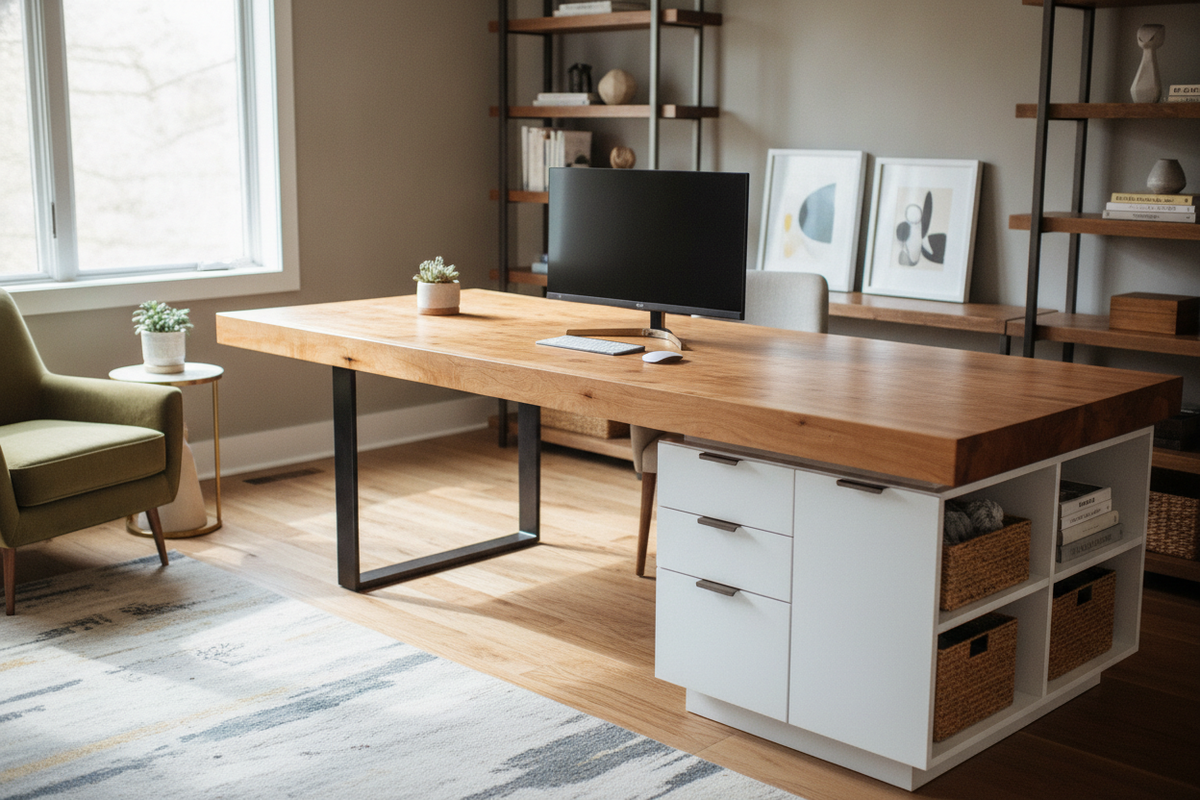
Introduction: The Enduring Appeal of the Butcher Block Desk
A butcher block desk brings together the organic warmth of solid hardwood and the structural rigidity required for demanding modern work environments. Unlike hollow-core or thin composite work surfaces, a solid wood countertop desk provides a dense, dependable platform capable of holding heavy monitor arms, desktop audio gear, and comprehensive storage layouts. Whether you are assembling a custom workstation from scratch or comparing pre-assembled functional computer desks with custom desktop builds, understanding the core components—from timber selection to support frames—ensures a long-lasting, ergonomic setup.
Butcher Block Desktop Selection: Materials, Grain Styles, and Finishes
Selecting the right butcher block desk top requires evaluating wood species, construction orientation, and surface sealants based on your daily usage habits.
Wood Species and Grain Construction Profiles
Butcher block surfaces are constructed by joining multiple solid wood staves together. The orientation of these staves influences both appearance and structural stability:
- Edge-Grain Construction: Built from parallel wood strips laid on edge, this style provides uniform surface strength, subtle grain variation, and dependable resistance to warping.
- Face-Grain Construction: Assembled from wider wood boards laid flat, face-grain tops highlight natural wood grain patterns and visual character, making them popular for decorative and minimalist office designs.
- Hardwood Varieties: Common options such as birch, acacia, rubberwood, oak, and walnut vary in tone, density, and grain prominence. Denser hardwoods offer greater scratch resistance, while lighter timbers provide a bright, airy aesthetic.
Surface Finishing: Polyurethane, Hardwax Oils, and Conditioners
Raw wood requires a protective topcoat to resist moisture, ink marks, and daily wear. Finishing options include:
- Polyurethane and Film Finishes: Available in matte, satin, and gloss sheens, polyurethane forms a durable barrier across the wood surface, offering high resistance to spills and minimal maintenance.
- Hardwax Oils and Penetrating Finishes: These treatments penetrate the wood fibers to protect against moisture while preserving the natural, tactile texture of the grain. They allow for easy spot repairs without stripping the entire desktop.
- Mineral Oils and Conditioners: Primarily used in culinary prep areas, traditional mineral oils require frequent reapplication and are generally less practical for office environments where paper and electronics contact the surface.
Dimensional Planning and Spatial Ergonomics
Proper dimensional planning ensures your butcher block workstation fits your physical space while maintaining natural posture and comfortable viewing distances.
Desktop Thickness, Span Length, and Sag Prevention
Solid wood tops are heavy, and wide spans without intermediate support can bow over time under load. When planning your butcher block computer desk:
- Desktop Thickness: Thicker slabs offer higher structural rigidity and greater visual weight, making them suitable for longer spans and heavy clamp-mounted monitor arms.
- Unsupported Span Support: Desks spanning long distances between two end supports benefit from an under-desk steel stiffener channel, a central support leg, or a continuous rear modesty panel to prevent mid-span deflection.
- Weight Balancing: Position heavy items such as desktop computers, book stacks, and multi-monitor mounts closer to the primary base supports rather than directly in the middle of a wide, unsupported gap.
Depth and Seating Clearance Guidelines
Depth determines focal distance and arm comfort. A shallow surface may feel cramped when paired with large displays, while a deep desk provides ample space for a keyboard, writing materials, and desktop speakers. Ensure sufficient knee clearance beneath the surface, accounting for the thickness of the top and any under-mounted cable trays or drawers.
Base Support Systems: Cabinets, Legs, and Adjustable Frames
The foundation of your butcher block office desk dictates its storage utility, aesthetic profile, and ergonomic flexibility.
Filing Cabinets and Modular Storage Pedestals
Pairing a butcher block slab with two pedestal units creates a sturdy butcher block file cabinet desk that combines wide workspace with integrated document and hardware storage. For inspiration on planning modular storage bases, explore custom built cabinet desk setups that blend functional drawers with continuous timber tops.
Using sturdy modular lower cabinet base units allows you to anchor the workspace with dedicated drawers for stationery, filing folders, and peripherals, establishing an organized perimeter that keeps the main surface clutter-free.
Steel Legs and Motorized Standing Desk Frames
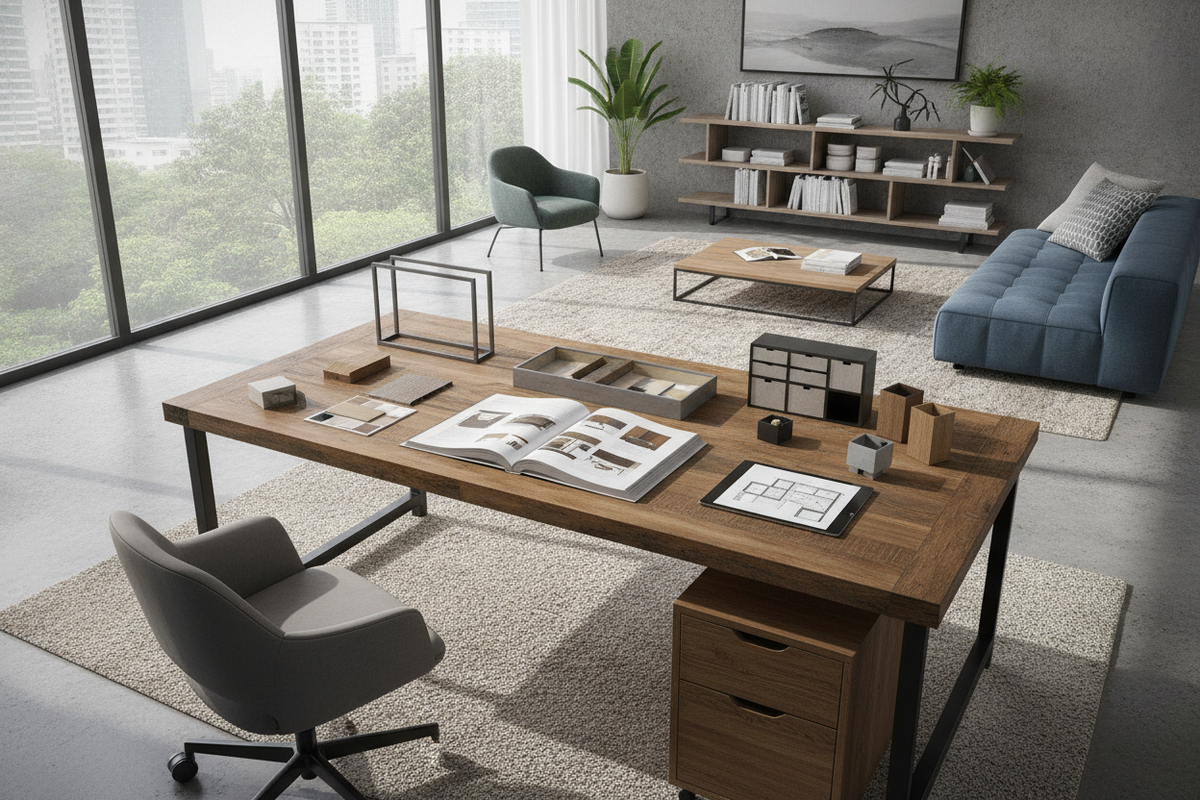
If you prefer an open, minimalist aesthetic, fixed steel legs provide clean sightlines and ample legroom. Alternatively, mounting a butcher block desktop onto a motorized sit-stand frame allows for easy height adjustments throughout the workday. When pairing a solid timber top with a standing frame, verify that the frame's rated load capacity accounts for the substantial weight of the wood slab in addition to your monitors, computers, and mounted accessories.
Setup Scenarios: Home Office, Gaming Battlestation, and Built-In Alcoves
Different daily workflows demand tailored layout configurations for optimal comfort and utility.
Gaming Battlestation Configurations
A butcher block gaming desk provides a rigid foundation for high-action setups. To optimize this configuration:
- Monitor Clamp Reinforcement: Use an underside mounting plate to spread the clamping force of multi-monitor arms across a broader surface area.
- Vibration Dampening: Add soft rubber or silicone pads between the desk frame and the desktop to absorb mechanical vibrations from speakers and input devices.
- PC Placement: Place tower cases directly above a vertical leg or cabinet support to maintain optimal balance across the frame.
Built-In and Corner Workstations
For alcoves and dedicated home office rooms, a built-in butcher block desk maximizes every inch of available wall space. Wall-mounted ledger boards can support the perimeter of the desktop, while complementary modular office base cabinets provide seamless intermediate support and cohesive cabinetry lines along adjacent walls.
Assembly, Fastening Methods, and Cable Management
Proper assembly ensures long-term stability while allowing for the natural seasonal expansion and contraction of solid wood.
- Fastening with Expansion Washers: Solid wood expands and contracts across its grain as ambient humidity shifts. When securing the top to metal frames or wooden cabinets, use slotted brackets or figure-eight desktop fasteners that permit slight lateral movement without cracking the wood.
- Under-Desk Wire Routing: Install under-desk wire trays, adhesive raceways, and J-channels to keep power bricks and cables suspended and hidden from view.
- Grommet Hole Placement: If drilling cable pass-through holes into your butcher block desk top, pre-drill pilot holes, use high-quality hole saws, and finish the cut edges with a matching sealant to protect against moisture absorption.
Conclusion: Designing a Timeless, Ergonomic Workspace
A thoughtfully planned butcher block desk combines the structural integrity of natural wood with the tailored functionality of modern office organization. By selecting an appropriate wood species and finish, ensuring adequate mid-span support, and pairing the surface with reliable storage cabinets or adjustable frames, you can create an enduring, comfortable workspace tailored to your daily tasks.

Laisser un commentaire
Ce site est protégé par hCaptcha, et la Politique de confidentialité et les Conditions de service de hCaptcha s’appliquent.