


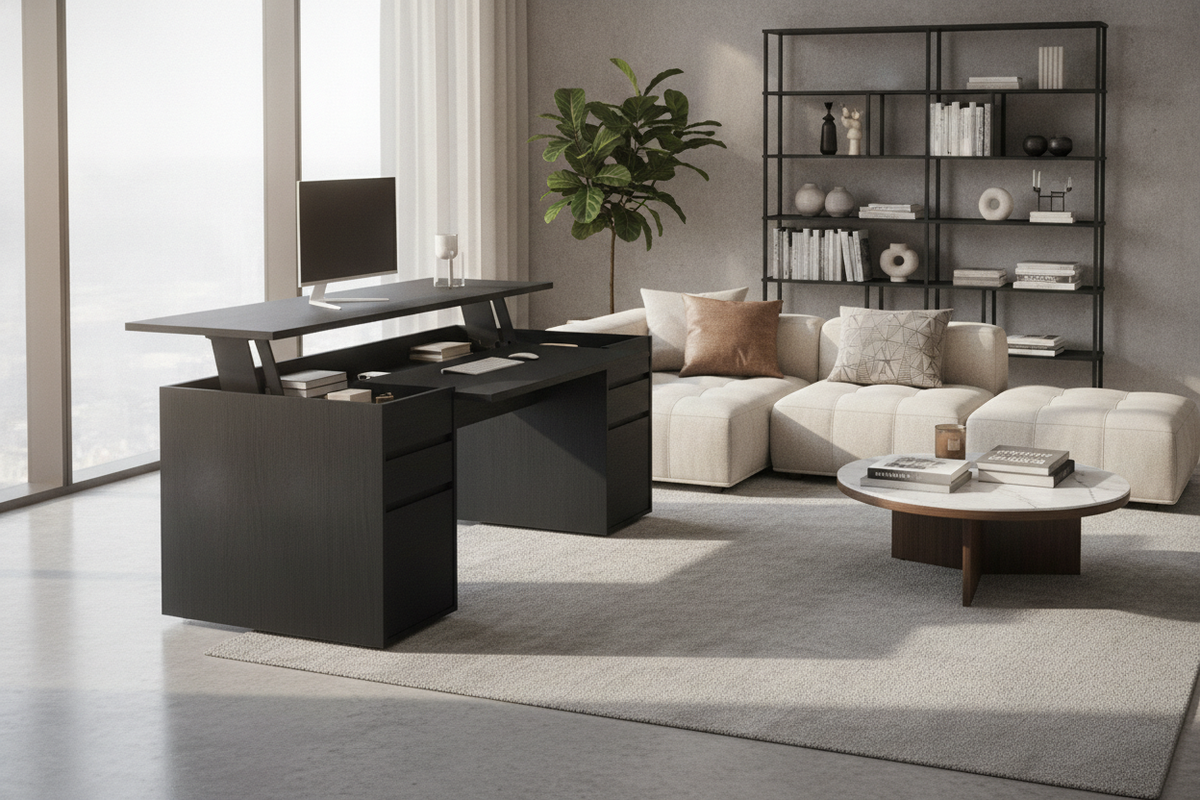
Understanding the Black Lift Top Desk Architecture
A black lift top desk serves as an adaptable anchor for contemporary multi-purpose rooms. Unlike standard static workbenches, these units rely on specialized lifting assemblies that allow the main desktop surface to elevate smoothly toward the user. This mechanical adaptability converts a standard writing surface into an elevated platform suited for varied working postures, dining, or focused typing sessions.
Mechanical Lift Mechanisms: Spring vs. Gas Strut vs. Electric
The interior hardware of a desk top lifter generally falls into mechanical spring linkages or pneumatic gas struts. Tension spring mechanisms offer straightforward lifting action, using coiled metal springs to counterbalance the weight of the platform. Guiding spring-assisted tops with both hands helps control the ascent smoothly.
Pneumatic gas struts, by contrast, offer a controlled, dampened motion during both raising and lowering cycles. They glide quietly and help prevent the tabletop from dropping abruptly against the sub-frame. While manual mechanical linkages define traditional designs, selecting a lift top adjustable desk ensures you receive smooth transitions during daily work habits without jarring desktop equipment.
The Lift Arc and Forward Clearance Dynamics
One structural factor unique to lifting platforms is the forward arc. Traditional lifting hinges do not merely lift straight up vertically; they travel along an angled path that projects the panel upward and forward toward your seating position. Accounting for this forward projection is essential when planning room layout and knee well spacing.
Because the panel swings closer to the seated or standing user, maintaining adequate clearance between your chair base and the front edge of the cabinet helps preserve easy movement. Furthermore, placing items near the rear hinge line requires awareness of pinch zones so cables, power bricks, and stationary gear move freely along the arc.
Dimensional Planning and Room Fit
Integrating a computer desk lift top into a dedicated study, bedroom corner, or open living area requires evaluating dual footprints: the compact static profile and the expanded elevated profile.
Evaluating Surface Footprint vs. Elevated Elevation
When closed, the desk functions as a discreet, streamlined console or credenza. Once the top extends, the effective working height increases noticeably, bringing screens closer to eye level. To preserve comfort across varied seating heights, evaluate both your elbow height while seated and your forearm position when working while standing.
If your room hosts multiple functions, such as guest accommodations or entertaining, maintaining visual order is helpful. In shared spaces where workstations coordinate alongside accent storage, pairing your setup with a modern black wood product maintains cohesive room finishes and complementary concealed utility.
Wall Clearance and Perimeter Circulation
A home office desk with lift top often sits flush against a wall or floats in the center of a room. If positioned directly against drywall, confirm that the lifting mechanism articulates forward rather than backward. Designs with cantilevered arms usually lift forward and upward, meaning the rear edge pulls away from the wall during deployment.
Leave sufficient perimeter space around the perimeter of the desk so you can walk past without bumping the extended top. Maintaining open circulation around the sides guarantees that peripheral cords and task lighting do not snag on nearby shelving or door frames.
Storage Architecture: Hidden Compartments and Drawer Layouts
A notable functional characteristic of a lift top storage desk is the presence of internal storage tucked beneath the primary work surface.
Concealed Under-Top Wells for Daily Tech and Peripherals
Lifting the desktop exposes a partitioned storage well built directly into the frame. This central compartment keeps chargers, laptops, external hard drives, notebooks, and writing instruments hidden from view when the desk is closed, clearing visual clutter after work hours.
To make the most of this internal compartment, organize small office supplies thoughtfully. When planning compartments within the shallow internal well beneath the lifting lid, reviewing a detailed desk storage office guide helps you select modular inserts and trays that fit neatly below the closed lid.
Lower Pedestals, Open Shelving, and Drawer Configurations
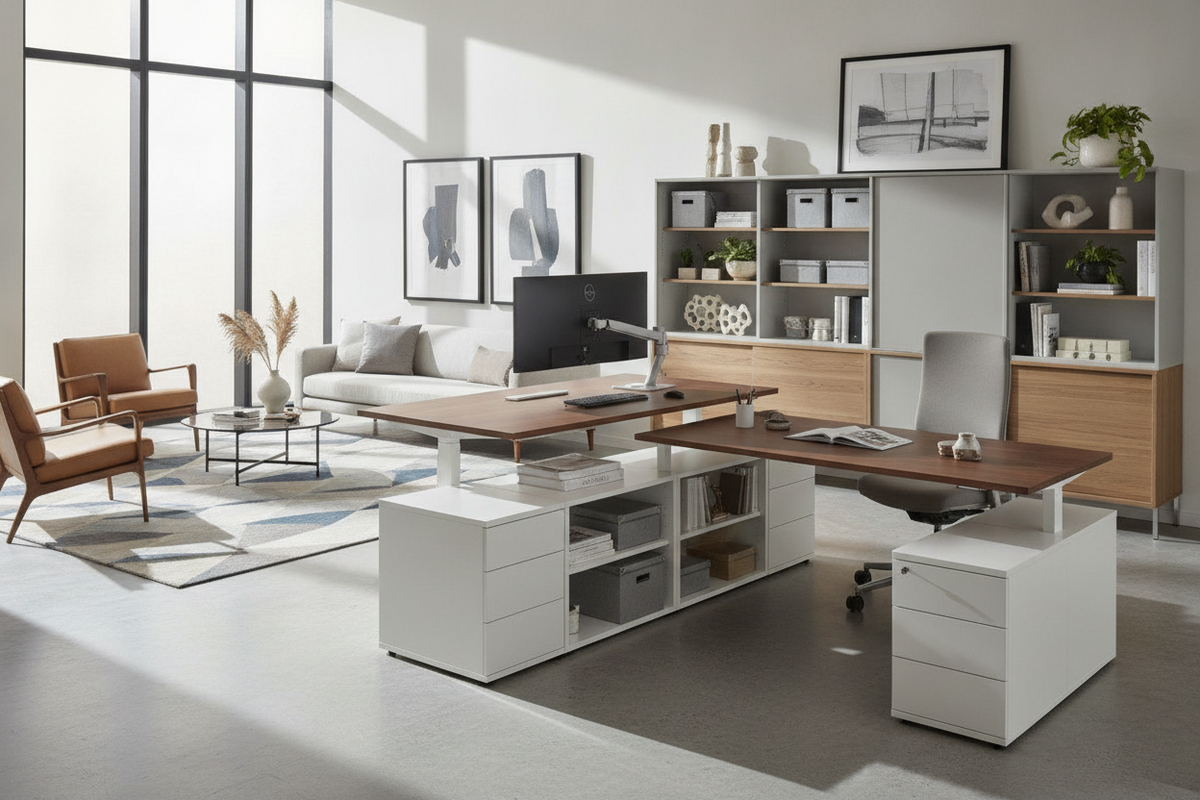
Many configurations combine the overhead lift compartment with lower storage elements. A lift top computer desk with drawers provides dedicated zones for sorting hanging files, desk accessories, and personal electronics. Open cubbies placed below the main chassis offer fast access to reference books, headphones, and daily planners.
For extensive setups where documentation and equipment outgrow the central well, pairing your workstation with cabinetry detailed in our office storage drawers guide keeps oversized peripherals neatly stowed elsewhere in the room.
Styling a Black Lift Top Desk Across Interior Aesthetics
A black finish creates an intentional focal point, anchoring the room with architectural weight. Depending on surface sheen, silhouette, and hardware, a black desk fits comfortably into varied design vocabularies.
Modern Minimalist and Industrial Black Silhouettes
A modern lift top desk generally features clean geometric lines, handle-free drawer fronts, and slender powder-coated metal legs. The dark monochrome aesthetic pairs seamlessly with neutral palettes, concrete accents, and brushed chrome details. In modern lofts, an all-black workstation creates sharp contrast against pale walls and polished wood floors.
Industrial interpretations often integrate exposed steel corner brackets, rivets, and dark charcoal metal framework. These structural details emphasize the mechanical nature of the lift system, turning functional hinges and brackets into visible design features.
Rustic and Farmhouse Textures with Two-Tone Accents
If you prefer warmer, softer visual layers, consider a rustic lift top desk or a farmhouse lift top desk. These variations feature visible woodgrain, wire-brushed finishes, or muted undertones that soften the dark tone. Many farmhouse pieces combine a matte black frame with warm timber accents to balance traditional charm with contemporary function.
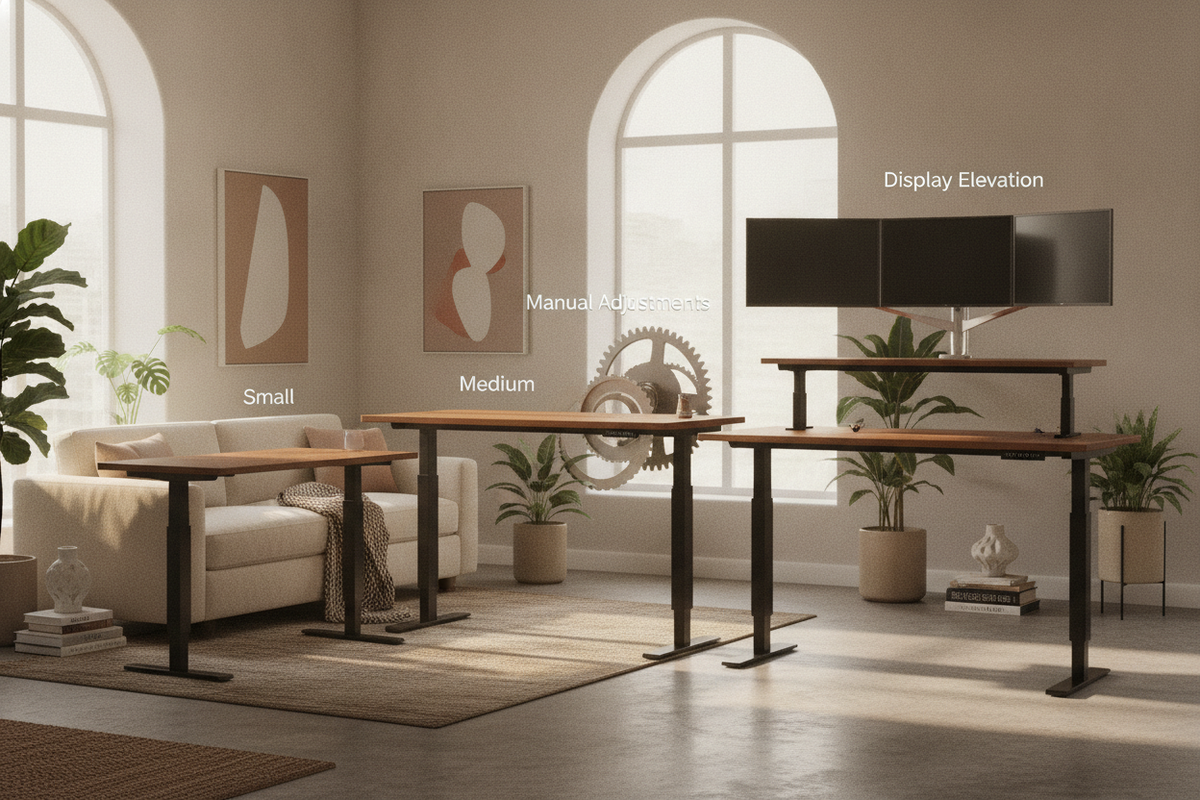
A lift top wood desk with dark walnut or weathered oak paired with a black body produces an inviting look. If your daily tasks benefit from a broader multi-tiered workspace with motorized flexibility, opting for a rustic wood adjustable product provides expansive room for multi-monitor setups alongside complementary rustic tones.
Material Durability, Finishes, and Surface Care
Because dark surfaces show dust, smudges, and fine marks more readily than lighter woods, choosing an appropriate finish is helpful for ongoing care.
Matte vs. Textured Black Finishes and Fingerprint Management
Matte black finishes offer a understated, non-reflective surface that minimizes glare under bright task lamps. However, smooth matte surfaces can display finger marks over time. Textured finishes, such as open-pore black oak or textured laminate, naturally diffuse light and help reduce the appearance of handling marks from regular contact.
For regular upkeep, clean the black surface with a soft microfiber cloth lightly dampened with water or a mild, non-abrasive wood cleaner. Avoid harsh chemical sprays, ammoniated window cleaners, or abrasive sponges that can alter satin sheens or leave swirl marks on dark surfaces.
Edge Banding and Structural Frame Support
The edges of a lift-top panel receive frequent physical contact as you raise, lower, and rest against the surface. Durable edge banding helps protect the perimeter from everyday contact. Additionally, examine the internal sub-frame: reinforced cross-bracing beneath the storage cavity helps ensure the desk maintains structural rigidity when supporting computer equipment in the elevated position.
Assembly, Stability, and Ergonomic Daily Use
A lift-top workstation depends on balanced mechanics. Taking care during initial assembly helps support smooth daily operation and dependable stability over time.
Hinged Hardware Alignment and Counterweight Balance
During assembly, align the left and right lift brackets carefully. Minor discrepancies in hinge placement can cause the tabletop to track unevenly during closure. Fasten all bracket hardware securely, checking that the panel settles squarely onto its dampening pads without rubbing against the exterior cabinet walls.
Weight distribution on the lifting platform is also an important planning consideration. Distribute monitors, laptops, and accessories evenly across the surface rather than concentrating heavier items on a single edge. Balanced weight helps protect the mechanical arms from uneven wear and maintains smooth lift motion.
Dynamic Posture Transitions in Compact Workspaces
Integrating posture changes throughout your working day supports personal comfort. When using your lift-top desk in an elevated position, arrange your keyboard and mouse so your forearms rest comfortably. Keep your screen at an appropriate viewing distance to support relaxed head alignment.
When transitioning back to a seated configuration, gently guide the panel down using both hands until the gas struts or tension springs engage their resting positions. With deliberate spatial planning, thoughtful storage organization, and regular hardware care, a black lift top desk delivers an adaptable workstation that keeps your space organized and flexible.

Laisser un commentaire
Ce site est protégé par hCaptcha, et la Politique de confidentialité et les Conditions de service de hCaptcha s’appliquent.