


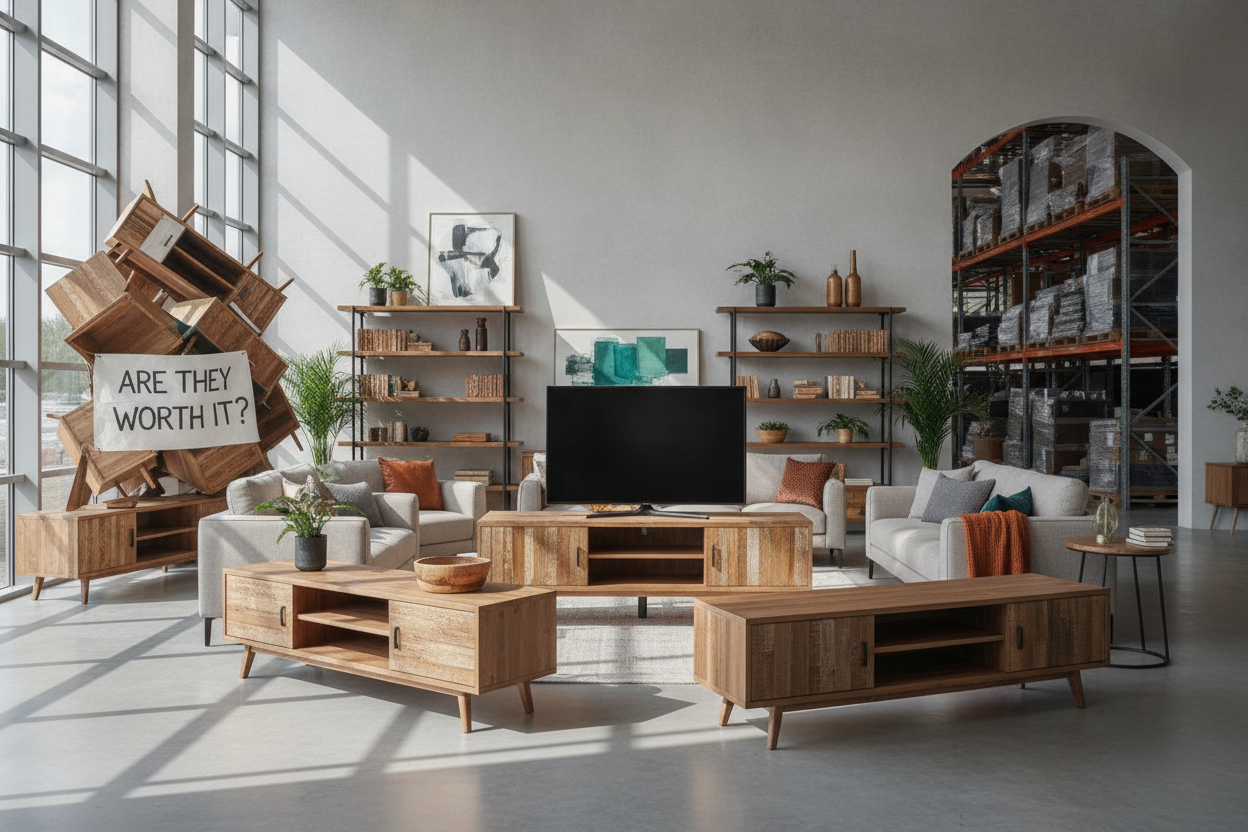
I spent three hours last Saturday staring at a 65-inch OLED sitting on two milk crates because I couldn't commit to a console. Online shopping felt like a high-stakes gamble where the loser gets a 200-pound box to return, so I decided to brave the concrete floors and fluorescent lights of a massive outlet. I wanted to see if tv stands at the dump were actually the high-end steals the radio ads promised or just overpriced particle board.
- Bring a tape measure; the warehouse ceiling height makes everything look 20% smaller than it is.
- Solid wood is the only reason to shop here; skip the flat-pack stuff you can get delivered for free elsewhere.
- Check the back panels for damage—outlets are notorious for rough handling during unboxing.
- Delivery fees are steep, so bring a truck if you want the 'deal' to stay a deal.
First Impressions: Walking Into the Warehouse
Walking into The Dump is a sensory experience that sits somewhere between a Costco run and a scavenger hunt. It is massive. We are talking about 100,000 square feet of furniture stacked high, with price tags that look like they were slapped on by someone in a hurry. It’s overwhelming, and if you don’t have a plan, you’ll end up wandering the rug section for forty minutes before you even find the media consoles.
The vibe isn't 'boutique.' It’s a warehouse, plain and simple. You’ll see high-end leather sectionals next to weirdly ornate dining sets that look like they belong in a 1990s mob movie. But buried in the mix are the closeouts—pieces from brands you recognize that simply didn't sell fast enough at full-price retailers. This is where the hunt for the dump tv stands gets interesting.
How to Judge Scale When Everything Looks Tiny
The biggest mistake I almost made was trust my eyes. In a room the size of a plane hangar, an 80-inch console looks like a nightstand. I saw a beautiful low-profile unit and thought, 'That’s perfect for my small den.' Then I pulled out my tape measure and realized it was nearly seven feet long. It would have blocked my front door.
Before I left the house, I brushed up on a designers guide to scale and style to remind myself that my TV shouldn't overhang the edges of the stand. You want at least 3 to 6 inches of breathing room on either side. Without that mental checklist, the warehouse scale would have tricked me into buying something completely impractical for my 12x14 living room.
The Dump TV Stands That Actually Surprised Me
I went in expecting a lot of 'fast furniture,' but I was genuinely surprised by the amount of solid acacia and mango wood on the floor. I found a heavy, hand-carved unit with legitimate dovetail joinery that was marked down by 60%. It had that weight and texture you just don't get from a box store. It felt permanent, not like something that would wobble the second you put a soundbar on it.
I specifically looked for pieces that didn't feel like 'outlet' furniture. I spotted a gorgeous walnut unit that reminded me of a high-end mid century modern tv stand I had been eyeing online. The difference? The outlet version was already assembled and made of kiln-dried hardwood instead of veneer. If you can find a piece with slatted doors or clean lines amidst the chaos, you’ve hit the jackpot.
Outlet Red Flags: What I Left Behind
For every gem, there are three duds. I saw plenty of units with 'distressed' finishes that were clearly just covering up poor-quality wood. Some of the faux-farmhouse stuff was particularly egregious—chunky, oversized, and finished in a grey wash that already feels dated. I knew I had to avoid the cabin cliché look because those pieces are visual magnets for dust and make a room feel cramped.
Another red flag: check the drawer glides. If they are plastic or stick when you pull them, walk away. A TV stand is a high-touch piece of furniture if you’re using it for storage. I also saw a few floor models with chipped corners. Since these outlets often sell 'as-is,' you are stuck with that damage. If it isn't solid wood that you can sand down and touch up, it isn't worth the discount.
My Final Verdict: Should You Go?
If you have a truck, a Saturday to kill, and a high tolerance for fluorescent lighting, you can find a killer deal. You’re getting 'real' furniture for 'flat-pack' prices. However, if you factor in the cost of truck rental and the sheer mental drain of the warehouse hunt, the math changes. For many people, the convenience of having a curated piece show up at your door is worth the extra hundred bucks.
If you aren't in the mood to spend four hours sweating in a warehouse, you are much better off browsing a selection of curated TV stands from the comfort of your couch. You get the specs, the reviews, and the delivery handled for you. But for the hardcore bargain hunters? The Dump is a rite of passage that occasionally pays off in solid oak.
FAQ
Is the furniture at The Dump used?
No, it is generally new furniture that consists of overstocks, floor models, or discontinued lines from other retailers. It’s not a thrift store; it’s a liquidation outlet.
Do they offer assembly?
Most of the high-quality pieces are already assembled because they are solid wood. If you buy something that comes in a box, you’re usually on your own or paying extra for a third-party service.
Can I return something if it doesn't fit?
Check the fine print. Many outlet items are final sale or have very strict, short-window return policies with high restocking fees. Measure twice, buy once.

Laisser un commentaire
Ce site est protégé par hCaptcha, et la Politique de confidentialité et les Conditions de service de hCaptcha s’appliquent.