


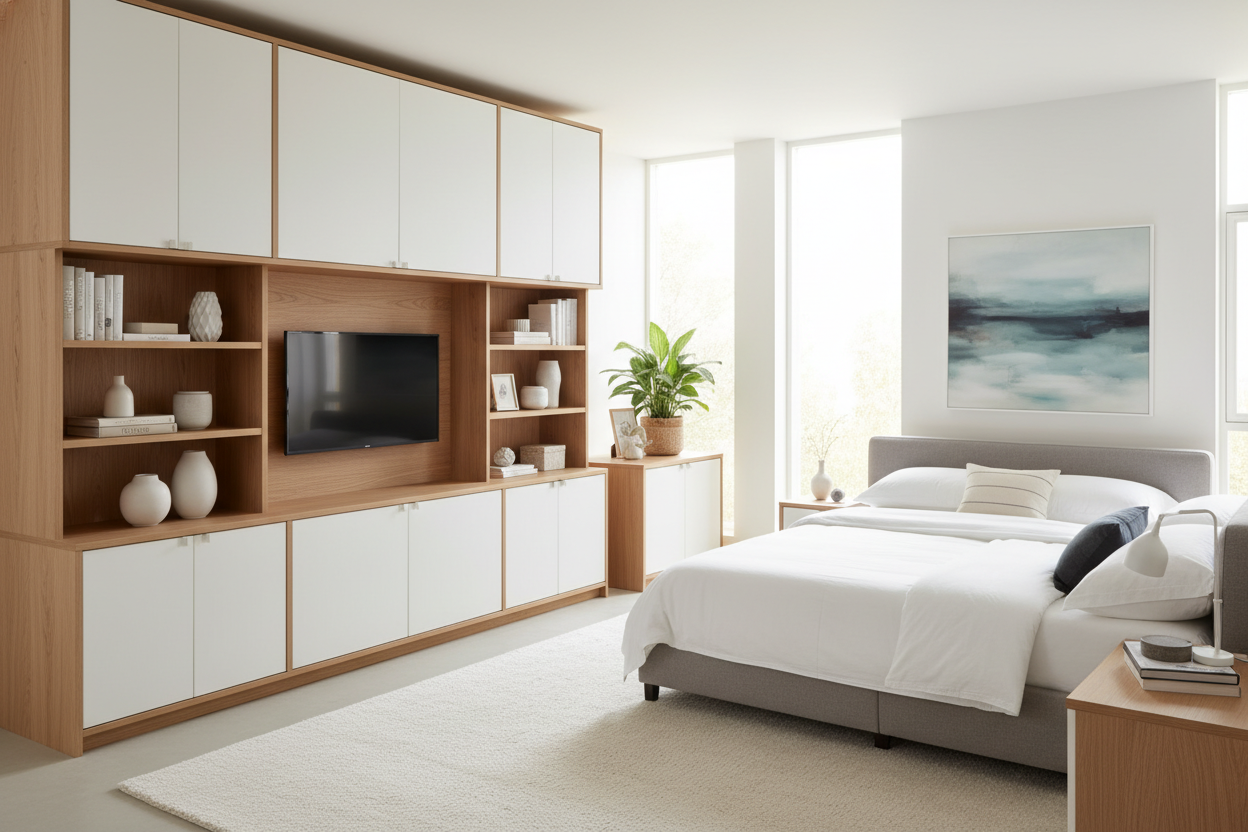
I once spent twenty minutes trying to wedge a pair of jeans into a dresser drawer that had jumped its tracks. It is a specific kind of rage. Most of us default to the standard six-drawer dresser because that is just what you do when you move into a bedroom, but in a small space, that bulky box is a floor-space killer. If you are tired of bruising your shins on drawer corners, it is time to consider bedroom shelving units with doors.
Quick Takeaways
- Vertical storage uses the top half of your room, which is usually wasted space.
- Doors are non-negotiable; they hide the visual chaos of folded laundry.
- Shelving units are often shallower than dressers, saving 4-6 inches of floor depth.
- Adjustable shelves accommodate boots and bulky sweaters better than fixed drawers.
The Dresser Dilemma (And Why You Need Vertical Storage)
The average dresser is about 18 to 22 inches deep. When you pull a drawer out, you need another 18 inches of clearance just to stand there. In a tight bedroom, that is a massive footprint for a piece of furniture that only stands waist-high. You are essentially paying rent for air space you aren't using.
Switching to large wall storage units with doors flips the script. By going up to 72 or even 80 inches, you can store twice as much in a footprint that is only 12 to 15 inches deep. My bedroom felt five feet wider the day I swapped my chunky mahogany dresser for a tall, slim cabinet. It makes a cramped room feel instantly airy because you have actually reclaimed the floor.
Why Enclosed Shelves Win on Versatility
A dresser is a one-trick pony. It holds clothes, and maybe a stray charging cable in the top drawer. A storage shelf unit with doors is a chameleon. I use mine for jeans and sweaters, but the bottom shelf holds my heavy winter blankets and the top shelf hides my 'to-read' book stack.
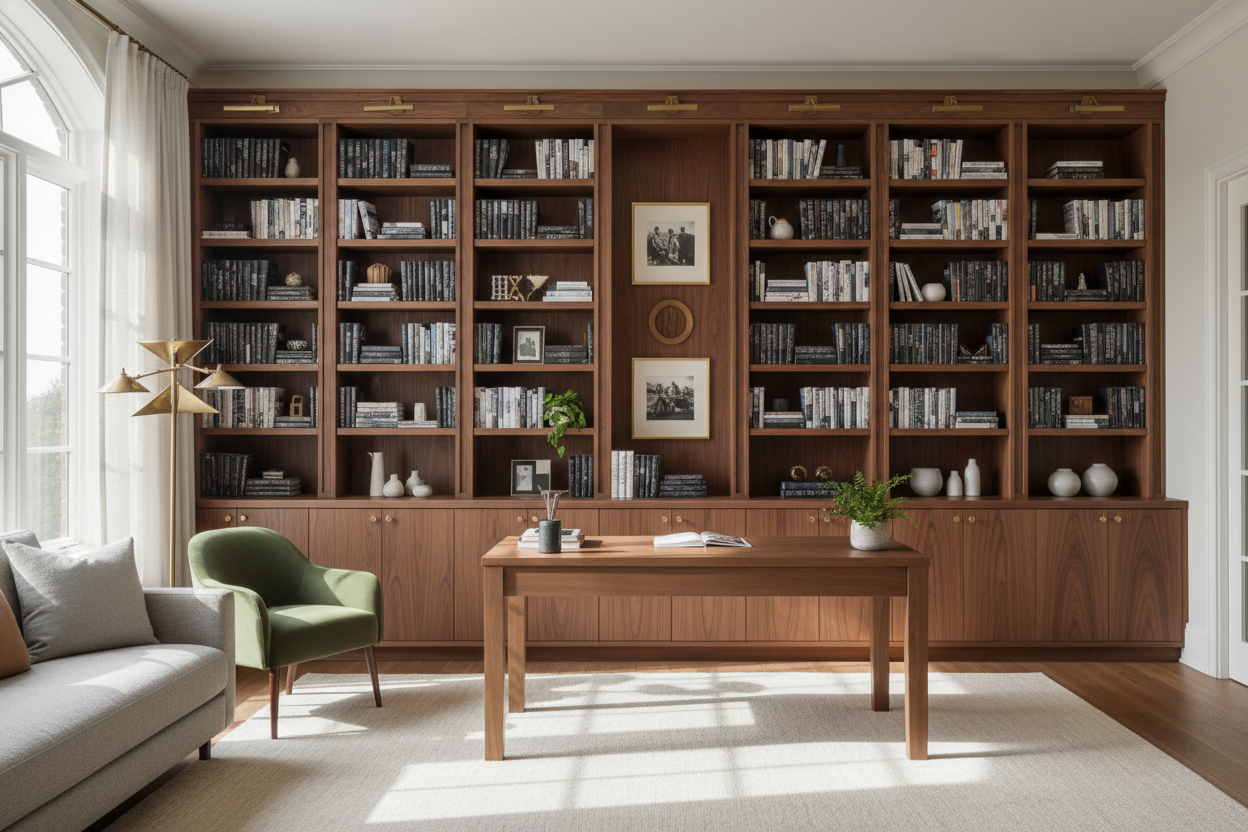
When you choose the perfect bookcase with doors, you are looking for a piece that balances utility with aesthetics. Doors are the secret sauce here. Without them, your folded t-shirts look like a messy retail display. With them, the room looks curated and restful. You can hide the mismatched bins and the slightly-lopsided stacks of hoodies behind a clean facade.
Tall vs. Short: Picking the Right Scale
If you have the wall height, go tall. A piece like this elegant white bookcase with storage solutions maximizes every square inch without feeling like a heavy monolith. White finishes or glass-front doors help the unit recede into the wall rather than looming over the bed.
However, do not sleep on the short shelving unit with doors. These are fantastic as oversized nightstands. Most nightstands are tiny and useless, but a two-shelf cabinet gives you a surface for a lamp and enough internal room for your entire pajama collection. It is a brilliant way to sneak in extra storage in a room that technically has no space left for a 'proper' wardrobe.
How to Organize the Inside (Without Creating a Junk Drawer)
The biggest fear people have with shelves is the 'landslide' effect. Without drawer walls, your socks might end up in a heap. The fix is simple: fabric bins for small items and acrylic shelf dividers for the big stuff. I use clear dividers for my sweaters so they stay in neat vertical columns rather than tipping over.
The real magic happens when you have adjustable shelf storage. Unlike a dresser where the drawer height is fixed, you can move these shelves to fit exactly what you own. I keep my summer sandals on a short 4-inch shelf and my knee-high boots on a 20-inch shelf at the bottom. It is about making the furniture work for your wardrobe, not the other way around.
The Final Verdict: Should You Make the Swap?
If you are living in a studio or a bedroom where you have to shimmy past the bed, ditch the dresser. A bedroom shelving unit with doors is objectively better for organization and floor flow. It forces you to be a little more intentional with how you fold things, but the payoff is a room that feels like a retreat instead of a storage locker. If you want a cleaner look and more floor to actually walk on, the swap is a no-brainer.
Personal Experience: My Biggest Mistake
I once bought a cheap, 80-inch tall unit made of thin particle board and didn't anchor it to the wall. Big mistake. As soon as I loaded the top shelves with heavy linens, the whole thing developed a terrifying lean. Now, I only buy units with a solid back panel and I always, always use the anti-tip kit. Also, beware of 'open' backs; they let dust bunnies migrate onto your clean clothes.
FAQ
Do clothes get dusty on shelves?
Not if you have doors. A solid door or a well-fitted glass door keeps the airflow—and the dust—off your sweaters. If you go doorless, you will be washing your 'top' items every time you want to wear them.
Are shelving units harder to assemble than dressers?
Actually, they are usually easier. Dresser drawer glides are the bane of my existence and rarely line up perfectly on the first try. A shelving unit is mostly just a frame and some hinges.
How do I keep my socks organized on a shelf?
Use baskets. I have two felt bins on my middle shelf—one for socks, one for underwear. It works exactly like a drawer but you can pull the whole bin out to the laundry room to refill it.

Laisser un commentaire
Ce site est protégé par hCaptcha, et la Politique de confidentialité et les Conditions de service de hCaptcha s’appliquent.