


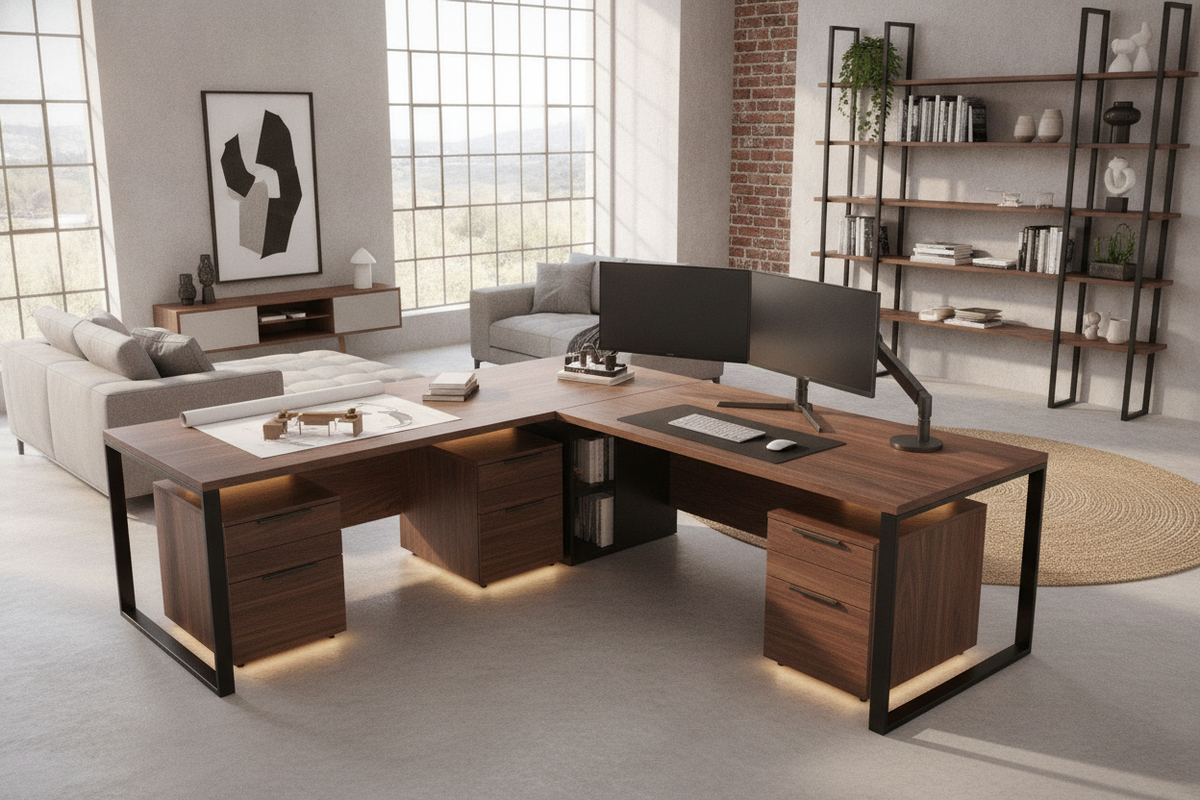
A 50-inch L-shaped desk represents an adaptable midpoint in home office design. Offering expansive dual-surface functionality without demanding the extensive footprint of executive corner units, this geometry fits seamlessly into dedicated offices, spare bedrooms, and multipurpose living spaces. Designing an effective setup requires understanding how proportional dimensions, return wings, storage pedestals, and room layouts interact to maximize everyday productivity.
Understanding the 50-Inch Footprint: Dimensions and Spatial Proportions
When selecting a 50-inch corner workstation, the nominal measurement usually refers to the length of the primary work surface or the outer boundary of the corner footprint. Unlike linear desks, corner designs distribute usable tabletop area across two intersecting planes, creating an ergonomic cockpit feel where equipment remains within arm's reach.
Symmetric 50x50 Configurations vs. Asymmetric Extensions
Corner desks generally follow two distinct architectural profiles: symmetric and asymmetric. A symmetric 50x50 layout features equal lengths on both sides of the inner corner. This geometry provides balanced visual weight and equal working room whether turning to the left or right wing.
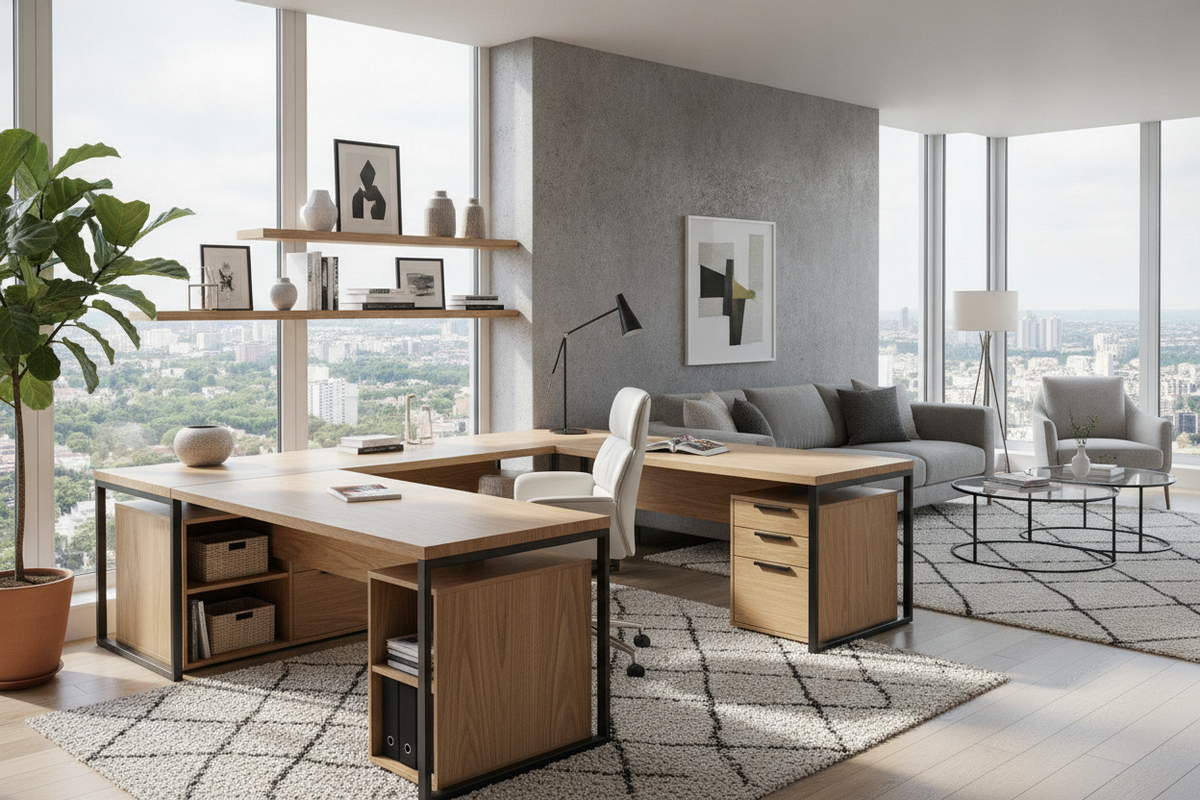
In contrast, asymmetric models feature a primary main desk paired with a shorter return wing. An asymmetric profile is well suited for narrow rooms where one wall offers more clearance than the adjacent wall. If you have extra wall span, considering a slightly larger corner desk with storage can expand your lateral space, but the standard 50-inch profile remains a sweet spot for balanced room proportions.
Wing Depth and Ergonomic Leg Clearance
Desktop depth significantly affects comfort and functionality. The depth of the main and return wings determines the viewing distance between your eyes and computer displays, as well as the available under-desk clearance for knees and chair armrests. Planning for adequate diagonal depth at the central junction ensures smooth rotation between digital workstations and analog writing tasks without colliding with modesty panels or frame supports.
Room Layout Strategies for 50-Inch Corner Desks
How you position an L-shaped desk within a room dictates traffic flow, natural light utilization, and electrical accessibility. A 50-inch footprint is compact enough to tuck into unused alcoves yet broad enough to anchor dedicated work zones.
Flush Corner Positioning and Perimeter Clearances
Placing both wings directly against intersecting walls is the most space-efficient arrangement. This configuration opens up central floor space, making it ideal for compact bedrooms or shared living areas. When comparing room footprints, referencing a compact desk drawers guide illustrates how corner desks optimize underutilized wall junctions compared to standalone straight desks.
When positioning flush against walls, consider the following layout factors:
- Power and Data Access: Ensure wall outlets are accessible without pinching cords between heavy panels and baseboards.
- Window Orientation: Position screens perpendicular to windows to minimize direct glare across dual displays.
- Chair Roll-Out Radius: Reserve sufficient open floor depth behind the central pivot point for caster movement and recline clearance.
Peninsula and Floating Room Divider Layouts
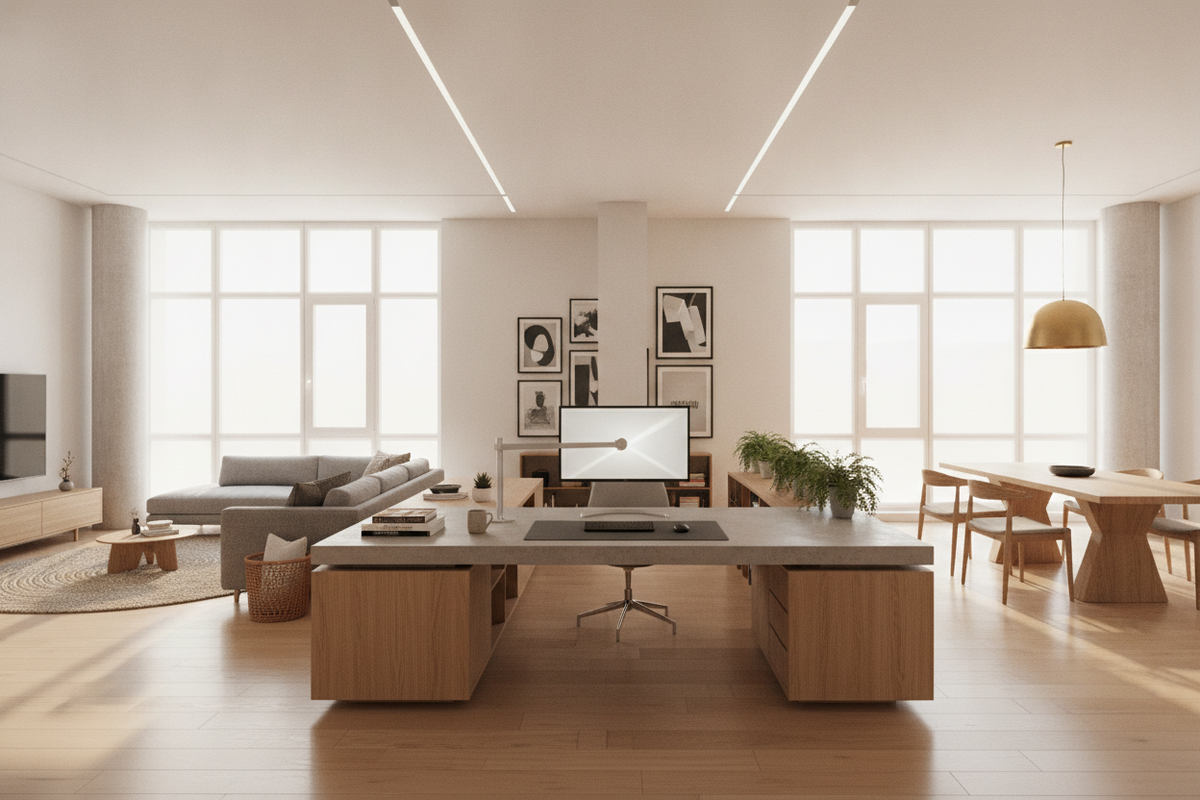
In open-concept rooms, an L-shaped desk can function as an architectural room divider. By placing the primary wing against a wall and extending the return wing into the room as a peninsula, you delineate a distinct home office zone without building physical walls. This setup provides an executive feel, facing outward toward the room while concealing cables and peripherals behind the desk structure.
Storage Architectures: Drawers, Shelves, and Compartments
Effective storage architecture keeps the desktop surface uncluttered while maintaining structural stability. Modern corner desks integrate diverse organizational elements tailored to different storage needs. For broader cabinetry planning, reviewing a comprehensive desk drawers guide helps balance enclosed drawers with open surface requirements.
Integrated Drawer Pedestals for Concealed Organization
Integrated drawer units provide discrete storage for everyday essentials, paperwork, and peripheral accessories. Opting for a shaped corner desk product with integrated drawers introduces warm visual texture while keeping high-touch office tools neatly organized out of view. Drawer pedestals are typically positioned at the outer edge of a wing to preserve central leg clearance beneath the main work surface.
Open Shelving and Reversible CPU Bays
Open lower shelving and dedicated computer tower bays offer practical alternatives to closed cabinetry. Tiered lower shelves accommodate desktop computer towers, external backup drives, and reference books while promoting airflow around electronic hardware. Reversible configurations allow users to mount the storage bay on either the left or right side, adapting the desk to room entryways and outlet placements.
Zoning Your 50-Inch Workstation by Activity
The core advantage of an L-shaped desk lies in its natural capacity for workflow zoning. Dividing the two wings by task increases daily focus and reduces physical clutter.
Multi-Monitor Computing and Home Office Setups
For screen-intensive tasks, the corner apex or primary wing can serve as the primary digital hub. Dual monitors can be arranged along the angled corner or mounted on articulated arms along one side. This leaves the adjacent wing completely free for input devices, docking stations, and conferencing accessories, keeping peripheral wiring routed systematically along one dedicated edge.
Hybrid Work, Creative Study, and Analog Tasks
If your daily routine balances digital tasks with handwritten note-taking, sketching, or document review, an L-shaped layout creates clean division of labor:
- Primary Digital Wing: Houses the laptop, keyboard, mouse, and main display.
- Secondary Analog Wing: Remains clear for notebooks, reference materials, planners, and task lighting.
- Corner Junction: Acts as a seamless transition zone for easy swivel between computing and writing modes.
Material Selection, Frame Stability, and Assembly Planning
Structural stability is critical for multi-surface furniture. Desks engineered with robust metal support frames, diagonal cross-bracing, and durable laminate surfaces provide long-term resistance to daily wear. Choosing a bright, minimalist aesthetic like a white corner desk option can visually lighten a small room while maintaining dependable structural rigidity.
When assembling a 50-inch corner desk, verify the room's corner squareness and use adjustable leveling feet to compensate for uneven flooring. Taking time to align the desktop seams during initial assembly ensures a smooth, uniform working surface that will support your daily productivity for years to come.

Laisser un commentaire
Ce site est protégé par hCaptcha, et la Politique de confidentialité et les Conditions de service de hCaptcha s’appliquent.