


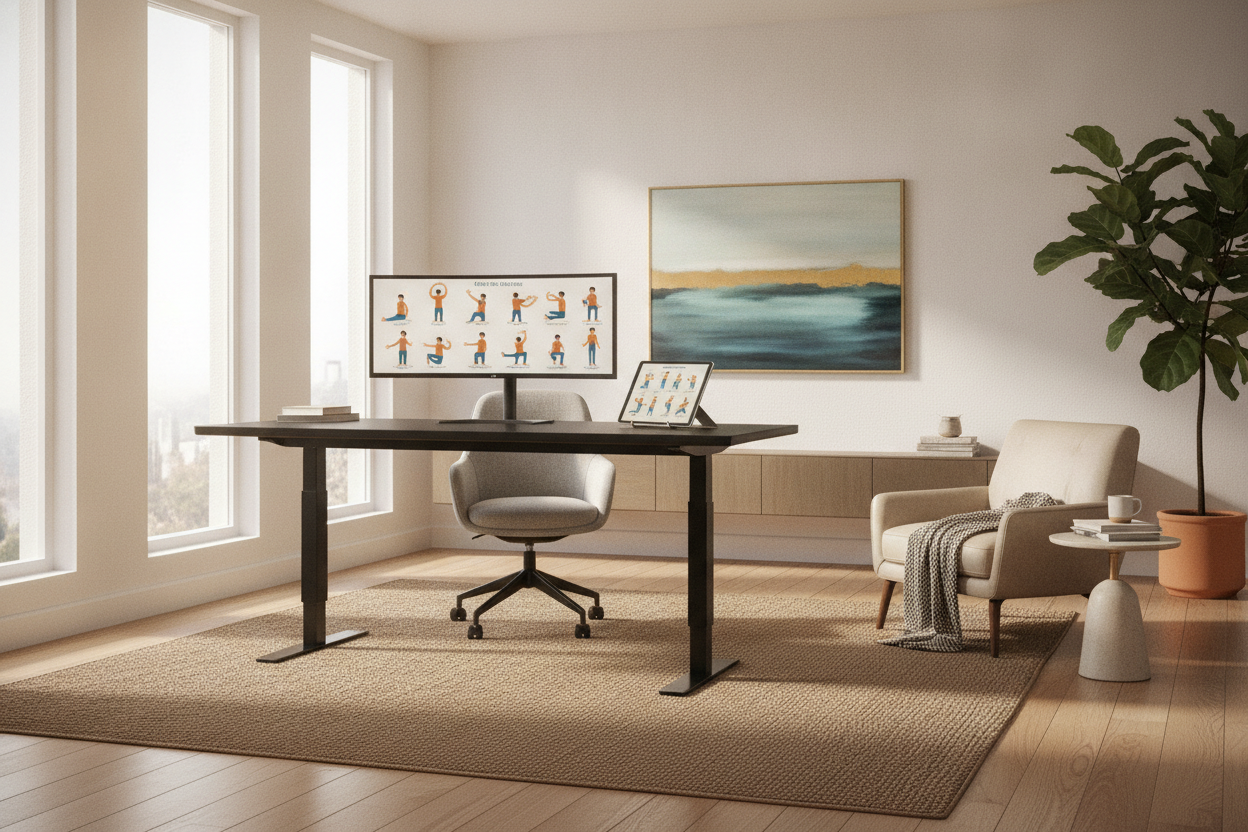
In the modern home office, the boundary between professional productivity and physical well-being often blurs. Many of us spend the majority of our daylight hours tethered to a workstation, a habit that can lead to physical discomfort and persistent stiffness. Prolonged sitting is frequently associated with an increased risk of musculoskeletal issues, particularly in the neck, shoulders, and lower back. However, your workspace does not have to be a place of stagnation. By discovering the best exercises to do at your desk, you can transform your energy levels and maintain your physical health without ever leaving your chair.
Why Desk Dimensions and Stability Matter for Office Workouts
Before diving into a routine, it is essential to evaluate the equipment supporting you. The effectiveness and safety of office movements rely heavily on having a workspace with the right dimensions and structural integrity. For instance, under-desk dimensions and legroom dictate which lower-body exercises you can perform. If your desk is cluttered with low-hanging drawers or a bulky modesty panel, you may find it impossible to fully extend your legs or rotate your ankles safely. A clear knee-well height is the foundation of any seated movement routine.
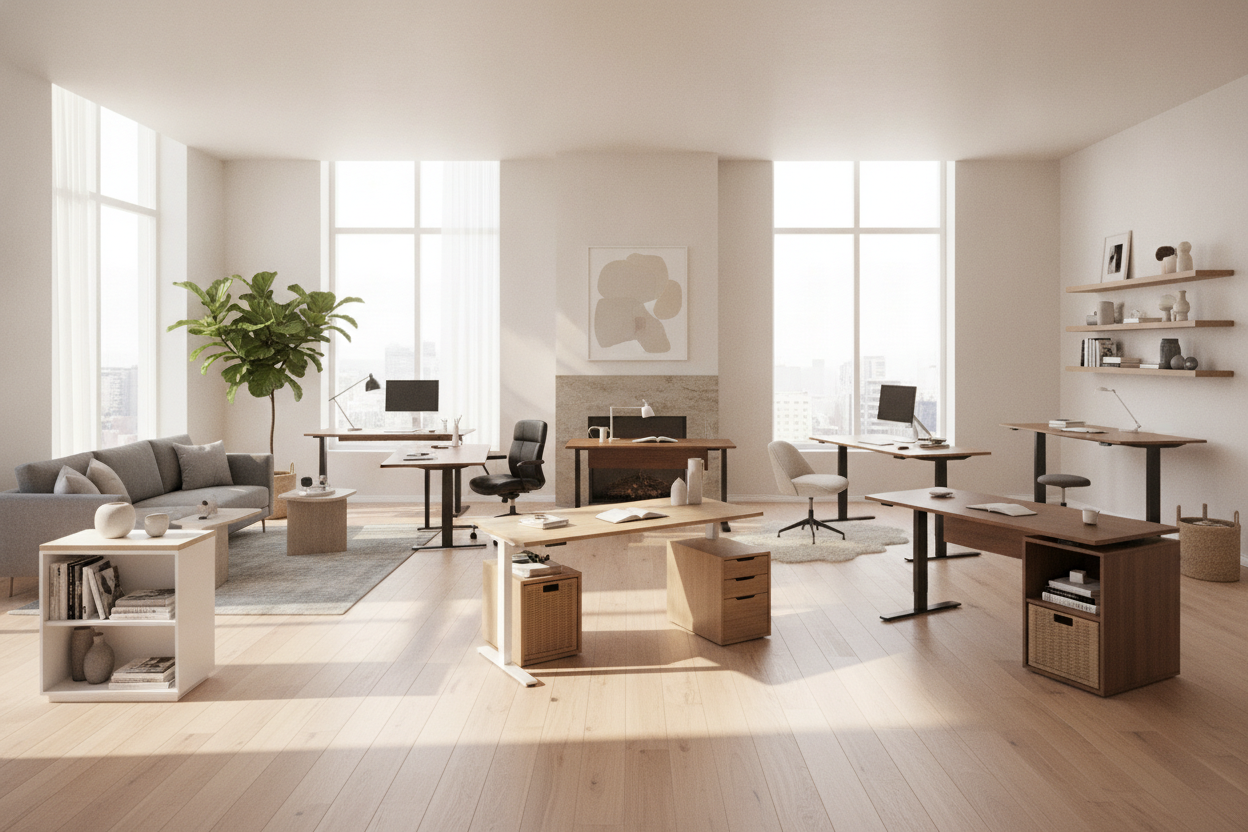
Furthermore, stability is a non-negotiable factor for weight-bearing movements. If you plan to perform desk push-ups or planks, your furniture must be constructed from high-quality materials with a sturdy assembly. A desk that wobbles under the slightest pressure is not a safe partner for a workout. Additionally, smart storage solutions play a vital role; by keeping the floor clear of cables and stray papers, you ensure a safe room fit for standing stretches and lunges. If you find your current setup too cramped, you might need to extend your desk space to accommodate both your work tools and your movement needs.
Upper Body Stretches to Relieve Tension
The upper body often bears the brunt of screen-induced strain. These four exercises focus on releasing tension in the areas most affected by typing and monitor use.
1. Neck Rolls and Tilts
To relieve the pressure on your cervical spine, start with gentle neck rolls. Slowly drop your chin to your chest and rotate your head in a circular motion. Follow this with side-to-side tilts, reaching your ear toward your shoulder. This simple movement helps counteract the 'forward head' posture common in desk work, especially when monitors are not at the ideal eye level.
2. Seated Spinal Twists
Place your feet flat on the floor and grip the armrest or the edge of your desk. Slowly rotate your torso to one side, looking over your shoulder. A desk with adequate width is beneficial here, as it prevents you from bumping into side cabinets or walls during the rotation. This stretch helps maintain spinal mobility throughout a long shift.
3. Desk Push-Ups
This is one of the more intense exercises you can do at your desk. Stand a few feet away, place your hands on the edge of the desk, and perform a push-up. This requires a desk with solid assembly and weight-bearing capacity. Personally, I find that a desk with a smooth, beveled edge is much more comfortable for this exercise than one with a sharp, 90-degree corner.
4. Wrist and Finger Flexes
Typing for hours can lead to forearm tightness and wrist fatigue. Extend one arm forward and use the other hand to gently pull your fingers back toward your forearm, then downward. This stretch is vital for maintaining dexterity and preventing the repetitive strain associated with constant keyboard use.
Lower Body & Core: Exercises You Can Do At Your Desk
You don't need to stand up to engage your lower half. These are discreet exercises you can do at your desk during meetings or while reading reports, making them effective at your desk exercises for a busy schedule.
5. Seated Leg Extensions
While sitting, straighten one leg out under the desk and hold it for a few moments. This exercise requires proper under-desk clearance; if your storage drawers are positioned too low, you won't be able to achieve a full range of motion. Ensuring your desk has a high knee-well height is key for this movement to be effective.
6. Invisible Glute Squeezes
This is the ultimate discreet exercise. Simply squeeze your glutes as hard as you can, hold the tension, and release. Repeat this several times to keep blood flowing in the lower body and prevent the numbness that can occur from sitting on a chair for several hours without movement.
7. Seated Core Engagements
Sit at the edge of your chair and lift both feet a few inches off the ground. Use your abdominal muscles to hold the position. This not only strengthens your core but also encourages better seated posture, as it forces you to engage the muscles that support your spine.
8. Chair Hover Squats
Stand up slightly so your glutes are just hovering over your chair seat. Hold this position until you feel your quads engage. Desk height plays a role here; you can use the desk surface for balance if needed, provided the desk is stable enough to support your leaning weight without shifting.
Standing Stretches (Perfect for Adjustable Stand Desks)
For those who have invested in adjustable stand desks, transitioning into full-body stretches is much easier. Standing desks allow for a wider range of motion and more dynamic movements that are difficult to achieve while seated.
9. Standing Calf Raises
While standing at your desk, lift your heels until you are on your tiptoes, then lower them back down. You can lightly touch the desk surface for balance. This helps prevent the leg heaviness and circulation issues that often follow long periods of inactivity.
10. The Desk Plank
Similar to the push-up, place your forearms on the desk and step your feet back until your body forms a straight line. Hold this position to engage your entire core. Again, the stability and 'room fit' of your desk are paramount here to ensure the piece doesn't slide forward on the floor during the exercise.
11. Standing Torso Twists
With your feet hip-width apart, rotate your upper body from side to side, letting your arms swing gently. Optimizing your room fit by clearing away side tables or floor lamps allows you to perform this with a full range of motion, ensuring you don't strike any nearby furniture.
12. Hamstring Desk Stretches
If your desk is at a lower setting or you have a sturdy lower shelf, place one heel on the surface and lean forward slightly to stretch the back of your leg. This requires a well-assembled desk that won't tip when weight is applied to one side. This is particularly useful for those who experience tight hamstrings from sitting.
Conclusion: Build a Workspace That Moves With You
Incorporating these 12 exercises into your daily routine can significantly mitigate the physical toll of office work. However, the foundation of a healthy workday is the furniture itself. Choosing a desk with the right dimensions, ample under-desk clearance, and rock-solid stability makes these movements possible and safe. By evaluating your current setup and considering ergonomic upgrades, you create an environment that supports both your professional goals and your physical health. Remember, a workspace that moves with you is a workspace that works for you.

Laisser un commentaire
Ce site est protégé par hCaptcha, et la Politique de confidentialité et les Conditions de service de hCaptcha s’appliquent.