

















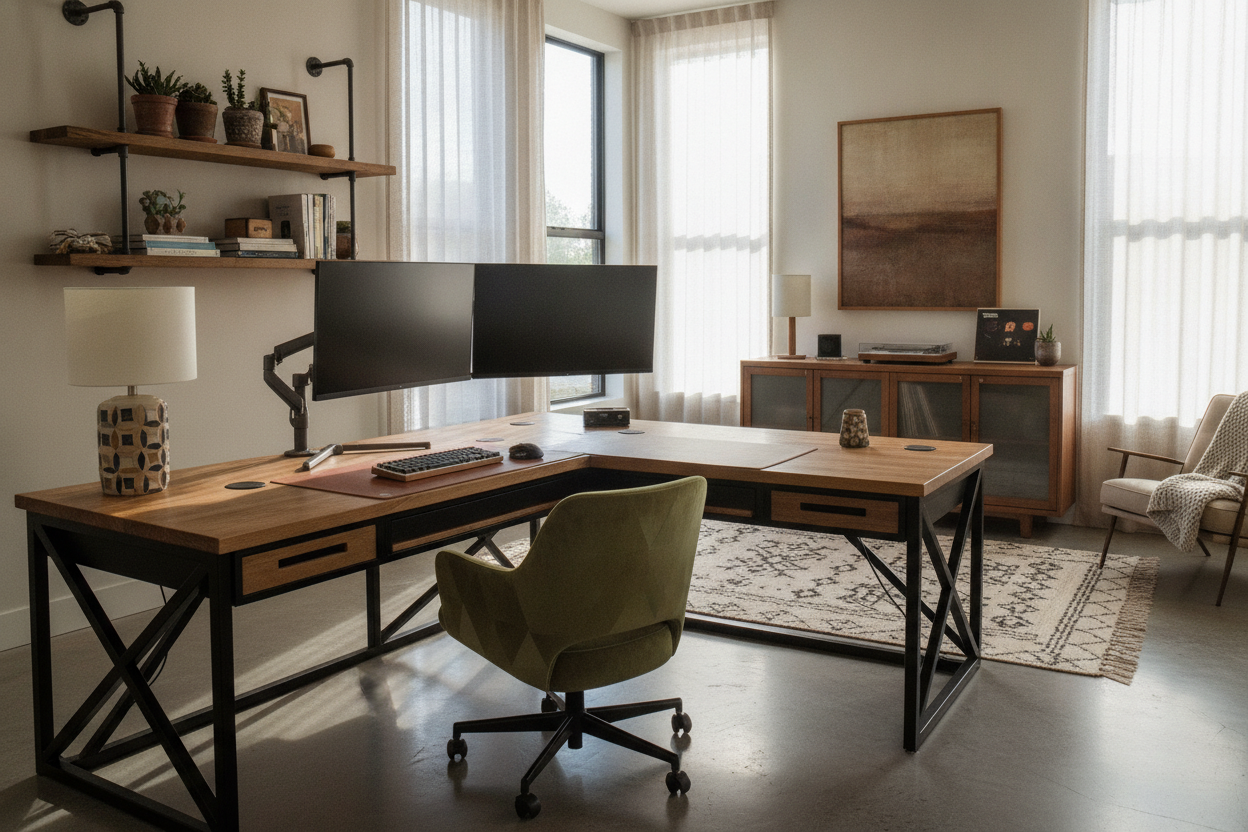
I spent three weeks measuring my spare bedroom, trying to find a desk that didn't look like it belonged in a DMV waiting room. Everything was either 48 inches (too small for my dual-monitor setup) or 60 inches (blocked the door), and almost all of it was made of that crumbly particle board that strips the second you tighten a bolt. Staring at 47 browser tabs of generic furniture at 1 AM is a special kind of hell. Finding custom desk ideas became a survival tactic for my sanity and my floor plan.
Quick Takeaways
- Standard desks are usually 29 inches high, which is actually too tall for many people's ergonomic health.
- Kitchen butcher blocks are the ultimate 'cheat code' for a high-end solid wood look on a budget.
- Floating desks save floor space in tiny rooms but require serious wall anchoring.
- Vintage doors make incredible desk tops if you seal them properly to avoid splinters.
Why I Finally Stopped Shopping at Traditional Office Stores
Most office stores sell furniture designed for cubicles, not homes. They assume you have a perfectly rectangular room and zero personality. I found that most 'home office' collections are just scaled-down versions of corporate junk—think faux-wood finishes and flimsy metal legs that wobble every time you type an email. When I started curating home office desk ideas, I realized the gap between those airy, sun-drenched Pinterest studios and the clunky, gray laminate reality of big-box retail was huge.
The problem is the 'one size fits all' mentality. If you are taller than 6 feet or shorter than 5'4, a standard desk height is going to give you neck pain within a week. Plus, retail desks rarely account for the weird baseboard heating or the awkward 37-inch nook next to your closet. I realized that if I wanted a workspace that didn't make me want to quit my job, I had to stop looking for a finished product and start looking for raw materials.
The Kitchen Countertop Approach: A Foolproof Starting Point
The best desk I ever owned wasn't a desk at all; it was an 8-foot slab of birch butcher block intended for a kitchen island. Kitchen countertops are built to take a beating, which makes them perfect for heavy monitor arms and the occasional spilled coffee. You can get them in solid oak, walnut, or birch, and they feel incredibly substantial compared to the hollow-core tops sold at furniture chains. I opted for a 74-inch length, which gave me enough room for a 'work zone' and a 'creative zone' on the same surface.
This is the natural progression from mastering the Ikea double desk hack. Instead of using the cheap, paper-filled Linnmon tops, you grab two Alex drawer units and bridge them with a heavy solid wood slab. It’s the gateway drug to custom furniture. It looks expensive, it doesn't shake when you're typing furiously on a deadline, and it provides a massive amount of storage without looking like a filing cabinet from 1994.
Squeezing Into Weird Corners: Custom Office Desk Ideas That Work
My last apartment had a weird 34-inch alcove that was useless for anything but a tall plant. Instead of forcing a small corner desk with large storage into a space where the drawers wouldn't even open, I went the floating route. I bought two heavy-duty steel brackets, found the studs in the wall, and mounted a custom-cut piece of 1.5-inch thick oak. It turned a dead zone into a high-functioning cockpit.
If you're dealing with an asymmetrical room, wall-mounted surfaces are your best friend. You can cut the wood to follow the exact contour of your walls, even if they aren't perfectly square (and let's be real, no house has perfectly square walls). It keeps the floor clear, which makes a small room feel twice as big. Just make sure you aren't using those flimsy decorative shelf brackets; you need something rated for at least 100 pounds if you plan on leaning on your desk.
Repurposing Vintage Finds Into Legitimate Workstations
There is a certain soul in a piece of wood that has been around longer than you have. I once used a solid pine farmhouse table I found at a garage sale as my primary workstation. It had dings, scratches, and a history that made my home office feel like a library rather than a call center. If you find a vintage dining table with great legs but a ruined top, you can sand it down and refinish it with a matte polyurethane for a indestructible finish.
However, I know not everyone has the time to spend three weekends sanding down a thrift store find. If DIY vintage restoration sounds like a nightmare, you can still find a dedicated writing computer desk that captures that mid-century silhouette without the mystery smells. The key is looking for solid wood construction and tapered legs that give you that 'found' aesthetic without the splinters.
Integrating Tech Without Ruining the Vibe
The quickest way to ruin a beautiful custom setup is a 'cable waterfall' hanging off the back. When you build your own desk, you have to plan for the wires. I started using a 2-inch hole saw to drill grommet holes directly into my wood tops. It feels scary to drill into a $300 slab of walnut, but being able to tuck your keyboard and mouse wires directly under the desk is worth the mini-heart attack.
If you want the health benefits of moving during the day, you don't have to sacrifice your custom top. You can buy a standalone sit stand up desk frame and bolt your custom wood slab or vintage door right onto it. It’s the ultimate pro move. You get the ergonomic preset heights you need, but the 'personality' of the desk remains exactly what you want it to be. I’ve done this with a reclaimed barn wood top and it’s the only way I’ll work now.
My Biggest Mistake
I once tried to use a hollow-core door as a desk top because a 'budget hack' video told me it was a great idea. It looked fine for a week, but as soon as I clamped my dual-monitor mount to the back edge, the pressure literally crushed the cardboard interior of the door. The monitors started leaning forward like they were tired. If you are going custom, do not skimp on the core material. If it’s not solid wood or high-grade 13-layer birch plywood, it won't hold up to modern tech gear.
FAQ
How deep should a custom desk be?
Never go shallower than 24 inches if you use a monitor. 30 inches is the 'sweet spot' that allows you to have a keyboard, a monitor, and still have room for your elbows and a notebook without feeling cramped.
What is the best wood for a DIY desk top?
Birch and Hevea (rubberwood) are the best bang-for-your-buck. They are hardwoods, meaning they won't dent if you drop a pen, but they are much cheaper than Walnut or White Oak.
How do I stop a long custom desk from sagging?
If your desk span is longer than 60 inches, you need a support leg in the middle or a steel 'stiffener' C-channel screwed into the underside. Wood will eventually bow under its own weight plus your gear.

Leave a comment
This site is protected by hCaptcha and the hCaptcha Privacy Policy and Terms of Service apply.