

















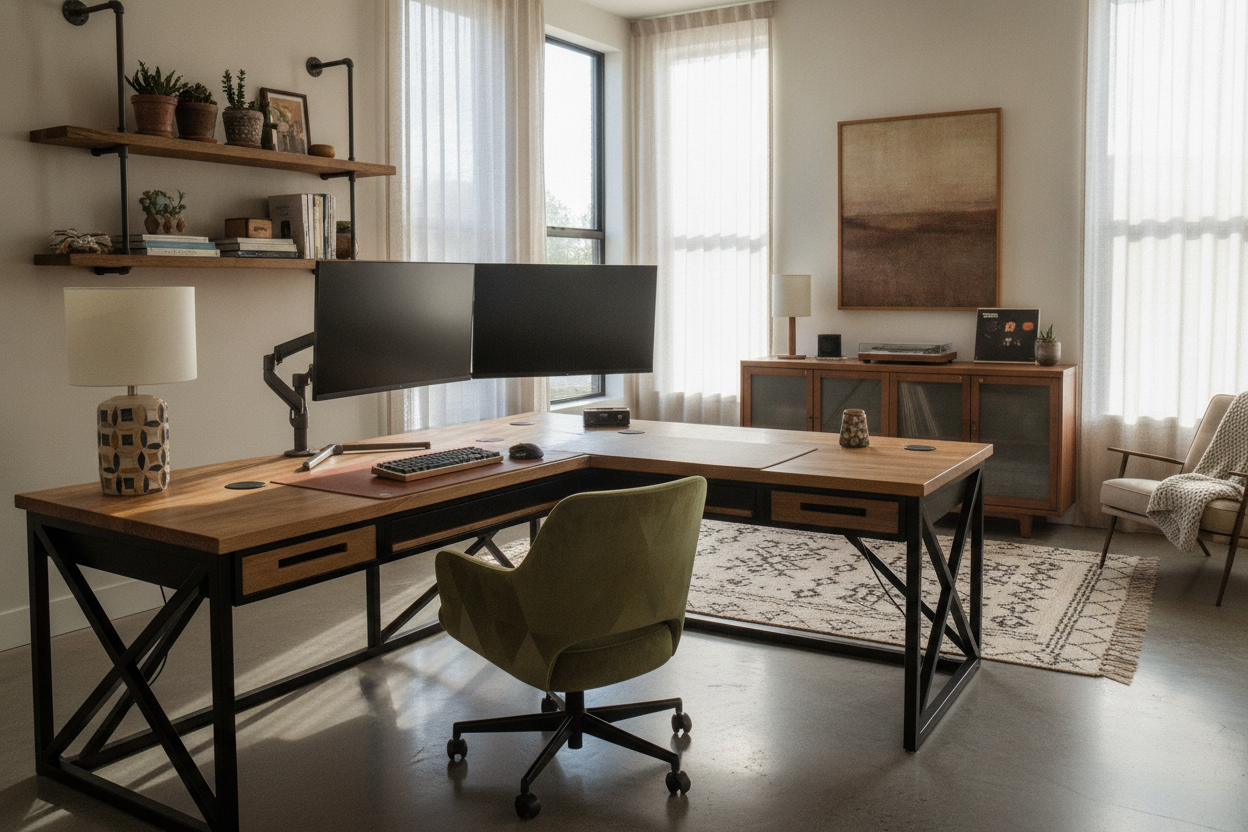
I spent three years staring at a massive, grey-plastic L-shaped workstation in the corner of my guest room. It had 'ergonomic' adjustment handles I never touched and built-in grommets that looked like they belonged in a 1990s DMV office. It was a productivity beast, sure, but it killed the vibe of my home. Eventually, I realized I didn't need a spaceship; I just needed a solid desk table that didn't scream 'corporate drone.'
Quick Takeaways
- Visual weight matters: A thin-profile table makes a small room feel twice as large.
- Cable management is the biggest hurdle when you ditch built-in trays.
- Solid wood or high-quality veneer is worth the extra $100 for long-term stability.
- Under-desk adhesive drawers are the secret weapon for minimalist setups.
The Breaking Point With My 'Ergonomic' Command Center
My old desk was a beast. It had thick, industrial legs and a laminate top that felt cold and sterile. It dominated the room, making it impossible to truly relax once I clocked out. When your office is also your home, that 'command center' aesthetic becomes a mental burden. I was tired of living in a cubicle.
The breaking point came during a Zoom call when I saw my reflection against the backdrop of my cluttered, oversized workstation. It looked like I was working in a storage unit. I wanted something that felt like furniture, not equipment. I wanted a table desk that looked like it belonged in a design magazine, even if it meant sacrificing a few built-in drawers.
Why a Simple Desk Table Is Aesthetically Superior
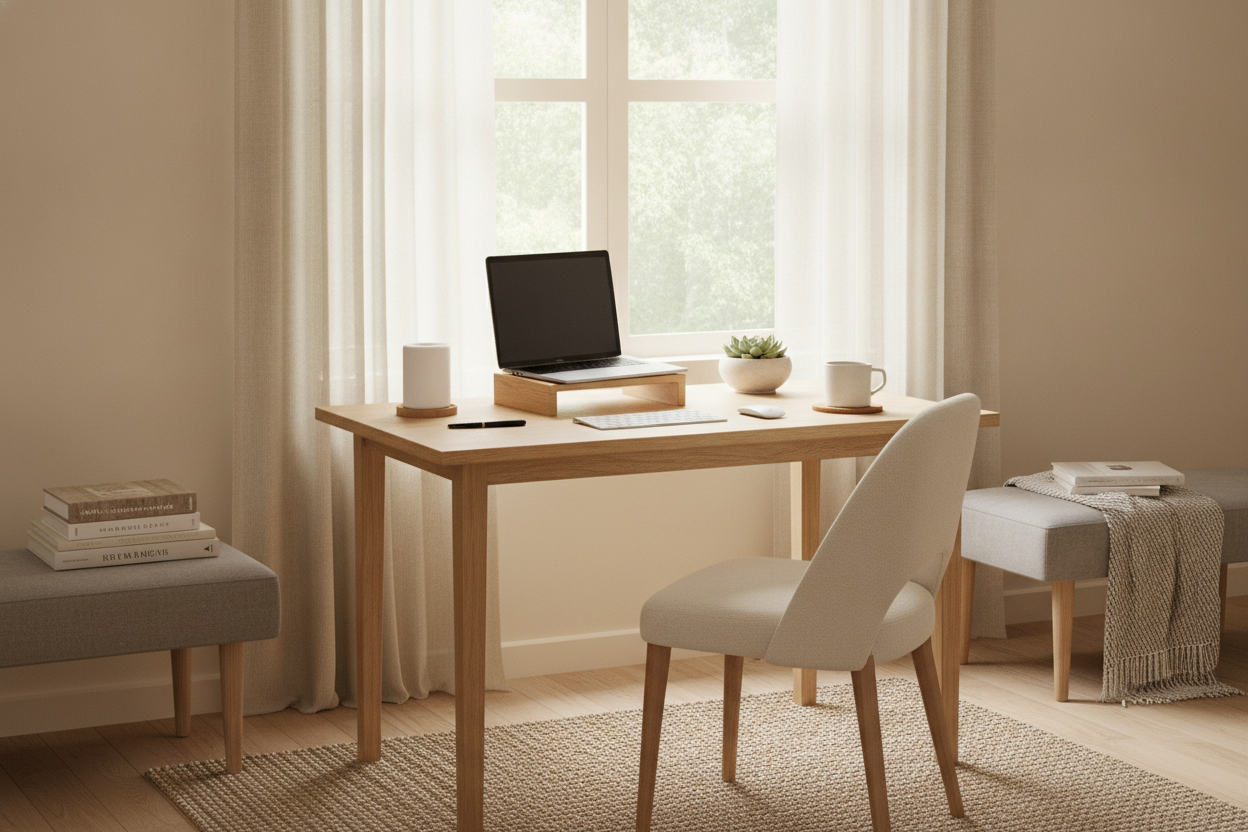
Switching to a simple four-leg design changed the energy of my room instantly. A minimalist profile lets the floor space breathe. In a 10x10 room, every inch of visible floor counts. By moving to a desk table with tapered legs, I suddenly had a space that felt airy and intentional.
I also realized I refuse to spend $1k on a table just because it has an 'executive' label. You can find stunning, solid surfaces that do the same job for a fraction of the price. The beauty of a basic table is its honesty—it's just a flat, reliable surface that doesn't try too hard to be a 'workstation.'
The Immediate Nightmares: Cables and Coffee Mugs
The honeymoon phase lasted about four hours—until I had to plug everything back in. Without the bulky modesty panels of my old desk, my cable management (or lack thereof) was on full display. It looked like a plate of black spaghetti was melting off the back of my beautiful new wood top.
I briefly panicked and tried to repurpose an old vanity desk with mirror I had in storage, thinking the tiny drawers would help. Big mistake. Those drawers were built for lipsticks, not MacBook chargers or external hard drives. A bare-bones table desk demands a real strategy, not just a 'shove it in a drawer' mentality.
How I Fixed the Storage Problem Without Adding Clutter
To keep the top clear, I had to get creative. I bought a set of metal under-mount drawers that screw directly into the bottom of the table. They are invisible from a standing height but hold my pens, notebooks, and SSDs perfectly. It’s the best of both worlds: the clean look of a table with the utility of a desk.
For the heavier items like my printer and extra monitors, I looked into a table bookshelf combo layout. By placing a slim shelf within arm's reach, I kept the desk surface completely clear for my morning coffee and my keyboard. It prevents that 'desk creep' where your workspace slowly expands until you're buried in paper.
The Final Verdict: Is the Minimalist Look Worth the Effort?
Honestly? Yes. My focus improved the moment the visual noise disappeared. There is something deeply satisfying about sitting down at a clean, wooden desk table that doesn't feel like a piece of office machinery. It forces you to be more organized because you can't hide your mess.
If you're willing to spend twenty minutes installing a cable tray and an adhesive drawer, the aesthetic upgrade is massive. You aren't just changing where you work; you're reclaiming your home from the 'office' aesthetic. It's a trade-off I'd make every single time.
FAQ
Is a basic table stable enough for two monitors?
If you buy a solid wood or heavy-duty metal frame table, it's plenty stable. Avoid the $30 hollow-core tables; they will wobble the second you start typing or mount a heavy monitor arm.
How do I hide cables on a table with no back?
Use adhesive cable clips along the back edge of the table legs. If you run the wires down the 'inside' of the leg, they become virtually invisible from most angles in the room.
What is the ideal height for a table desk?
Standard dining tables are usually 28 to 30 inches high. This works for most people, but if you're shorter, you might need an adjustable chair to ensure your elbows stay at a 90-degree angle.


Leave a comment
This site is protected by hCaptcha and the hCaptcha Privacy Policy and Terms of Service apply.