

















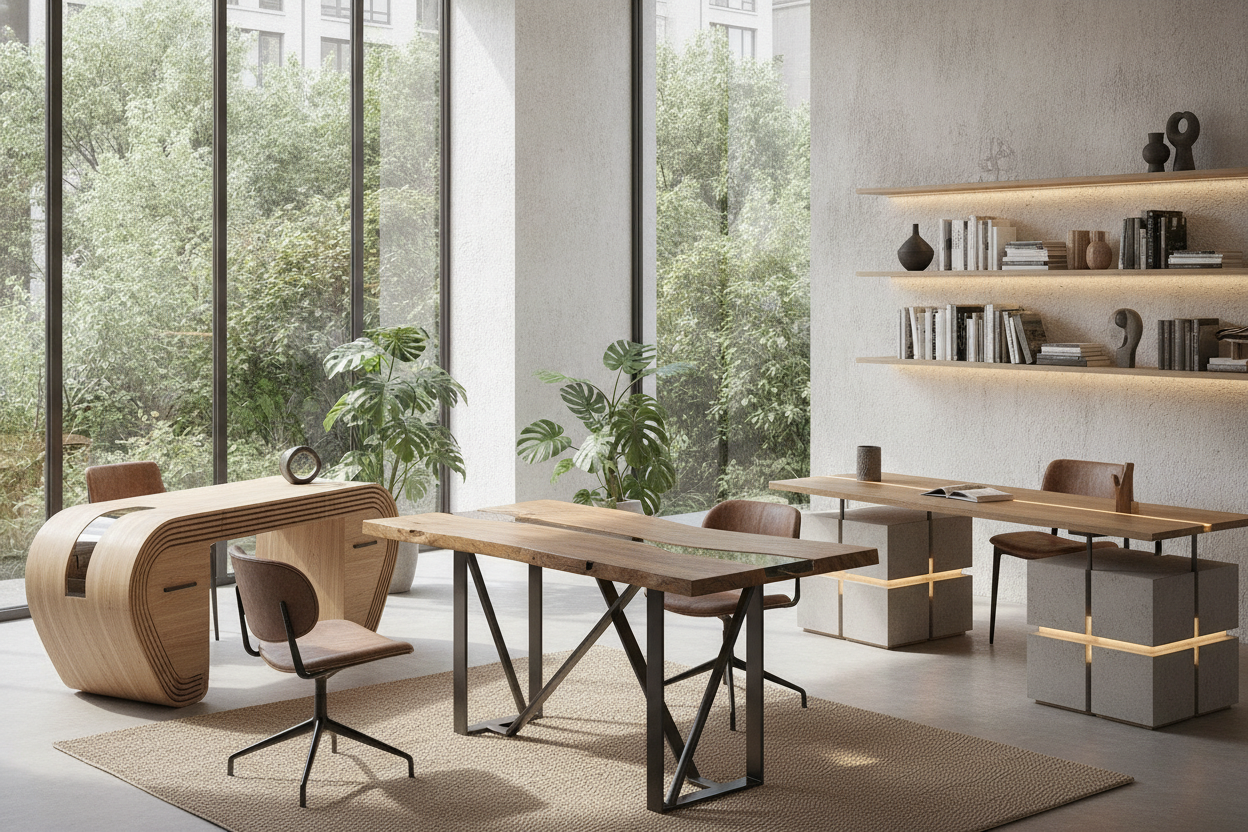
I once spent a month’s rent on a vintage drafting table that looked like it belonged in a 1950s Parisian architecture firm. It was stunning, made of solid oak with cast-iron gears, and it was the single worst purchase of my life. Within two weeks, I had a permanent crick in my neck because the surface wouldn't sit flat, and my knees hit the crossbar every time I tried to scoot in. I was working on a piece of art, not a workstation.
We all want unique desks that reflect our personality, but the line between 'quirky' and 'unusable' is incredibly thin. If you’re hunting for unique office desks, you have to look past the Instagram-friendly silhouette and check the hard specs. A desk that looks like a geometric marvel is useless if you can't fit a coffee mug and a 27-inch monitor on it at the same time.
- Depth is King: Aim for at least 24 inches, but 30 inches is the sweet spot for eye strain prevention.
- Leg Clearance: You need at least 25 inches of vertical space from the floor to the bottom of the desk.
- The Straight-Edge Rule: Even the most unusual desk needs one straight side for your body to square up to.
- Cable Reality: Unique modern desks often forget that wires exist; look for hidden channels or prepare for 'cable spaghetti.'
The Problem With Treating Your Workspace Like an Art Gallery
The thrill of finding a unique home office desk often blinds us to basic geometry. I’ve seen people buy kidney-bean-shaped tables that look incredible in a minimalist loft but offer zero support for your forearms. When you’re typing for eight hours, you need a surface that doesn't force your elbows into a weird, hovering chicken-wing position.
The rise of unique desks for home office setups has flooded the market with 'sculptural' pieces. These are usually made by designers who haven't spent a full Tuesday staring at spreadsheets. If the desk is too narrow, your monitor will be six inches from your face, and you’ll be booking an eye exam by Friday. Don't let a cool silhouette trick you into a cramped workflow.
What Makes Unique Modern Desks Actually Functional?
Functionality isn't boring; it’s the difference between a productive afternoon and a trip to the chiropractor. When I vet unique modern desks, I start with the 'shake test.' If it’s a three-legged tripod design or a cantilevered glass slab, I give it a firm nudge. If the monitor wobbles, I walk away. Mechanical stability is non-negotiable for anyone who actually types for a living.
Standard writing and computer desks usually hover around 29 to 30 inches in height. Many unique home desks ignore this, opting for 'low-profile' looks that force you to slouch. Look for a desk that allows your elbows to stay at a 90-degree angle. If the design is too avant-garde to allow for an adjustable chair to fit underneath, it’s a side table, not a desk.
The Knee-Crushing Reality of Bad Storage
Beware the 'floating box' aesthetic. This is where a unique desk with drawers features a thick, heavy storage compartment right under the desktop. It looks sleek and mid-century, but it effectively eats up all your legroom. I once tested a desk where the drawer assembly was five inches thick, meaning I had to choose between hitting my thighs on the wood or lowering my chair so much I couldn't reach the keyboard.
If you need a unique desk with storage, look for designs that move the drawers to the side rather than directly under the main work area. A better solution is a desk with shelves and drawers that utilizes vertical space or asymmetrical pedestals. This keeps your legs free to move while still giving you a place to hide your stapler and half-eaten snacks.
The 'Weird Shape, Normal Workflow' Rule
You can absolutely own a quirky desk without ruining your life. The trick is the 'straight-edge rule.' Even if the desk is a wild, organic shape, the area where you sit should be relatively straight. This allows your chair to tuck in properly and your body to align with the screen. Asymmetrical designs are great for this—think a desk that is deep on one side for a monitor and tapers off on the other for a lamp or notebook.
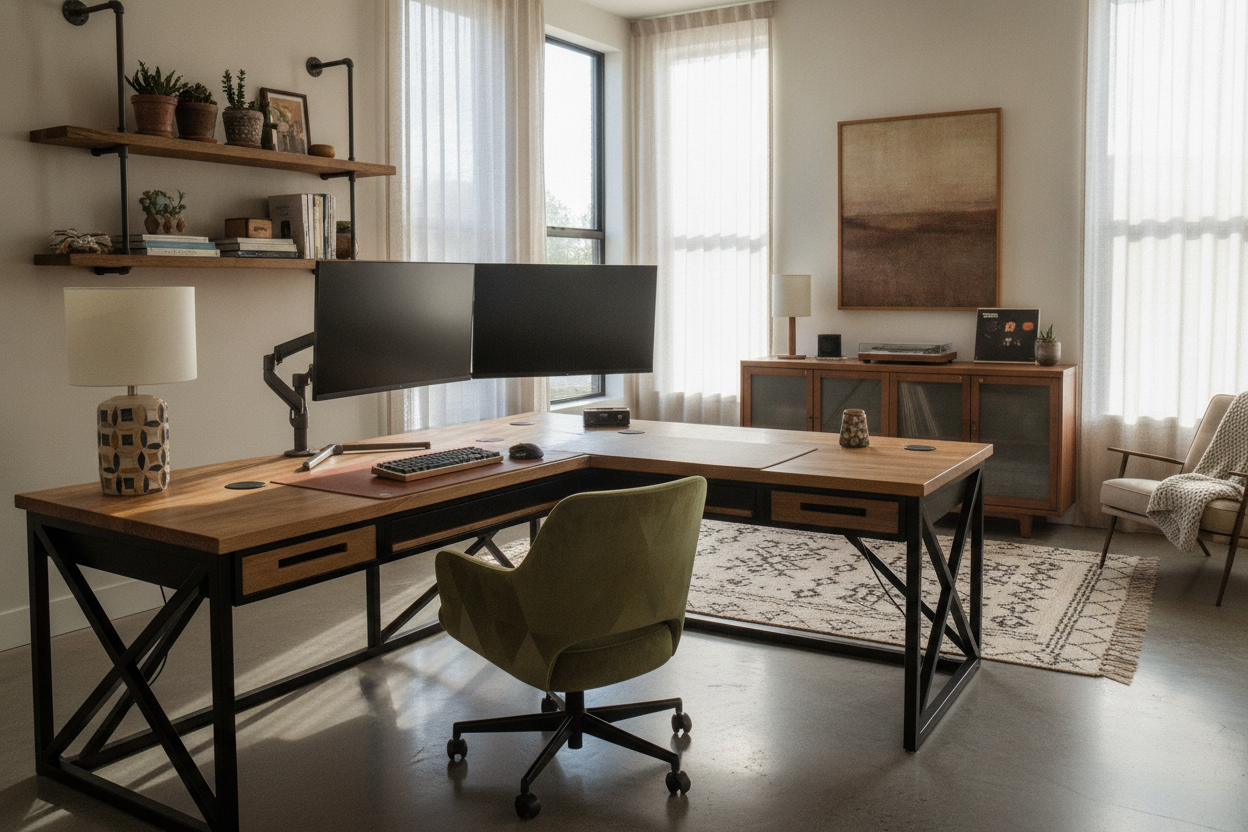
For those with dual-monitor setups, a corner desk with large storage can offer a unique computer desk vibe without the ergonomic nightmare. Corner units naturally provide more depth in the 'crook' of the L-shape, which is perfect for tucking away bulky monitor stands while keeping the rest of the surface clear for actual work. It’s the best way to get that unusual desk look while maintaining a pro-level setup.
Finding the Balance Between Quirky and Comfortable
Before you commit to a unique home office desk, do a mental walk-through of your day. Where does the lamp go? Where do the power strips hide? Most 'cool' desks are designed to be seen from the front, but they look like a disaster from the back where all your cables hang. If the desk doesn't have a built-in way to manage wires, you’re going to need a lot of velcro ties to keep that 'modern' look from looking like a tech junkyard.
Ultimately, the best cool desks for home office use are the ones that disappear once you start working. You want to notice the design when you walk into the room, but you shouldn't be thinking about it while you're actually using it. If you’re constantly adjusting your posture or moving your mouse because the surface is too small, the desk has failed its only job.
FAQ
Is a glass desk a bad idea for a home office?
They look airy and cool, but they are a nightmare for fingerprints and many optical mice won't work on them without a mousepad. Plus, they show every single wire tucked underneath. Only buy one if you're a cable-management wizard.
What is the best material for a unique desk?
Solid wood or high-grade plywood (like Baltic Birch) is best for longevity. Avoid 'hollow core' or cheap particle board with a thin veneer; they might look unique in photos, but they’ll sag in the middle within a year if you have a heavy monitor.
How much space do I really need for my legs?
At a minimum, you want 20 inches of width for your legs to move side-to-side and 25 inches of height. Anything less and you'll feel like you're working in an airplane seat.

Leave a comment
This site is protected by hCaptcha and the hCaptcha Privacy Policy and Terms of Service apply.