

















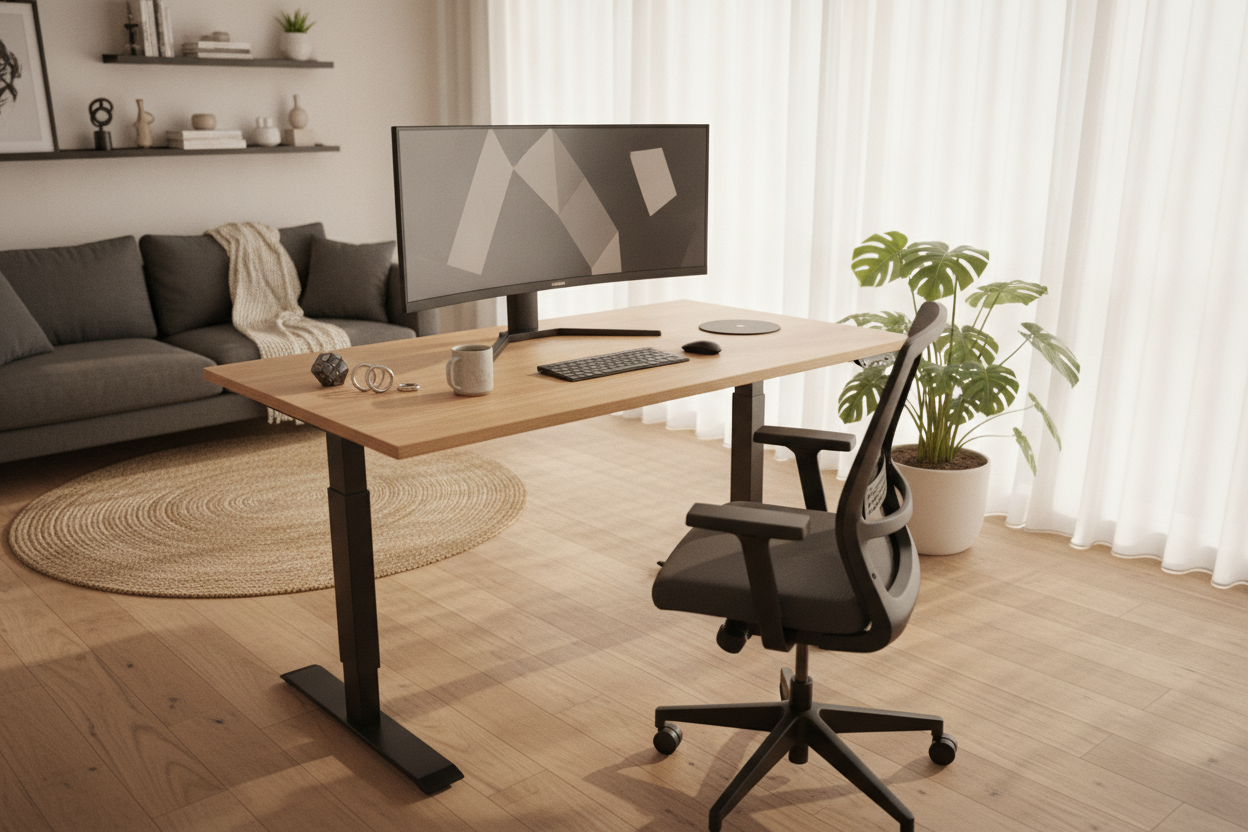
I used to think I was the problem. I would buy a $900 ergonomic chair, sit in it for twenty minutes, and then end up with one leg tucked under me like a confused flamingo. My back hated me, and my productivity was in the gutter because I was too busy trying to find a comfortable angle that didn't exist in a static world.
Finally, I realized my electric desk height adjustable wasn't just a tool for standing—it was the ultimate machine for the 1,000 tiny shifts I make every hour. It turns out, I didn't need a better chair; I needed a desk that could keep up with my restlessness.
- Micro-adjustments (1-2 inches) are more important than full standing transitions.
- Memory presets are non-negotiable for maintaining workflow.
- Dual motors provide the stability needed to prevent monitor wobble.
- Cable management is the biggest hurdle to a successful height-adjustable setup.
The Myth of the Perfect 9-to-5 Posture
Ergonomics gurus love to talk about 90-degree angles. Feet flat on the floor, elbows at your sides, monitor at eye level. It sounds great in a brochure, but it is a total lie for anyone who actually works for a living. No one sits like a statue for eight hours straight.
Real life involves slouching, leaning, stretching, and eventually sliding so far down your chair that you are basically horizontal. The natural human urge to fidget isn't a flaw; it's your body's way of begging for blood flow. A fixed desk forces your body to adapt to the furniture, which is exactly backwards.
Enter the Micro-Adjustment: Why I Need Constant Changes
Most people buy these desks because they have grand visions of standing for four hours a day. In reality, the real magic happens in the micro-adjustment. Sometimes I need the desk at 28 inches for deep typing, but thirty minutes later, 29.5 inches feels better for my wrists while I'm just clicking through emails.
Finding the right adjustable height desk home office setup was far more effective for my daily comfort than any of the trendy workout equipment I've tried. It’s about the freedom to move two inches up or down without thinking about it. That small shift changes the pressure points on your back and neck just enough to keep the 'work-from-home ache' at bay.
My 3-Position Rotation: Chair, Stool, and Cross-Legged
My workday is a rotating theater of seating styles. I start in a standard mesh chair, move to a wobble stool by noon, and by 3 PM, I’m usually sitting cross-legged on my chair like a teenager. Each of these positions requires a different desk height to keep my shoulders from bunching up to my ears.
A traditional, static writing computer desk simply cannot handle this. It’s built for one body type and one very specific sitting style. If you’re a dynamic sitter who moves around, a fixed desk is basically a cage for your legs. I need my desk to follow me, not the other way around.
Why Your Home Adjustable Desk Needs Memory Presets
If you have to manually crank a handle or hold down a 'dumb' button for thirty seconds every time you want to move, you won't use it. I’ve been there, and the desk just ends up stuck at one height forever. It ruins your focus and breaks your flow.
You absolutely need an electric lift system with memory presets. I have one button for my 'perfect' sit, one for my stool height, and one for full standing. One tap and I can keep typing while the motor does the work. It’s the difference between a tool you actually use and a piece of furniture you regret buying.
Finding an Adjustable Home Desk That Holds Everything
Movement can be messy. If your desk is a bird's nest of tangled wires, something is going to snag, pop, or rip out of the wall the first time you hit the 'up' button. I learned that the hard way when I nearly decapitated my favorite lamp with a stray monitor cable.
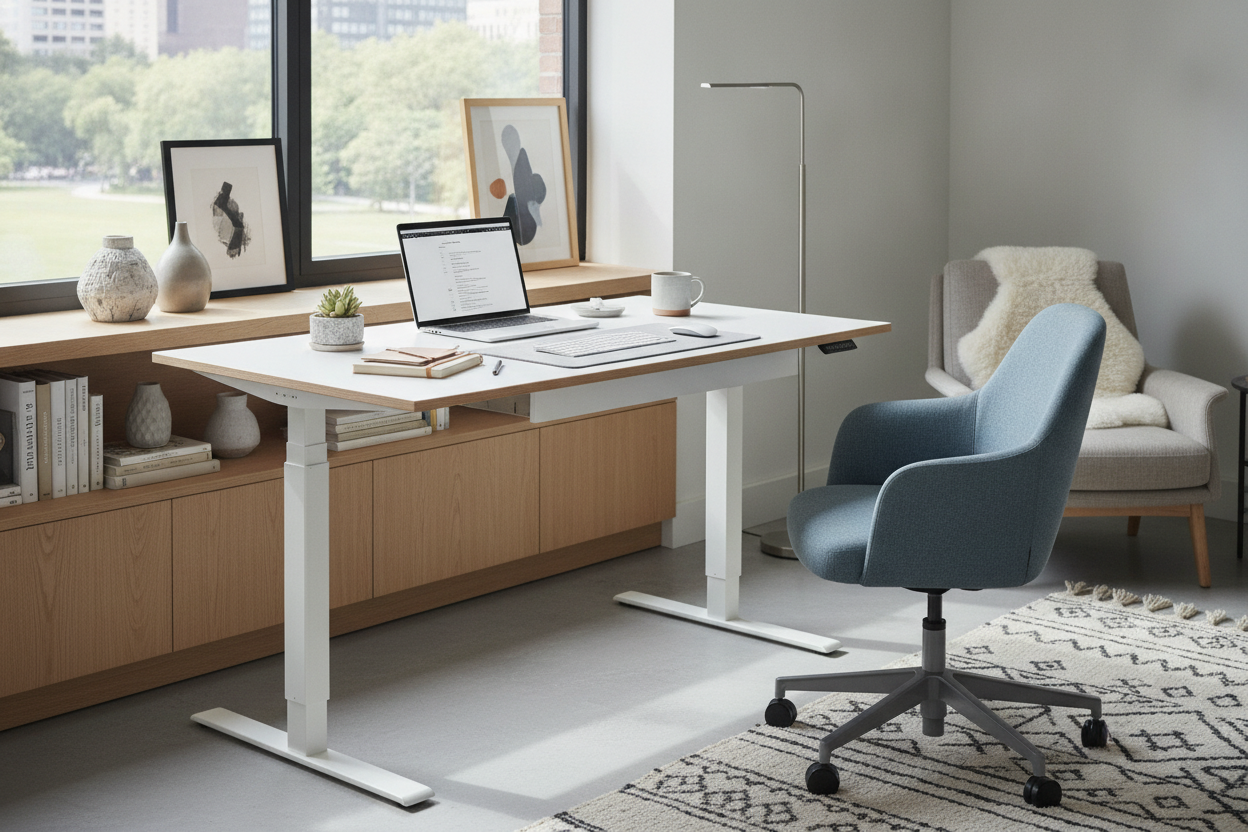
I eventually upgraded to a height adjustable desk with dual storage to keep the chaos contained. Having dedicated spots for my gear means nothing slides around or falls off during a transition. A clean desk isn't just about aesthetics; it's about making sure your transition from sitting to standing doesn't result in a coffee-soaked keyboard.
Is a motorized desk louder than a manual one?
Technically yes, but most modern motors are just a quiet hum. It’s less noise than a microwave. Unless you’re working in a library, nobody is going to notice the sound.
Do these desks wobble when you type?
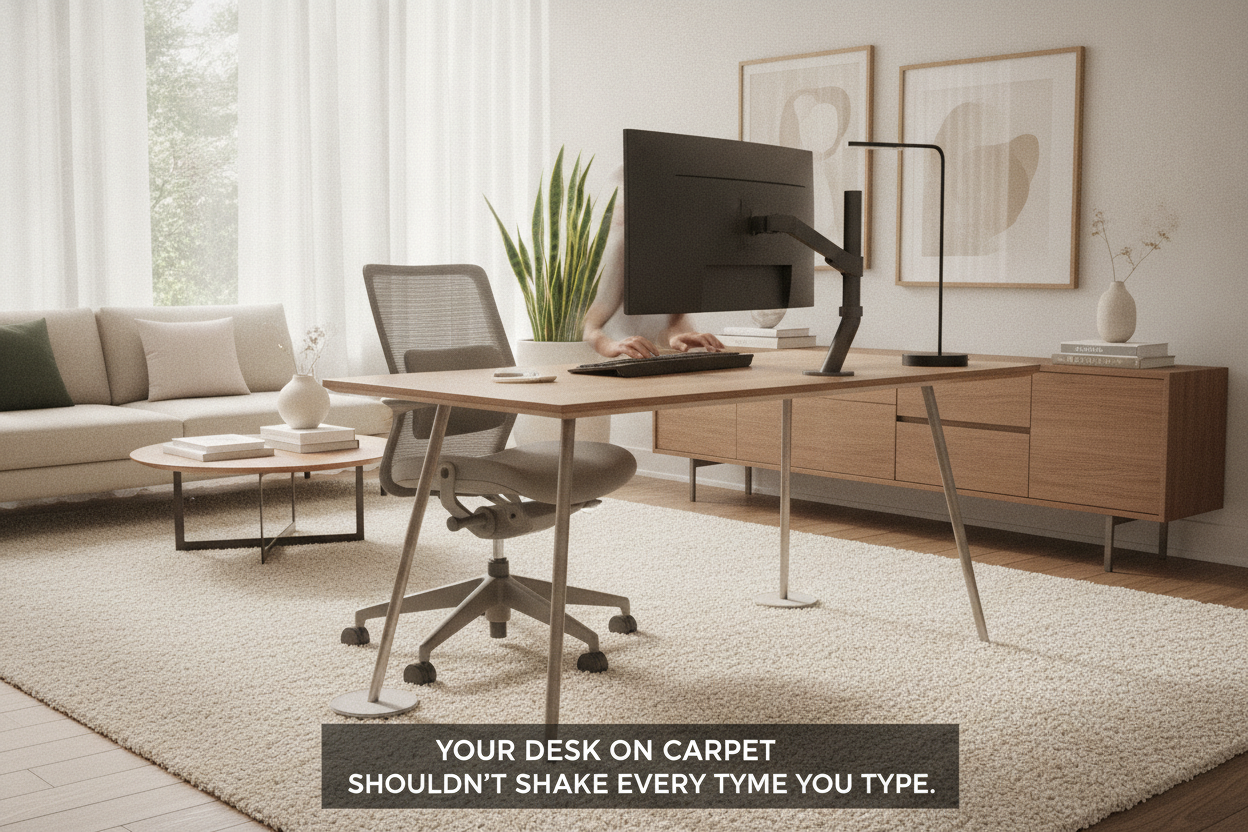
The cheap, single-motor ones definitely do. If you’re sensitive to screen shake, look for a dual-motor frame with a heavy T-style leg. It stays rock solid even at full standing height.
How much weight can an electric desk actually lift?
Most quality frames handle between 200 and 300 pounds. Unless you’re planning on sitting on the desk yourself (please don't), it will easily handle three monitors, a heavy PC, and your oversized coffee mug.

Leave a comment
This site is protected by hCaptcha and the hCaptcha Privacy Policy and Terms of Service apply.