

















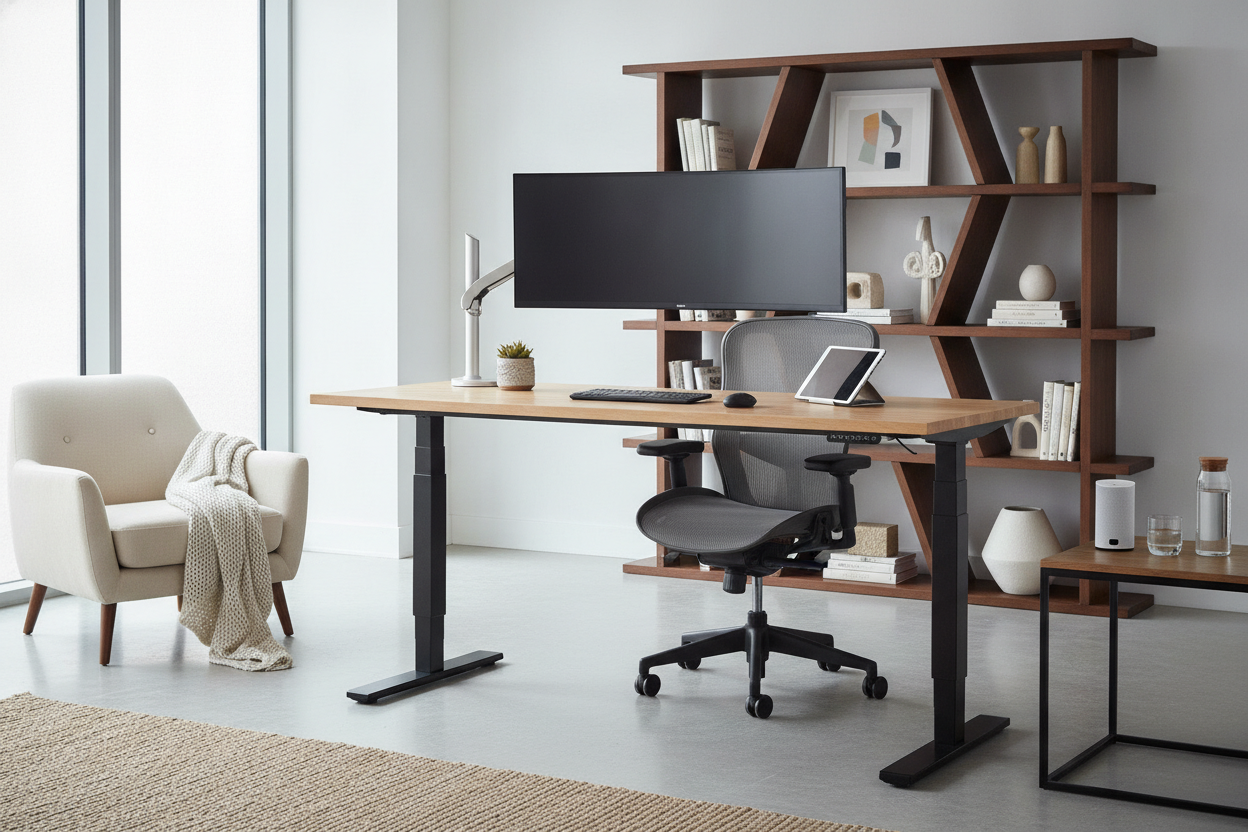
I spent $400 on a walking pad because a TikToker looked serene doing it. Three days later, I was covered in sweat, my typos were embarrassing, and I nearly face-planted during a budget review. I realized my adjustable height desk home office wasn't the problem—my expectation that I could be an athlete and a copywriter simultaneously was.
- Walking pads are great for cardio, but terrible for complex cognitive tasks.
- Using height presets as a psychological 'trigger' for different tasks is a productivity secret.
- Sitting is for deep focus; standing is for admin and momentum.
- Cable management is the difference between a sleek setup and a tangled nightmare.
The Viral Walking Pad Fantasy vs. Reality
The dream is simple: you walk 10,000 steps while clearing your inbox and you end the day feeling like a fitness god. The reality is a lot more like trying to solve a Rubik's cube while jumping on a trampoline. I found that my brain just couldn't handle the 'micro-bounces' of walking while trying to draft a high-stakes strategy document. My focus shattered every time I had to correct a typo caused by my swaying torso.
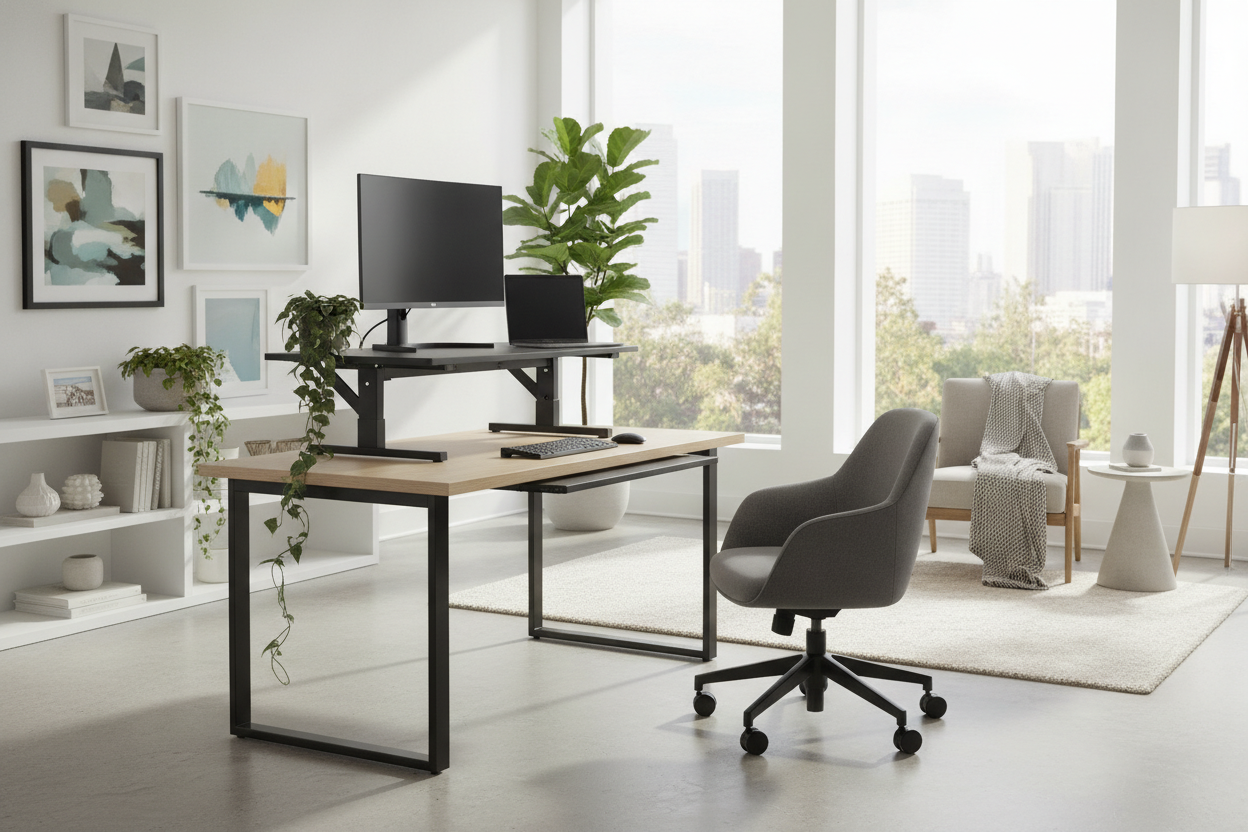
I realized I needed a more grounded approach after upgrading my static work zone. While the walking pad gathered dust in the corner, I started focusing on how my adjustable height home desk could actually support my work rather than distracting me from it. Stability, it turns out, is the ultimate luxury when you're trying to hit a deadline.
Matching Your Moveable Desk Height to Your Brain State
The real breakthrough came when I stopped viewing my desk as a piece of gym equipment and started using it as a psychological switch. Now, I have specific heights for specific 'brain states.' When I’m at 28.5 inches, sitting in my ergonomic chair, my brain knows it is time for deep, focused work. It feels solid and contained, much like a traditional writing computer desk.
When I transition the moveable desk height to 41 inches, I’m standing. This is my 'shallow work' mode. I stand for Zoom calls, Slack triage, and checking my calendar. Standing keeps me from getting too comfortable and falling into a scrolling rabbit hole. By physically changing the desk height, I’m signaling to my nervous system that the nature of the work has changed. It’s a mental reset that doesn't require a shot of espresso.
The Ideal Desk Table Adjustable Settings for Every Task
If you have to manually crank your desk or hold down a button while guessing where your elbows should be, you will never use the standing feature. Friction is the enemy of productivity. This is why I consider an electric lift desk with memory presets to be non-negotiable. I have three presets saved: one for morning focus (sitting), one for afternoon admin (standing), and one slightly higher for when I’m using a balance board.
A desk table adjustable setup needs to be precise. For me, 28.5 inches is the sweet spot where my shoulders don't hunch. If I’m even half an inch off, I feel it in my neck by 3 PM. Having those memory buttons means I can transition from 'deep dive' to 'quick sync' in six seconds without losing my train of thought. It’s about maintaining momentum, not just changing posture.
Building a Height Adjustment Work Table Setup Without the Clutter
One thing nobody tells you about standing desks: if your cables are messy, they will either unplug themselves or rip your expensive monitor off the edge when the desk moves up. I learned this the hard way when my laptop charger got caught in the frame and let out a terrifying 'pop.' Your height adjustment work table needs to be a self-contained unit.
I solved this by using an adjustable desk with integrated pegboard storage. By keeping my headphones, notebooks, and pens attached to the desk itself, they don't shift or fall when the surface moves. It keeps the desktop looking like a workspace rather than a piece of medical equipment. A clean desk isn't just about aesthetics; it's about removing the visual noise that competes for your attention when you're already trying to stay on task.
How often should I switch between sitting and standing?
Don't try to stand for eight hours straight; your feet will kill you. I recommend the 50/10 rule: sit for 50 minutes, stand for 10. Or, switch based on your task list. Standing for meetings and sitting for writing is a great rhythm.
Do I need a special mat for standing?
Yes. Standing on a hardwood floor or thin carpet in socks will lead to heel pain within an hour. A high-density foam anti-fatigue mat is worth every penny if you plan on standing for more than 20% of your day.
Is assembly difficult for electric desks?
Most modern kits take about 45 minutes. The heavy part is the motor and the legs, so have a friend help you flip it over once it's built. Pro tip: use a real drill, not the tiny hex key they provide, or your wrists will be sore before you even start working.

Leave a comment
This site is protected by hCaptcha and the hCaptcha Privacy Policy and Terms of Service apply.