











Architectural Geometry of Reversible L-Shaped Desks
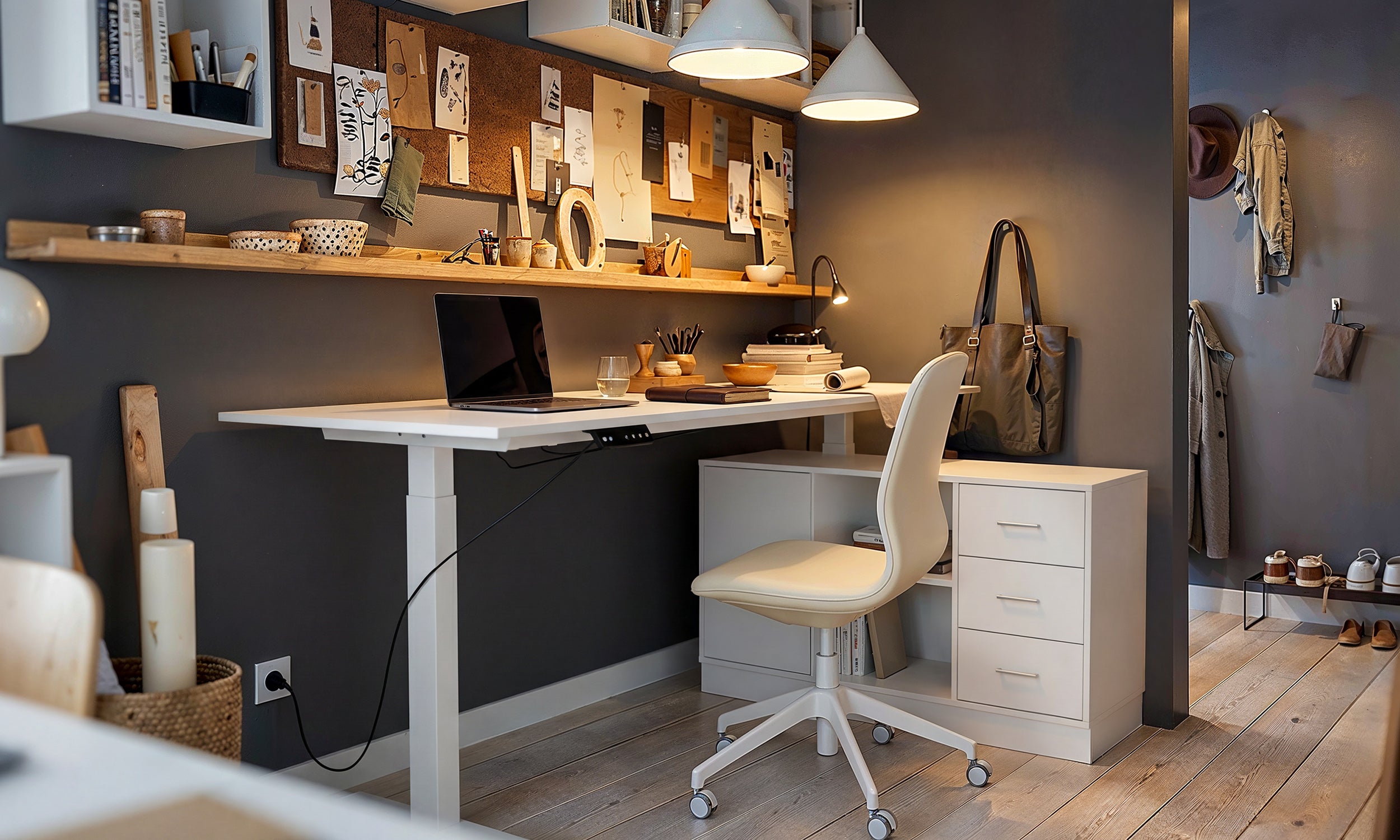
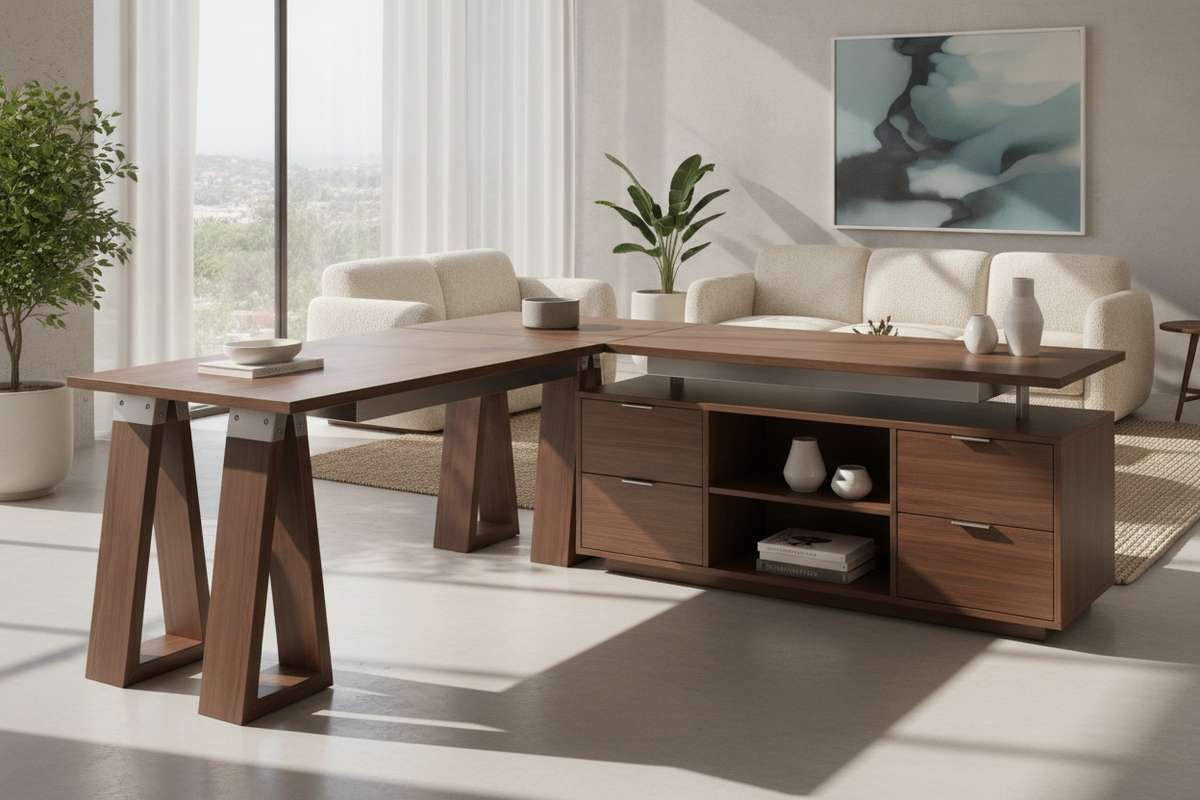
Modern workspaces demand layout flexibility, and a reversible l shaped desk provides an adaptable workstation structure. Unlike fixed corner units, a reversible desk features a primary work surface and a secondary bridge or return wing that attaches on either the left or right side. This reversible configuration enables the desk to adapt to changing floor plans, architectural obstacles, and diverse room corners.
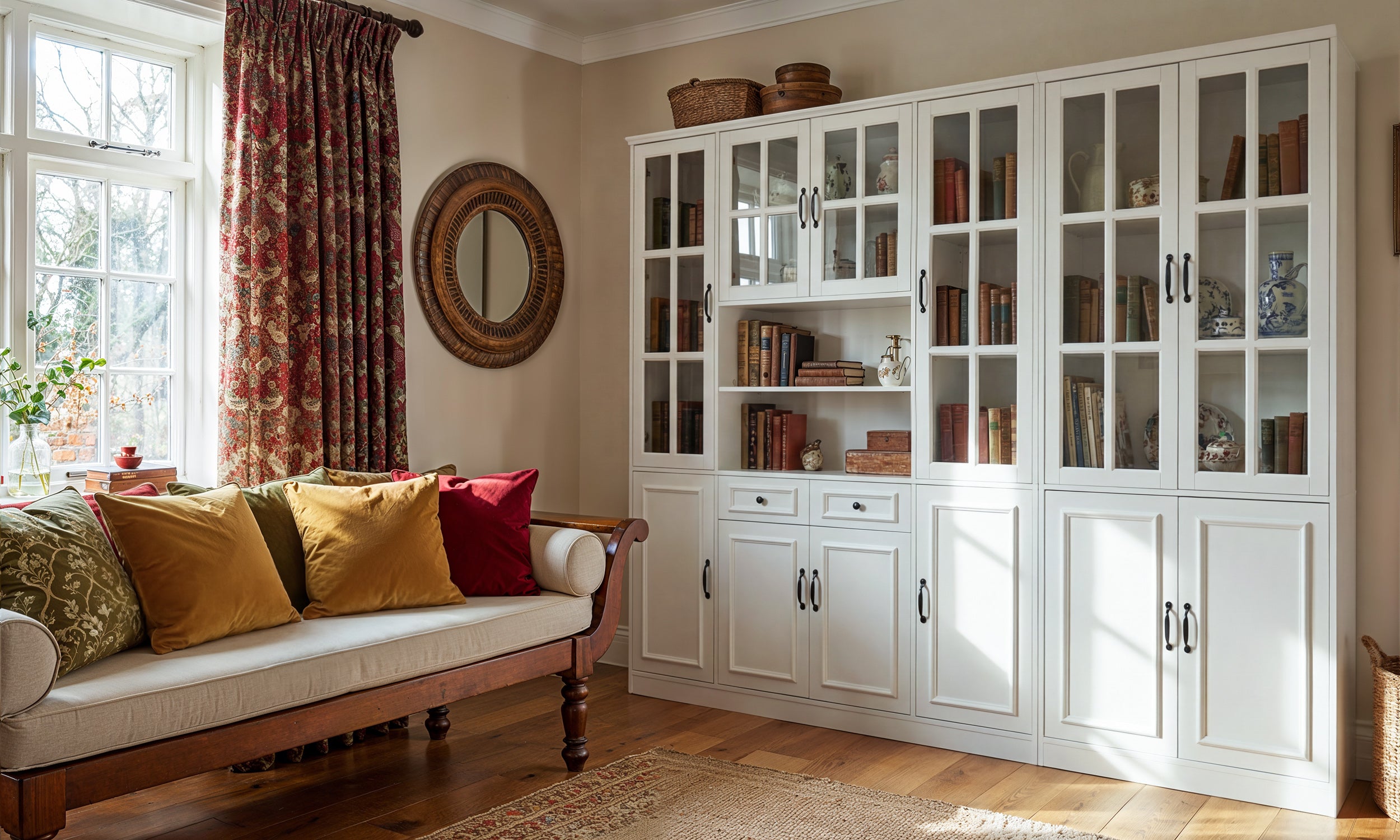
The engineering behind a reversible l-shaped desk relies on universal connector brackets, symmetrical frame crossbars, and pre-drilled fastening matrices on the underside of the desktop panels. By decoupling the main surface from a fixed orientation, the reversible corner desk functions equally well against an open perimeter wall or tucked within compact alcoves. For coordinated room planning, pairing your desk with dedicated corner storage collection elements helps keep floor plans open and functional.
Footprint Sizing Tiers and Spatial Clearance Envelopes
Selecting the right desk scale requires evaluating the complete spatial envelope, including seated chair clearance and active circulation paths around the room. A small reversible l-shaped desk generally suits studio apartments and multi-purpose guest rooms, offering dedicated dual-surface zones without overwhelming room boundaries.
Mid-tier and expansive models provide broader surface spans suited for multi-screen arrangements and peripheral equipment. When measuring spatial envelopes, plan for ample clearance behind the seated position to accommodate task chair swivel, reclining movement, and smooth entry into the corner junction. Exploring balanced solutions like a white computer corner product allows planners to establish clean visual lines while preserving under-desk leg room.
Left vs. Right Return Mechanics: Choosing Your Layout Flow
Determining whether to assemble your reversible l-shape computer desk in a left-hand or right-hand configuration depends on room architecture and workflow patterns. Consider natural light angles from nearby windows to prevent screen glare on the primary monitor, as well as clearance from door swing arcs.
Workflow zoning also dictates orientation:
- Primary Focus Zone: The deeper main desk surface typically accommodates the central display, keyboard tray, and immediate task items.
- Secondary Utility Wing: The return surface serves as an auxiliary workspace for paperwork, secondary monitors, or desktop accessories.
- Dominant Hand Utility: Positioning the return on your dominant side facilitates fluid writing, document drafting, and rapid reach for reference materials.
Storage Integration: Drawers, Hutches, and Open Shelving Tiers
Storage components define the organizational efficiency of a reversible l shaped desk with storage. Modular units commonly incorporate file drawers, open under-wing shelves, or vertical hutches that can switch sides during initial setup.
A reversible l-shaped desk with drawers positions file storage within the return pedestal without compromising central knee clearance. For spaces requiring elevated organization, a reversible l shaped desk with hutch leverages vertical wall space above the primary surface. When expanding complementary storage across the office, insights from a white drawers storage guide provide useful principles for balancing open display and concealed storage. Additionally, incorporating freestanding units such as a white storage drawers product creates balanced organization throughout adjacent office zones.
Material Profiles and Structural Frameworks
Stability across long spans requires a robust foundation. A reversible l shaped executive desk often pairs thick engineered wood surfaces with reinforced structural frameworks. Steel tube leg systems equipped with diagonal corner gussets eliminate lateral wobble, ensuring the desk remains steady under dynamic daily use.
A white reversible l-shaped desk delivers a light, contemporary aesthetic that brightens home offices while resisting visible dust buildup. Selecting durable desktop laminate finishes ensures scratch resistance against daily hardware movement. For a deeper exploration of expansive desk formats and hardware integration, reviewing an executive desk computer guide can help clarify executive workstation configurations.
Assembly Protocols and Reversible Reconfiguration Strategies
Successfully assembling a reversible desk with drawers starts with choosing the desk orientation before fastening the primary frame components. Laying out all structural members on a soft surface prevents finish scuffs during assembly.
Follow these practical guidelines for smooth assembly and future reconfiguration:
- Orientation Confirmation: Verify room clearance, wall outlet placement, and peripheral cord runs before securing the return wing bolts.
- Symmetrical Fastener Alignment: Finger-tighten all frame connectors across the corner junction first, fully torquing bolts only after the entire frame is squared.
- Cable Channel Routing: Plan wire management pathways along the interior steel rails to keep power cords hidden regardless of return direction.
- Future Reversibility: Retain the manufacturer hardware schematics and spare connector fittings to simplify future room redesigns and layout swaps.


Leave a comment
This site is protected by hCaptcha and the hCaptcha Privacy Policy and Terms of Service apply.