




Corner workstations offer expansive surface area and efficient room zoning, yet their multi-directional geometry introduces distinct engineering challenges. When two perpendicular spans meet, standard vertical support posts often conflict with natural seated leg movement, while long unsupported surface spans invite tabletop deflection. Providing proper l shaped desk support requires a clear understanding of load distribution, seam reinforcement, and strategic bracing.
Understanding L-Shaped Desk Mechanics: Load Paths and Corner Vulnerabilities
An L-shaped configuration functions differently from a standard rectangular desk. Downward weight placed on either the main span or the return wing creates torsional stress at the inner corner junction. Without adequate underlying framing, this rotational force can lead to joint separation, surface creaking, and noticeable sag across the wider span.
When planning how to position and stabilize a corner setup, considering room layout is the first step. As explored in our comprehensive shaped desk guide, matching the structural footprint to the room walls allows perimeter anchors to share the load, significantly reducing mechanical stress on freestanding leg assemblies.
Corner Seam Reinforcement: How to Brace L-Shaped Desk Miters and Butt Joints
The seam where the main desk top meets the secondary return top represents the most vulnerable failure point in modular or DIY builds. Whether joining a 45-degree miter or a 90-degree butt joint, relying solely on surface glue or dowels is insufficient to resist dynamic downward pressure.
- Steel Mending Plates: Heavy-gauge flat steel tie plates installed on the underside span across the seam to bridge both desktop halves, preventing vertical dislocation.
- Interlocking Apron Rails: Continuous under-table aprons fastened to both tabletop pieces distribute downward loads across multiple mechanical connection points.
- Pocket-Hole Fasteners and Drawbolts: Mechanical joinery pulls the joint tight horizontally, eliminating micro-gaps that worsen over time under continuous hand or monitor loads.
Leg Placement vs. Ergonomic Clearance: Eliminating the Corner Knee-Knocker
A frequent error when reinforcing corner desks is placing an obtrusive vertical leg directly beneath the inner vertex. While this provides direct downward support, it severely restricts legroom and creates an awkward obstacle during swivel transitions.
Achieving structural integrity without sacrificing knee space involves specialized geometry:
- Recessed Corner Legs: Positioning the inner leg several inches back toward the rear corner clears immediate knee pathways while maintaining an effective load path.
- Integrated Factory Frames: Selecting a factory-engineered shaped desk product with purposeful frame geometry ensures balanced weight distribution while keeping the under-desk area open.
- Diagonal Gusset Brackets: Heavy-duty triangular corner brackets attached to the rear framework brace the vertex without intruding into user legroom.
As detailed in our ergonomic support guide, maintaining uninhibited movement under the primary work surface is essential for daily comfort.
Under-Table Aprons, Stringers, and Cantilever Bracing
To eliminate desktop deflection along extended wings, horizontal stiffeners are crucial. Long tabletop spans naturally bow over time under monitor mounts, heavy tower computers, and resting arm weight.
Effective stiffener profiles include:
- Longitudinal Apron Rails: Solid timber or engineered composite aprons running the length of each wing increase overall stiffness against bending.
- Embedded Metal C-Channels: Routed metal channels flush-mounted on the underside provide exceptional span rigidity without lowering under-desk clearance.
- Modular Return Linking: When configuring modular layouts, pairing a primary work surface with a secondary desk shaped product using continuous undersurface brackets forms a rigid, multi-functional return.
Integrating Supportive Storage: Pedestals, Credenzas, and Side Returns
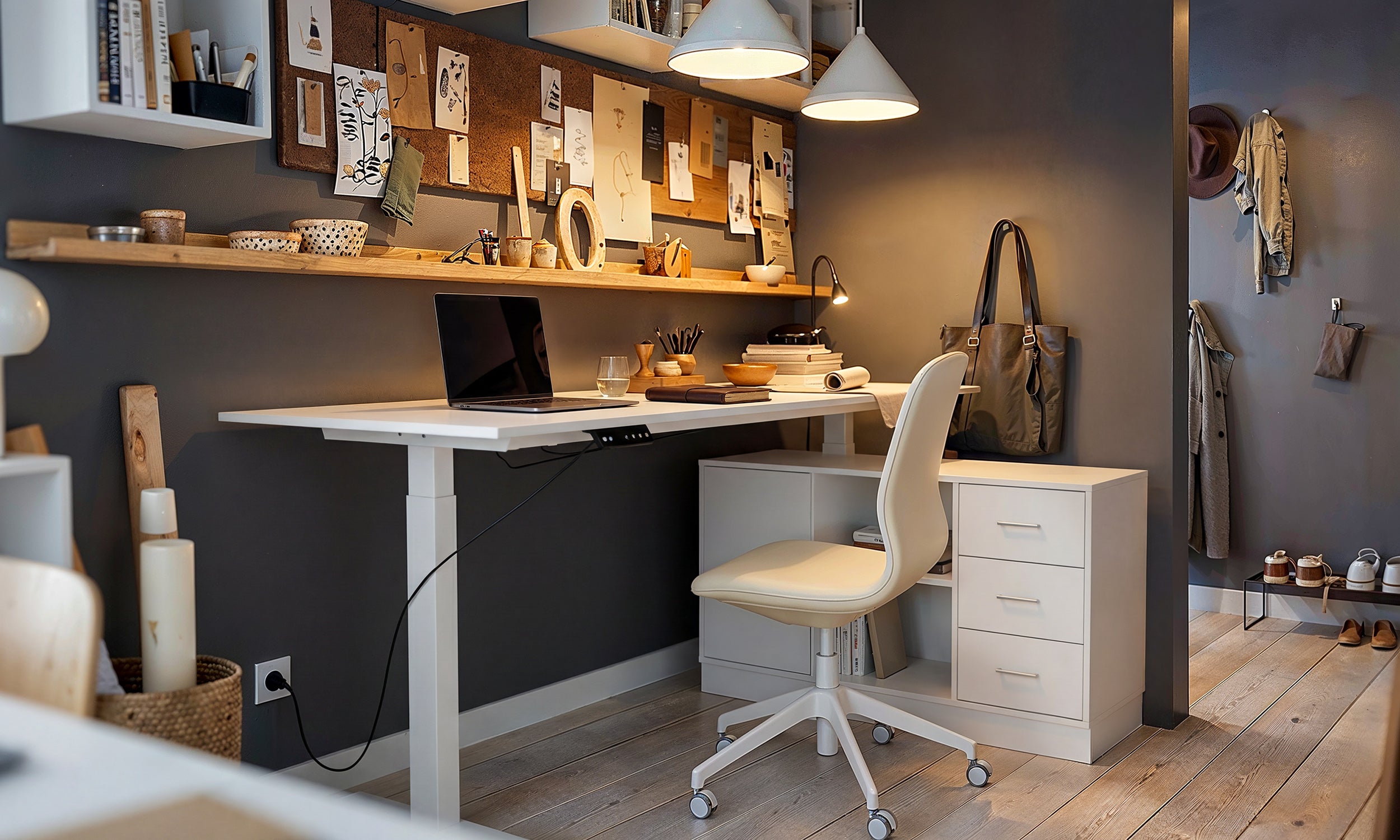
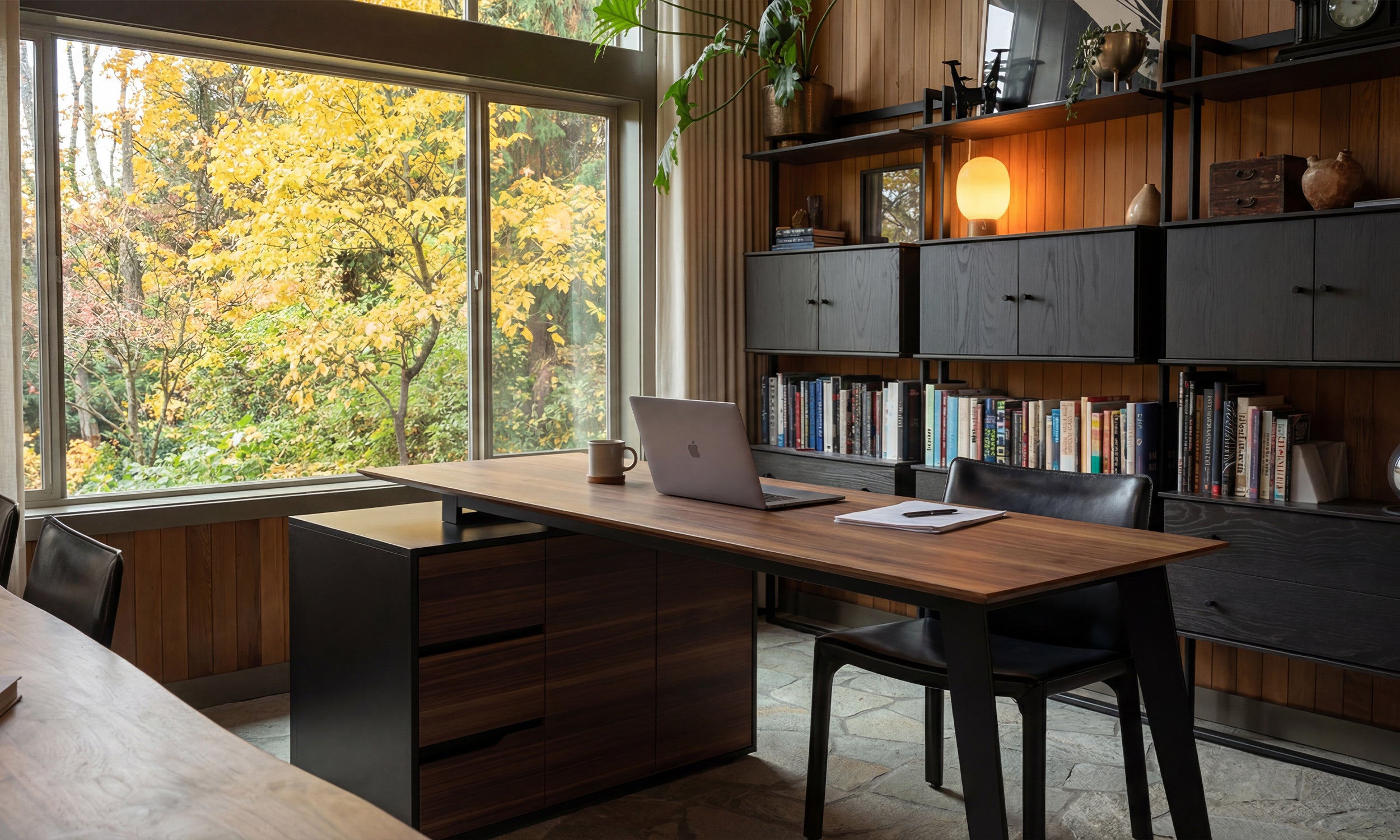
One of the most stable methods for anchoring an L-shaped layout is replacing isolated tubular legs with solid storage casework. Drawer pedestals, low credenzas, and integrated filing cabinets provide wide, multi-point bases that eliminate lateral racking entirely.
When a return wing rests directly on a storage pedestal, the entire footprint acts as a stabilizing shear wall. Fastening the desktop to the top panel of a drawer base creates a massive anchor that absorbs side-to-side wobble, providing a sturdy foundation for heavy equipment.
Step-by-Step Diagnostic and Bracing Protocol for Wobbly Corner Desks
If an existing corner desk exhibits sway or tabletop dipping, follow this systematic diagnostic routine:
- Level the Floor Contact: Adjust all leveling glides until the frame sits completely flat. An unlevel floor causes isolated legs to float, shifting unnatural twist forces to the corner seam.
- Re-torque Fasteners: Vibration and seasonal movement loosen mechanical bolts. Systematically tighten all frame-to-top and leg-to-apron hardware.
- Install Cross-Wing Corner Gussets: Add triangular corner gussets or diagonal steel brackets underneath the junction to stop racking motion.
- Tie the Long Wings to Base Storage or Walls: Fasten floating wing ends to heavy pedestals or rear wall studs to stop longitudinal deflection.
For additional hardware guidance or replacement bracket suggestions, refer to our dedicated support resource to maintain a secure, wobble-free work environment.


Leave a comment
This site is protected by hCaptcha and the hCaptcha Privacy Policy and Terms of Service apply.